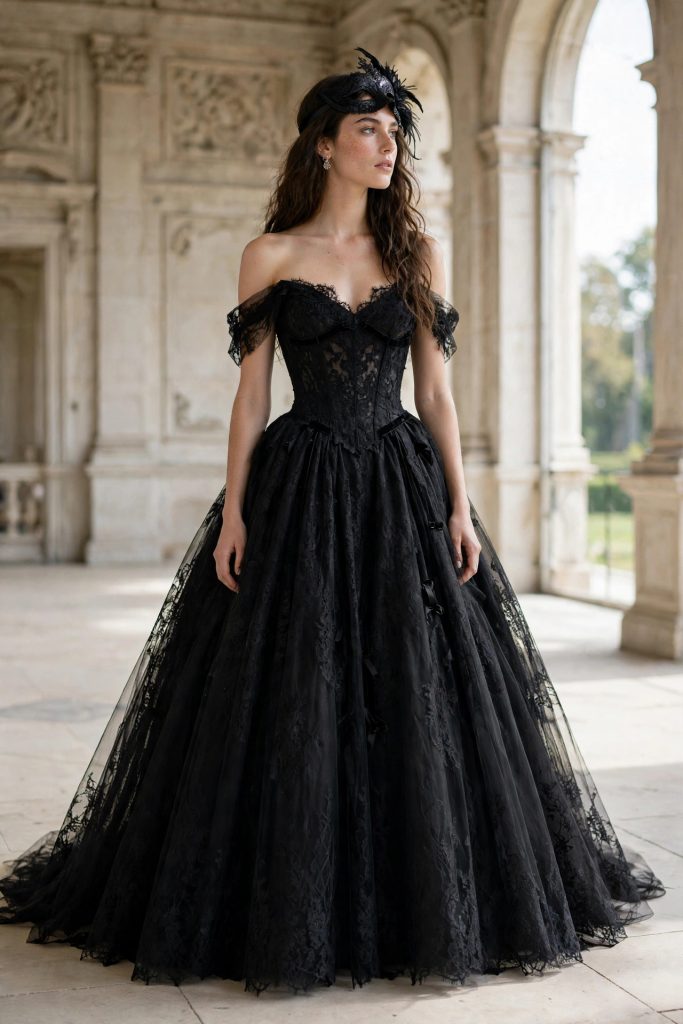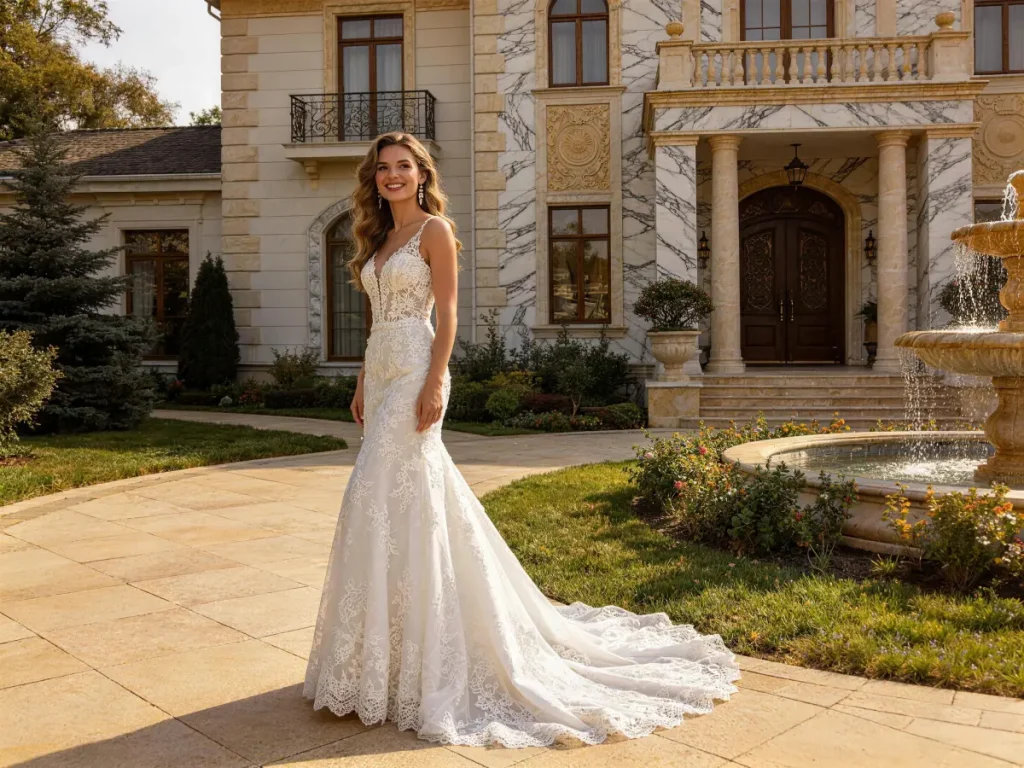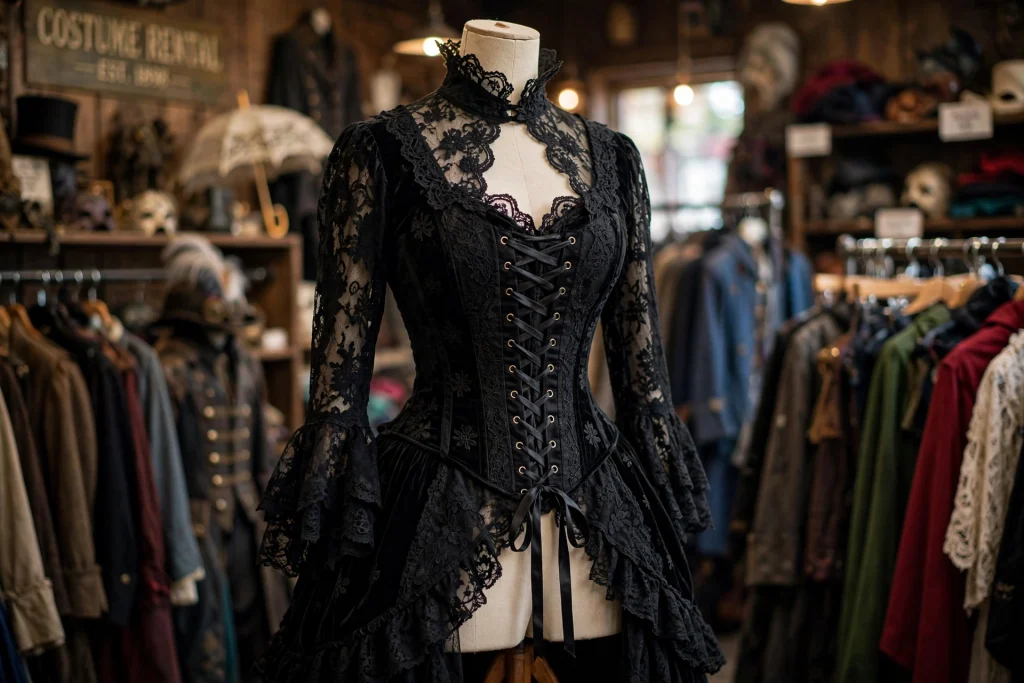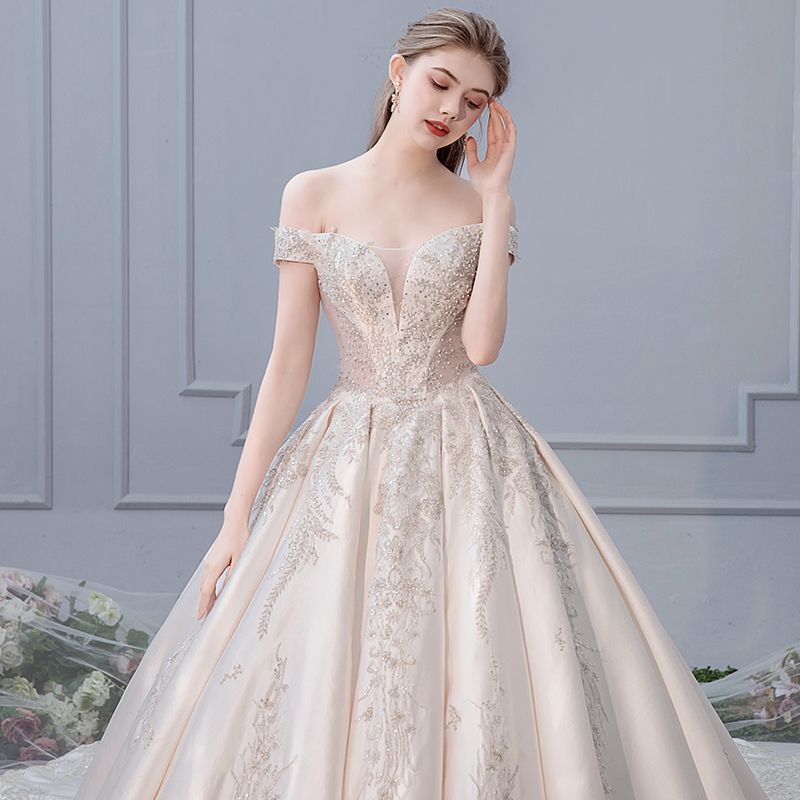
October 31 does not move. That single fact runs my whole side of this trade, and the ghost bride costume in front of us, pale layers and an undead wedding dress look, is the purest example I ship. A Christmas dress that lands late can still sell in the January sales. A ghost bride that lands on November 1 is worth its weight in storage fees and nothing else. So this category gets ordered backwards from a fixed date, and I want to walk that backwards road properly, because the buyers who survive Halloween are the ones who treat it as a calendar first and a costume second.
Count backwards from a date that will not negotiate
The costume needs to be in hands, tried on, and photographed well before the party, because a one-night garment discovered to be wrong on the night itself has no second night to be right on. In my planning the dress should sit in the store, or with the buyer, by about October 24, a full week ahead, with that week held as pure slack for the size swap or the torn seam that somebody still has time to fix. Freight gets counted back from the 24th, not from the 31st. Small lots under 20 pieces travel at about $17 to $22 per kilo and twenty and up by express at about $13 to $20, and in the last two weeks of October every costume seller in the trade is buying the same fast capacity at the same time, so the rate a buyer was quoted in August is a story about August.
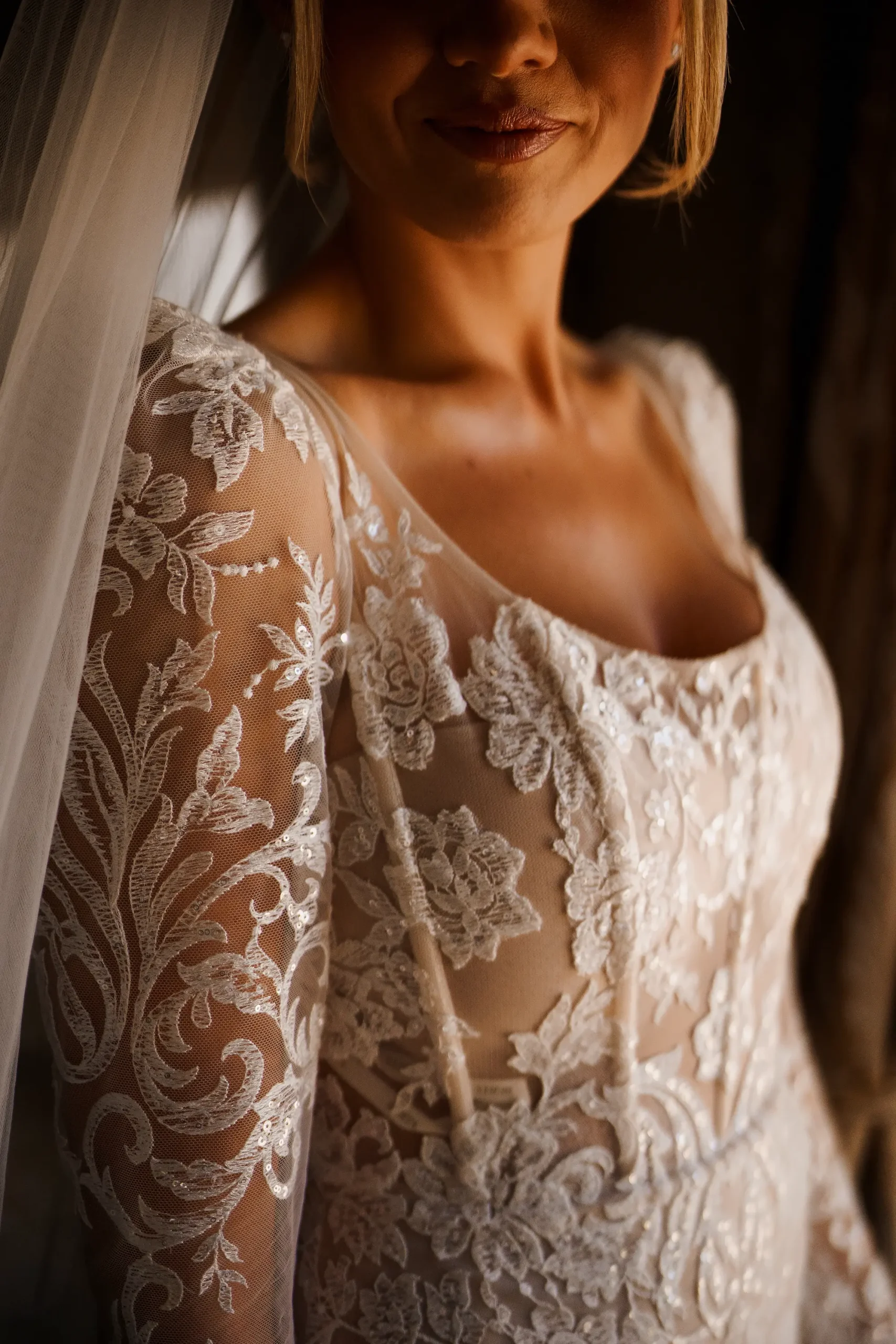
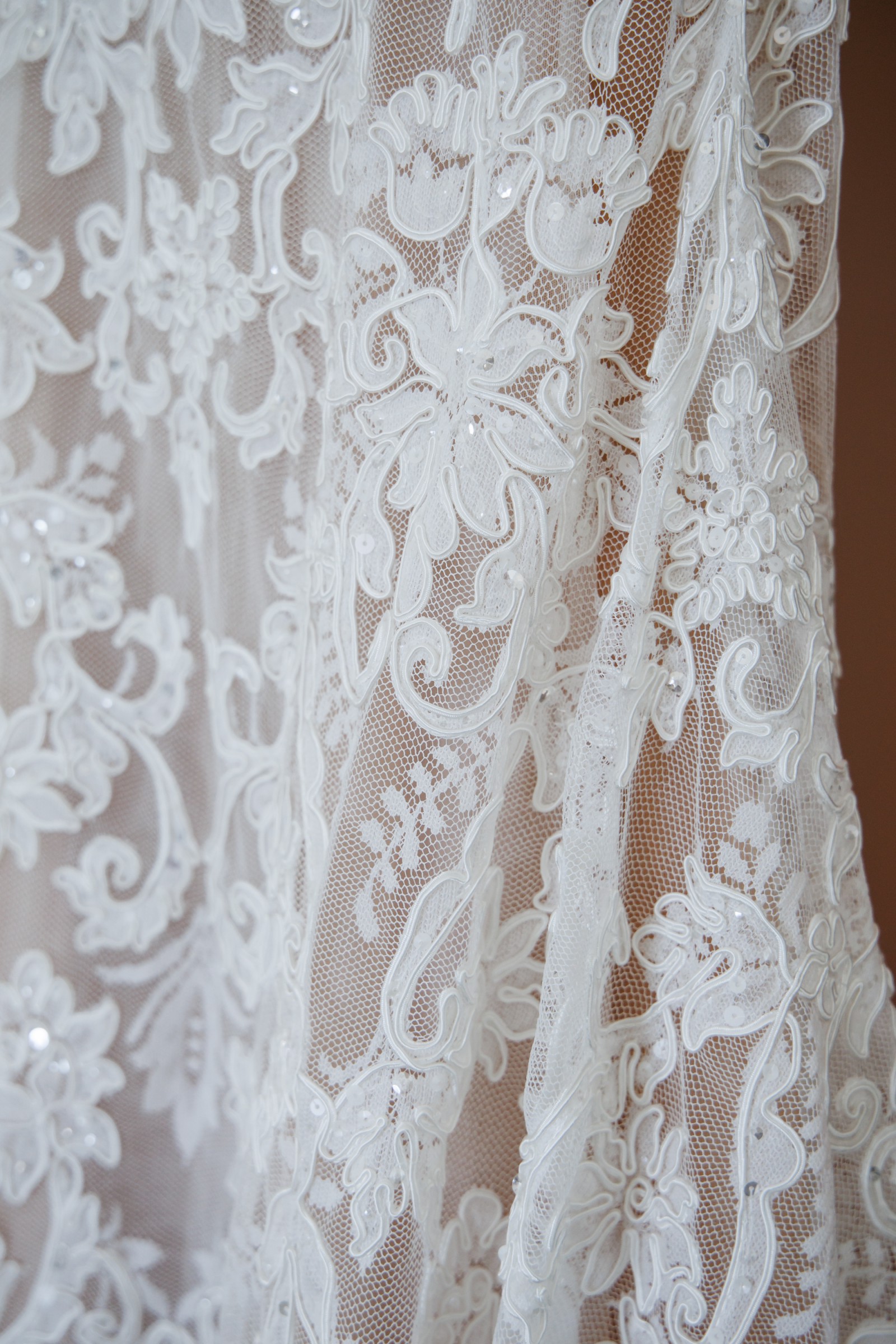
Behind freight sits bulk production at 20 to 30 days, which puts the production order in September for an October rail, and September production has its own trap for this category: the sheer overlays. The gauzy layers that make a ghost bride read as ethereal are miserable cloth to sew fast. They slip under the foot, they fray at every cut edge, and they show every rushed finish because there is nothing under them to hide a seam behind. A line hurrying a costume order in late September produces a dress that photographs beautifully and starts shedding its edges at the party. The floor under one-wear construction is a seam that survives the one wear, sitting, dancing, a crowded room, a car door. Below that floor the costume has not been built cheaply. It has been built to fail its only appointment.
The sample nobody wants to pay for in July
Sampling takes 10 to 15 days once the spec is confirmed, with a general style sample fee of $45 to $75 per piece and half of it back against the bulk order, and for Halloween stock that arithmetic lands the sampling conversation in high summer, which is exactly when buyers least want to think about ghost brides. They think about them in September instead, all of them, at once, and the sample rooms fill with pale tulle while the freight calendar quietly closes its cheap doors. A trial order of halloween costumes wholesale at 10 pieces per style, run in July or August, settles the two questions this costume actually asks: does the sheer overlay survive being sat in, and does the pale shade read as ghostly rather than merely grey under party light. Both answers are cheap in August and priceless in October, in the worst sense of the word priceless.
Stocking depth is the last decision on the backwards road and the one with no reorder hiding behind it. A boutique dress that sells out can be reordered. A ghost bride that sells out on October 20 is simply gone, and one that is left over on November 1 is gone in the other direction. So the order gets split by confidence rather than by hope: the core sizes in depth, the edge sizes shallow, and the whole buy sized to what the store can stand to carry into November without flinching. No wait. Split by confidence sounds wise and it hides the real rule, which is ruder. Order what you can afford to bury. The stores still standing in my territory after a few Halloweens all plan this category as a one-way door, money spent that the date either redeems in full or not at all.
Distribution plans this ghost bride backwards alongside the plus size goth lace patchwork dress file, shelves it near the press-on nails for spooky weddings review, and checks the small goods against the gothic velvet coffin box review, because October stock is one calendar wearing three different costumes and it all misses together or lands together.
Questions buyers and stores actually ask
Halloween is October 31 and my stock is due to land October 29. Late, or just tight?
Late, in every way that matters. A one-night costume still needs its slack week: time to check sizes against real bodies, repair the seam that travelled badly, and swap what can still be swapped. Landing on the 29th spends that week inside a carton. The planning date for this category is in hands by about October 24, counted back through bulk production at 20 to 30 days and sampling at 10 to 15, which is why the buyers who look calm in October did their worrying in July.
The costume only has to survive one night. Why does the seam spec still matter at costume prices?
Because one night is the whole promise, and a seam that opens on the dance floor has failed the only test the garment ever sat. Costume construction is light and everybody knows it, seam allowances run short and the sheer layers fray if you look at them sternly. The floor is still a floor: allowances that hold through sitting and dancing, edges finished so the overlay does not shed itself by midnight. A sample sat in, hard, for ten minutes tells you which side of that floor a factory is building on.
A trial at 10 pieces per style in July feels early for a costume nobody wears until October. Is it?
It feels early and it is the cheapest education in this category. Ten pieces in July settle whether the overlay survives sitting and whether the pale shade reads ghostly or just grey, while there is still a calendar left to act on the answers. The same ten pieces sampled in September settle nothing, because the freight and production windows behind them have already narrowed to the expensive options. July trials are not enthusiasm. They are the price of having choices in October, and choices are the whole game in a category with a fixed date.
I have a soft spot for this odd little category, honestly, and it took me years of October freight bills to admit why. The ghost bride costume is the most honest garment I move. It promises one night, it is priced for one night, and everybody in the chain knows it. The dresses I ship the rest of the year promise seasons and are quietly built for less. The costume only ever lies when its seams cannot manage the single night it admitted to. Everything else about it, the date, the layers, the pale impossible shade, is exactly what it says it is, arriving on a calendar that says what it means too.
Dated costumes run on the same unforgiving calendar as every other seasonal range, which is why buyers now plan them the way they plan holiday ranges that live or die on a date that never moves — backwards from the last full selling week, not forwards from the order date.