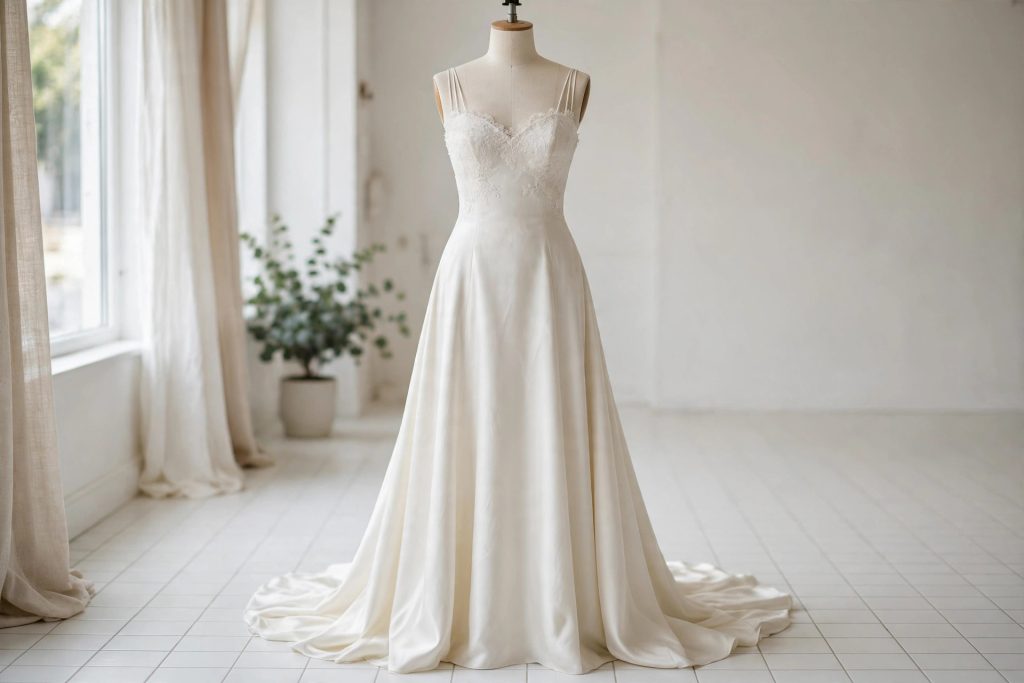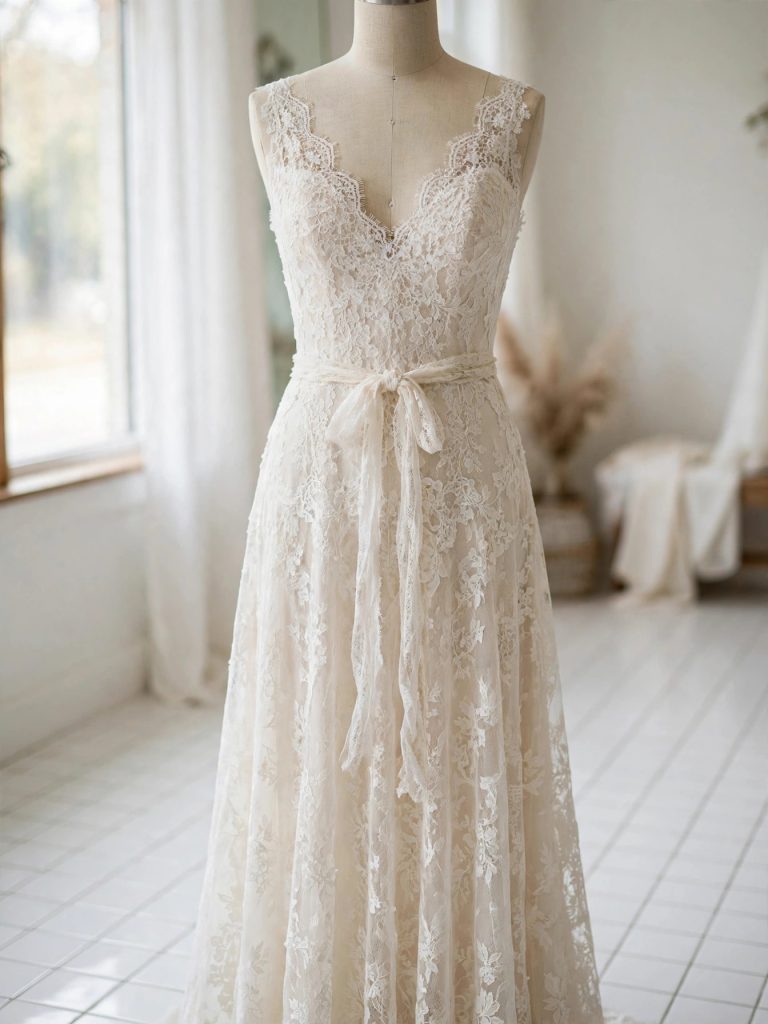
It stands up in the morning. That is where this story starts, mid-scene, with an Aprildress A-line on a boutique rail at opening time, skirt holding a soft, natural bell that the owner photographed for the shop page. By the afternoon fitting the same skirt has gone quiet and flat against the bride’s legs, and the owner is on the phone asking what the factory did to her crinoline. I sell cloth and netting upstream of factories, which means I get this call from the other direction too, and the answer is rarely a villain. A soft crinoline is a structure made of air and stiffness, and both of those leak.
Layers are not the same as lift
A hoopless crinoline builds its volume out of tiered net, each tier cut fuller than the one above it, and the lift comes from the net’s stiffness pushing those tiers apart. Count the tiers and you have counted the cheap part of the spec. Two crinolines can both carry six tiers and behave like different garments, because the net itself varies, in the weight of the yarn, in how it was finished, in how much stiffness survives being cut, sewn, packed and shipped flat in a carton. Soft net makes a soft bell that photographs kindly and tires by afternoon. Firmer net holds the bell and can feel scratchy at the tier edges if the binding was rushed. The listing word soft is doing heavy work in this category. It describes the silhouette the bride wants and, quietly, the lifespan of the lift she is buying.
Then the skirt’s own weight joins the argument, and this is the step buyers skip. The crinoline does not hold itself up in an empty room. It holds up a wedding dress, satin or organza or layered tulle over lining, and every gram of that skirt hangs on the tiers all day. A crinoline specced against a light sample skirt and then ordered under a heavier production skirt is being asked to lift a load it never met at approval time. The collapse looks sudden at the fitting. Upstream it was arithmetic from the start, load against stiffness, and the load won on schedule. When a boutique changes the skirt cloth between sample and bulk, the crinoline spec has to be revisited in the same conversation, and it almost never is, because nobody owns that line of the order.
Packing is the third ingredient
Net remembers being folded the way paper does, only slower to forgive. A crinoline that travels compressed in a carton and goes straight onto a rail carries its folds as flat spots in the bell, and steaming coaxes most of them back, most of the time. No wait, steaming is not the whole fix and I should stop letting shops believe it is. Steam restores shape to net that still has its stiffness. Net that was finished lightly, or stored hot in transit, has lost something steam cannot hand back, and the honest test is at intake, not at the fitting. Hang the crinoline for a day beside a skirt of the real production weight. The bell it holds on day two is the bell the bride gets. The bell in the delivery photograph was taken by somebody who had just shaken it like a duvet.
From the cloth side this A-line is costed beside the long sleeve satin mermaid bridal gown review, hung against the stretchy halter A-line maxi review, and read with the champagne boho fit and flare wedding dress, because skirt volume, body fit and cloth weight are three lines of the same invoice and buyers keep trying to pay only one of them.

Questions buyers and stores actually ask
Six tiers on both quotes, wildly different prices. What is the dearer quote actually selling?
Stiffer net, most likely, and better binding on the tier edges. Tier count is the visible spec, so it is the one listings compete on, but the lift lives in the net’s yarn weight and finish, which cost more per metre and survive packing better. A cheap six tier and a dear six tier are different structures wearing the same number. Ask for a cut piece of the actual net with the quote and bend it in your hand. The cloth answers faster than the spreadsheet does.
The sample skirt held its bell and the bulk skirt sits flat by afternoon. Same crinoline, so what changed?
The load, in most cases I get called about. If the production skirt cloth came in heavier than the sample skirt, or the lining changed, the crinoline is lifting weight it was never specced for, and its tiers give up gradually through the day instead of all at once. Weigh both skirts if the samples are still around. It feels like an odd test until the numbers differ, and then it feels like the only test anybody needed.
Steaming at the shop restores the bell for an hour, then it fades again. Is the net finished?
That pattern usually means the shape came back but the stiffness did not, and shape without stiffness is a loan the day collects by afternoon. Steam can relax folds and remind net of its cut. It cannot replace a finish that was light to begin with or cooked out in a hot container. A crinoline that needs steaming before every fitting is telling the shop its spec, in the only language it has.
I do not think the soft crinoline is a dishonest product, which surprises the owners who call me angry. It gives a natural, moving volume that hoops cannot, and brides who hate the caged feeling of a hoop skirt are right about what they want. What it will not do is hold that volume on any terms the buyer names after the fact. The stiffness has to be specced, the load has to be admitted, and the intake test has to happen while the order can still be argued with. Leave any one of those out and the skirt will keep its morning appointment beautifully, and miss the afternoon one, in front of the only audience that matters.