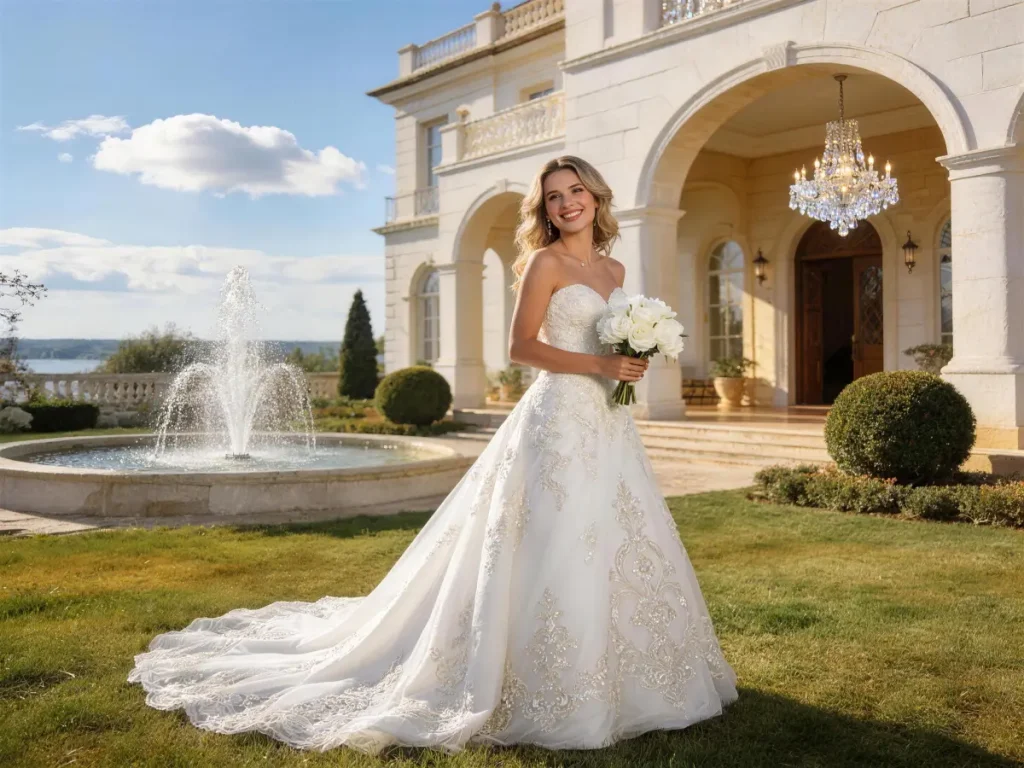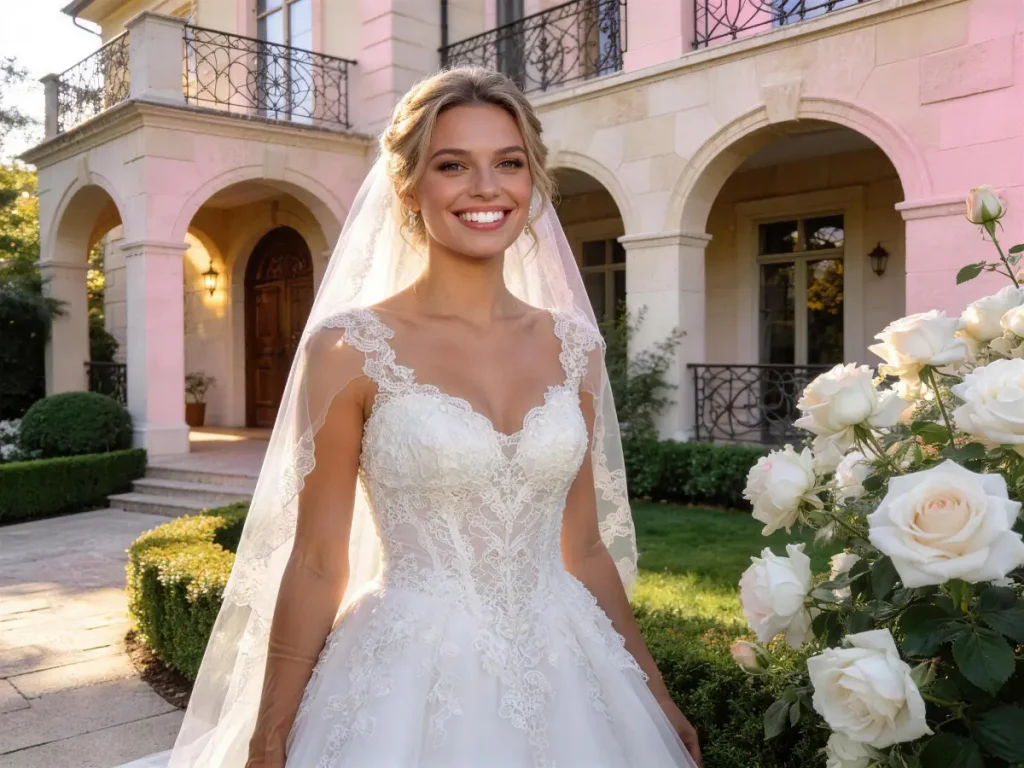
Searching for winter wedding dresses? Most of what you see online is dressed-up fast fashion, designed to look decent for a photoshoot and then disappear. But every now and then, something like the BTFBM Women’s Maxi Dresses Fall 2026 Long Sleeve Ruched pops up, forcing a real conversation about value. Let’s cut through the marketing fluff.
One-Sentence Verdict
For those navigating the cluttered market of winter wedding dresses, the BTFBM Women’s Maxi Dresses Fall 2026 Long Sleeve Ruched offers a solid, if slightly overpriced, entry point that banks heavily on perceived seasonal utility rather than raw material cost.
The Profit Guard’s Take: What Are You Really Paying For?
Alright, let’s talk numbers. My job for the last two decades has been watching factories in Guangzhou churn out textiles, from high-end bridal to the stuff you wear once. When I look at the BTFBM Women’s Maxi Dresses Fall 2026 Long Sleeve Ruched, especially as it’s marketed for winter wedding dresses, my first instinct is to calculate the landed cost. Most sellers? They don’t want you doing that.
You’re seeing this dress retail, let’s say, in the $70-$120 range. Maybe more, maybe less, depending on where it’s pushed. What does it actually cost to get it made, shipped, and into their warehouse? For a garment like this – poly-blend base, basic ruched construction, long sleeves – a decent factory in Dongguan or Foshan would quote around $12-$18 FOB (Free on Board) per unit, assuming a minimum order quantity (MOQ) of 500-1000 pieces. That’s for the fabric, cutting, sewing, and basic QC.
Then you add shipping. An LCL (Less than Container Load) shipment from Yantian or Nansha to a US port? Probably another $2-$4 per unit, depending on volume and current freight rates. Customs duties, warehousing, and domestic shipping push it to maybe $18-$25 landed. That’s before a single marketing dollar is spent.
So, if it lands at $25 and retails for $100, the seller is making a gross profit of $75 per unit. That’s a 300% markup. Is that fair? For a small boutique, covering overhead, photography, returns, customer service, and actual profit, maybe. For a larger outfit pushing volume? It’s a generous margin. The price isn’t inherently “unfair” in a capitalist sense, but it’s certainly not a steal when you break down the manufacturing end. They’re leveraging the “winter wedding dresses” niche to command a premium on a mass-produced item.
Last month, I was haggling over GSM on a similar poly-blend in Shaxi. The factory tried to upsell a 200g base for a 160g price. You learn to spot the lies. This BTFBM piece, while decent, is not using some exotic fiber that justifies an astronomical production cost. It’s the marketing and positioning that adds the bulk of the price tag.
Why/How/What Q&A: Inside the BTFBM Winter Wedding Dresses
Here’s where we get into the nitty-gritty.
❓ Why is the BTFBM Women’s Maxi Dresses Fall 2026 Long Sleeve Ruched often positioned as a premium winter wedding dresses option despite its material costs?
Because “premium” in the current market often means “looks good in filtered photos” and “has a narrative.” For winter wedding dresses, buyers are often under pressure, seeking something ‘special’ but not breaking the bank. The BTFBM design hits a sweet spot: long sleeves, a maxi length that suggests formality, and ruching that can be forgiving. These design elements are cost-effective to produce but elevate the perceived value far beyond what a simple slip dress would command. It’s perceived utility for a specific, high-stakes event that drives the premium, not revolutionary fabric technology or bespoke craftsmanship. It fills a gap for those who want a wedding-appropriate look without the custom bridal price tag, and sellers know exactly how to leverage that desire.
❓ How does the construction of BTFBM Women’s Maxi Dresses Fall 2026 Long Sleeve Ruched compare to a true high-end winter wedding dresses in terms of long-term wear?
Let’s be blunt: it doesn’t. A true high-end winter wedding dress, even a minimalist one, will feature heavier silk blends, complex interlinings, multiple layers of 40D or 50D tricot lining, hand-finished seams, and potentially tailored boning or built-in corsetry. The BTFBM piece uses standard machine stitching, likely a 3-thread overlock, and a single-layer lining – if any beyond basic facing. It’s built for “event wear,” not heirloom status. The ruching is probably secured with elastane threads rather than meticulously hand-gathered and secured. It will hold up for one or two major events, but the stress points (zipper, underarms, ruched seams) will show wear much faster than a garment constructed with double-stitched French seams and robust internal support. The longevity is functional, not exceptional.
❓ What should a buyer realistically expect to pay for the landed cost of BTFBM Women’s Maxi Dresses Fall 2026 Long Sleeve Ruched, factoring in its target winter wedding dresses market?
As discussed, based on a standard production run and factoring in current shipping and duty rates for a garment of this type and material composition, a realistic landed cost would be in the range of $18-$25 USD per unit for a bulk buyer. This includes the FOB price, ocean freight, customs duties, and basic inbound logistics to a US warehouse. Anything beyond that is the seller’s overhead, marketing spend, and profit margin. So, if you’re paying $100 retail, understand that 75% or more of that is going towards covering the seller’s operations and profit, not the raw material or factory labor in Guangzhou.
How It Compares: Standing Out in a Sea of Winter Wedding Dresses
When you stack BTFBM Women’s Maxi Dresses Fall 2026 Long Sleeve Ruched against other winter wedding dresses options, it’s a mid-tier player. It’s a step above the absolute cheapest, unlined polyester nightmares that crinkle after one wear. It doesn’t pretend to be couture. It fills the gap for the bride or guest who needs a “nice dress” for a winter event but isn’t spending $500+. The long sleeves and maxi length are key for winter functionality. Many cheaper alternatives will skimp on fabric length or sleeve coverage, leaving you shivering. This one offers a complete, cohesive look without the obvious visual tells of ultra-low budget production. It compares favorably to items in the $50-$70 range, making its higher price point a question of perception rather than superior quality.
Fabric Deep Dive: GSM, Hand Feel, and the Polyester Puzzle
BTFBM Women’s Maxi Dresses Fall 2026 Long Sleeve Ruched likely uses a medium-weight polyester blend, probably a 180-220 GSM (grams per square meter). The specific blend for “Fall 2026” suggests a slightly heavier, perhaps brushed or textured poly. This gives it enough drape and opacity to avoid looking flimsy, which is critical for winter wedding dresses. The “ruched” texture often means a higher elastane content, perhaps 5-10%, which provides stretch and helps the fabric hold its gathered shape without looking stiff.
The hand feel? It won’t feel like silk, obviously. It’ll be soft enough, perhaps with a slight peach skin finish if it’s brushed poly. It will wrinkle less than natural fibers, a practical win for shipping and wear. The “breathability” will be typical poly: decent for moderate indoor temperatures but could get clammy if you’re dancing hard under hot lights. It’s a workhorse fabric, chosen for cost-effectiveness, durability, and ease of care, not luxury. Don’t expect cashmere warmth; this is a visual warmth, designed to look appropriate for the season.
Construction Check: Seams, Zippers, and What Lasts
Alright, let’s get into the bones.
- Stitching: Expect standard machine stitching, likely a 3-thread or 4-thread overlock. Seam allowances will be minimal, usually 0.5cm to 1cm. This is common for mass production. It’s durable enough for a few wears, but won’t tolerate significant stress or alterations without potential fraying.
- Boning: For a maxi dress, especially one that’s ruched and not designed as a structured gown, I wouldn’t expect boning. If it has any, it will be thin plastic strips (often called “rigilene”) sewn into side seams or bodice panels, offering minimal support. This isn’t a true bridal corset.
- Zipper: This is a key differentiator. If it’s a YKK zipper, that’s a good sign. YKKs are industry standard for durability. If it’s a generic zipper, which is more likely at this price point, check for smooth operation and strong teeth. A weak zipper is one of the first points of failure, particularly with a body-hugging ruched design.
- Lining: Expect a single layer of basic tricot lining, likely 30D or 40D polyester. It’s there for modesty and a slightly smoother interior feel, not for structure or warmth. It’ll probably be sewn in at the neckline and armholes, free-hanging elsewhere.
Overall, the construction will be functional. It’s not built for the ages, but it’s not going to disintegrate on the dance floor unless you’re doing acrobatics.
Fit & Scene: The Real-World Test
Can you wear it all Halloween night, or through a full winter wedding reception? Probably. The long sleeves provide coverage, and the maxi length offers formality. The ruching is forgiving, often flattering. It’s designed to be comfortable enough for extended wear, assuming the fabric isn’t too tight.
Does it photograph well? Yes, absolutely. This is where modern fast fashion excels. The silhouette, the ruching, the potential for a subtle sheen on the fabric – it all translates well in photos, especially with good lighting. This is a big reason why garments like this get picked up for events like winter wedding dresses. It delivers the visual impact without the corresponding price tag of something truly bespoke. Just make sure to steam it well; polyester can hold creases.
Red Flags / Avoidance Guide: Who Shouldn’t Buy This?
- Bridal Purists: If you’re expecting anything close to traditional bridal quality, pass. This is an event dress, not a wedding gown.
- Alteration Enthusiasts: Minimal seam allowances mean significant alterations could be tricky or even compromise the garment’s integrity.
- Those Seeking Warmth: While it has long sleeves, it’s not insulated. For outdoor winter ceremonies, you’ll still need proper outerwear.
- Sustainability Advocates (Deep Dive): We’re not discussing Angle C, but if traceability is your top priority, mass-produced poly blends from large Guangzhou factories typically offer minimal transparency beyond certifications that can be easily gamed.
- Tight Deadlines: Lead times for large batches can be unpredictable. Assuming immediate availability is naive. While it’s likely in stock, remember the logistics traps. A small batch from a non-prime supplier could miss an event like Halloween easily.
Value for Money (ROI): The Real Markup
Let’s circle back to the Profit Guard angle. For the consumer, “value for money” means getting a decent product that performs as expected for its price. For the BTFBM Women’s Maxi Dresses Fall 2026 Long Sleeve Ruched, the value lies in its aesthetic suitability for winter wedding dresses and its generally reliable, if basic, construction.
The ROI for the buyer is primarily in looking the part without a massive investment. You get a visually appealing, functional dress that fits a specific seasonal and formal requirement. The market price reflects a significant markup from production cost, but it also reflects the convenience, marketing, and inventory management of getting that specific style to you when you need it. Is it a good “investment”? No, it’s a purchase for a specific occasion. But it’s a cost-effective solution for that occasion, provided you go in with realistic expectations about its longevity and true material worth.
Winter Wedding Dresses: Final Verdict
Yes, for a specific segment of the market, the BTFBM Women’s Maxi Dresses Fall 2026 Long Sleeve Ruched is a contender for winter wedding dresses. It’s not a heirloom, it’s not groundbreaking, but it does the job. It’s a solid option for those prioritizing appearance, timely delivery (assuming decent stock), and a budget-conscious approach to formal wear, rather than bespoke quality or true luxury materials. Go in with your eyes open about the profit margins, and you won’t be disappointed by the product itself.
Summary & Recommendation
Bottom line: BTFBM Women’s Maxi Dresses Fall 2026 Long Sleeve Ruched falls into the solid value tier of winter wedding dresses options. Good for brides or guests seeking a stylish, functional, and budget-friendly dress for a winter event. Not great for those expecting high-end bridal construction or heirloom quality. If you’re shopping for winter wedding dresses, hope this real-world test saves you some trial and error.
#BTFBM #Womens #Maxi #Dresses #Fall #Long #Sleeve #Ruched
Keep reading: REORIA winter wedding sheer mesh long sleeve dress review and PULI pashmina shawl winter wedding bridal wrap review.