The ruffle was already sewn to the sleeve when somebody on the line asked the question that should have been asked at the cutting table. If the ruffle stands up like that on a blouse, fine. On a jumpsuit, who checks what it does when the wearer raises her arm to hail a cab, or reaches for a seat belt, or sits down and the whole garment pulls from shoulder to ankle in one long line? A jumpsuit is not a top and trousers that happen to share a colour. It is one piece of engineering with no waist seam to forgive a mistake, and the black formal jumpsuit with ruffled sleeves, a high waist and a V-neck is a good garment to learn that lesson on, because nearly every part of it punishes a shortcut somewhere else.
Start with the part most listings photograph best. The ruffle. A ruffled sleeve on a sample photograph sits in soft waves because the person arranging it had time and a steamer. In production, a ruffle is a strip of fabric gathered onto a much shorter seam, and the life of that wave is decided by a ratio nobody prints on a product page. Gather a strip at roughly one and a half times the length of the sleeve head and the wave lies polite and flat. Push it closer to twice the length and it stands up, full, almost architectural. Neither is wrong. What is wrong is a bulk run where the ratio drifts between sizes because the cutter cut one strip length for the whole size range and the machinist gathered whatever arrived at her machine. The check costs nothing. Lay the finished sleeve flat, measure the strip against the seam it is gathered onto, and write the ratio on the spec sheet next to the size. If the ratio is not written down anywhere, every reorder is a new negotiation with physics.
The edge of the ruffle decides how it ages, too. A narrow rolled hem, done on an overlocker with the tension set loose enough to let the edge wave, keeps the ruffle soft after washing. A tight, over-locked edge curls into something closer to lettuce, and a plain turned hem makes the wave hang in sections, stiff where the fold is and dead between folds. None of this shows in a front photograph taken at chest height. It shows the third time the garment is worn, which is exactly when a formal jumpsuit is supposed to be earning its place in a wardrobe rather than being quietly replaced.
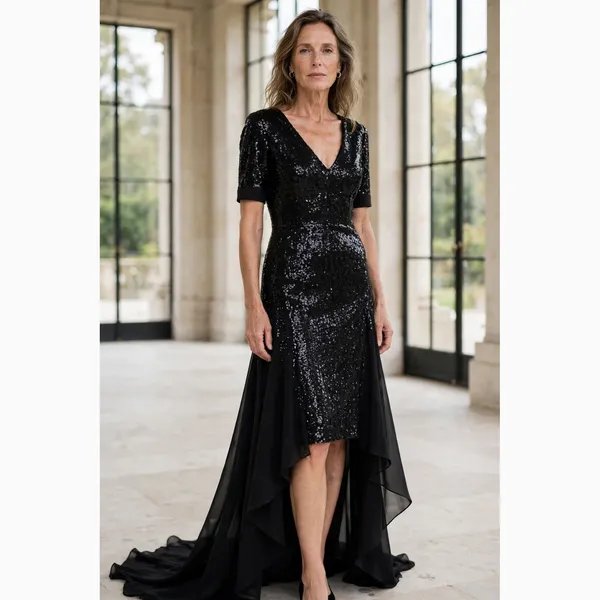
The waist is a line on a drawing. The body disagrees.
A high waist on a dress is a style line. A high waist on a jumpsuit is a measurement with consequences, because everything below it is leg and everything above it is torso, and the two are sewn together with no elastic forgiveness in most formal versions. The standard check is simple and often skipped. Measure the back rise and the torso length together, on the body or on a form, in a sitting position. A jumpsuit that fits standing can bind hard across the lap when the wearer sits, because sitting asks for length that the standing body did not need, and that length has to come from somewhere. It comes from the shoulders. The V-neck pulls down, the ruffle sleeve drags toward the elbow, and the wearer spends the evening adjusting a garment that measured correctly in every single dimension on the chart.
Grading makes this worse in a quiet way. When a size run grades up, the leg length and the torso length both grow, but they do not grow at the same rate in every pattern system, and a pattern graded by someone used to dresses can carry a dress habit into a jumpsuit. The leg gains its centimetre. The torso gains less. On the small sizes nobody notices. On the largest size the crotch seam sits lower than the pattern intended and the high waist sits higher, and the two errors meet in the middle and call themselves a fit problem. Any buyer reading size reviews for a black formal jumpsuit will find the pattern in the complaints even if the reviewers never name it. The small sizes get praised. The large sizes get described as oddly proportioned, long in the leg and short in the body, which is grading language wearing street clothes.
The honest way to check a sample is unfashionable. Put it on a person, not a mannequin. Ask her to sit, stand, climb one step, and raise both arms. Four movements. A jumpsuit that survives those four without pulling, gaping or dragging has passed a harder test than any tape measure gives it.
A zip you cannot use is a door you cannot open
Most formal jumpsuits close with a back zip, and the zip is where the one-piece design sends its bill. A dress needs a zip long enough to open the waist. A jumpsuit needs a zip long enough to let the wearer’s hips pass through the top of the garment, because there is no other way in. As a working check, compare the open length of the zip against the hip measurement of the largest size in the run, with room to spare. A zip that stops at the waist seam looks tidy on the hanger and turns dressing into a negotiation. This is a known failure point in the category and it is embarrassingly cheap to test at sample stage. Open the zip fully. Measure the opening. Compare it with the garment’s own hip, not with a number from a different style.
The V-neck has its own quiet test. A deep V on a one-piece garment moves when the body moves, because the fabric below the waist pulls on the fabric above it. Sitting draws the neckline down. A modesty panel, a small snap at the point of the V, or a neckline cut a fraction higher than the photograph version are the three usual answers, and each one changes the look slightly, which is why sample photographs so often show the version without any of them. A buyer sourcing this style for resale is not really choosing between a panel and no panel. She is choosing which complaint she would rather read in February.
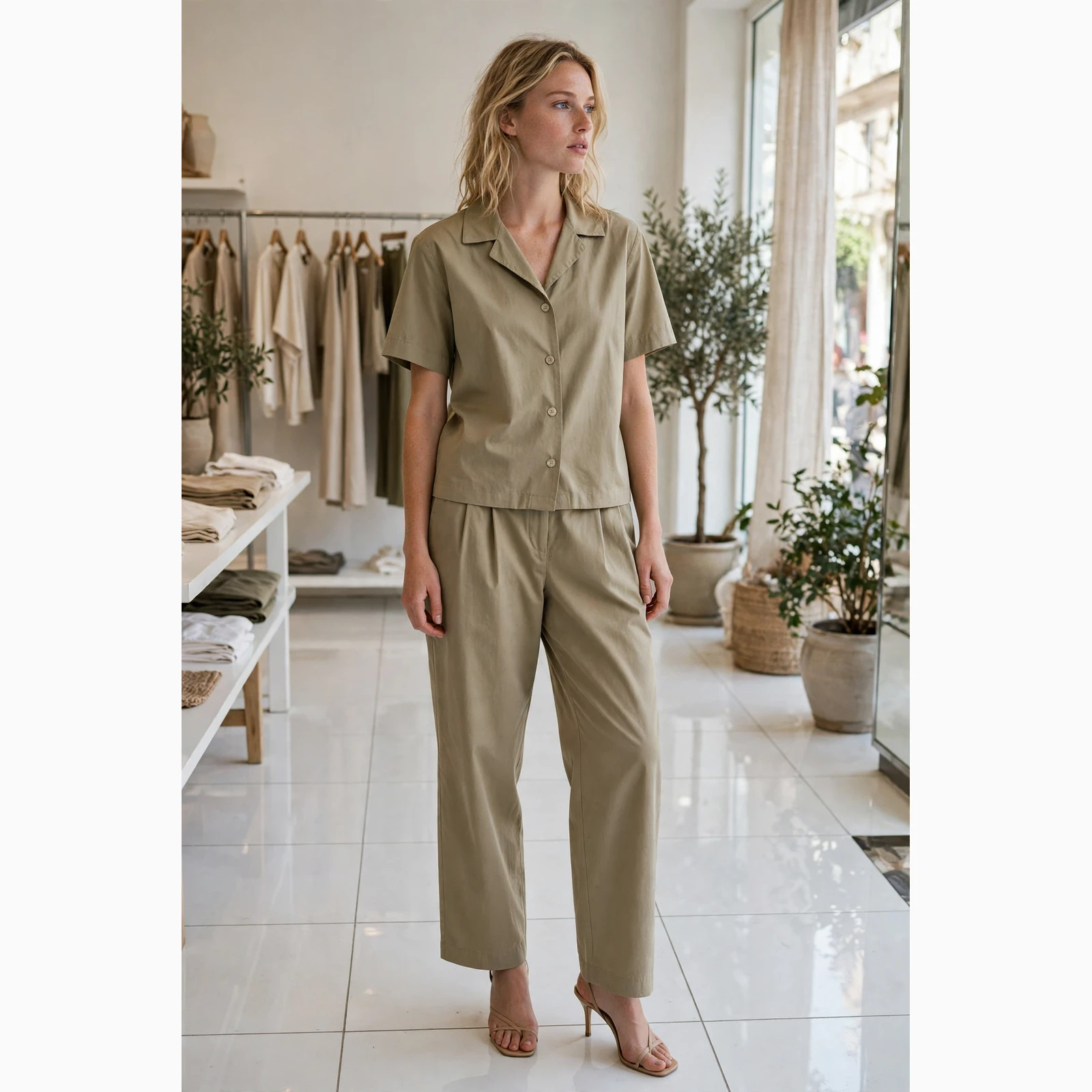
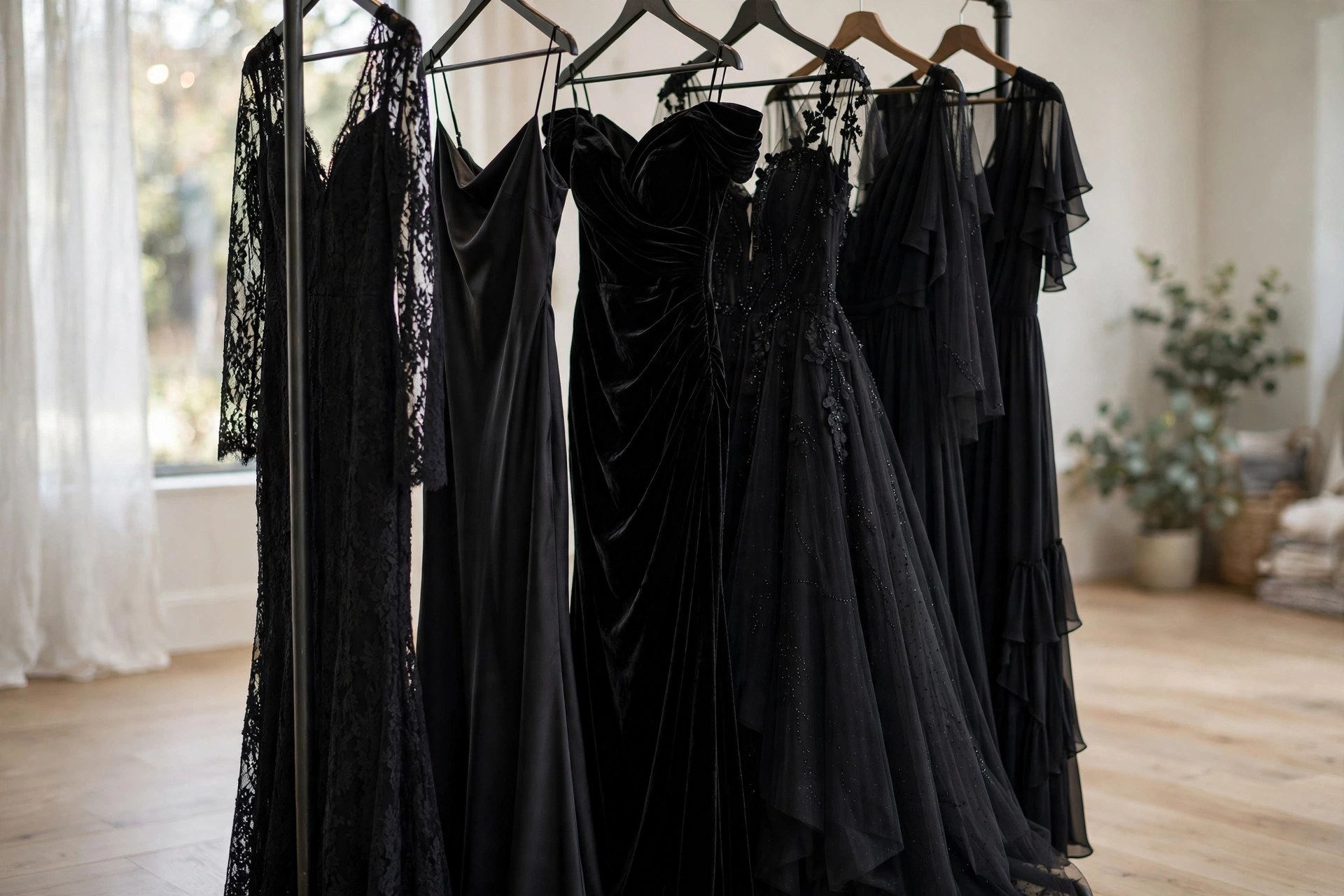
Black deserves its own paragraph, because black is not one colour in a factory. It is a family of colours that agree under one light and argue under another. The shell fabric, the lining, the zip tape and the thread on a black jumpsuit usually come from different suppliers, sometimes different dye lots from the same supplier, and a set that matches perfectly under the white tubes of a sewing floor can split into blue-black, brown-black and green-black under the warm light of a restaurant or a shop. The check is old and dull. Carry the finished garment to a window. Then carry it under warm light. If the ruffle, which is often cut from a separate piece, reads lighter than the leg, that difference will be the first thing a customer sees in her own hallway mirror, whatever the product photograph promised.
No wait. The window test alone is not enough for black, and saying so matters. Daylight shows dye-lot differences between large pieces. It is poor at showing the difference between a fabric and its own thread, because the thread is too small an area to judge at arm’s length. For thread and zip tape, the sample card test works better. Sew a short seam on an offcut, tape a piece of the zip beside it, and judge that card under both lights. Small area, honest answer.
For shops reading this as a sourcing question rather than a sewing lesson, the style sits inside ordinary women’s wholesale terms on this site. Ten pieces per style is the standing minimum for women’s styles, sizes and colours mixable within that, and the fuller picture of how the non-bridal range is organised sits in the women’s dresses wholesale guide. A jumpsuit counts as one style for that purpose. The ruffle does not turn it into two.
What the leg does at the hem
A wide leg on a jumpsuit carries more fabric than the same leg on a pair of trousers, because the cutter knows the garment will be judged as evening wear and evening wear gets extra sweep. That sweep has a cost nobody photographs. Fabric cut wide and slightly on the bias of its own weight will grow. A leg that measures correctly off the machine can hang a centimetre or more longer after a night on a hanger, as the weight of the cloth pulls the weave straight. Better workshops rest wide-leg pieces before hemming, or hem after the garment has hung. A sample measured the hour it was sewn is a sample of a garment that will not exist in the shop. When a size run is checked, the hem question to ask is not how long the leg is. It is when the leg was measured.
Creasing follows the same logic. A formal jumpsuit travels folded, sits in a stockroom folded, and is expected to look pressed when it comes out of the bag. Fabrics differ wildly here and the product page rarely says which family a given style belongs to. The suitcase test is the plain version. Fold the sample the way it will be packed, leave it overnight, hang it in the morning and time how long the fold lines take to fall out. Twenty minutes in a steamy bathroom rescues some fabrics completely and does nothing at all for others. A boutique selling this style for weddings and evening events is selling that recovery time, whether it knows it or not.
Questions buyers actually ask about this jumpsuit
A size M jumpsuit and a size M dress share a chart. So why does the jumpsuit bind when she sits?
Because sitting asks for length the standing chart never measures. A dress takes that extra length from its skirt, which has fabric to give, while a jumpsuit has to take it from the torso, pulling the neckline and sleeves down with it. The fix at sample stage is a sitting check on a real body across the size run, not another look at the chart. I still see buyers sign off jumpsuits from flat measurements alone, and the return notes read like the chart lied, when the chart was simply never asked the sitting question.
Ten pieces per style. Does a ruffled sleeve change what counts as one style?
No. Ten pieces per style is the standing minimum for women’s styles on this site, and one jumpsuit design in one colour is one style, ruffle or no ruffle. Sizes can mix inside the ten. What does change the count is asking for the same jumpsuit in a second colour, which most factories treat as a second style with its own minimum. Buyers planning a black run plus a second colour for the season should budget for two minimums, not one, however the photograph groups them.
The zip is 45 centimetres long. Why can that still be too short to get the garment on?
A 45 centimetre zip can still be too short because the opening has to pass the hips, not the waist. On a dress the comparison barely matters, since the skirt opens below the zip. On a jumpsuit the zip opening is the only door, and if the open length plus the neckline give less room than the largest hip in the size run, the garment fits beautifully once on and fights every step of getting there. Measure the opening against the garment’s own largest hip. That one comparison settles it, and it settles it before bulk, which is the only time settling it is cheap.
Black shell, black lining, black zip. Why do the three blacks split under shop lights?
Because they were dyed in different places at different times, usually. Shell, lining, zip tape and thread rarely share a dye lot, and black dye recipes lean blue, brown or green in proportions that hide under factory light and separate under warm retail light. The sample card check, a sewn offcut judged beside the zip tape at a window and under warm light, catches most of it. What still bothers me is how often the check gets skipped because the pieces matched in the one room where nobody will ever wear the garment.
The ruffle will get the attention, because ruffles do. But the version of this jumpsuit that earns repeat orders is decided by duller things. A zip measured against a hip. A torso checked on a seated body. A black checked in two lights instead of one. None of it photographs. All of it is still there at midnight, at a wedding, when the wearer sits down in a garment that either thought about that moment or did not. The wider range this style belongs to is gathered in the factory catalog, for anyone comparing construction across styles rather than colour. I keep coming back to the sleeve, though. Somebody on a line somewhere is gathering that ruffle at whatever ratio the morning gives her, and nobody has written the number down yet.