
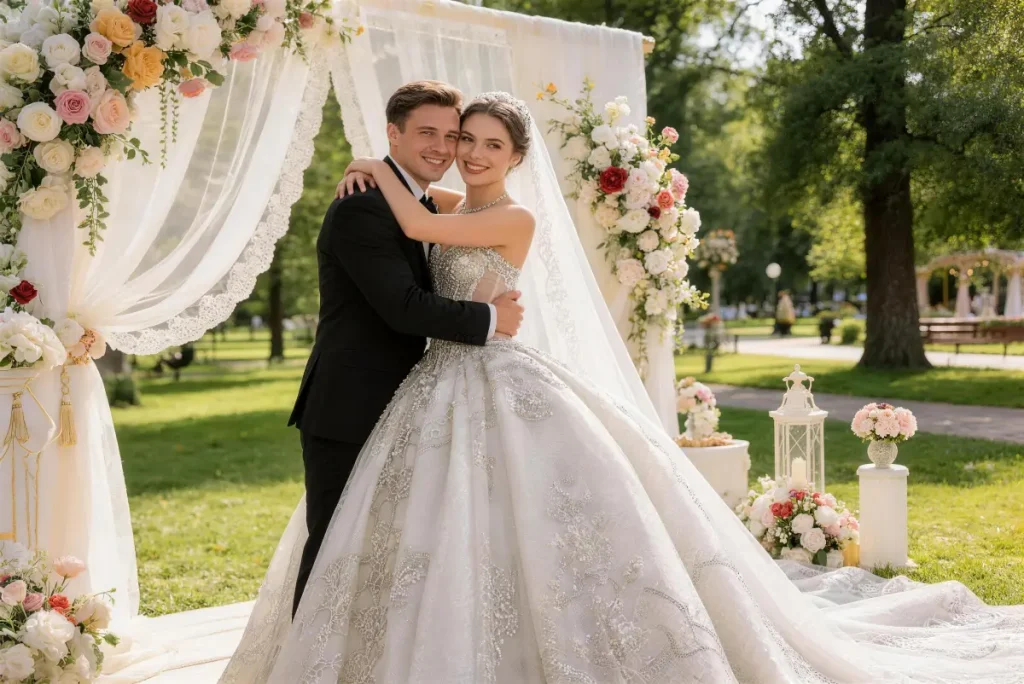
Alright, let’s talk real. Forget the fluff. That “Women Strapless Floral Dress with Sarf Mesh Tube Maxi” on oemod.com? It’s not about the pretty picture. It’s about what’s inside that thing, or what should be inside, if you want to move serious units for 2027 and not get crushed by returns.
You see that 4.0-star rating from 225 reviews? That tells me two things: either oemod is doing something right on the guts, or the price point is so low that customers are grading on a curve. My money’s on the latter if we’re comparing to what I see on the factory floor here in Guangzhou, specifically Xintang.
The Boning Bone Yard: Why Your Strapless Floral Dress Dies Fast
A strapless dress is a structural challenge, plain and simple. If you’re selling a “Strapless Floral Dress,” the absolute first thing a buyer needs to understand is the internal architecture. Cheap copies? They skimp. You’ll get flimsy plastic boning, maybe four pieces, often sewn directly into the lining. That’s a $15 mistake waiting to happen. It buckles, it pokes, it collapses. The bust line sags before the first dance. Your boutique’s reputation, gone.
For this design to justify a real markup, you’re looking at a minimum of 8-10 pieces of spiral steel boning, ideally encased in cotton boning channels. Not just tacked on, but integrated. It needs to provide genuine support, contour the body, and hold its shape through packaging, shipping, and a night of wear. And don’t even get me started on the internal bra cups—they need to be sewn in, not just floating, and dense enough (think 150D foam) to provide actual shaping, not just decoration. Otherwise, what’s the point of “strapless”? It’s a dress waiting for a wardrobe malfunction.
The Invisible Layers: Lining GSM and Interlining Choices
That “Sarf Mesh Tube Maxi” suggests a skirt with flow and possibly volume. How is that achieved? Is it just a single layer of mesh over a basic satin lining? If so, you’re selling a glorified costume. A proper formal maxi needs layers.
The lining needs to be at least a 75D or 100D polyester with a solid GSM, not that transparent, static-cling garbage. And for the structure of the “tube maxi” part, you likely need a hidden layer of stiff tulle or crinoline, maybe 20-40 GSM, sewn strategically between the outer mesh and the inner lining. This is the difference between a dress that drapes with intention and one that just hangs limp. I’ve seen too many pattern makers in Haizhu district arguing over where to cut corners on the interlining. It’s the first place they trim to hit a target FOB, and it’s the first thing customers complain about.
Seam Allowance & Stitch Density: The $500 Detail
You think buyers care about seam allowance? They should. The longevity of any garment, especially a formal piece, is in the seams. Generic B2B platforms will offer you 0.5cm seam allowances on the cheap stuff. Barely an overlock stitch. That unravels. Fast.
For a quality garment like the oemod should be aiming for, you’re talking 1.0cm internal seam allowances on main seams, clean finished with a 4-thread overlock. Critical stress points—like where the bodice meets the skirt, or the zipper insertion—need double-stitching and bar-tacking. And the zipper? If it’s not YKK, don’t bother. I’ve seen factories try to save 50 cents on a zipper and ruin an entire order. The closure on a strapless dress is paramount. It needs to hold. No exceptions.
Guangzhou Field Note: Just last month, I was out in Panyu, late-night, arguing with a factory owner over the zipper spec on a similar maxi dress. He wanted to use a no-name local brand. I told him straight, “Your returns will eat your profit on that, mate. It’s not 2016 anymore. Brides expect YKK.” He grumbled, but he switched. The good ones listen.
The “Sarf Mesh” and “Floral”: Decoding the Fabric Reality
“Sarf Mesh” is vague. Is it a soft, delicate tulle? A more robust power mesh? What’s the GSM? What about the “Floral”? Is it a digital print on poly? Is it embroidered appliqué? Or a jacquard weave? Each has drastically different cost and aesthetic implications.
If it’s printed mesh, we need to talk dpi and colorfastness. You don’t want the colors bleeding after the first dry clean. If it’s embroidery, what’s the stitch count? What’s the thread quality? Are the edges clean? This isn’t just about looks; it’s about snagging, durability, and the hand-feel that justifies a higher price.
The 2026 B2B Reality Check: Avoiding the Deepfake Factory Tour
You click on a generic B2B directory in 2026, you’ll see “satin” and “lace” touted everywhere. What does that actually mean? For them, “satin” is a 90 GSM poly charmeuse that snags if you look at it wrong. “Lace” is a stiff, single-cord polyester that feels like plastic. They’ll show you deepfake factory videos with perfect stitching robots, but the reality is 1.5-stitch-per-millimeter work.
Oemod.com’s listed product, by virtue of its rank and reviews, suggests it might be a step up, or at least acceptable. But if you’re trying to replicate it with quality, you’re looking at:
- Mesh: A high-twist, soft-touch polyester mesh, 40-60 GSM, with a slight stretch for comfort, not that scratchy stuff.
- Lining: Minimum 100D poly-crepe, 120-150 GSM. It needs to have body.
- Floral: If printed, high-resolution digital transfer, pigment inks, not dye-sub that washes out. If embroidered, dense, multi-directional stitching with rayon or cotton thread, not coarse poly.
When the spec sheet says “satin,” in 2026, we mean a 220g high-twist matte version that doesn’t wrinkle into a mess in the shipping crate. We mean a fabric that has body and a decent hand, not something that feels like it came from a dollar store. This is why you need to physically vet the samples, not just trust the photos.
The Profit Guard: Justifying the Markup
Now, let’s talk brass tacks. Landed cost versus boutique retail price. If you build this Women Strapless Floral Dress with Sarf Mesh Tube Maxi right – with the spiral boning, the proper lining, the YKK zipper, the quality mesh and floral detailing – your FOB cost might be $40-$60 USD, depending on quantities and exact fabric choices. Maybe a bit more for truly premium embellishments.
But here’s the kicker: with that kind of genuine, engineered construction, you’re not selling a disposable garment. You’re selling a reliable piece that fits well, looks solid, and won’t disappoint. That justifies a 4x-6x markup easily. A boutique can retail that dress for $160-$360, depending on their market. Why? Because the hidden guts reduce returns, build brand loyalty, and allow the customer to feel genuinely good in it. That 4.0 rating becomes a 4.5 or 5.0, and that’s what drives repeat business. It’s ROI from solid construction.
The Lead Time Trap:
Don’t think you can rush quality. For a dress like this, with the complexity of boning, multiple fabric types, and print/embroidery, a 45-day lead time is tight but achievable for a solid factory. Anything less, and you’re getting shortcuts. We often push for 60 days to allow for proper QC on each stage, especially if there’s specialized floral application. You need to batch-order this for the 2027 peak season – prom, wedding guest, early spring events. Order now, aim for a Q4 2026 delivery to hit those early 2027 sales windows.
Stop gambling on generic 2026 directories. Message us for the raw factory footage and tiered wholesale pricing for the Women Strapless Floral Dress with Sarf Mesh Tube Maxi collection. We show you the boning, the lining GSM, and the YKK zippers. No BS.
#Women #Strapless #Floral #Dress #Sarf #Mesh #Tube #Maxi
Keep reading: LILLUSORY Floral Wrap Dress Review and Elegant Lace Fishtail Bodycon Dress Review.