Nothing about this dress fails all at once, and that is what makes it hard to buy well. I sell cloth for a living, and the LILLUSORY floral wrap dress, the fall wedding guest one, is a garment I judge from the roll outward: the wrap front, the tie, the skirt’s behaviour by evening are all fabric decisions before they are sewing decisions. Each small thing about it is defensible on its own. The cloth is a touch lighter than the sheet promised. The overlap is a touch shorter than the photograph suggests. The tie sits a touch higher than a waist expects. Alone, any one of those passes inspection and gets a friendly review. Together, over one long autumn wedding, they accumulate into a dress the wearer spends the evening managing, and a dress being managed is a dress not being enjoyed, whatever the star rating said the next morning.
Overlap is a number before it is a neckline
A wrap dress closes by generosity. The front panels cross, and how far they cross is the whole garment. Generous overlap forgives sitting, dancing, a meal, a breeze on a church step. Short overlap forgives nothing and spends the evening negotiating. What buyers rarely hear is that overlap is partly a cloth decision: a lighter, drapier fabric pulls further around the body under its own tie tension, so a pattern cut for a heavier cloth quietly loses crossing distance when the mill ships a lighter roll. The number on the spec sheet for this family of dresses reads around 120 grams per square metre. Rolls arrive under it, sometimes by ten grams or more, same order, same friendly paperwork. Twelve grams is nothing on a spec sheet. On a wrap front it is the difference between a skirt that settles and a skirt that keeps asking to be held.
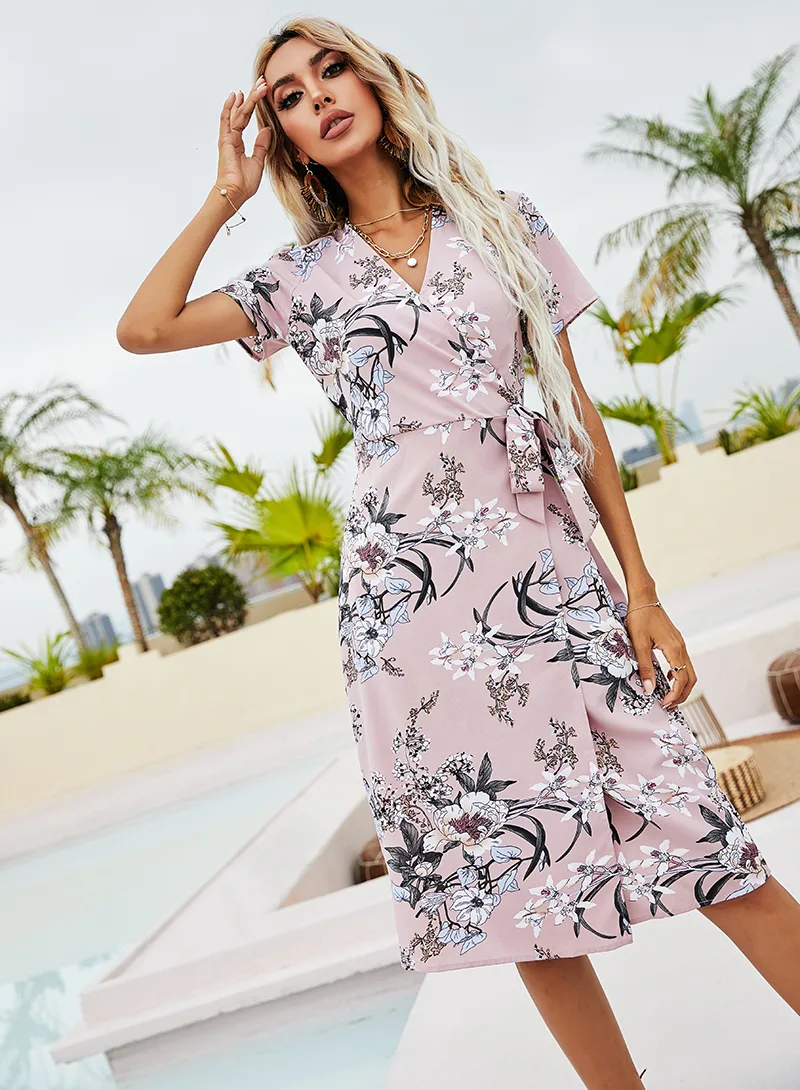
The print tells the same story earlier than the scale does. Floral prints on this cloth are set under tension, and a roll printed hot and fast carries a pattern that relaxes once cut and worn, so flowers drift out of their sample positions across a long skirt. A small drift, but it is the first visible sign the roll ran light and loose, and an experienced buyer reads a wandering flower the way a mechanic listens to an engine: not the fault itself, but the fault clearing its throat.
Where the tie sits is where the dress lives
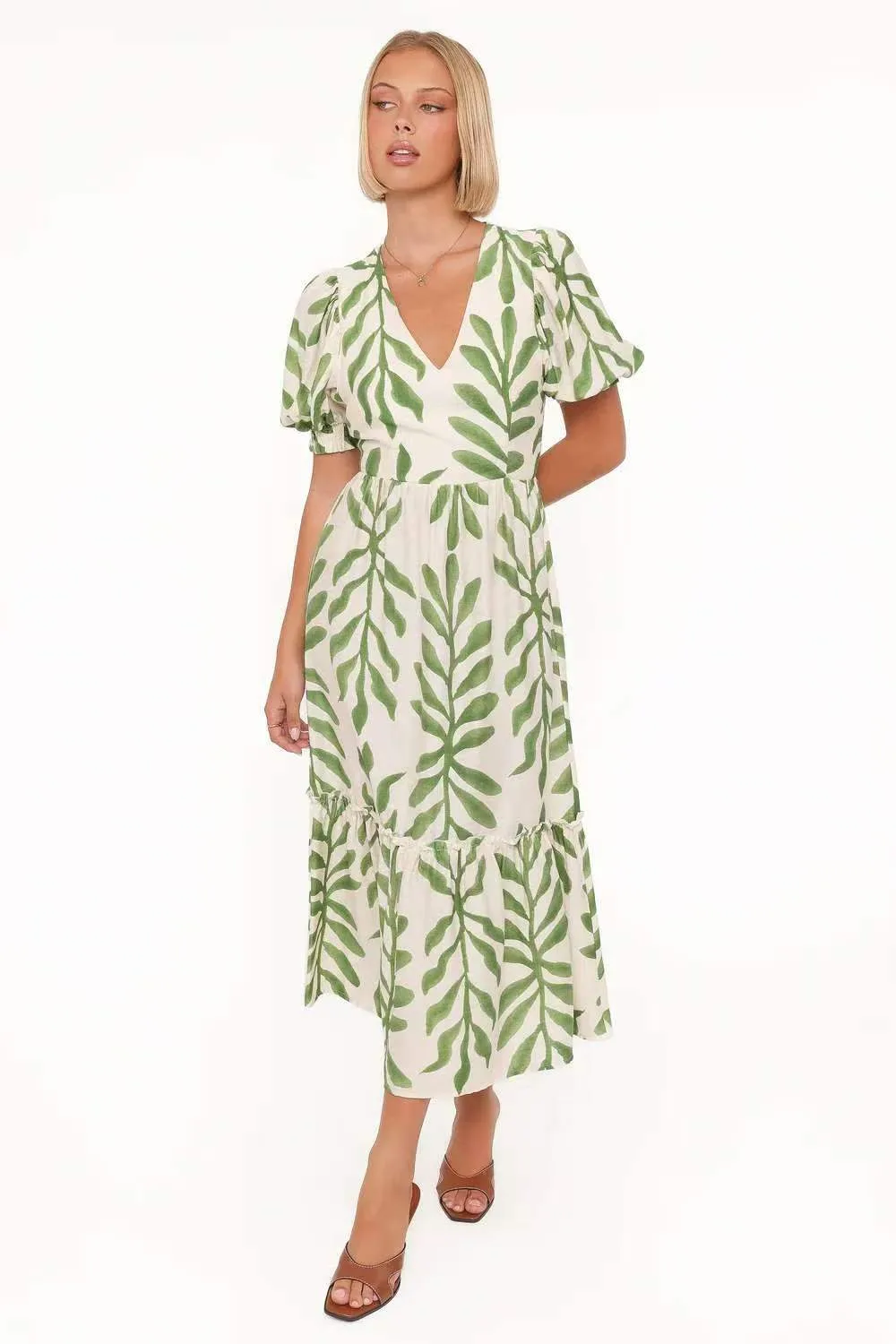
Then there is the tie, which sounds like a detail and behaves like a foundation. A wrap dress hangs from its tie point: the sash anchors at the waist seam, the front panels swing from it, the skirt’s weight argues with it all day. Set the tie a little high and the dress reads empire, the overlap shortens below it, and the wearer starts pulling the front down in photographs. Set it true at the waist and the whole garment calms down. Autumn makes this worse. Fall versions arrive in cloth with more body and less give than the summer ones, and stiffer cloth does not drape around a curve, it bridges across it, so a front that skimmed in a July fabric stands away from the body in an October one, gaping at the exact moment the wearer sits down at the wedding breakfast. Same pattern. Same size. Different season of cloth, different dress.
No single one of these gets a dress returned on its own, which is why the complaint letters puzzle the stores that sell it. The reviews say the dress was lovely and the wearer felt watched by it all day, and the store reads that as a mystery because every individual check passed. Nothing failed. Things accumulated: a light roll, a short crossing, a stiff autumn hand to the cloth, a tie riding a centimetre proud of the waist. No wait, a centimetre is me being generous to somebody. On the worst of these I have measured the tie placement by eye against the sample and watched it sit visibly higher, and nobody in the chain had moved it on purpose. It drifted the way the flowers drifted, a little at a time, in the same direction, for the same reason. Cloth that runs light changes everything it touches, quietly, in chorus.
From the fabric counter this wrap dress is read against the made-to-measure floral wrap guide, weighed beside the faux wrap guest dress file, and compared with the Swiss dot A-line guest dress review, because a wrap front, a fixed front and a dotted overlay are three different answers to the same guest dress question.
Questions buyers and stores actually ask
The sheet says 120 grams and the roll feels lighter. How much drift actually matters on a wrap dress?
On most styles, ten grams is a rounding error. On a wrap front it is a fit change, because the closure is the fabric itself: lighter cloth crosses less distance under the same tie tension. Weigh the roll, not the paperwork. A supplier who weighs cheerfully and writes the number on the order is telling you something good about the rest of the run too.
The front gaped when the wearer sat down, but stood fine in the fitting room. What changed?
The cloth’s stiffness, most likely, helped by a short overlap. Standing, a crossed front only has to hang. Sitting bends the body inside it, and a fabric with autumn body bridges across the bend instead of following it, so the front stands away exactly when it is most looked at. Fitting rooms test dresses standing still. Weddings test them seated, fed and photographed in October. The gap lives in the difference.
Fall versions feel stiffer than the summer one in the same style. Same dress, or a different animal?
A different animal wearing the same name. Autumn runs often move to cloth with more body for the season, and that body changes the drape, the crossing distance and the way the skirt settles, even with the pattern untouched. Stores that reorder the fall version on the summer sample’s reputation are buying on a photograph of a fabric they are no longer getting. Ask for the current roll’s weight and hand before the reorder, every season.
The tie sits above my waist and the front keeps riding up. Pattern fault, or am I tying it wrong?
Usually the placement, not the hands. The tie anchor decides where the dress hangs from, and an anchor set high shortens the overlap below it and pulls the front up across the day. Compare the anchor against the waist seam on a flat lay: they should be close neighbours. If the anchor rides well above the seam line, no tying technique fixes it, and the store deserves the conversation more than the wearer deserves the blame.
I keep a light roll of this floral on my own counter now, not as stock, as a reminder. Buyers ask for the fall wrap dress fabric by name and I make them hold the roll before we talk price, because the whole argument of this style is in the hand: the weight, the drape, the way it crosses and stays crossed. A wrap dress is a promise that cloth will behave like a closure. Some rolls can keep it. Some were never going to, and they announce it the moment they are lifted, months before the wedding, if anybody bothers to lift them.