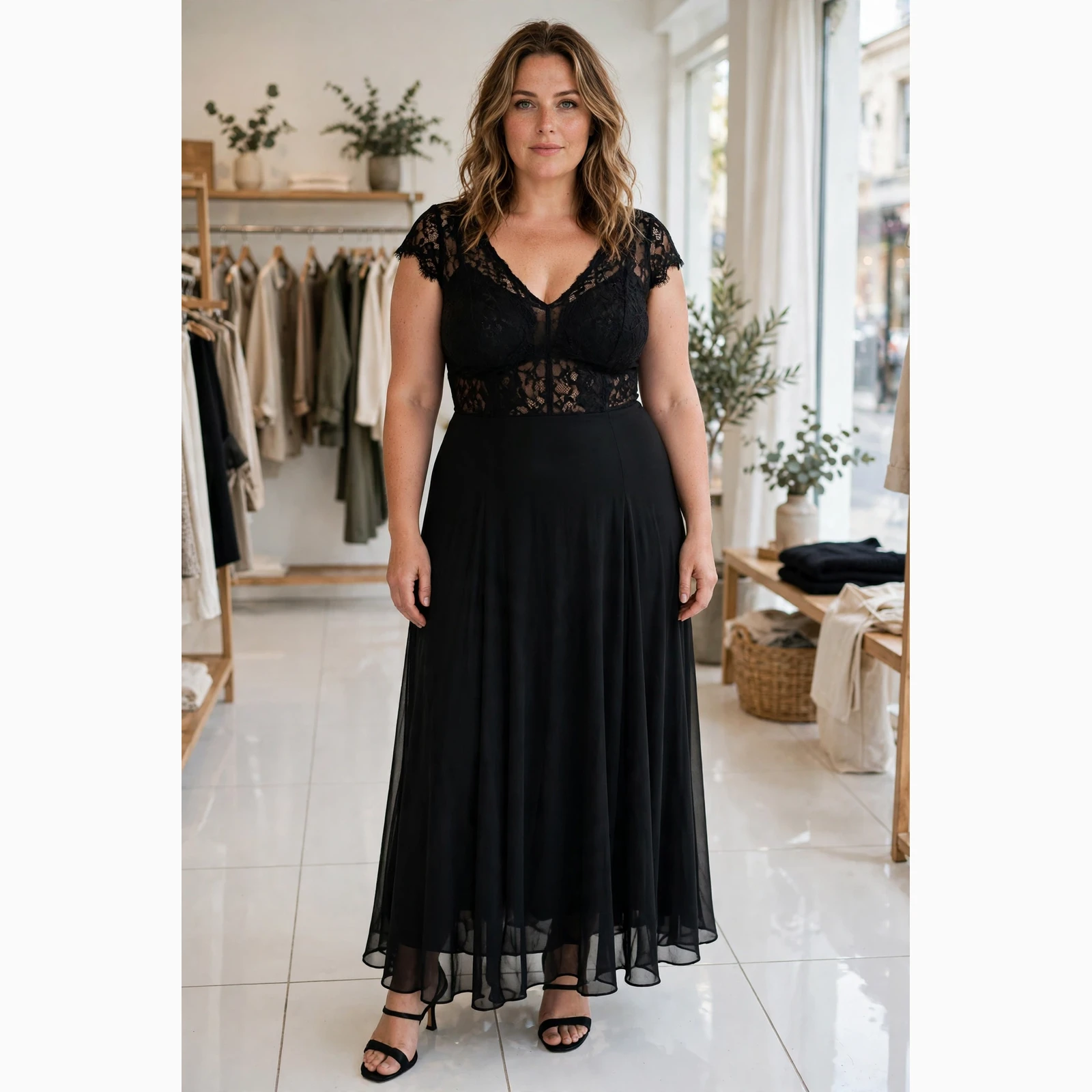
Failure is a better teacher than the size chart, so this article is arranged the way the returns actually arrive: one failure at a time. The dress in question is a plus size formal maxi, lace over chiffon, V-neck, A-line, the sort of garment a store orders for bridal parties and evening events and then, if the pattern work was lazy, spends a season apologizing for. Nothing in what follows is a sewing scandal. The sewing is usually fine. These are pattern and cutting failures, born upstream of the sewing line, in the grading decisions nobody photographs.
I write from the production side, the end that watches a lay of chiffon come off the cutting table and knows, sometimes right there, which returns letter is already being drafted by the cloth. The failures below repeat across factories and across years with a regularity that would be funny if each one did not cost somebody a bridal party.
The grade that treated a 3X like a photocopy
The first failure is the grade itself. Most plus size ranges in this category are not patterned. They are enlarged. A size medium sample gets graded up by fixed increments, a set amount added at bust, waist, and hip per size, as though bodies grew on a spreadsheet grid. They do not. The difference between a medium and a 3X is not a uniform border added around the same shape; the shape itself changes, where the bust sits, how the armhole needs to deepen, how much ease a waist needs before a seated woman can breathe through a wedding dinner. Grade by arithmetic and the largest sizes inherit a neckline that gapes, because the V was deepened in proportion when it should have been made shallower, and an armhole that binds, because width was added where depth was the actual requirement.
On the cutting table there is a tell for this that buyers can ask about without knowing any pattern terminology. Ask whether the largest sizes were fit on a body or only measured on paper. A factory that fit the 3X on a plus size fit model, even once, answers quickly and usually complains about how long it took, which is how you know it happened. A factory that graded on paper answers with the grade rule, proudly, as though the rule were the achievement. The rule is the failure. Bodies are not rules.
Lace exposes lazy grading faster than plain cloth does, which brings the second failure through the door.
The lace that landed wherever the lay put it
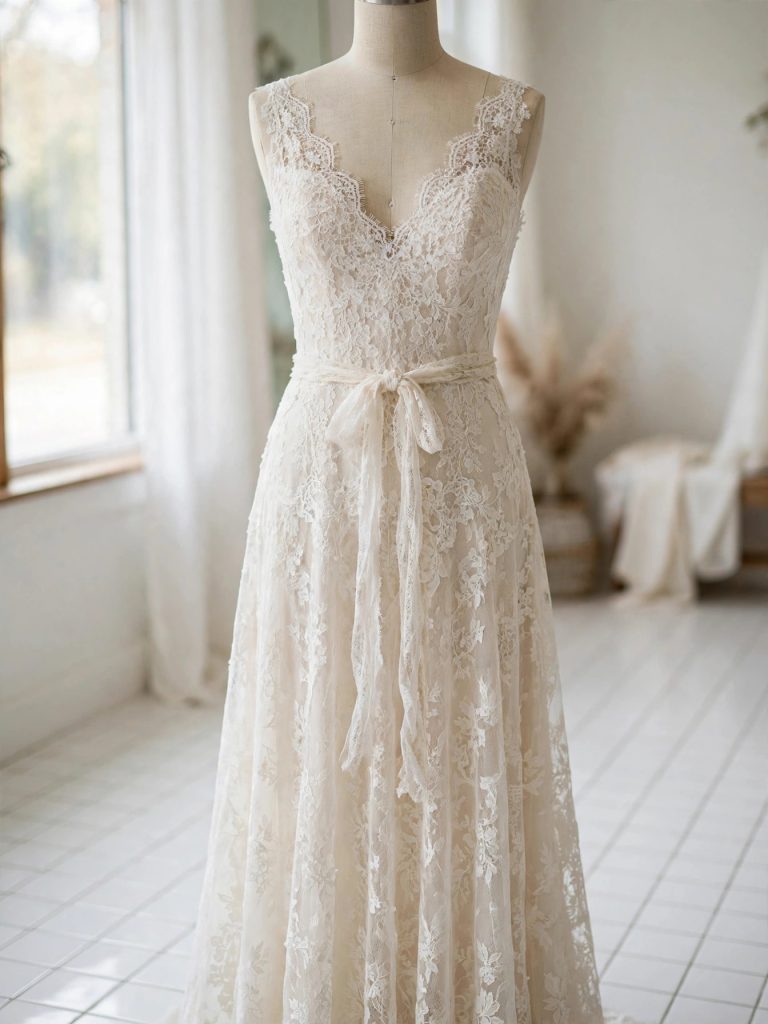
Lace has a repeat. The motif, the scalloped edge, the floral unit that repeats across the width, is a fixed size set by the lace maker, and it does not stretch to fit a grade chart. On a small size, one motif arrangement falls across the bodice. Grade the bodice wider and the same lace lays differently: a motif center lands on a bust point, the scallop that was meant to finish a neckline edge falls two centimeters short of it, the pattern of the lace starts to look accidental. Good production treats the lace placement as a per-size decision, shifting the lay so the motifs sit decently at each size, and that shifting costs cloth, because lace cannot be nested as tightly once placement matters. Bad production cuts lace like plain fabric, tight and blind, and the savings show up on the customer’s chest.
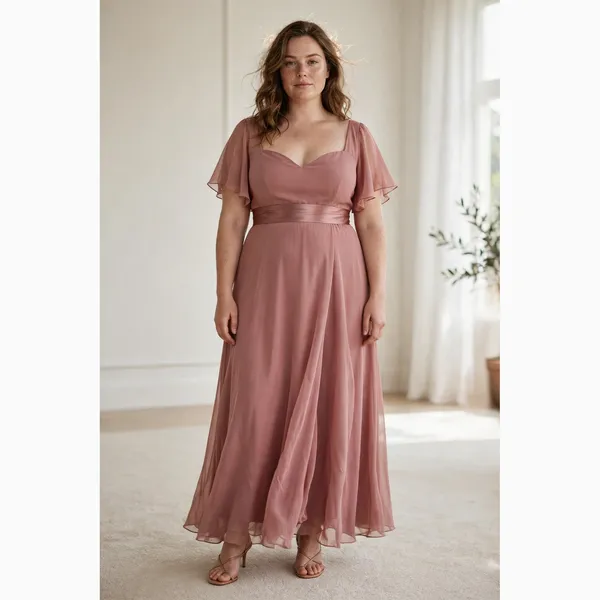
There is a cutting detail under this one that even many buyers on the factory side never learn. Chiffon moves. A tall lay of chiffon, many plies stacked for cutting, shifts under its own slipperiness, and the bottom plies can drift a few millimeters against the top ones, which is nothing on a plain skirt and a visible step on a lace bodice where two sides are meant to mirror. The bigger the garment, the more cloth per piece and the more the drift matters, so careful shops cut plus size lace bodices in shorter lays, fewer plies, slower work. It costs time. The alternative costs returns, in the specific wording this category always produces: the lace pulls. The lace is not pulling. The lace was cut drifted, or graded blind, and pulling is just the word a customer has for it.
The lining that was graded as an afterthought
The third failure is the one I would fix first if a genie offered me one change across the whole category. The lining. A chiffon maxi lives or dies on its lining, because chiffon alone is a rumor of a dress: it clings, it shows every seam allowance and every undergarment line, it goes static in dry weather and sticks to legs in humid weather. The lining is what makes it a garment. And in lazy production the lining is cut from the shell pattern with a shrug, same shape, sometimes slightly smaller to save cloth, which inverts the requirement. The lining of a plus size A-line needs its own ease, in places more ease than the shell, because the lining is the layer against the body and the layer that takes the sitting strain. A tight lining under a floating chiffon shell produces the strangest complaint in the category, that the dress feels smaller than it measures. It does. The dress the body meets is the lining. The dress the tape measure meets is the shell. Two different sizes, one label.
Static is the lining’s second job and the one nobody specifies. An anti-static lining in a dry climate is the difference between a skirt that falls in a clean A-line and a skirt that wraps itself around the wearer’s legs by the second dance. Specifying it costs very little. Almost nobody specifies it, because the sample was tried on in a humid sample room in a coastal city where static does not exist, and the dresses ship to a heated ballroom in a dry winter city where it very much does. Geography is a production input. It just never appears on the tech pack.
A correction belongs here, because I have blamed the pattern room for three failures straight and the fourth one is partly the buyer’s. No wait, it is mostly the buyer’s, and it concerns the V-neck. Stores order a deep V because the sample photographs beautifully on the fit model, then their customers, fuller-busted women buying for a family wedding, experience that same neckline as a risk they have to manage all evening with tape and posture. The factory sewed the V it was given. The depth was a buying decision. A shallower V on the plus sizes of the same style is not a different dress and it is not an insult to the customer. It is the same dress, translated. Insist on the translation.
| Lace | Chiffon | |
|---|---|---|
| Drape | Holds its own pattern, falls in sections | Flows and floats, no structure of its own |
| Breathability in wear | Open work breathes where the motif is open | Light but worn over a lining, so the lining decides |
| Wrinkle behaviour after packing | Motif can crease and needs steaming flat | Creases fall out with hanging and steam |
| Shows the lining colour through | Yes, by design | Yes, unless the chiffon is doubled |
| Cleaning | Dry clean, motif edges are the risk | Dry clean or gentle wash by fibre, snagging is the risk |
| Iron and steam tolerance | Low heat, never press the motif flat | Steam only, direct iron marks it |
Ordering the dress with the failures designed out
None of these failures requires a heroic factory. They require a specific order. As an existing women apparel style, the dress sits in the OEMOD Factory wholesale catalog at ten pieces per style with sizes and colors mixed, and a plus size order should use that small run properly: not as ten pieces of the middle size, but spread across the top of the size range, where the grading questions actually live, so the store can fit the largest sizes on real customers before ordering depth. And one step in the sampling routine matters more for lace than for any plain style. Before we start sampling, we always photograph the fabrics and send them to you to review and choose from. Lace repeats vary between what a catalog page shows and what a roll holds, motif scale especially, and a motif that flatters a medium can crowd a 3X bodice. The photograph of the actual roll, with a coin or a hand in frame for scale, is the only honest preview of that.
Set beside a simpler dress, the demands here come into focus. The floral beach maxi review on this site deals with a maxi that fails on print and wind and color, forgiving failures, the kind a customer laughs about. The lace chiffon formal fails on architecture, and architecture failures get returned with feeling, because the customer bought the dress for an occasion with photographs and relatives in it. Same garment family. Completely different stakes, and the ordering care should scale with the stakes, not with the price tag, though in this case the two happen to agree.
What the returns desk asks me
The size chart says the 3X measures right, so why does it wear wrong?
Because the chart measures the shell and the customer wears the lining, and if the lining was cut tight from the same pattern, the garment on the body is effectively a size smaller than the garment on the hanger. That, plus a V graded deeper in proportion instead of shallower, plus an armhole that gained width but not depth, gives you a dress whose numbers pass inspection and whose fit fails the evening. It is the most common story in this category and the hardest to argue about, since everyone involved can point at a correct measurement. I get asked this one after almost every formal season, and the answer has not changed in years.
Ten pieces per style. Should a plus size order really spread them across sizes instead of stocking the middle?
For a first order of a graded style, yes, spread them, because the middle sizes of a plus range are the sizes closest to the original sample and therefore the least informative. The information lives at the ends of the range, in the 2X and 3X, where the grade either held or quietly fell apart. Fit those on real customers, watch the neckline and the lining behavior, and you will know whether the style deserves depth. Stocking ten of the middle teaches you that the sample size fits, which you knew in the fitting room before you paid anyone. Stores resist this because the ends feel like slower stock. They are. They are also the truth.
Why does the lace pattern sit beautifully on the medium and look random on the largest size?
Because the lace repeat is a fixed size and the bodice is not, so grading the bodice moves every motif’s landing place, and unless the lay is repositioned size by size, the lace ends up wherever geometry drops it, including a motif centered exactly where nobody wants attention. Repositioning costs cloth, since placed lace cannot be nested as tightly, and that cost is the difference between lace that looks designed and lace that looks spilled. When a quote for the plus sizes of a lace style is suspiciously identical to the quote for the small sizes, that repositioning is usually what is missing from it, quietly, in the cutting room.
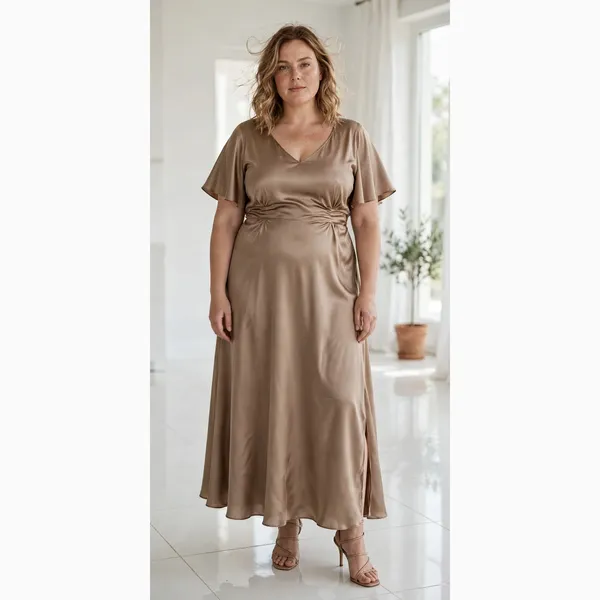
The dresses keep coming back with the same three letters attached, pulls, gapes, clings, and the letters get filed as quality problems and argued over as quality problems, season after season. They are not quality problems. They are decisions, made early and cheaply by people who never met the women who would wear the largest sizes, and I am not sure the category fixes them until those women are in the fitting room while the pattern is still paper. The chiffon, at least, is innocent. It only ever did what the lining told it to.