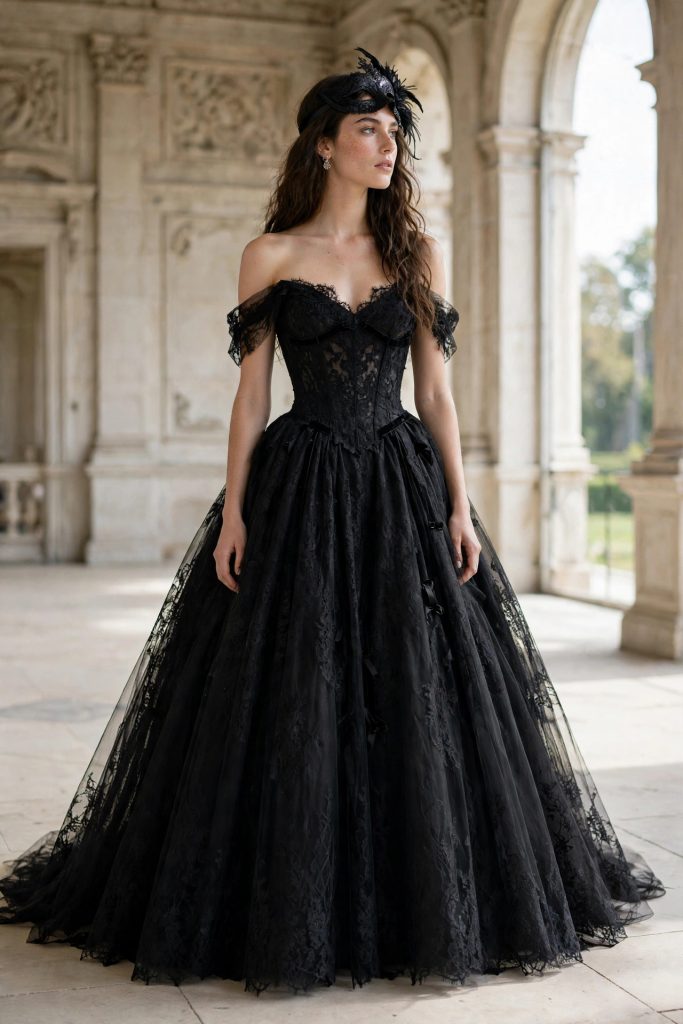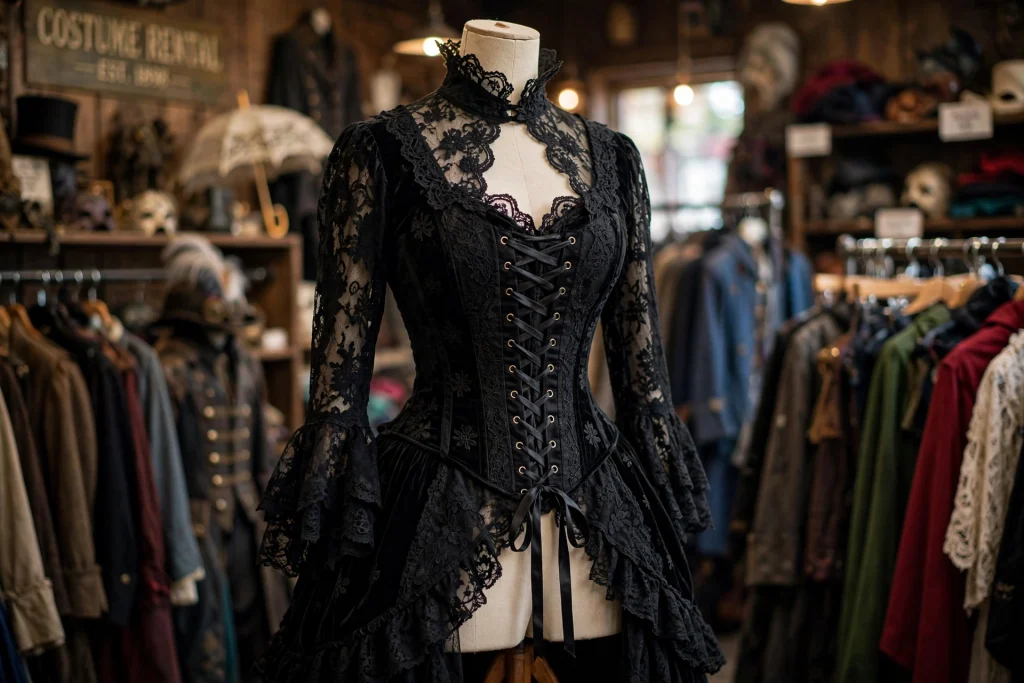
A bolero shrug is the smallest line on a sourcing sheet and the one most likely to be quoted from memory, which is where its troubles start. This Victorian goth lace piece, a cropped lace layer for vampire-leaning weddings and October events, weighs almost nothing, uses very little lace, and still manages to carry four separate decisions a buyer has to get right: the lace itself, the edge finish, the closure, and a size run that does not behave like a dress size run at all. Supply chain people learn to slow down on the small lines. Small lines are where a vague order goes to become a precise disappointment.
Lace is bought by the repeat, and a bolero lives inside one repeat
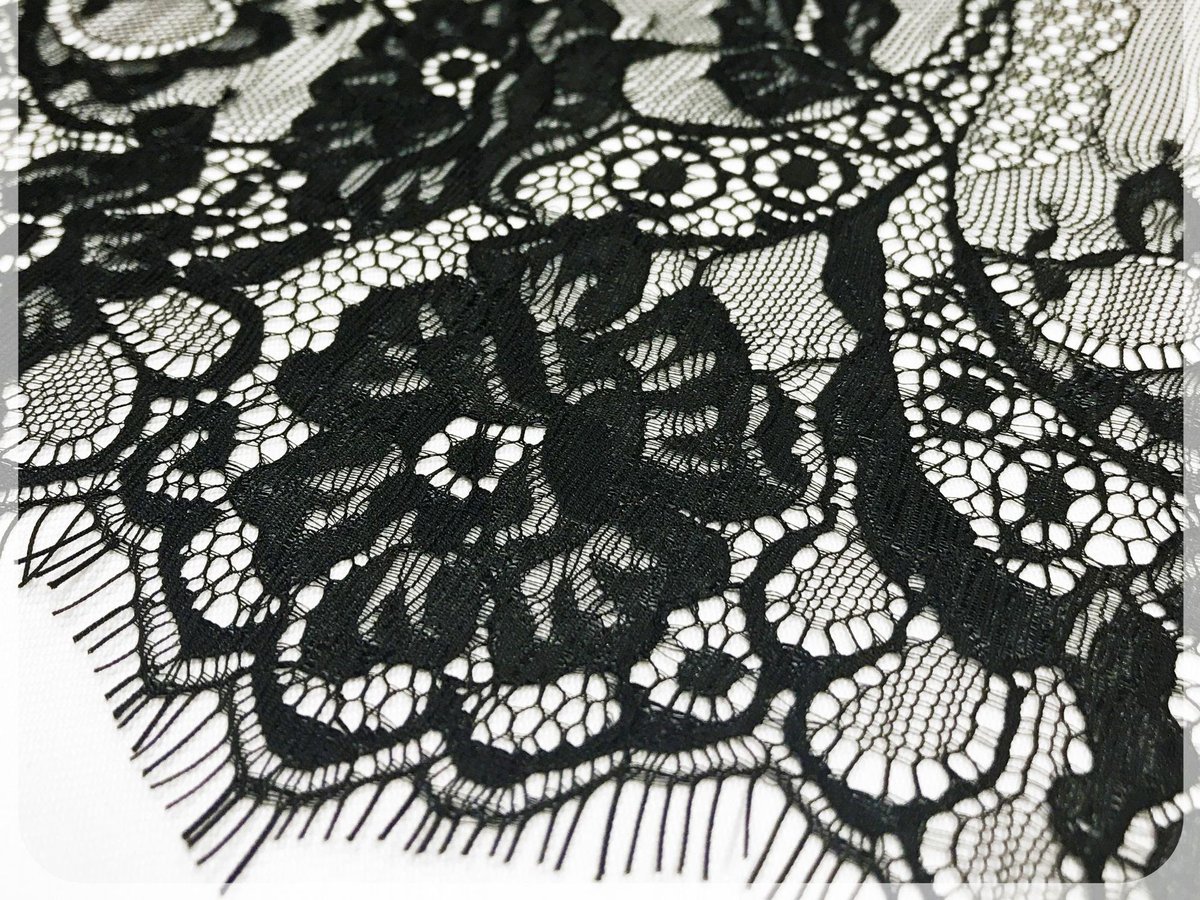
Lace comes with a pattern repeat, a set length after which the design starts again, and a bolero is small enough that a single piece may hold only one full motif. Where that motif lands decides whether the shrug looks composed or accidental. A flower centred on the back reads deliberate. Half a flower at each front edge reads like the cutter was not looking, even when the lace itself is lovely. Sourcing this piece means stating motif placement in the tech pack, centre back and front edge, the way a buyer would state it for a bodice. Leave it unstated and the cutting table will place for yield, which is a polite way of saying the lace will decide, and lace has no taste.

The edge is the second decision hiding inside the first. A bolero has almost no seams to hide behind, so its edge is its face: a scalloped eyelash edge cut from the lace’s own border, or a bound edge in a matching thread. The scallop costs more because it forces the cutting to follow the border and waste the middle of the width. Binding costs less and reads harder, a drawn line around a soft garment. Neither is wrong. They are different products at different prices wearing one description, and a quote comparison that does not name the edge is comparing a shrug with its own cheaper shadow.

A shrug does not grade like a dress, whatever the size chart says
Dress grading grows a garment in length and width together. A bolero mostly needs width across the back and room in the sleeve, while its length barely moves, because a crop that grows longer by size stops being a crop at the large end and becomes a short jacket with confidence issues. Size runs copied from a dress pattern produce exactly that drift. The check is dull and quick: lay the smallest and largest sizes flat and compare the back length. If the large one is several centimetres longer, the run was scaled, not graded, and the large-size buyers will feel the difference as a style change nobody told them about. Back width and sleeve room are where the size lives in this garment. Length is where it hides.
Closure and pairing finish the sourcing picture. A single hook, a tie front, and an open front are three different shrugs for selling purposes, because the gown under it decides which one works: a tie front over a plain strapless dress is a look, the same tie over a detailed bodice is a fight. Stores buy it as a set partner, not a solo piece, and the reorder pattern follows the dresses it was paired with more than it follows its own reviews. No, that is not quite the whole story. In October it sells solo too, as the one gothic layer over dresses nobody bought from us. The calendar keeps its own pairing, and it does not ask the sourcing sheet for permission.
The sourcing file quotes this bolero beside the corpse bride white wedding dresses with ribbon and cascade layers range, reads it against the corpse bride styles with butterflies and veils notes, and compares it with the lace sleeve pieces in the gothic bridal file line, because a shrug is ordered as an accessory and returned as a garment, and the paperwork has to survive that change of mind.
Questions buyers and stores actually ask
The lace flower landed half cut at both front edges. Is that a cutting fault or just lace being lace?
It is an unstated specification being filled in by the cutting table. On a piece this small, motif placement is visible everywhere, so centre back and front edge placement belong in the tech pack the way they would for a bodice. Left unstated, cutting places for yield. The lace behaved exactly as lace behaves. The order sheet is the part that was vague.
The largest size looks like a short jacket, not a shrug. What went wrong in the run?
The run was scaled instead of graded. A bolero needs back width and sleeve room as it grows, while its cropped length barely moves. Copying dress grading adds length size by size until the large end changes style. Lay the smallest and largest flat and compare back length. A few centimetres of drift there explains the jacket, and the tape never lies about it.
Scalloped edge or bound edge at a lower price. What is actually being traded?
Cutting freedom, mostly. A scalloped eyelash edge has to follow the lace border, which wastes the middle of the width and costs more per piece. Binding uses the cloth freely and reads as a harder, drawn line. Both are sellable. They are not the same product, so a quote that does not name the edge cannot be compared with one that does.
10 pieces per style for an accessory this small. What does a trial order teach a store?
Pairing, which is the thing this piece actually sells on. Ten shrugs across sizes, tried over the dresses already on the rail, show which closures fight a detailed bodice and which lift a plain one. The lace quality shows in one piece. The commercial question takes ten, and October, when it sells solo as a gothic layer, is a separate lesson the trial cannot teach in spring.
Quoted slowly, this is a good small line for a boutique: low fabric use, easy shipping, a private label piece that lifts a plain dress into an occasion, and a trial order at 10 pieces per style that costs little to learn from. Quoted from memory, it is a motif in the wrong place, an edge nobody named, and a size run that quietly changes style at the large end. The shrug itself is simple. The sheet describing it has to be less simple than the shrug, and that sentence, unglamorous as it is, is most of sourcing.