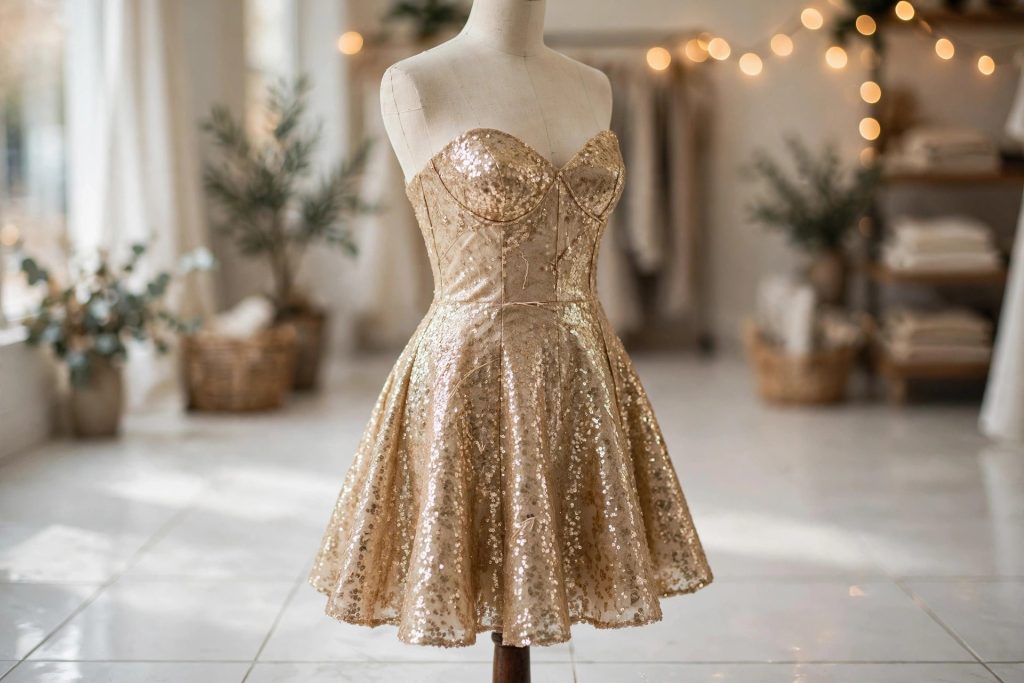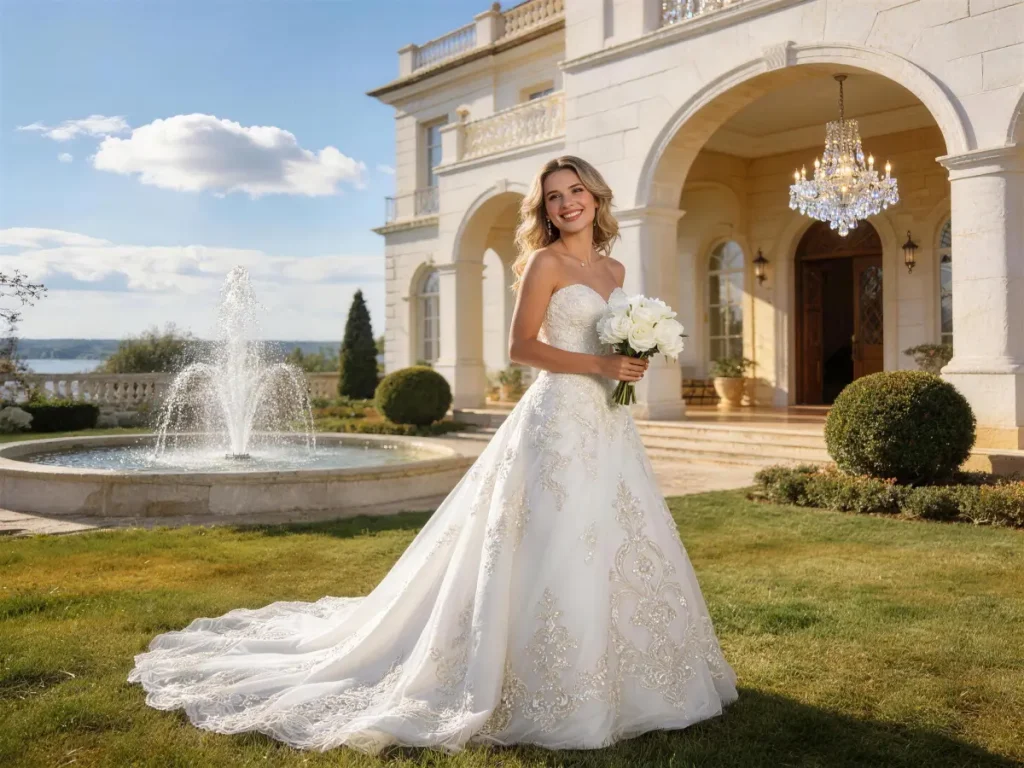
A high-low hem is a promise made in motion, and the reviews know it even when the words do not. This Wedtrend sequin style, short at the front and long at the back, is bought from a standing photograph and lived in walking, sitting, climbing two steps into a venue, and turning on a dance floor. The consumer side reads the feedback in that order. Nobody complains about how the dress hung on the rail. They complain about where the front hem landed once their knees were moving, and about a back hem that behaved like a train nobody had agreed to manage. The shape is the product. The shape is also the risk.
The front hem is measured in knees, not centimetres
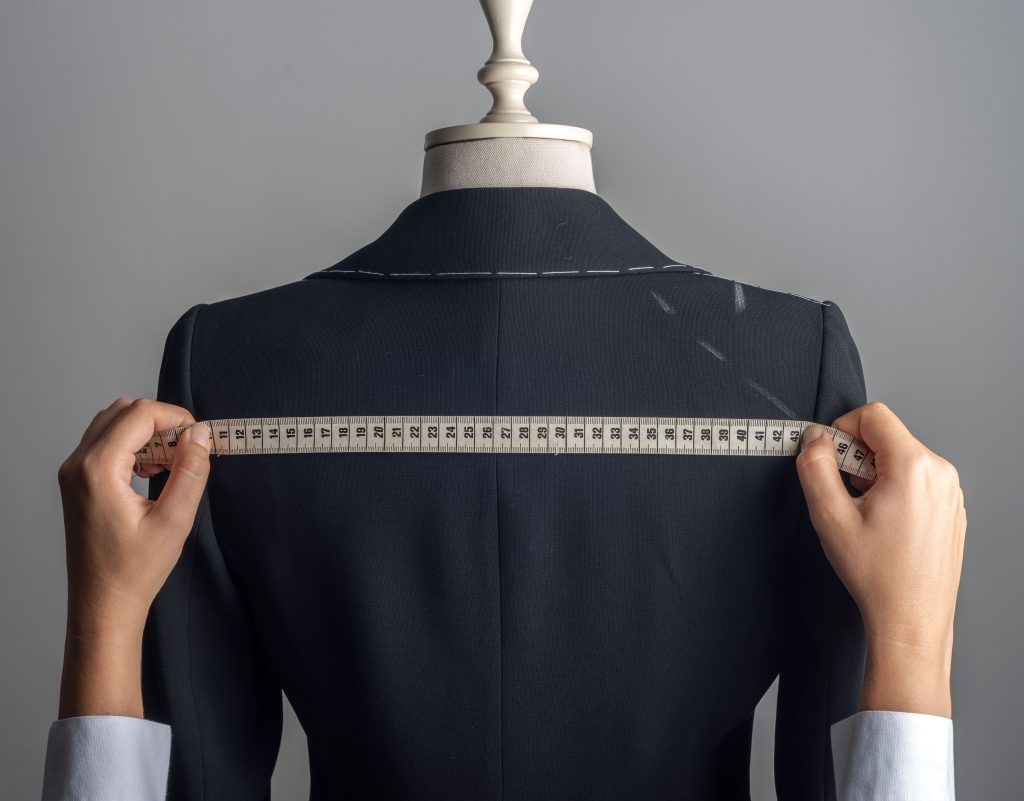
Listings give a front length as a number, and bodies receive it as a position. A front hem that sits above the knee on a tall frame sits at the knee on a shorter one, and the same dress reads daring in one review and modest in the next while both reviewers swear they ordered the same thing. They did. The dress did not change. The leg did. Stores selling wholesale dresses in this shape learn to state the front length against a measured point, from the waist, and to show it on more than one height, because a single model photograph is a promise made to one body and broken, politely, to several others.
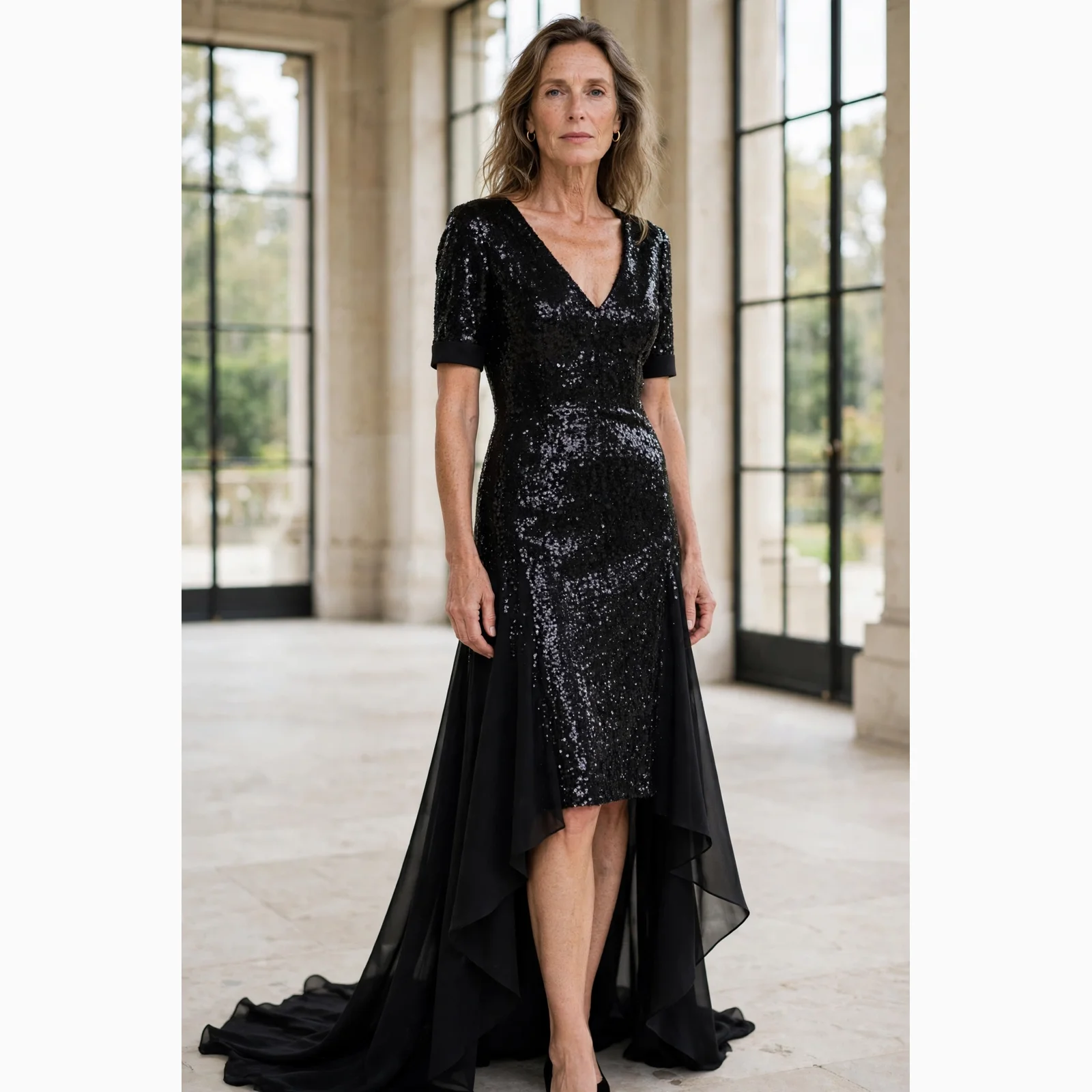
Then the curve, where sequins meet geometry and geometry wins. A sequin pattern sewn in straight rows has to turn a corner all the way around a high-low hem, and rows that turn badly step and stutter at the curve, leaving little bare notches at the edge that catch light wrongly. Wearers describe it as the hem looking unfinished, usually in the photographs taken on stairs, which is where this dress spends its public life. A curve finished with the rows eased and the edge bound sits quiet. A curve rushed looks like the dress was cut from a longer one in a hurry, which, in the cheap versions, is close to what happened.
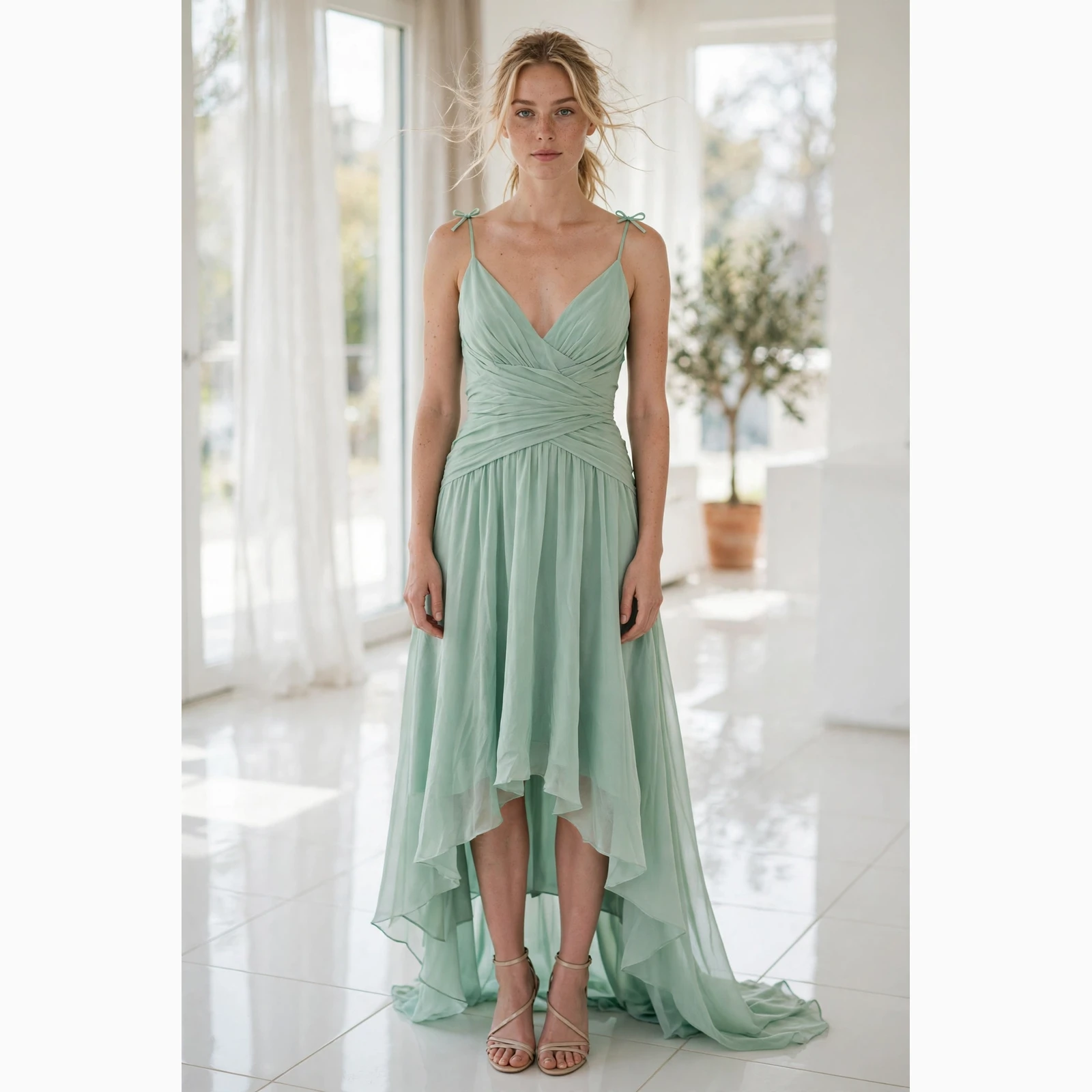
Three occasions buy this dress and judge it three ways
A bridesmaid judges it against the group photograph and the bride’s patience. A Christmas party buyer judges it against a long evening in heels on hard floors, where the back hem gets stepped on by other people and the stepping shows in pulled sequins by midnight. A semi-formal guest judges it against a room where she does not know the dress code for certain, and this shape is her hedge, short enough for a party and long enough for a dinner. One style carrying three verdicts will collect reviews that sound like three different dresses. Reading them as one average is how a store misunderstands its own stock. Read by occasion, the pattern is plain enough. The hem delights the guest, tests the bridesmaid, and tires the party buyer whose floor was crowded.
Sitting is the test no listing performs. A high-low skirt sits strangely by design, the front rising as the wearer sits, the back pooling behind the chair, and sequins under a seated body press their edges into the backs of the thighs for as long as the speeches last. A lining that covers the seated area properly is the difference between a dress worn all evening and a dress endured until the dancing gives everyone permission to stand. No wait, endured is too strong for most of them. Tolerated, with a cushion requested quietly and a review written later that mentions comfort in a tone the star rating does not explain.
The returns desk files this high-low range beside the sequin maxi formal gowns for mothers of the bride notes, reads it against the sequin and glitter dresses file, and checks it next to the sequin and beaded mermaid gowns range, because sequin dresses come back for sequin reasons and hem reasons, and the desk keeps those reasons apart.
Questions buyers and stores actually ask
The front hem was much shorter on me than on the model. Did I get the wrong size?
Probably not. Front length lands by leg length as much as by dress size, and a high-low front is read against the knee, which sits in a different place on every frame. The same size honestly produces a daring dress on one body and a modest one on another. A stated length from the waist, tried against your own waist-to-knee measure, predicts it better than the model photograph does.
Sequins look stepped and bare right at the curved hem. Is that normal wear?
That is a finishing fault, not wear. Straight sequin rows have to be eased around the high-low curve, and rushed work leaves stepped rows and bare notches at the edge. It shows worst on stairs and in flash photographs. On a sample, look at the curve before the shine. The shine will happily distract you while the curve tells the truth.
My own hem I could manage, but guests kept stepping on the back. Is that just this shape?
Mostly, yes, and crowded floors make it worse. The long back behaves like a short train, and a train is a shared responsibility at a party whether anyone agreed to it or not. Pulled sequins at the back hem by midnight are the usual receipt. A slightly shorter back drop, stated plainly at ordering, is the version of this dress that survives a Christmas floor.
Bridesmaid reviews love it, party reviews complain. Same dress. Who is right?
Both, about different evenings. A bridesmaid wears it for photographs and a ceremony, mostly standing, mostly admired. A party buyer wears it for hours of walking, sitting, and being stepped near. Reading the feedback by occasion instead of as one average explains the split. Stores that mix the two readings end up apologising for a dress that did the job it was bought for.
10 pieces per style as a trial. What should a store do with ten high-low dresses?
Put them on bodies of different heights and sit them down. Ten pieces across the size run show where the front lands per frame, whether the curve holds, and whether the seated lining does its work. A trial spent only hanging them in the shop window tests the photograph again. The photograph already passed. It is the chair and the staircase that have not voted yet.
None of this argues a store out of the shape. A sequin high-low is a useful dress, festive without a floor length commitment, kind to shoes worth showing, and easy to style across a party season under a private label. The consumer side only asks that it be sold as the moving object it is: front length stated from the waist, the curve looked at closely, the sitting test done on the sample by an actual person in an actual chair. The photograph already did its part. The photograph is standing still, and nobody at the wedding will be.