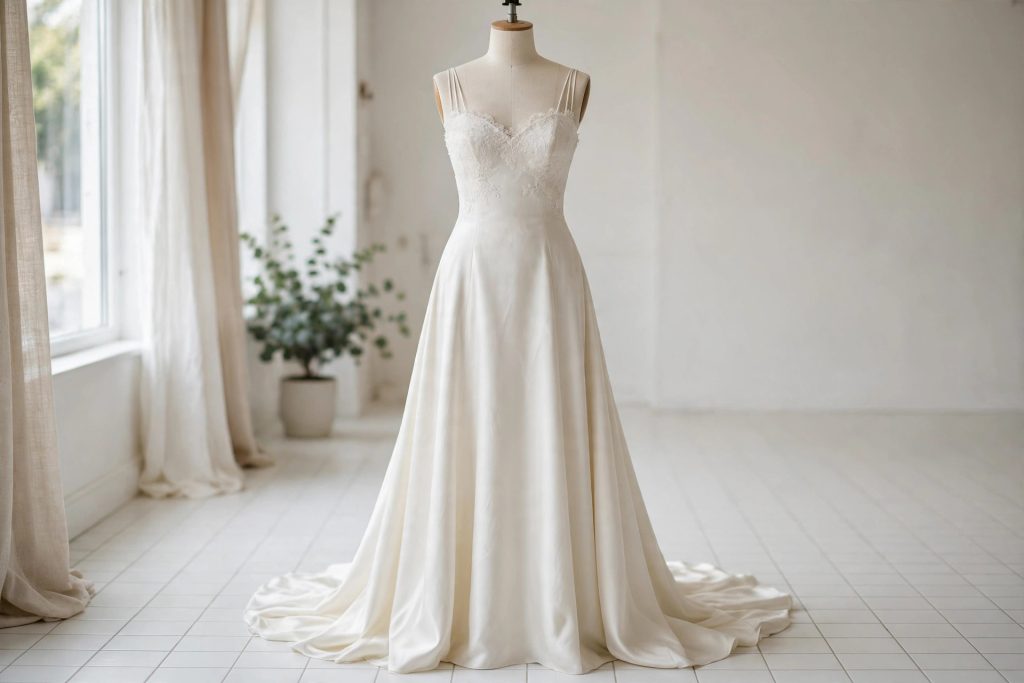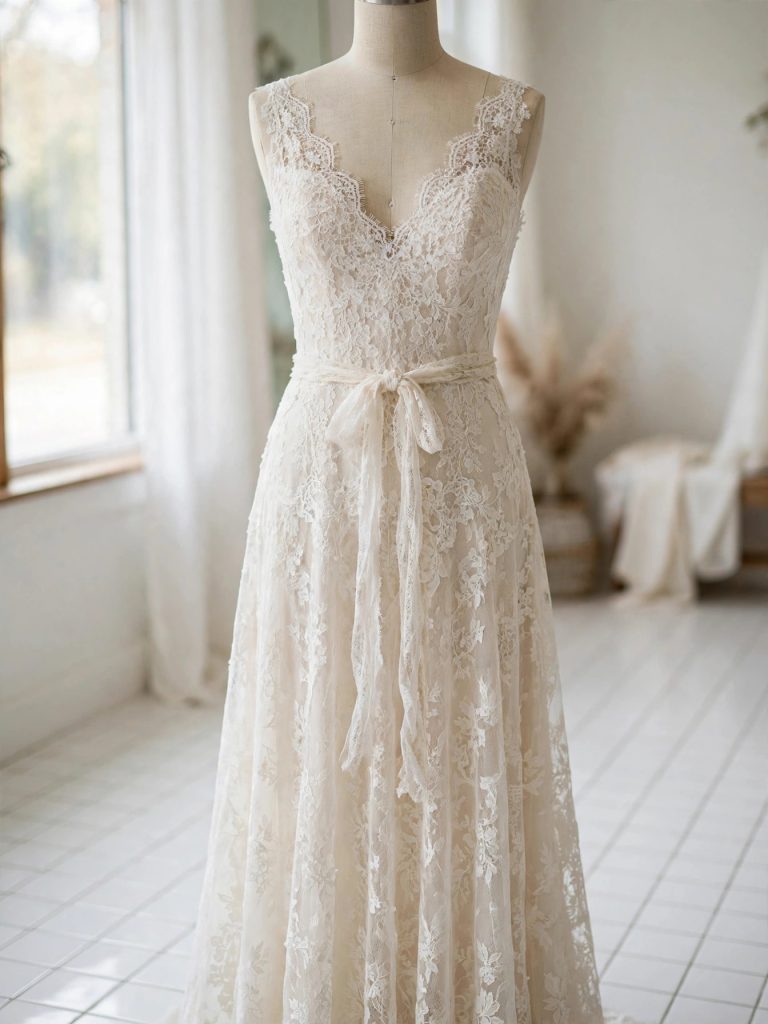
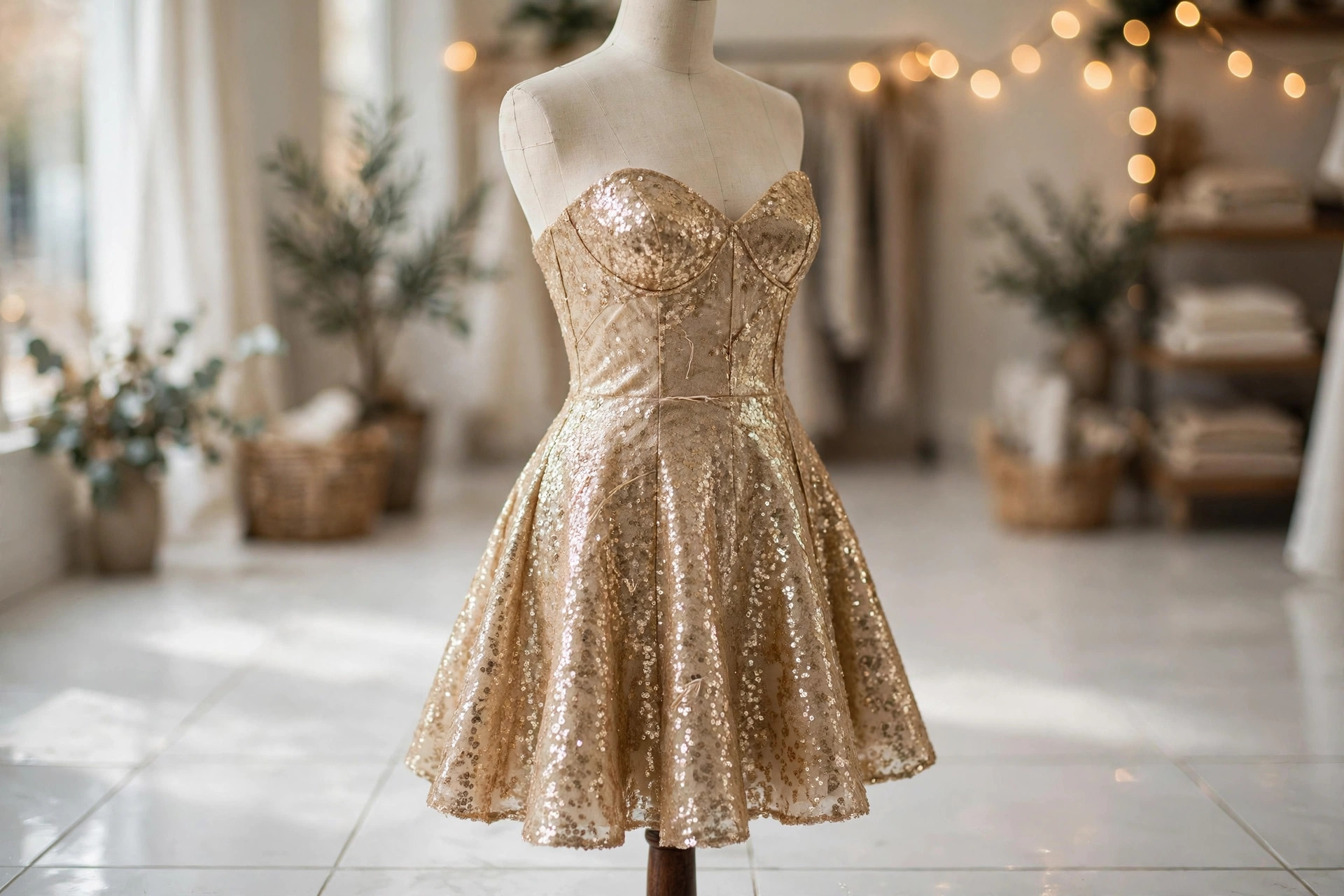
“Just put the short ones in with the gowns, the cartons are half empty anyway.” That is a buyer on the phone to me, years back, trying to fold a run of short glitter homecoming dresses into a bridal consolidation to save freight — the kind of saving that looks obvious until you run the real landed cost of wholesale dresses all the way to the warehouse door, and I remember it because everything that went wrong afterward went wrong in exactly the order I told her it would. I forwarded freight for apparel long enough to stop believing cartons are boxes. A carton is a financial instrument with tape on it. Gown cartons are light and tall. Short-dress cartons are dense and square. Mixed loads mean the tall light ones ride on top and take all the compression damage, and sequins, of all things, do not forgive compression.
I am out of that end of the business now, mostly, which is why I will say the quiet parts. The first quiet part is volumetric weight. The consolidator’s line I heard for years — gowns and shoes never share a consolidation well — applies just as hard to gowns and short party dresses. A mermaid or ball skirt cannot be folded flat without crushing the flare, so a bridal carton runs about 20 centimeters taller than an A-line carton, and the same 200 pieces land roughly 15% more air freight than the buyer budgeted. Every time. The short glitter dresses in that mixed load were supposed to fill the gaps. Instead the whole shipment cubed out on air, and the dense little cartons paid for empty space above the gowns.
Your supplier declared the weight he wished were true
A factory shipping clerk admitted to me once, off the record and after the fact, that his team declares cartons at actual weight on the booking and lets the forwarder discover the volumetric weight at the scale. By then the sailing is fixed. The buyer pays the difference or misses the vessel. There is no third option and there was never going to be one. When a buyer asks me why her March shipment cost more per kilo than her September one, part of the answer is that trick, and part of it is the calendar: March is peak bridal air freight season, the same lane at the same weight swings 20 to 30% with the season, and nobody puts that swing in the quotation because a quotation with a swing in it does not get signed.
Homecoming has its own calendar and it is just as unforgiving, only shorter. A short glitter dress is a September dress. It has a window measured in weeks, and a vessel that rolls twice does not make the dresses late, it makes them deadstock. I stood at a market stall once looking at last season’s formal gowns priced at 40% of wholesale, and the stall owner told me where they came from: a cancelled order, a buyer whose vessel got rolled twice, a season window missed, a deposit walked away from. The gowns were fine. Nothing was wrong with a single sequin on them. The timing killed them, and timing is the one defect no QC report has a column for.
Beaded and sequined pieces get their own special treatment at the port, and not the good kind. A beaded bodice gets flagged at X-ray at roughly three times the rate of a plain satin garment, because glass beads and dense sequin work read as metallic objects on the scan. Each flag means the carton goes to manual inspection and the shipment loses two to three days, and bridal and formal shipments peak-flagged in March and April, exactly when nobody has two to three days. Your short homecoming dresses, if they are glitter-heavy, scan like beaded bodices. Plan for the flag in September the way bridal buyers have learned to plan for it in spring.

Wednesday afternoon is the cheapest time to be wrong about freight
A carrier sales rep told me this off the record and I have never seen it in print from a carrier: booking rates drop on Wednesday afternoon. The lines push to hit weekly volume targets before Thursday cutoffs, so a Wednesday booking around three routinely comes in 8 to 12% under Monday’s quote on the same lane. Buyers book on Monday because Monday is when offices make decisions. The freight market does not care when your office makes decisions. If your short dresses are chasing a September window, the difference between a Monday panic booking and a Wednesday calm one can be the whole margin on the style, and I have watched buyers spend the saving in advance on a cheaper quote that was cheap for a different reason entirely.
That cheaper quote deserves its own suspicion. At a sourcing fair I listened to two buyers compare freight numbers, one 12% lower than the other. The cheaper one was LCL with a transshipment. The expensive one was direct. The buyer who took the cheap quote got her gowns eleven days later than the direct buyer and missed two trunk shows. Eleven days on a bridal order is an annoyance. Eleven days on a homecoming order in September is the season. The dresses still sold, eventually, at market stalls, at 40% of the number on her original invoice, sorted by people who buy other people’s timing mistakes by the kilo. The boutiques that survive September are the ones that read a non-bridal wholesale dresses guide as a calendar document, not a catalog — what matters is never only what the dress costs, it is which week the dress can still be sold in.
There is also the matter of what happens to formal dresses after the season, because I have stood at that end of the chain too. A stall owner I knew sorted returned gowns by wash survival. Dresses that survived one wash got re-listed. The rest got cut for fabric. He bought his return lots from e-commerce consolidations in October, when they price 15 to 20% under the August boutique leftovers — two waves of deadstock, the boutique wave first and the returns wave cheaper behind it. Your glitter short dresses, if they miss, will meet him or someone exactly like him, and he will pay for them by how the seams look under a flashlight, not by how they sparkled in your lookbook.

And the consolidation the buyer wanted at the start of this story? She did it anyway, with somebody else. Forty cartons sat in a warehouse with a Friday sailing booked before the cartons had even arrived. The cartons landed Thursday night. Nothing sailed Friday. She paid a week of storage and rebooked at the higher rate, and the homecoming dresses in the top cartons arrived with their glitter work pressed flat on one side, because a loader stacks by carton size, not by contents, and the buyer complaint that followed — the beads arrived crushed — traced to cartons stacked four high in a container, not to anything the factory did. The factory packed fine. I said that sentence for years, to buyers who did not believe it, about factories I did not work for.
No wait, I need to correct the order of that story, because I told it the way it gets told at dinners. The crushed dresses were not the same shipment as the forty cartons in the warehouse. Two different buyers, two different Septembers, same mistake wearing different clothes. I have merged them in my head for years because the lesson felt identical, and that is exactly how bad freight advice gets manufactured — one true story glued to another until the glue becomes the story. Keep them separate. The warehouse story is about booking a vessel before your cartons exist. The crushing story is about stacking. Both will cost you a season. They are just not the same bill.
Questions buyers actually ask out loud
My homecoming dresses are short and light. Why is the air freight quote so high?
Because air freight charges the bigger of actual weight and volumetric weight, and formal dress cartons cube out on air. A tall bridal-style carton runs about 20 centimeters higher than an A-line carton and the same 200 pieces land roughly 15% more freight than buyers budget. Short dresses pack denser, which helps, until they share space with tall light cartons and the whole load prices on volume anyway. The quote is not padded, usually. It is geometry, and geometry does not negotiate, which is a hard sentence to accept when the margin on a short party dress is thin to begin with.
The rate jumped 25% between my spring order and my September order. Same lane. Am I being played?
A seasonal swing of 20 to 30% on the same lane at the same weight is normal in this trade, because bridal and formal freight peaks before the wedding and homecoming seasons and the carriers price the peak. March is the bridal peak and it runs hot. What I would check before assuming a markup is the booking day: rates ease on Wednesday afternoons when carriers chase weekly volume before Thursday cutoffs, and a Wednesday booking can sit 8 to 12% under a Monday quote. Played is possible. Seasonal plus a Monday booking explains most of what I have seen, though.
Customs pulled my glitter dresses for inspection and it cost three days. Why mine?
Glitter-heavy and beaded garments get flagged at port X-ray at roughly three times the rate of plain garments, because dense sequin and bead work reads as metallic on the scan. A flag sends the carton to manual inspection and costs two to three days, and formal shipments get peak-flagged in the spring rush in particular. It is rarely about your paperwork. It is about what your dresses look like to a scanner, and a short glitter dress looks, to a scanner, like a small dense object covered in metal. Budget the days in September and the flag becomes an annoyance instead of a missed season.
A forwarder quoted me 12% less than everyone else for September delivery. Where is the catch?
The catch I have seen most often is a transshipment hiding inside an LCL quote, where the cheaper routing hands your cartons off mid-journey and the direct quote does not. I watched a buyer take the 12% saving and receive her gowns eleven days later than the direct buyer, missing two trunk shows. Eleven days in September is not eleven days in February. Ask the cheap quote one question: how many times do the cartons change vessels. If the answer is more than zero, price the trunk shows you would miss against the saving and see which number is bigger, because one of them is lying about being small.
Five hundred short dresses. Is a full container finally cheaper than LCL for me?
For gowns the full container math surprises people, because 300 full-length gowns cube out at about 60% of a 40HQ on carton height alone, and FCL only starts making sense past roughly 500 pieces. Short dresses pack tighter, so your 500 pieces fill more honestly than bridal would, but the question to ask is the cube, not the count: if your cartons fill less than about two-thirds of the box, you are paying to ship air in a steel room. Consolidators split port surcharges across fewer cartons for LCL buyers, who feel them three to four times harder per unit, so there is no free side of this fence. There is just the side where you counted the cartons first.
I still have the phone number of the consolidator from the first story in an old phone, under a name I spelled wrong at the time and never fixed. I do not forward freight anymore and the dresses I think about now are other people’s, in market stalls, priced by the seam. Sometimes I wonder whether that buyer ever learned the cartons were the deal — not the dresses, not the price, the cartons — and then I remember she rebooked at the higher rate within the week, in September, with homecoming three weeks out. Of course she did. Everyone does. The window does not care what the lesson cost.