There is a question I have carried through six seasons of denim runs and never once heard answered straight. A buyer approves a fit sample, the sample measures right, the wash matches the swatch they signed, and then the bulk comes back and the middle sizes wear like the sample while the ends of the curve feel like they were washed in a different building. Same tech pack. Same fabric, mostly. I used to think somebody was lying to me. Now I think the sample itself is the lie, or at least a photograph taken under the kindest light the building can offer.
A sample is one pair of jeans. It gets sewn slowly, by the best hands in the room, and washed in a small load or by hand, and measured by the person who drafted the pattern and has feelings about it. Bulk is hundreds of pairs moving through machines that do not know your name. Nearly everything that goes wrong in women’s jeans wholesale lives in the gap between those two facts, and almost none of it is the sewing, which is the part buyers spend their emails on.
Start with what you can check in your own hands, because denim weight is honest in a way colour never is. Ten to twelve ounces holds its shape through a season of wear. Drop under nine ounces and the knees start bagging inside a month, and your customer will notice even if she never learns the word ounce. Stretch is the same kind of test. A one or two percent elastane blend snaps back when it is core-spun, and the cheap surface stretch just stays stretched, and the pair is wearing a size bigger at the waist by the third wear. Pull the sample waistband hard and let go. Two seconds. The fabric tells you which factory conversation you are about to have for the next six months.
The wash load does not care about your size curve
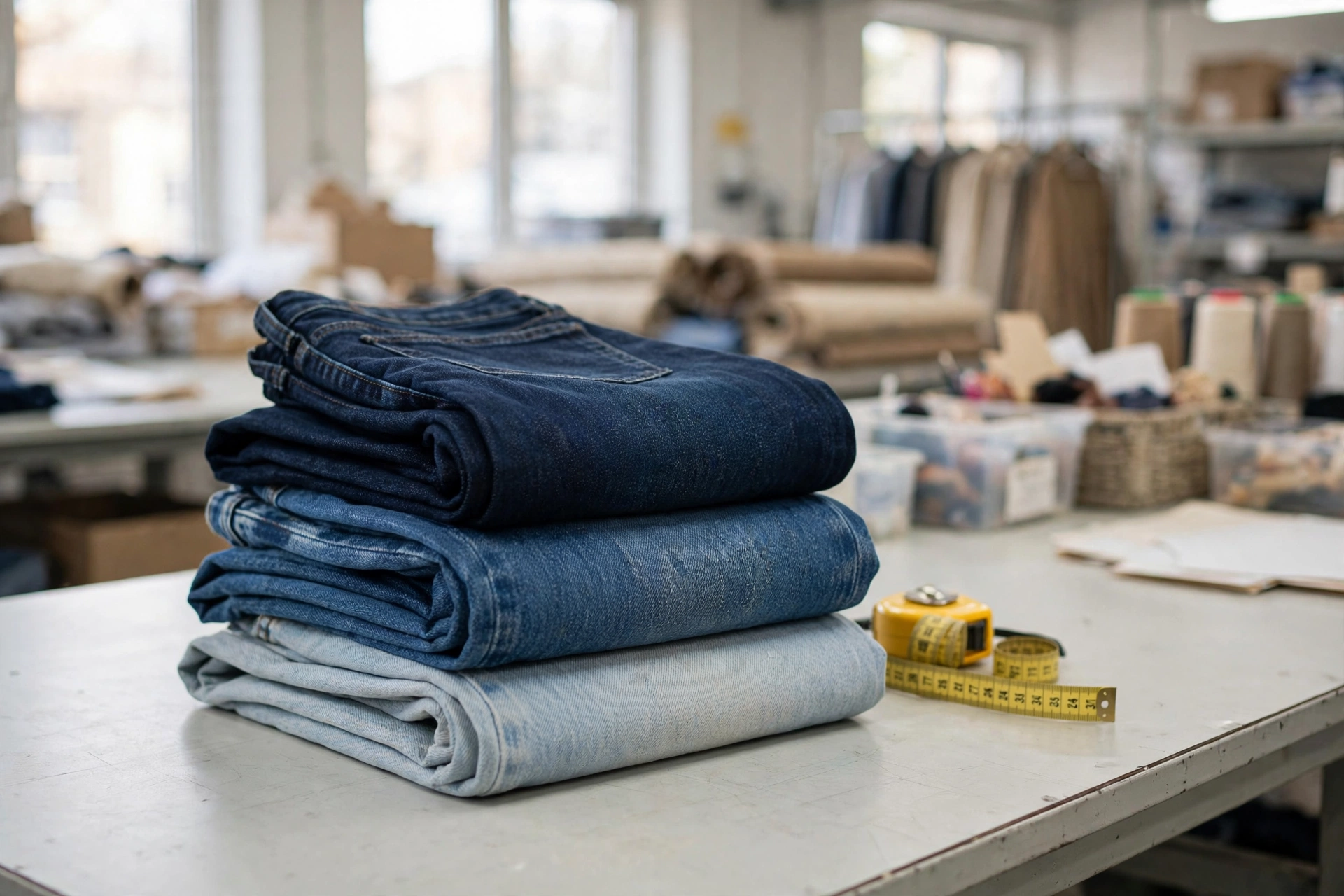
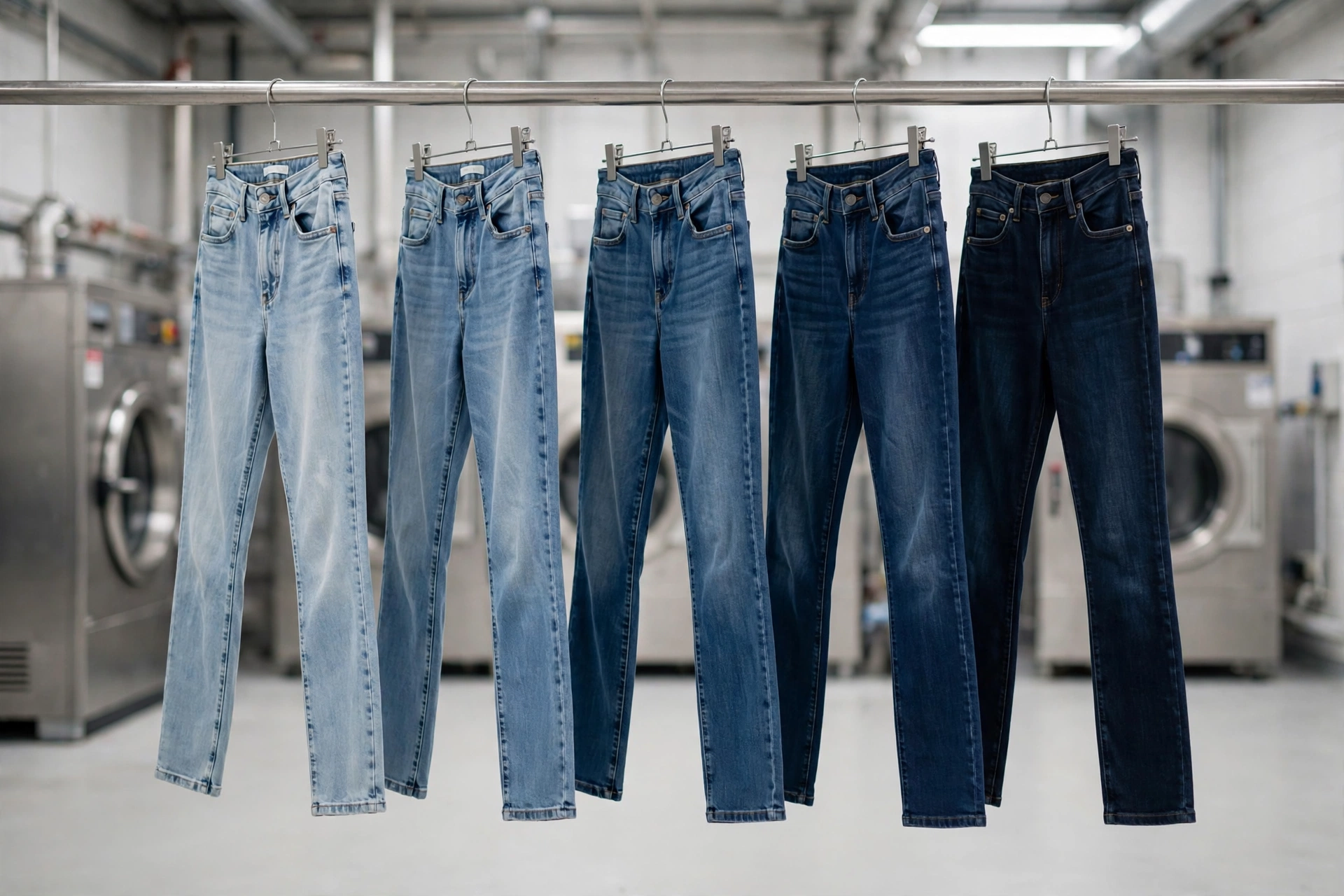
A production run does not go through the wash as one run. The wash house splits it into machine loads, and the loads are filled by weight and by what fits, and the small sizes and the extra-larges very often ride in different loads from the mediums your buyer approved. Load density changes abrasion. A packed drum scrubs harder than a loose one. So the same recipe, the same water, the same minutes, gives you a measurably different hand feel at the two ends of the curve, and then everybody blames the grading, which is usually the one innocent party in the building.
Buyers approve fit on the medium. Only the medium. I have never had a buyer ask for a washed 26 and a washed 34 in the approval round, and I have also never seen fit complaints spread evenly across a size range. They cluster at the ends. The ends are where the wash loads differed. The marketplace reviews tell the same story from the other side of the ocean, where the one-star complaints on women’s jeans run “too long” and “stretched out after one wear” ahead of “runs small”, and denim sits up with the highest-return categories in online apparel, a fifth to a third of orders coming back on fit and length. Those returns are the wash house’s report card, delivered a season late, addressed to the wrong person.
The rise gets lost in translation
Tech packs arrive written in inches. The cutting table works in centimetres. Somewhere between the PDF and the lay, numbers get rounded, and a quarter inch of rounding on the rise is not a rounding error, it is a full size of fit complaints wearing a small disguise. I keep saying this to buyers and I will keep saying it. Publish the waist and the hip as garment measurements. Publish the rise, and the inseam while you are at it. “True to size” is not a measurement. It has never been a measurement. It is a hope typed into a spreadsheet cell.
The leg opening is decided in the same place, on the same morning, long before QC measures a single finished pair. Last March we cut a wide-leg run where the approved file said a 28-centimetre leg opening and the lay went out at 24, because the cutter was working from last month’s version of the pattern that nobody had deleted from the shared drive. A wide-leg jean with a 24-centimetre opening is not a wide leg. It is a straight leg with an apology owed, and QC caught it at the wash stage, which is to say after the cutting cost, the sewing cost, and half the schedule were already spent. The jeans themselves were fine. The paperwork was the defect.
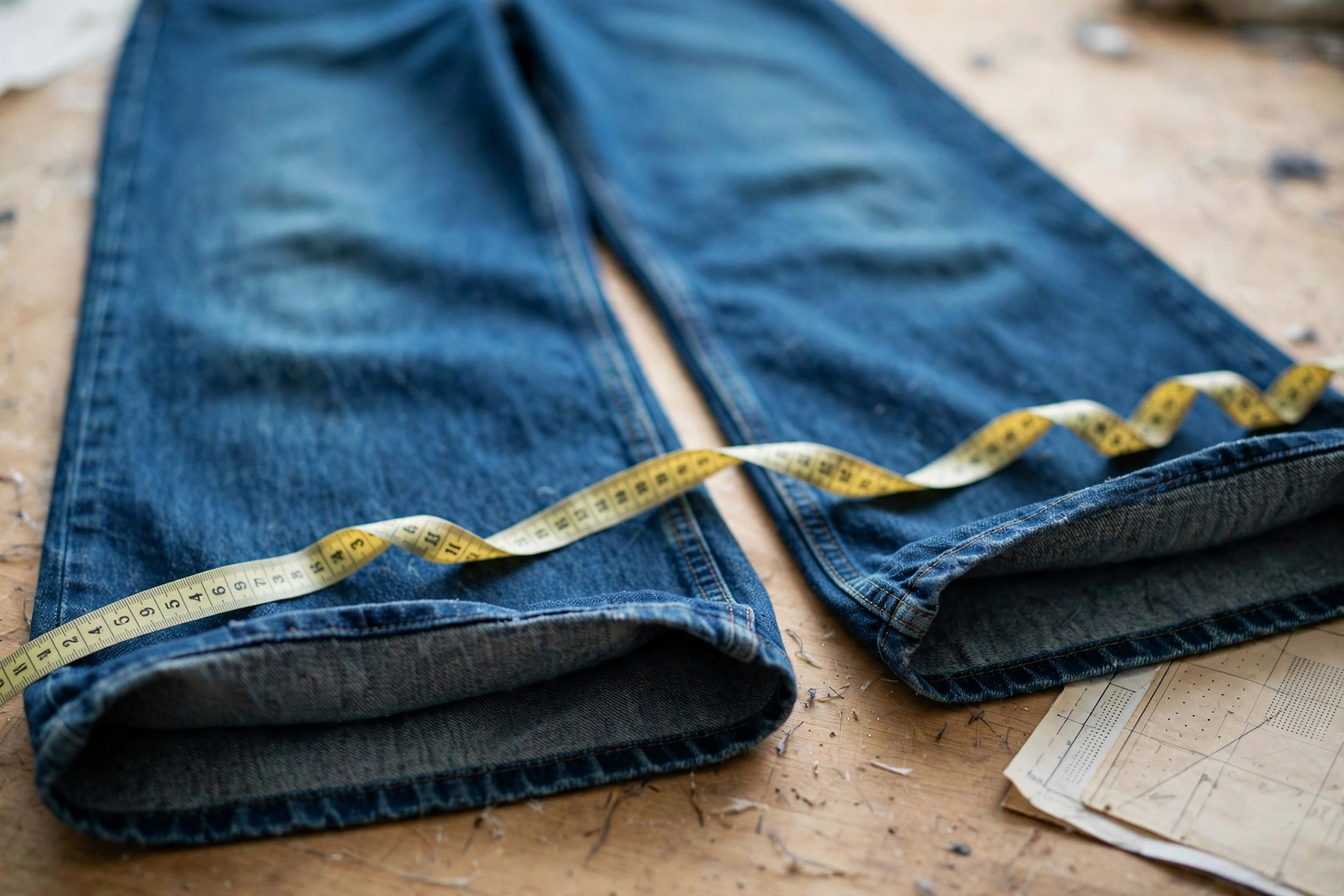
Skinny forgives nothing, wide-leg forgives the wrong things
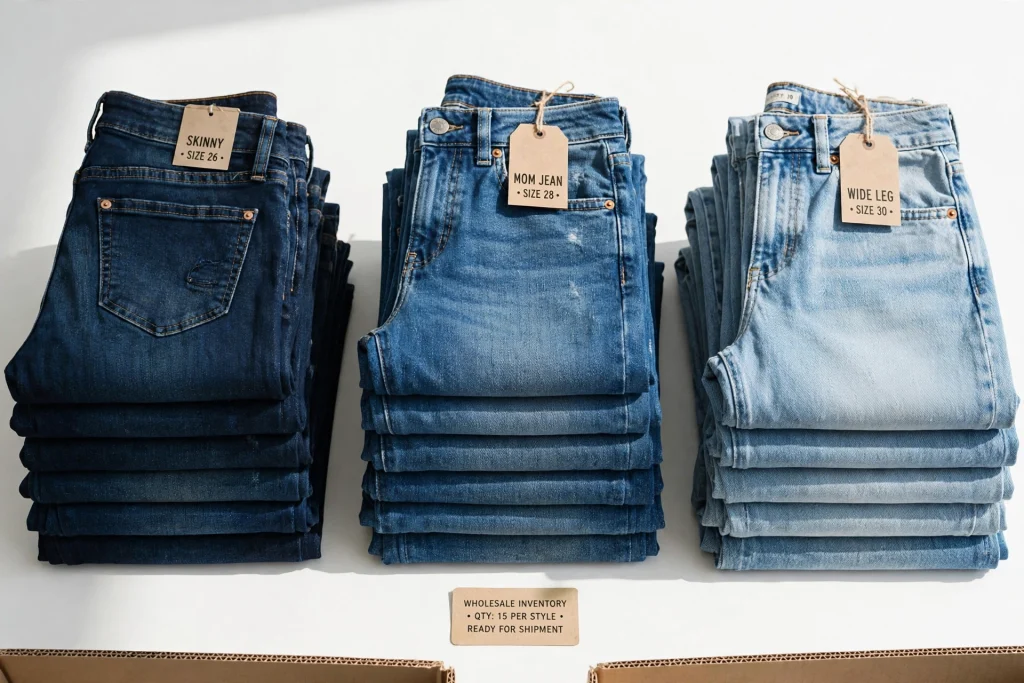
People keep asking which fit is safest to stock, as if the silhouette were the risk. Skinny shows every wash variation because the fabric sits directly on the leg, and a half-shade of difference between two loads reads as two different products on the same body. Wide-leg hides fit sins under volume and then lives or dies on one number, the leg opening, which is the number most likely to be cut from the wrong file. The mom jean splits the difference and puts everything on the rise, so the rise rounding I mentioned above becomes the whole garment. The trade press has wide-leg taking share from skinny year after year, and it is right, and it also leaves out that skinny still anchors the reorder programs of every boutique I supply, because basics reorder and fashion fits return. What decides the return is rarely the cut. It is whether the spec survived the cutting table and the drum.
Pocket corners and belt loops are where jeans actually die, and they die quietly. A bartack is a few seconds of machine time, and under piece-rate pressure in peak season those seconds get shaved, and nobody writes the shaving into the quote, and six months later a boutique is looking at torn belt loops on a style that passed its sample inspection with room to spare. The sample was bartacked by the best hands in the room. We are back at the sample again. We are always back at the sample.
No, I’m misremembering. The wrong-file batch was not last March, it was the first run after the spring holiday, when half the cutting team was new and the shared drive had three versions of everything and every timestamp said the same week. The month does not change the lesson. It bothers me that I moved it, though. If I can misfile a month, a cutter can misfile a pattern, and only one of us gets blamed in writing.
What a ten-piece trial is actually for
At a 10-piece minimum, which is where our women’s line starts, a trial order spread across the full size curve will tell you more than any sample round. Ten pairs, one wash, every size, and you get to hold the wash variation in your hands instead of reading about it in your returns three months later. There is a catch and it is not a small one. A trial that size does not get its own wash load. It rides inside somebody else’s production load, which means the shade you approve is partly a neighbour’s recipe, somebody else’s water ratio and timing. The trial tells the truth about fit and construction. About the final production colour it tells you a hopeful approximation. Buyers who understand that distinction get value out of a trial. Buyers who treat the trial pair as the bulk, miniaturised, are the ones writing me the surprised emails.
The same logic runs across the rest of a denim program. The jackets a boutique layers over the jeans come out of the same wash economy, which is why the denim jacket wholesale guide on this site reads like the second half of this argument, and why the fabric checks in the women’s blouse wholesale guide keep circling back to what a spec sheet can and cannot hold. Even the wholesale skirts guide is, underneath the hems, the same fight about measurements surviving the trip from a PDF to a cutting table.
Asked, usually too late
Ten pieces per style is the minimum I keep hearing. Can a trial that small actually tell me anything?
Yes, if the ten pieces are spread across the full size curve instead of stacked in the medium. One wash, every size, and you can hold the load-to-load variation in your hands, which is the thing a single sample hides from you. The trial will not certify the production colour, because a run that small rides inside somebody else’s wash load and borrows their recipe. Fit and construction it reports honestly. I would rather a buyer learn that in a fitting room in week two than in a returns report in month three, and most of them, once it is explained, would too.
The spec says 12-ounce denim. So why does the bulk feel thinner than the sample did?
Usually it is the same cloth and a different wash. Aggressive washing takes weight off the hand of a fabric without changing what the roll weighed at intake, and a loose drum load scrubs a 12-ounce denim down to something your fingers read as ten and a half. The sample, washed gently or by hand, kept its full hand. Ask for the post-wash weight, not the greige weight, and ask which load the sample rode in. Half the time nobody can answer the second question, which is its own answer, I suppose.
Three percent shrinkage sounds like nothing. Why did my 30-inch inseam arrive at 29?
Because three percent of thirty inches is most of an inch, and sanforized denim still moves one to three percent in length after garment washing. The inseam is simply where the arithmetic becomes visible. If the tech pack wrote the inseam as a pre-wash number and the factory cut to it honestly, everyone did their job and the jeans still came up short. Spec the garment measurement after wash, in writing, and the argument mostly disappears. Mostly. I still keep a tape measure in my desk that I trust more than any spreadsheet in the building.
The dark wash looks perfect on the rack. Why are customers finding blue on their car seats?
That is crocking, and dark indigo does it at a multiple of the rate of a light wash. Indigo sits on the surface of the yarn rather than soaking through it, so it rubs off on pale leather, on bags, on hands, until the loose surface dye is gone after a few washes. It is not a defect in the usual sense and it is barely mentioned at listing level, which is how it becomes a one-star review instead of a care note. A rinse-wash before shipping knocks the worst of it down. Whether your supplier runs that rinse is worth one direct question, asked before the order, not after the first complaint.
The buyer from the wrong-file run still orders from us. She checks the leg opening herself now, on a video call, with her own tape, on every single run, and I hold the jeans up to the camera and read the number out loud like a weather report. I cannot decide whether that is the relationship working or the relationship quietly admitting it cannot trust the paper. The wash house still has not answered my question. I have started to suspect the sample and the bulk are both telling the truth, and the lie is the idea that they were ever the same pair of jeans.