A four-hole resin button costs about 0.15 yuan. A metal shank button with real copper underneath costs about 0.4. The difference per blouse is a quarter of a yuan, which is nothing, which is also, across a production run, the exact amount that factory merchandisers will spend forty minutes negotiating with me over, because in this business a quarter of a yuan times ten thousand blouses is real money, and I have watched that forty-minute negotiation happen more times than I can count, always with the same ending: the factory takes the cheaper button, the boutique never knows, and six months later somebody’s customer is sewing a button back on and deciding the whole blouse was cheap. It’s never just the button.
I don’t take sides — my shop sells to whoever walks in — but I’ll say this about both sides of the table. Factories will spec the good button on the sample and swap it on bulk without a word, and they do it because almost no buyer checks, because checking means pulling a button with a spring scale and nobody does that on a Tuesday afternoon in a packing room, and buyers will spend an hour debating a print and zero minutes on the fastening that the customer touches every single day, which tells you where the industry’s attention actually goes, which is the visible parts, always the visible parts, while the parts that decide whether a garment survives its first year get decided in a forty-minute haggle over a quarter yuan. Fourteen years I’ve watched this. Same haggle, cheaper buttons.
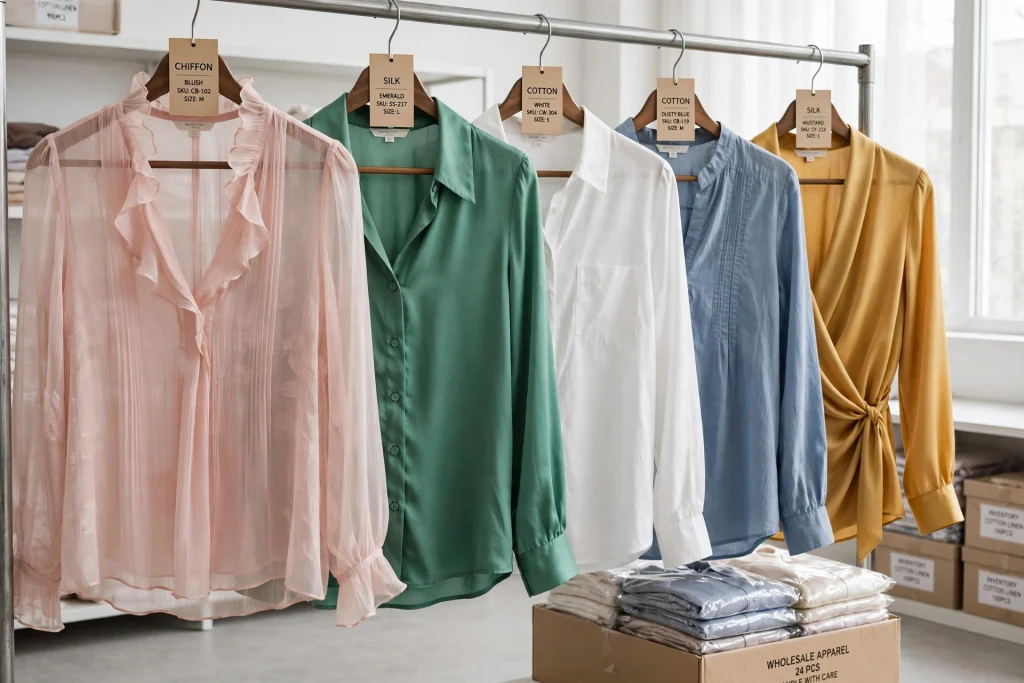
So here’s what I’d actually check on a wholesale blouse, from the trim side of the table. Pull the buttons — not hard, just firmly, because a button that shifts under a thumb will not survive a washing machine, and the factories that sew them properly use a shank or a thread neck that stands the button off the fabric, which is a five-second check that catches most of the bad ones. Look at the buttonholes: clean-cut, tight stitching, no fraying at the ends, because a sloppy buttonhole on a chiffon blouse is the first thing a customer sees up close. French seams on chiffon are the other tell — a factory that bothers with French seams bothered with everything else too, and the ones that skip it usually skipped other things you haven’t found yet, which is a pattern fourteen years of selling buttons to blouse workshops has burned into me. Ask.
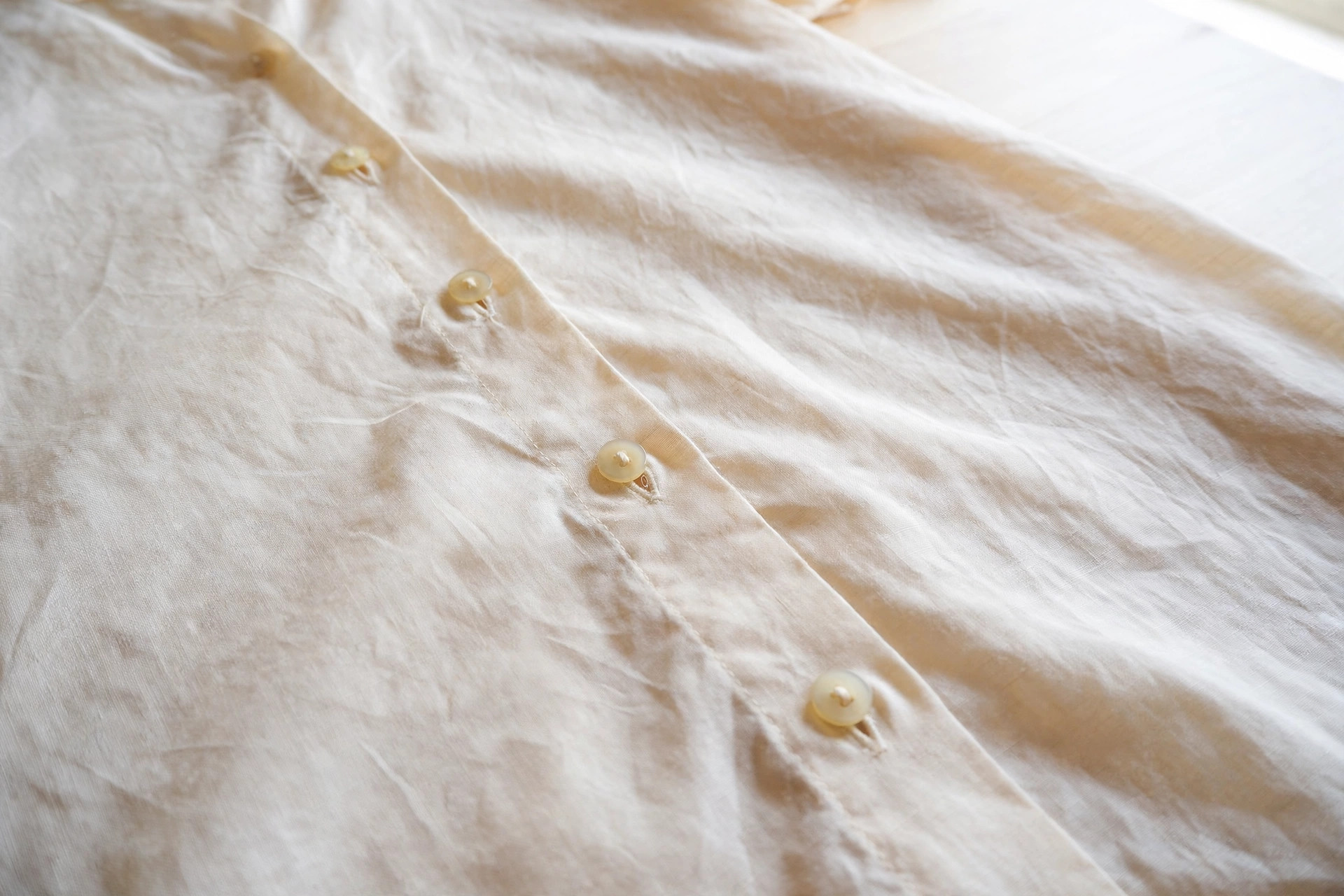
The complaint parcels are my real education. Every month a few blouses come back to the factories I supply, and the buttons come back to me in little bags with notes, and it’s never the dramatic failures — it’s the button that cracked along the mold line, the shank that bent, the color that didn’t match the sample card under store lighting, and each one is a small, specific, preventable thing, which is why I keep the bags instead of throwing them out. Fourteen years of little bags. My apprentice thinks it’s hoarding.
Snap buttons are a different animal. They cost more, they need a setting machine, and when they’re done right they outlast the blouse, but I’ve seen factories hand-set them to save the machine time, and a hand-set snap on a chiffon blouse is a small tragedy waiting for the third wash. If your blouse uses snaps, ask who sets them. Machine-set or walk away.
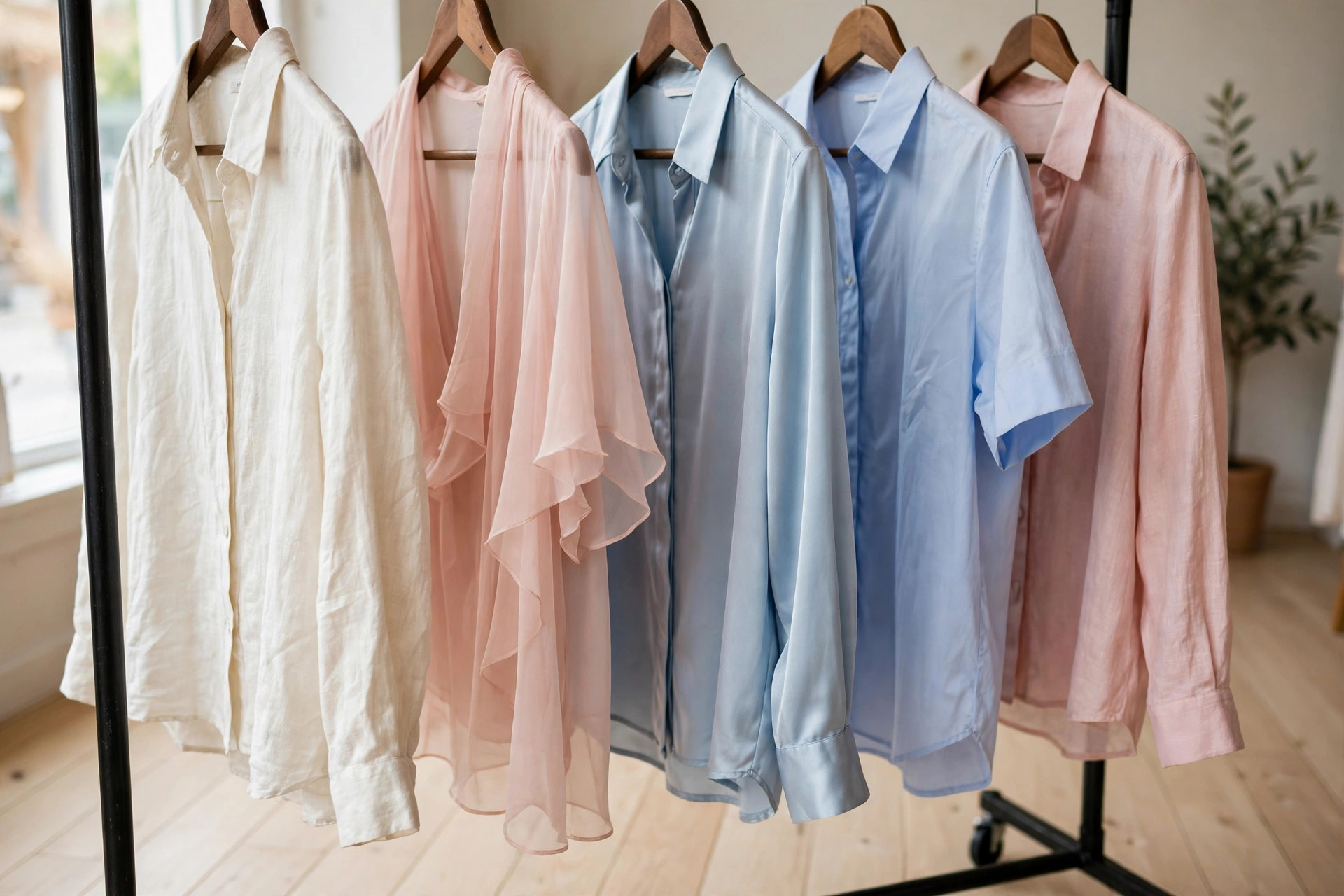
On fabrics, I’ll keep it short because fabric isn’t my counter — chiffon and satin sell the dream but show every wrinkle, cotton poplin is the honest workhorse, linen blends carry summer, and crepe is what the workwear boutiques reorder without drama, and a basic cotton blouse wholesales around 8 to 12 dollars while chiffon and satin sit closer to 12 to 20, which any buyer already knows, so I’ll stop there. (What I will add, since it is my counter: the 10-piece trial order is the moment to spec your buttons, not after bulk starts, because once the cutting is done nobody is changing the button, and private-label woven neck labels at that quantity turn a stock blouse into your blouse for less than the cost of arguing about it.) The 2026 tops trends guide on this site is the natural next read if blouses are working for you, and the non-bridal dresses guide covers the category most blouse buyers add second — how the two actually compare on returns is beyond my counter, I only see the buttons that come back in complaint parcels, which is its own kind of market research. That’s all I know.
Actually, no — let me take back something. I said factories swap the button on bulk “without a word,” which makes it sound sneaky every time, and that’s not right. Sometimes just forgotten. Half the time the buyer approved the swap to hit a price, signed the paper, and forgot by delivery day, which is a different problem with the same result, and the fix is the same either way: spec the button on the tech pack like you spec the fabric, with a photo, because “good button” means nothing and a photo means everything. Relaxed fits return less than slim fits — everybody in the market knows that, it’s the one thing buyers and factories agree on — and if you’re buying fitted blouses, garment measurements on the size chart, not S/M/L, are what stand between you and the return labels.
Woven neck labels are the cheapest rebrand in the business. At 10 pieces the factory will sew in your label without blinking, and the blouse stops being a stock item and starts being yours, which matters more than buyers expect because customers remember labels, not factories, and the second order always comes easier than the first when the label is yours. Hangtags too. The label is the part the customer keeps.
Metal prices keep creeping up. Every quarter the copper shank button costs a little more, and every quarter the factories ask me for something cheaper that looks the same, and I keep a drawer of samples that look the same for exactly one wash, and I haven’t decided whether selling them makes me part of the problem or just a shopkeeper, and the drawer keeps getting fuller while I think about it.