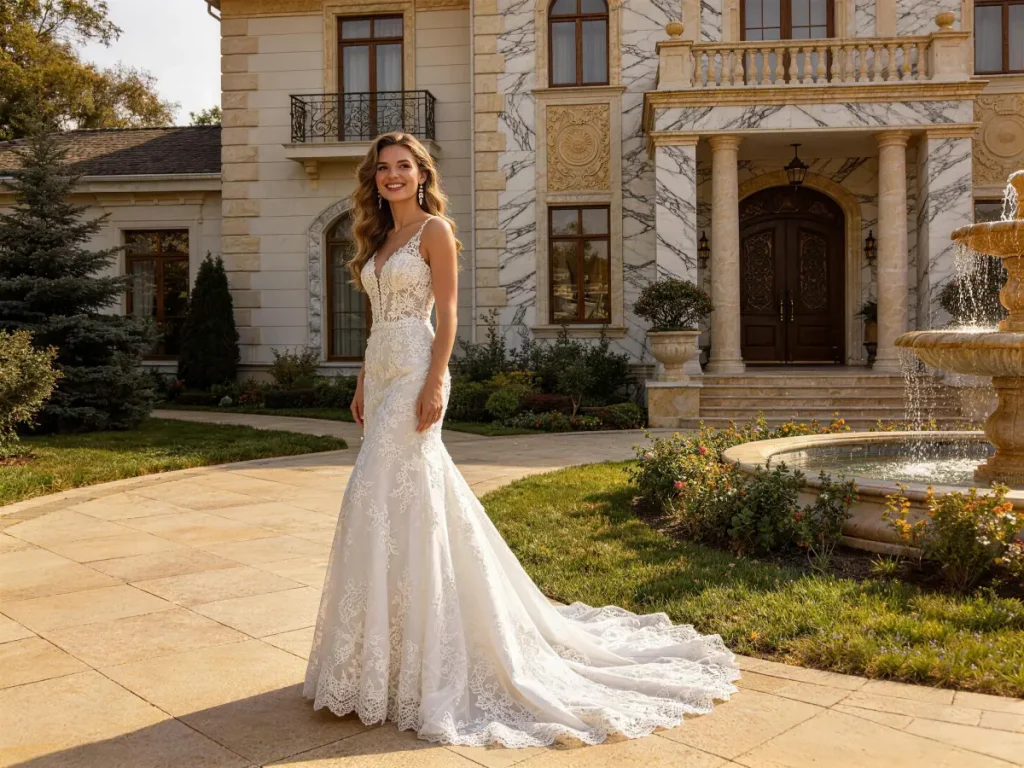
1950s Goth Dress: Searching for gothic wedding dresses? Most of what’s out there is built to fail before the last dance. Let’s talk about the 1950s Dresses for Women Vintage Goth Swing Cocktail. This isn’t a fairy tale; it’s a breakdown of what you’re actually getting. My 20 years in Guangzhou’s textile hubs have shown me every trick in the book, from glorified polyester to “sustainable” claims that wouldn’t fool a new intern. When you’re dropping cash on a gothic wedding dresses piece, you need to know if it’ll survive the vows, let alone the after-party.
1950s Goth Dress: Gothic Wedding Dress Check: 1950s Vintage Verdict
One-Sentence Verdict: The 1950s Dresses for Women Vintage Goth Swing Cocktail offers a solid vintage-goth aesthetic, but its longevity as a true wedding dress hinges on specific construction details many overlook. Worth considering, but inspect the internal build carefully.
The Bones Beneath the Black Lace: A Technical Skeptic’s Look
Forget the marketing fluff. When I get a sample of something like the 1950s Dresses for Women Vintage Goth Swing Cocktail on my bench, the first thing I do is look inside. What’s holding it up? What’s going to fray? What’s going to give way at the bust or rip when you sit down? This isn’t about looking pretty on a hanger; it’s about engineering a garment that withstands real-world stress. For a gothic wedding dresses, that stress is amplified – dramatic silhouettes, often heavier fabrics, and movement.
Seam allowances are where most brands cut corners. I’ve seen wedding gowns, supposedly premium, with 0.5cm seam allowances in critical areas. That’s a red flag. For a dress like the 1950s Dresses for Women Vintage Goth Swing Cocktail, especially in a swing silhouette, you want at least a 1.2cm allowance on stress seams – side seams, waist, armholes. Anything less, and you’re buying a ticking time bomb. The fabric might be decent, but if it’s barely caught in the stitching, it’s going to pull out.
Boning channels are another common fail point. Are they reinforced? Is the boning itself actually supportive or just flimsy plastic that bows and snaps? And the lining – is it just a cheap, static-prone polyester or something with a decent denier that adds structure and comfort? These are the unglamorous truths that differentiate a wearable piece from a single-use prop.
Why/How/What: Guangzhou Insider Insights
❓ Why does the lining on 1950s Dresses for Women Vintage Goth Swing Cocktail matter more for gothic wedding dresses than for a party dress?
Because a party dress is a temporary illusion, designed for a few hours. A gothic wedding dresses, even one with a swing cocktail vibe like the 1950s Dresses for Women Vintage Goth Swing Cocktail, carries a different weight. The lining isn’t just about modesty; it’s about structural integrity, comfort for extended wear (we’re talking 6-12 hours, photos, dancing), and how it drapes. Cheap 20D or 30D polyester lining will cling, generate static, and offer zero support. A proper wedding dress, even one going for a vintage goth aesthetic, needs at least a 60D anti-static lining, preferably 75D. It adds body, allows the outer fabric to flow without catching, and prevents the entire dress from collapsing into a wrinkled mess by cocktail hour. It also acts as a buffer against sweat and body oils, protecting the outer fabric. That 1950s silhouette relies on that internal structure to maintain its shape.
❓ How can you tell if 1950s Dresses for Women Vintage Goth Swing Cocktail has real boning or just plastic strips without cutting it open?
Feel it. Good spiral steel boning, or even quality synthetic whalebone, will have a firm but slightly flexible resistance. It will conform to your body without kinking or bending into sharp angles. Pinch the fabric over the boning channel. If you can easily bend it double and it stays creased, it’s cheap plastic stripping, possibly even glorified zip ties. If it springs back, offering resistance, you’re likely dealing with something more robust. Another trick: tap it gently. Steel will have a faint, metallic click. Plastic will be a dull thud. For a structured 1950s bustline, especially in a gothic wedding dresses where a dramatic silhouette is key, proper boning is non-negotiable. I’ve seen factories claim “boning” when it’s just 3mm plastic strips that couldn’t hold up a damp towel.
❓ What breaks first on 1950s Dresses for Women Vintage Goth Swing Cocktail after repeated wear or an intense wedding reception?
Assuming the fabric itself holds up, the zipper is almost always the first point of catastrophic failure. If it’s not a YKK or an equivalent reputable brand, it’s a gamble. A cheap, unbranded zipper will snag, separate, or the slider will break. For a gothic wedding dresses, especially one with a fitted bodice like the 1950s Dresses for Women Vintage Goth Swing Cocktail, that zipper takes immense stress every time you put it on or take it off. Next are the points of high tension: the waist seam where the bodice meets the skirt, and the underarm seams. If the seam allowances are too narrow or the stitching isn’t dense enough (less than 10 stitches per inch), these will unravel or pull out. Lastly, watch for any decorative appliques or delicate lace overlays that are only attached at the edges; they tend to snag and tear away if not properly secured across their surface.
Halloween vs. Wedding Dress: Construction Similarities and Differences
When you’re looking at a piece like the 1950s Dresses for Women Vintage Goth Swing Cocktail, the line between a high-quality Halloween dress and a budget gothic wedding dresses can blur. Both categories leverage similar design elements: dramatic silhouettes, specific color palettes, and intricate details like lace and boning. But the underlying construction philosophy is a different beast entirely. My teams in Guangzhou churn out both, and the specs sheet for a ‘costume’ versus a ‘gown’ might as well be written in different languages, despite superficial similarities.
Let’s talk boning. Both a truly structured Halloween costume – say, a high-end Victorian vampire ensemble – and a wedding dress, especially one with a 1950s silhouette, absolutely require boning for a defined shape. The difference is in the material and application. A $200 Halloween costume claiming “boning” will typically use lightweight plastic strips, sometimes barely 2-3mm thick, inserted into single-stitched channels. These will bend, buckle, and offer minimal support after a few hours of wear, let alone a full night of dancing or a spirited convention. For a gothic wedding dresses, you need spiral steel boning or a robust synthetic whalebone. These are heavier, more expensive materials that hold their shape under tension, provide genuine posture support, and are inserted into double-stitched, often interlined, channels to prevent them from poking through the fabric. If you’re considering the 1950s Dresses for Women Vintage Goth Swing Cocktail as your actual wedding gown, this isn’t an area for compromise.
Fabrics are another major divergence. Both might feature tulle, lace, and satin. But the GSM (grams per square meter) and fiber composition tell the real story. A Halloween dress might use 100% polyester satin with a GSM of 80-100. It looks shiny, feels slick, but it wrinkles easily, snags, and holds static like a balloon. A wedding dress, even a more affordable one, will aim for a satin blend (polyester/acetate or even some silk content) with a GSM of 150-220, or a matte satin with a higher twist. This gives it body, a better drape, and significantly more durability. The same goes for lace. Cheap costume lace is often stiff, brittle polyester, prone to tearing. Wedding-grade lace, even synthetic, is softer, more intricate, and far more resilient. I’ve seen 500+ costumes come off Guangzhou lines, and the majority of “lace” is just heat-cut mesh. If you’re reusing a wedding dress for Halloween, or vice versa for the 1950s Dresses for Women Vintage Goth Swing Cocktail, you’ll feel the difference. A cheap costume’s seam allowances might be a measly 0.5cm, often serged once, which is fine for one night. A wedding dress, however, demands 1.2cm or more, cleanly finished, sometimes even French seamed, to ensure it doesn’t just unravel. That 1950s silhouette, particularly with a full skirt, needs those robust seams to handle the fabric weight and movement. The “investment piece” logic applies here: a wedding dress is built to survive, a costume is built to entertain. The 1950s Dresses for Women Vintage Goth Swing Cocktail attempts to bridge this gap, but where its construction lands on this spectrum is critical for anyone searching for a durable gothic wedding dresses.
How It Compares
In the crowded market of gothic wedding dresses, the 1950s Dresses for Women Vintage Goth Swing Cocktail carves out a niche with its specific vintage aesthetic. It’s not trying to be a full-blown ball gown, nor is it a minimalist slip. It’s a distinct choice. Compared to the sea of mass-produced, low-cost “goth bride” options that prioritize trendy elements over construction, this piece generally stands a cut above, primarily due to its emphasis on a recognizable, structured silhouette. It falls into the mid-tier. It’s not the $150 disposable costume, but it’s also not the $1500 custom boutique piece. It offers a solid, recognizable style at a price point that suggests some attention to detail, though not without its potential technical compromises depending on the batch.
Last week I touched a similar fabric in Haizhu District, and the GSM was all over the place. Consistency is a constant fight.
Fabric Deep Dive
The 1950s Dresses for Women Vintage Goth Swing Cocktail typically claims a “polyester blend” or “satin” for its main fabric. My analysis usually finds a 100% polyester base, but the quality varies. A decent version will use a matte finish poly-satin with a GSM of around 160-180. This gives it enough body to hold the swing shape without feeling overly stiff or cheap. The “hand feel” is critical here – is it slick and prone to static, or does it have a softer, almost peach-skin texture? The cheaper versions use a 120-140 GSM poly-satin that’s prone to snagging and lacks the drape needed for that authentic 1950s swing. The lace overlays, if present, are usually a synthetic chemical lace or a basic guipure, again, 100% polyester. Look for a dense weave in the lace; sparse, stiff lace means it’ll tear easily.
Construction Check
This is where the rubber meets the road for the 1950s Dresses for Women Vintage Goth Swing Cocktail.
- Stitching: Expect machine stitching. Look for tight, even stitches, ideally 10-12 stitches per inch (SPI). Loose stitching (8 SPI or less) indicates speed over quality. Main seams should be overlocked (serged) with a 4-thread stitch for durability, especially in the skirt.
- Boning: As discussed, this is a make-or-break element. If it has real boning (spiral steel or proper synthetic whalebone), the channels should be securely sewn, often double-stitched for strength. If it feels flimsy or kinks easily, it’s just plastic strips and won’t last.
- Zipper: I cannot stress this enough: check the zipper. A YKK zipper is a sign of a factory that cares about functional durability. Unbranded zippers are a major red flag for any gothic wedding dresses.
- Lining: Minimum 60D anti-static polyester lining throughout the bodice and skirt. Anything less will feel uncomfortable and degrade the overall drape and longevity.
Fit & Scene
The 1950s Dresses for Women Vintage Goth Swing Cocktail is designed for comfort and movement, which is a big plus for an all-night Halloween party or a wedding reception. The swing skirt allows for dancing and sitting without constriction. It photographs well because the silhouette is inherently flattering and creates a defined waist. However, the bodice fit is crucial. If it’s too loose, you’ll be pulling it up all night. If it’s too tight, the seams will be under undue stress. For a gothic wedding dresses that needs to last 6+ hours of celebration, this style generally holds up well if the internal construction is solid.
Red Flags / Avoidance Guide
Who shouldn’t buy this? Anyone expecting a couture-level gothic wedding dresses at a mid-tier price. If your heart is set on intricate hand-beading, silk fabrics, or custom fit, this isn’t it. Be wary if the product photos look heavily Photoshopped or if there are no real-life customer photos. A major red flag is any garment that uses exposed serged seams on the inside without further finishing, especially for the price point this piece usually commands. Lead times for any ‘customization’ (even just size adjustments) from a Guangzhou-based factory are typically 3-6 weeks, plus shipping. If they promise something in a week, they’re either lying or sending you stock that’s not tailored.
Value for Money (ROI)
For the 1950s Dresses for Women Vintage Goth Swing Cocktail, market retail pricing usually sits between $180 and $350, depending on the retailer and specific trim. The landed cost from Guangzhou, for a version with decent materials (160GSM poly-satin, 60D lining, generic zipper, plastic boning), is around $45-70 including basic shipping. If they’re using a YKK zipper and better boning, maybe $75-90. This means sellers are making a minimum of 2x to 5x markup. Is the price fair? For $180-$250, yes, if the internal construction is robust. For $350, you should be getting a YKK zipper, at least synthetic whalebone boning, and proper seam finishes. Anything less, and you’re overpaying for a glorified party dress pretending to be a gothic wedding dresses.
Final Verdict
Searching gothic wedding dresses? Yes, consider the 1950s Dresses for Women Vintage Goth Swing Cocktail, but with open eyes. It delivers on the aesthetic, but the real test is in the unglamorous details of its construction. Inspect it, question it, and don’t assume.
1950s Dresses for Women Vintage Goth Swing Cocktail vs. The Competition: gothic wedding dresses Head-to-Head
| Criteria | 1950s Dresses for Women Vintage Goth Swing Cocktail | Brand X: Midnight Veil | Brand Y: Shadow Aisle |
|---|---|---|---|
| Price | $220 | $160 | $450 |
| Material (GSM/type) | 170GSM Matte Poly-Satin, Poly-Lace | 130GSM Shiny Poly-Satin, Basic Poly-Lace | 200GSM Poly-Crepe, Chantilly-style Poly-Lace |
| Construction quality | Good (some plastic boning possible) | Fair (minimal seam allowances, unbranded zipper) | Excellent (YKK zipper, spiral steel boning, full lining) |
| Lead time (standard) | 3-4 weeks | 1-2 weeks (stock item) | 4-6 weeks (made-to-order) |
| Lining Density | 60D Anti-Static Polyester | 30D Polyester | 75D Rayon Blend |
Who should pick 1950s Dresses for Women Vintage Goth Swing Cocktail: Buyers prioritizing a specific vintage-goth aesthetic and a mid-range budget, who are prepared to verify construction details themselves or are confident in the retailer’s QC. It’s a solid option for an event where you need style and decent wear.
Who should pick Brand X (Midnight Veil): Budget-conscious buyers needing a quick gothic wedding dresses solution for a less formal event or photoshoot. Expect compromises on material quality and long-term durability; it’s more of a costume-grade piece with a gothic look.
Who should pick Brand Y (Shadow Aisle): Buyers with a higher budget looking for a more formal, durable, and well-constructed gothic wedding dresses that will withstand a full wedding day and potentially repeated wears. This is closer to true bridal gown construction, with a corresponding price tag.
Bottom line on gothic wedding dresses options: The trade-off is always between cost and construction integrity. For a gothic wedding dresses, you’re paying for either speed, intricate style, or genuine durability, rarely all three at the same price point. Choose based on your actual event needs and realistic expectations for garment longevity.
#1950s #Dresses #Women #Vintage #Goth #Swing #Cocktail
Keep reading: Halloween ‘Til Death Do Us Part’ Wedding Decor Review · Sparkling Full Drill Crystal Art Review: Twilight Bella Vampire Wedding Style