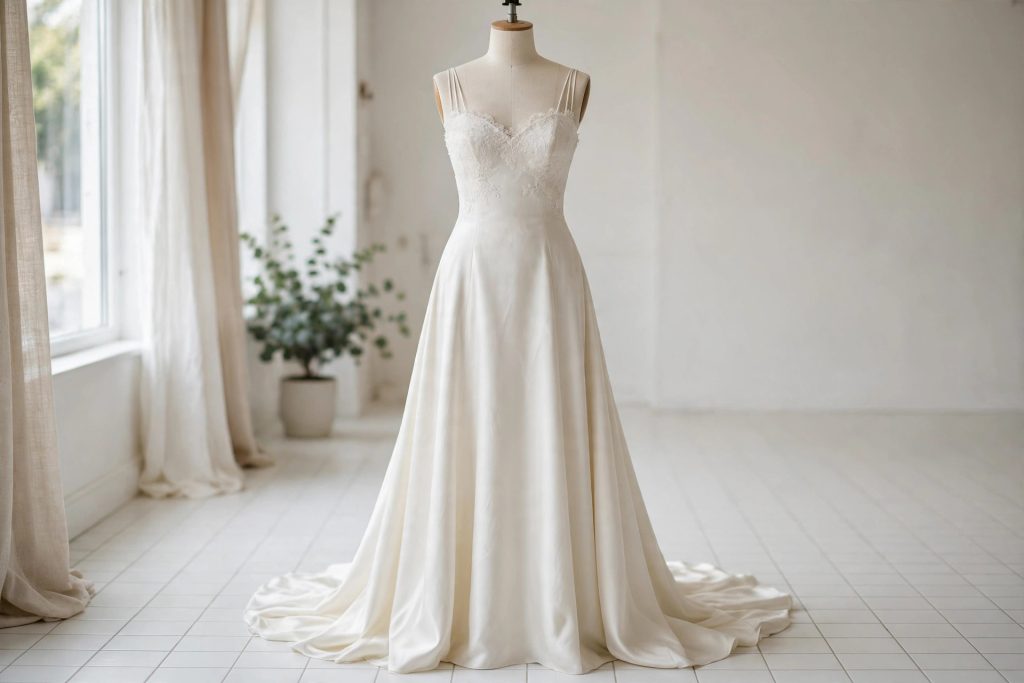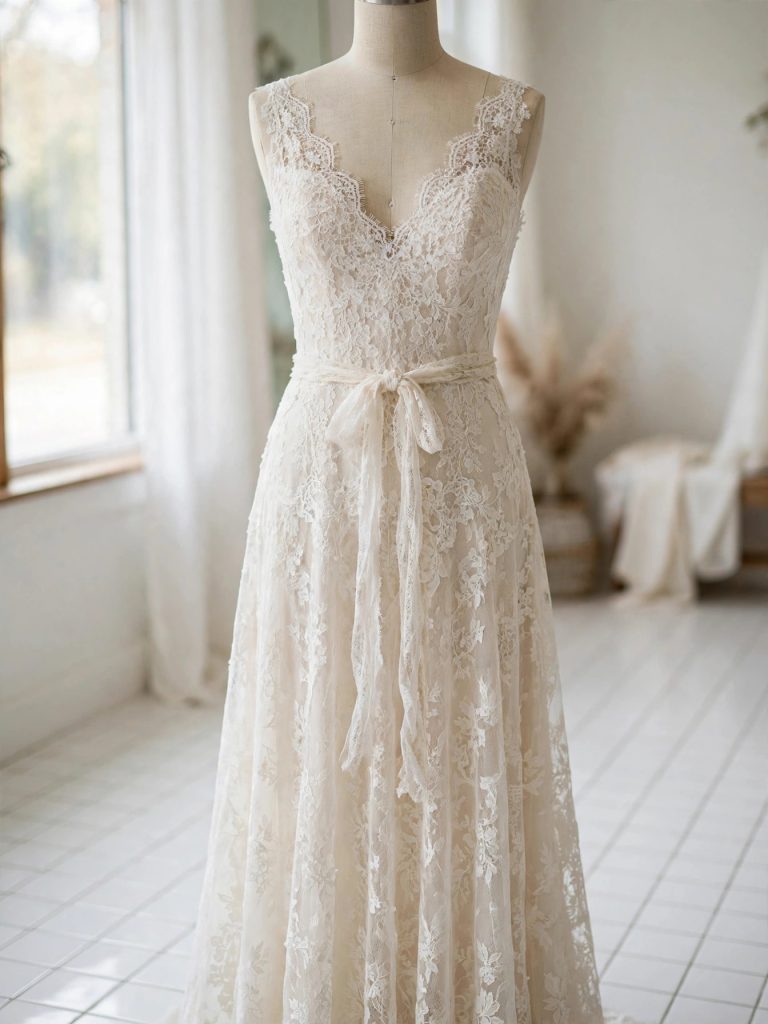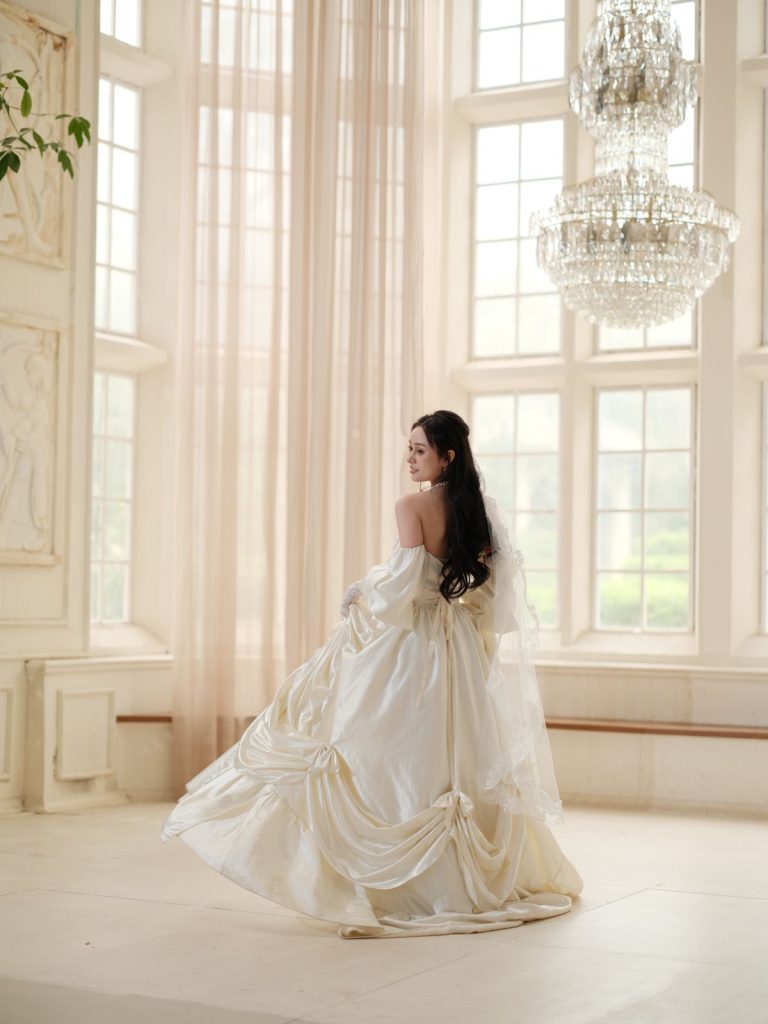
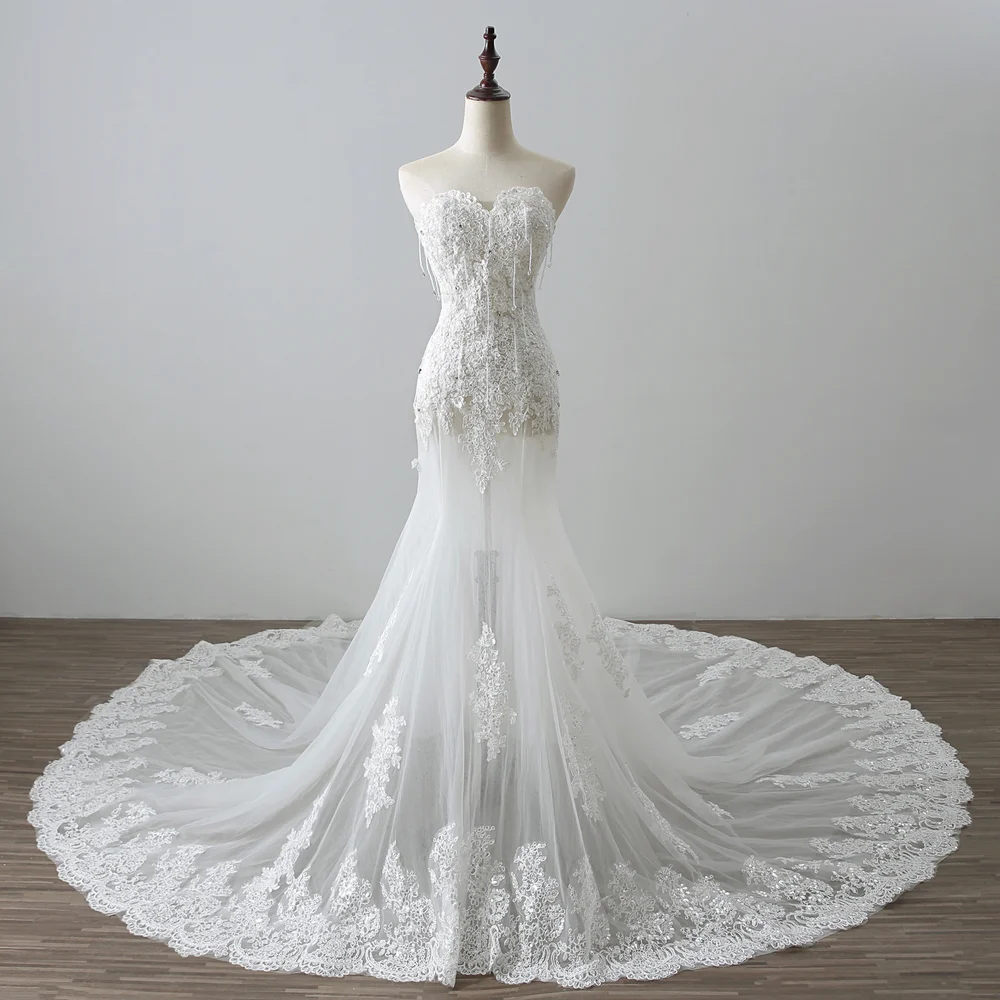
The question in this 2023 sleeveless lace dress listing — what does a custom wedding dress actually cost — has been forwarded to me by stores more times than any other in this category, usually with the same follow-up: why did three quotes for ‘the same dress’ come back three different numbers. The distribution side of this business moves dresses between factories, agents and shops, and at every handover the word ‘custom’ picks up a slightly different meaning and a slightly different price. The dress does not change. The number of hands, and what each hand believes it is selling, does.
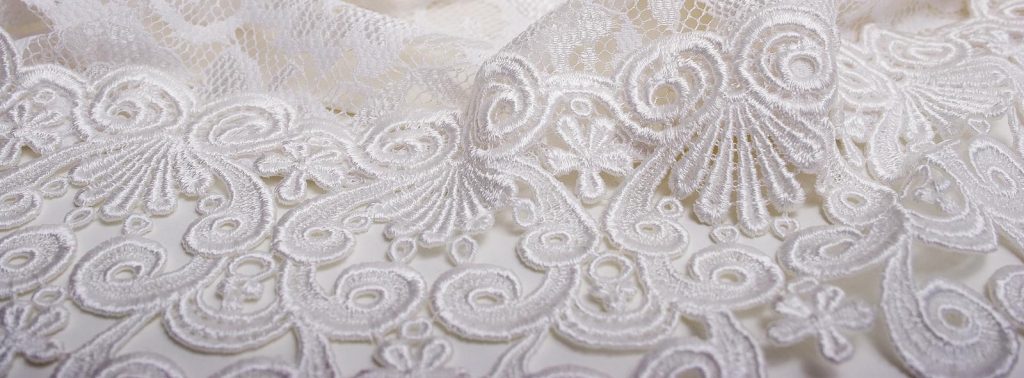
Why three factories quote three different prices for the same sleeveless lace gown comes down to what each quote is actually made of. One is pricing the lace by the metre and the motif placement by hand, one is pricing a printed lace-effect cloth, and one is pricing the sewing and leaving the structure out. A custom gown at the Guangzhou factory starts from one piece, a catalog style at 5 pieces per style, sampling takes 10 to 15 days after the fabric photographs are confirmed with the buyer, and a sample price on a wedding gown is only ever quoted per style after the design is reviewed. A bride, or a store quoting a bride, is not buying a dress at that point. She is buying a list of decisions, and the cheapest quote is usually the one with the fewest decisions in it.
Three quotes, three different products
A factory-direct quote on a sleeveless lace gown usually covers a standard pattern adjusted to measurements, lace as an all-over fabric, and delivery to the port or the courier. An agent’s quote adds a margin and, sometimes, a genuine service: communication, checking, a second pair of eyes on the measurement sheet. A retail quote adds the fitting room, the alterations bench and the risk of the bride changing her mind about the neckline in month two. All three can honestly call the dress ‘custom’. Comparing the numbers without comparing what each one carries is how stores end up switching suppliers to save money they then spend on alterations and apologies.
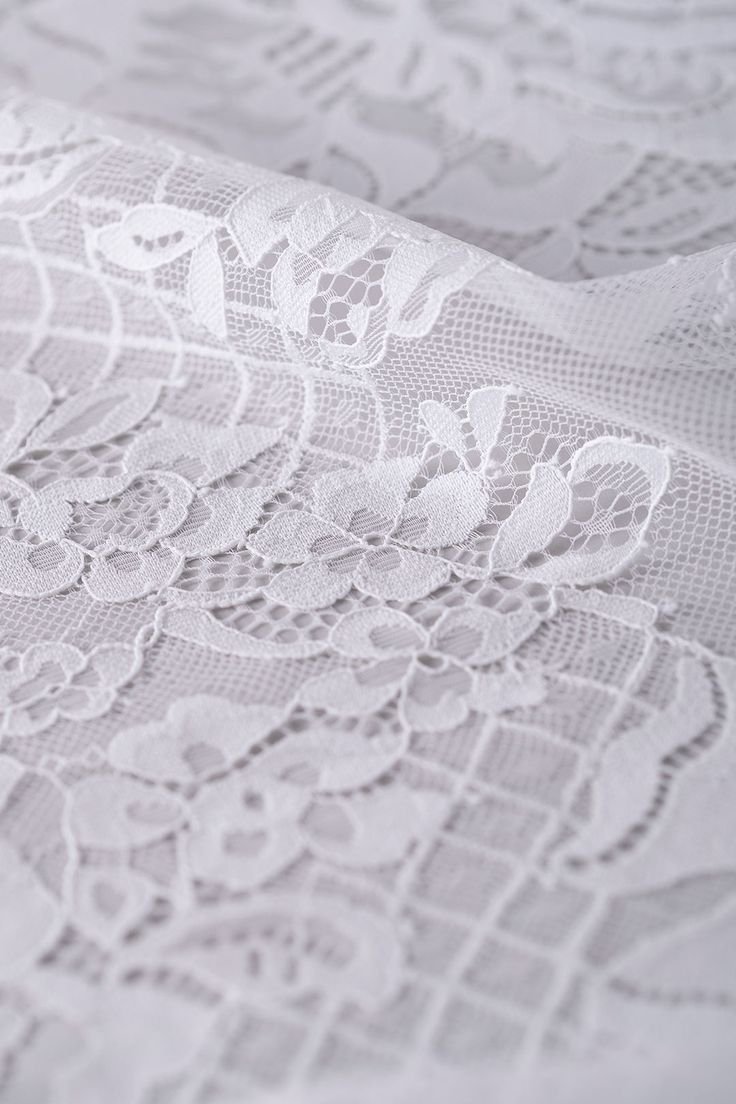
Lace is where the sleeveless version saves real money against its sleeved sisters. Sleeves in lace are hand-finished, matched at the armhole, and priced like the jewellery of the dress. Removing them takes out one of the most skilled operations on the garment, which is why sleeveless lace gowns hold their price band even when the bodice lace is good. A quote that prices a sleeveless and a long-sleeve version the same has not costed the sleeves at all — it has averaged them, and averages come home later as somebody’s surprise.
The timeline is a cost too
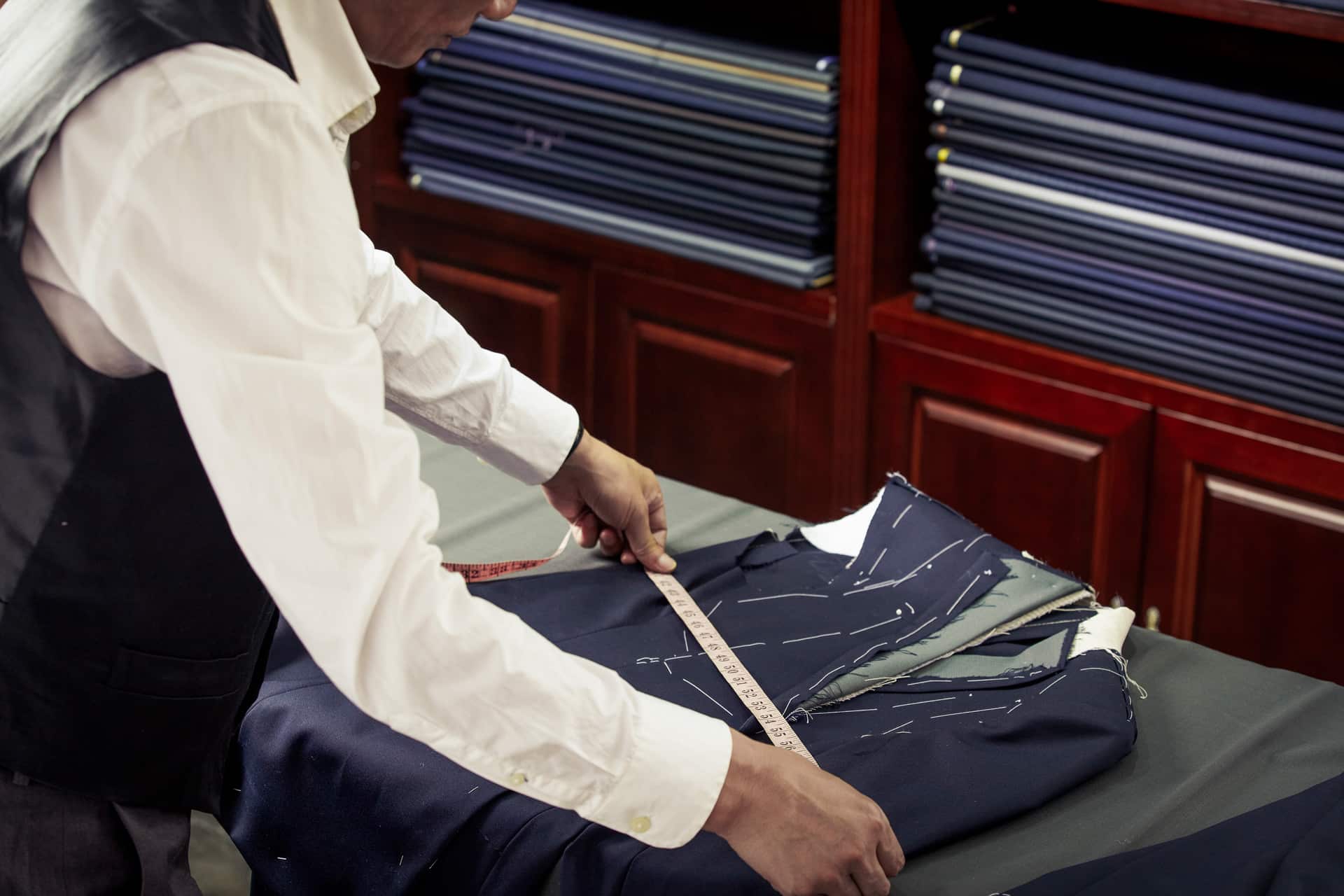
Custom at this level runs on a queue, not a stopwatch. Cutting waits for the lace to arrive, applique waits for the cutter, and the whole order waits behind every order that confirmed before it. The honest lead time stores work with for a made-to-measure lace gown is measured in weeks that include the queue, the making, the checking and the shipping, and each of those four can eat the slack the others left. Rush fees exist, and they buy queue position, not magic: the dress is made by the same hands, sooner, while somebody else’s dress waits longer. Stores that promise dates without asking which queue the dress is in are selling a date they do not control.
Shipping method then writes the last line of the cost. A single gown travels as a parcel with volumetric pricing — a full skirt in a protective box can be billed on dimensions well past its actual weight — while store orders consolidate and spread that cost across many dresses. This is why the same gown can look oddly cheap in a store’s bulk quote and oddly dear as a single order, without anyone being dishonest. The box is the same size either way. There are just more dresses to share it with when it travels as freight.
What a store should pin down before quoting a bride
Four things, in writing: whether the lace is all-over fabric or placed applique, whether the price carries local alterations or only factory adjustments, which queue the order joins and what date that queue honestly lands on, and how the gown ships and who pays the volumetric difference. A store that can answer those four from its supplier quote can price the dress in front of a bride without crossing its fingers. A store that cannot is not quoting. It is guessing in a confident voice, and brides can tell the difference by the second appointment.
Stores pricing their first custom orders can set these cost lines next to the affordability notes in our affordable lace wedding dresses and the sampling timeline in the how long it takes to sample a wedding dress piece.
Questions buyers and stores actually ask
Why do quotes for the same custom lace dress vary so much?
Because ‘custom’ covers different bundles at each step of the chain. A factory quote is usually the dress alone, adjusted to measurements. An agent adds margin and sometimes real checking work. A retail quote carries the fitting room, alterations and the risk of changes. The numbers differ because the products differ, even though the photograph is identical. Ask each quoter what their number carries — alterations, checking, shipping — before comparing the numbers at all.
Is a sleeveless lace gown meaningfully cheaper to make than a sleeved one?
Yes, and the reason is skill, not fabric. Lace sleeves must be matched at the armhole and finished by hand; they are among the most labour-heavy parts of the dress. Removing them removes that operation entirely, which is why a sleeveless version can carry good bodice lace and still hold a lower price. If a sleeved and sleeveless version quote the same, the sleeves were averaged into the price rather than costed.
How long should a store allow for a made-to-measure lace gown?
Allow for four stages, not one: the queue before cutting, the making, the checking, and the shipping. Each stage has its own delays and they rarely cancel out. Rush options buy a better queue position; they do not shorten the handwork. A store quoting a bride a date should be quoting the honest landing date of the queue the order will actually join, plus room for the stage nobody planned for.
Why does a single gown cost so much to ship?
Because a full-skirted gown in a protective box is billed on its dimensions, not its weight, and a single parcel carries that whole charge alone. Store freight spreads the same kind of charge across many dresses in a consolidated shipment. The difference between a single-order price and a bulk price often contains this box arithmetic, which has nothing to do with the dress itself and everything to do with how it travels.
What is the most common hidden cost on a first custom order?
Local alterations that nobody budgeted. A factory-adjusted gown still meets a real body in a real fitting room, and small changes — a hem, a strap, a centimetre at the waist — are charged locally at retail rates. Stores that state plainly whether their price includes an alterations allowance have calmer brides than stores that let the fitting room deliver the news.
The three quotes from that forwarded email are still in a folder somewhere, all for ‘the same dress’. Only one of them mentioned alterations. Only one mentioned the queue. The cheapest one mentioned nothing at all, in beautiful formatting, and it is the one the store chose first.