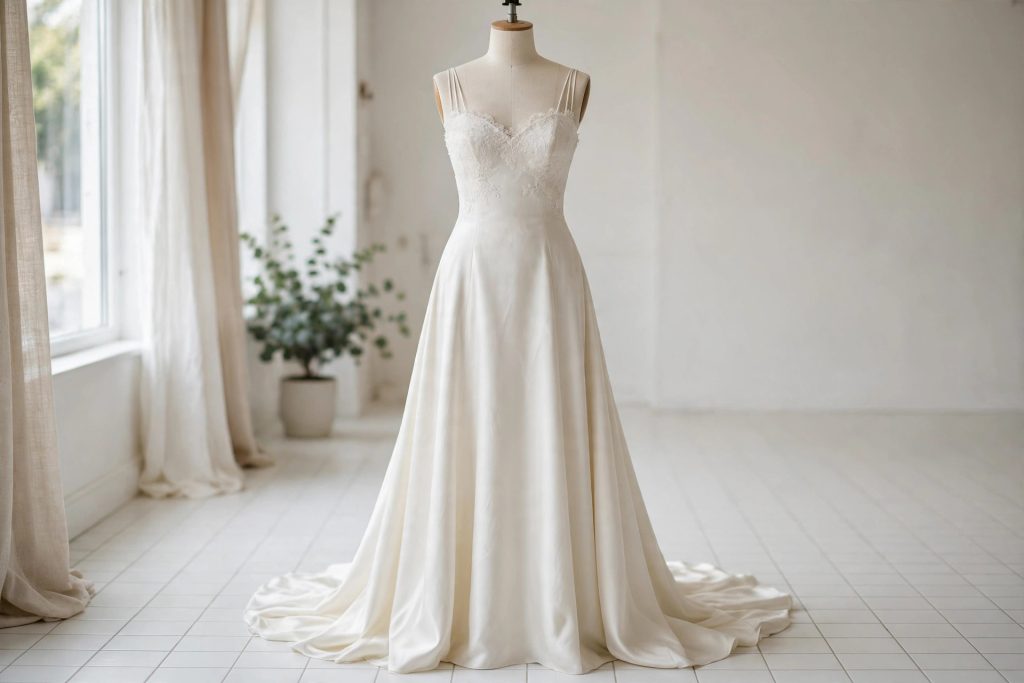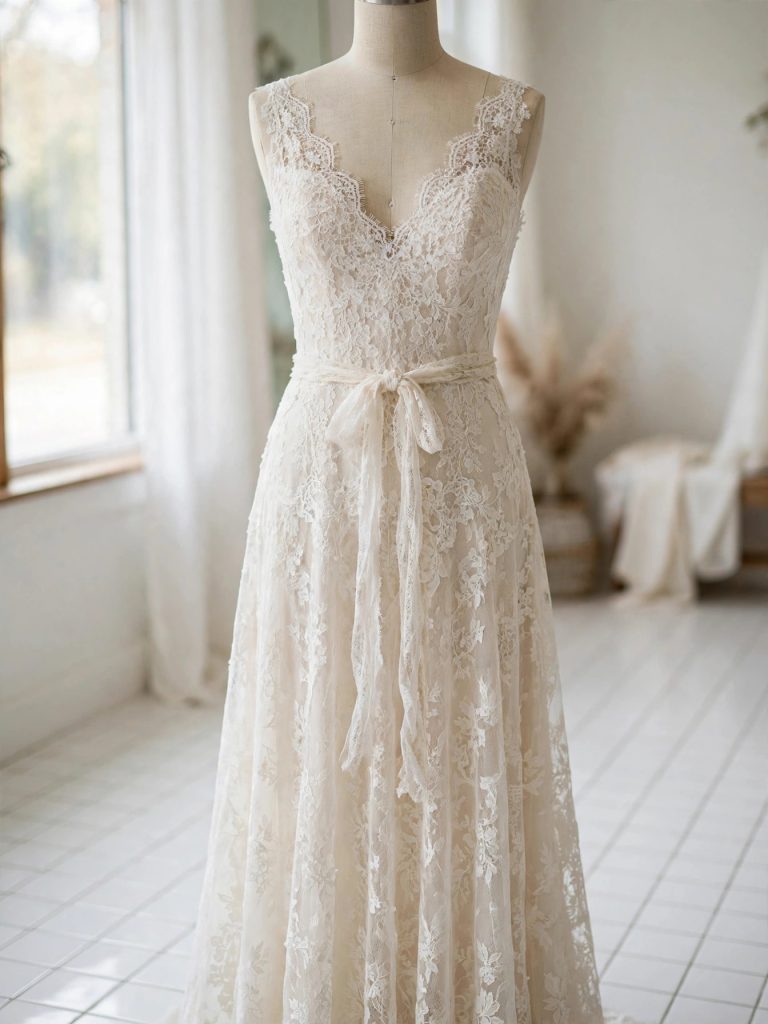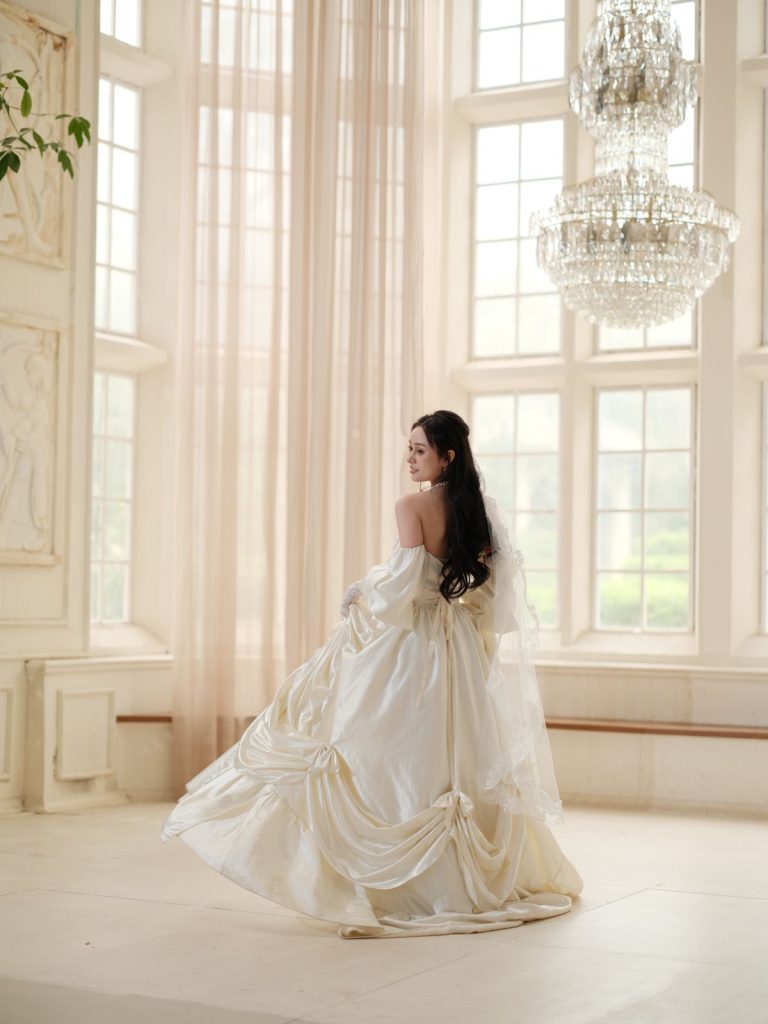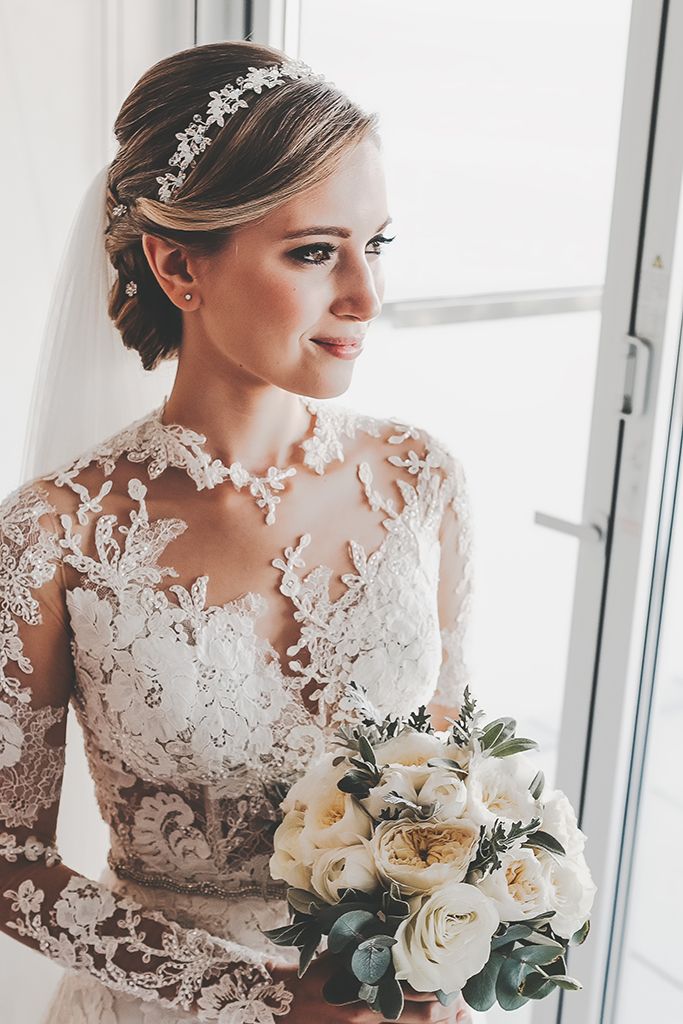
Seven to fifteen.
That is the number factories quote for a first wedding dress sample, in business days. Buyers hear the seven. The wedding dress sample lands on day nineteen. Then the emails start. I sit on the factory side of these conversations, the side that explains why a date on a calendar does not match a dress in a box, and the first thing I stopped assuming years ago is that the buyer and the factory mean the same thing by the word “sample.”
Why Does My Wedding Dress Sample Take Longer Than the Two Weeks Quoted?
The two-week quote almost always covers only the proto, the first shape-check garment, not the full sampling cycle. A complete wedding dress sample cycle from tech pack through revision rounds to a sealed salesman sample runs four to eight weeks door to door. Buyers hear the word “sample” and plan around the proto timeline; factories quote the proto while buyers picture the finished approval garment.
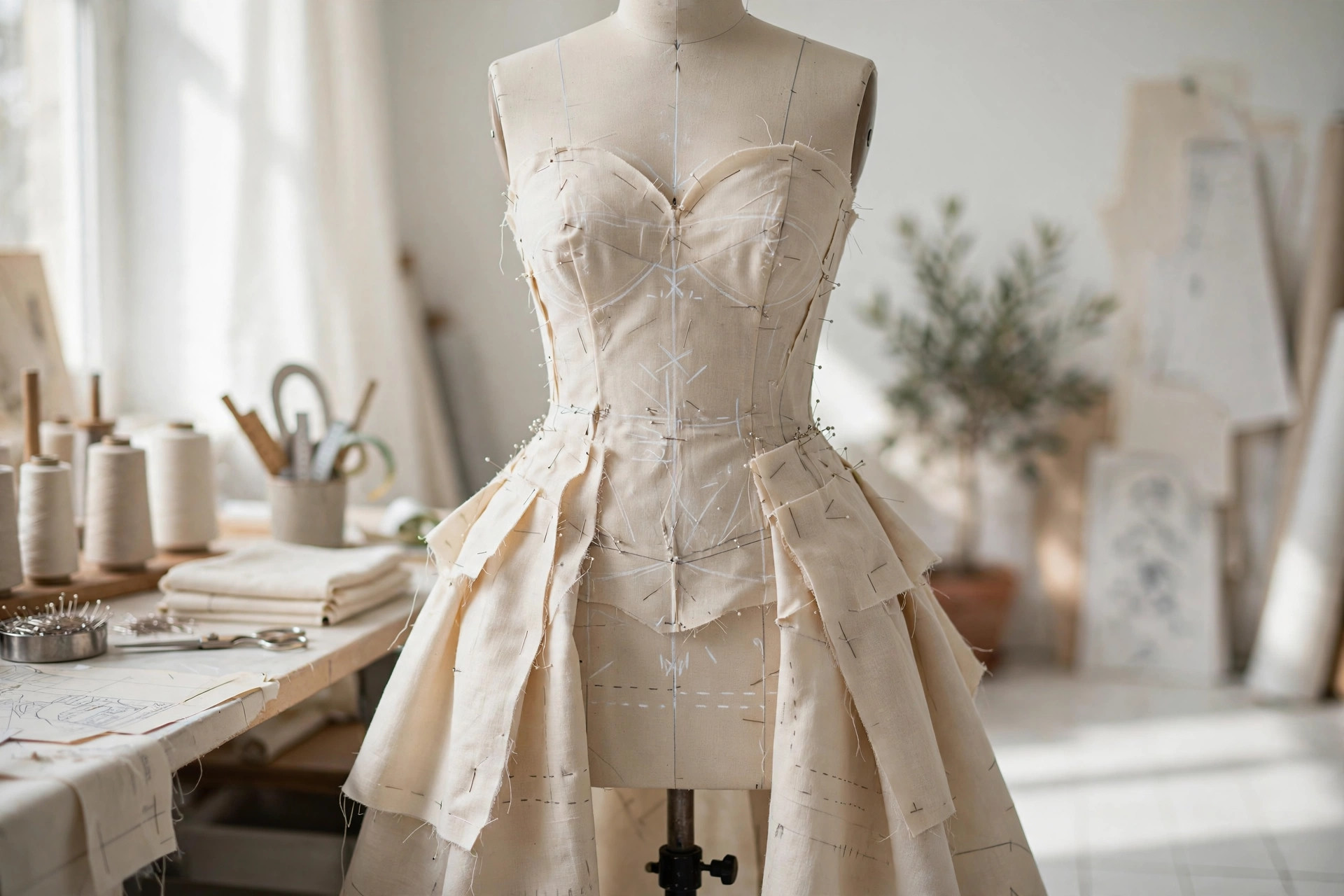
The classic accident with the word “proto” happens every season. A buyer approves the proto thinking it is the final sample, tells her retail accounts the design is locked, books the lookbook shoot. Then the real bridal salesman sample arrives looking like a different dress, because the proto was cut in substitute fabric just to prove the silhouette holds. Someone confused the shape-check with the sellable garment, and the whole wedding dress sample timeline collapsed before it had properly started. The PP, the salesman sample, the piece photographed for the lookbook and carried into market appointments in real fabric and real trims, is a different garment entirely. Buyers who tried to jump past the salesman sample stage have opened that box and gone quiet, because nobody told them the proto was never the point. If you want to see where sampling ends and production begins, the manufacturing process guide walks through the handoff.
Not their fault.
Becomes your problem anyway.
Actually, no. That is not right. The factory is not cheating the timeline. The factory quotes the proto while the buyer hears the full cycle. My mistake for assuming everyone in the room means the same word by “sample.”
The usual story goes like this. A buyer finds a wedding dress manufacturer in March, right at the edge of busy season. The quote says ten days for the wedding dress sample. She hears ten days, books a photographer for week three, tells her accounts the collection drops in May. Day ten arrives and the box holds a proto in muslin with boning channels marked in chalk, no zipper because nobody specified one, and a skirt volume nothing like her reference photo, because “full skirt” meant ballgown to her and A-line to the pattern maker. She is furious. The factory is confused. Both sides read the same email thread and see two different promises. Nobody lied. Everybody lost two weeks.
Bridal sample rooms run on queues, not on buyer calendars. Ten pattern makers, forty protos ahead of yours, and chain bridal accounts jump the line because their retainers keep the lights on. March through June and September through November are peak sampling months for bridal; a proto quoted at ten business days in February can wait three weeks in the queue in April. The sample room supervisor will not bump a 500-piece account for a twelve-piece test order, no matter how politely the buyer asks. That is not the factory being difficult. That is arithmetic, and buyers who do the division before March save themselves the angry emails.
Quoting only the proto is not always a trap, and this is where I part ways with the complainers. A buyer reordering a proven pattern with a small change, a neckline lowered two centimeters, a train shortened, can genuinely finish sampling in one proto round. Approved, done. The buyers who get burned develop brand-new silhouettes from scratch while planning like it is a reorder. The quote did not deceive anyone. The assumption did, and assumptions are the buyer’s department, not the factory’s.
What Adds More Time to a Bridal Sample Than the Sewing Itself?
Missing paperwork adds more time than sewing ever will. A tech pack without a measurement chart, zipper specification, or fabric codes forces the pattern maker to guess, and every guess becomes an email thread that sits for days. The same sample room that finishes a fully specced bridal gown in nine days can spend five weeks on a vague one. The sewing was never the slow part of a bridal sample.
Here is the trade secret about tech packs that buyers never hear: the measurement chart is the only page the pattern maker reads first. Everything else is decoration until that page exists. A tech pack missing the measurement chart adds roughly two weeks to a wedding dress sample, because she ends up drafting from your photographs while everyone on the email thread pretends the delay is about sewing capacity. No zipper specification, and the proto stops halfway waiting on confirmation. No fabric codes, and the sample room substitutes something “close enough,” landing a shade off in a way nobody can name but everybody can see.
Nine days with a full tech pack. Five weeks without one. Same season, same people, same machines. The difference was never the sewing.
I don’t know what a proper tech pack costs to commission. That is not my side of the business. A bad tech pack costs one full revision round, seven to fifteen days, plus courier both ways. That part I can price exactly.
Tech pack quality drives the sample timeline. That part I believe completely. Whether a physical reference garment can fully replace the paperwork, I still have not figured out. Some buyers send terrible tech packs and still get excellent samples, because they also send a retail dress bought off the rack. The factory measures it, feels the interfacing weight, sees how the boning is anchored, reads the construction like a map. Thirty pages of sketches cannot do what one real garment does. So the rule holds, except when it doesn’t, and I have stopped pretending I know which cases are which.
Rushing the Wedding Dress Sample Is How Bulk Orders Go Wrong
The accident always looks the same. The second proto arrives with thin beading in one section, because the bead supplier shorted the quantity. The buyer is behind schedule, the lookbook shoot is booked, so the proto gets approved with a handwritten note: “fix beading in bulk.” The factory files the note. Bulk production runs. Three hundred gowns arrive with the exact same thin beading, because the production line followed the approved reference, not the handwritten wish. The buyer rejects the shipment. The factory points at the approval. Beading cannot be fixed in bulk. The beading is the dress.
Whatever gets sealed in the salesman sample becomes the binding reference for the entire order. Stitch density, bead placement, lining finish, zipper brand, the exact shade of the lining against the shell, inspectors compare every finished gown against that sealed wedding dress sample, and the bulk quality control breakdown shows exactly how that comparison works on the inspection line. A puckered seam missed at sealing ships in every unit. The sample fee shocks every first-time buyer, and it should not. A basic gown runs something like $150 to $300 for the wedding dress sample, beaded gowns run higher by handwork hours, and express courier takes four to seven days each way, paid by the buyer, both ways. That “both ways” clause is where first-timers lose money they never budgeted.
I used to tell every buyer to slow down and take another revision round. Then I noticed the fastest buyers are usually reordering a proven pattern from a wedding dress manufacturer they have used for years. For those buyers, speed is not recklessness. Speed is certainty in a locked pattern and a known quantity. The slow-down advice fits new silhouettes, new factories, new relationships. I had it backwards for a while, preaching patience as a universal virtue. Slowness is not a virtue. Certainty is, and certainty is earned, not scheduled.
The Sample Timeline Includes Your Own Approval Speed
Bridal sample protos rot on buyer desks, and nobody puts that in the timeline. The scene repeats constantly: the bridal sample proto arrives on a Tuesday, the buyer means to review it properly, but a market appointment intervenes, then a trunk show, then the photos sit in her phone for a week. Feedback finally lands eighteen days later, thoughtful, detailed, and useless for scheduling, because the sample room moved on and her slot evaporated. Then comes the complaint that sampling is slow. The clock does not pause for a busy buyer. Every day the proto sits on a desk costs exactly as much calendar as a day of sewing, except nobody invoices for it.
The fix is unglamorous. Answer the proto within 48 hours, even if the answer is only “received, reviewing, back Thursday.” Silence drops you out of the sample room’s mental queue. I have watched buyers lose three weeks to their own inboxes and blame the factory with a straight face.
No wait, that is not fair either. Let me correct myself. Some slow approvals are the buyer doing her job properly, showing the proto to retail accounts, waiting on pre-orders before committing to a direction, and that caution prevents developing a gown nobody buys. I framed every delay as negligence, and that was wrong. Silent delays hurt. Slow deliberate ones are diligence in a slow costume. The distinction matters, because the fix for silence is a 48-hour acknowledgment habit, while the fix for deliberation is building account feedback into the timeline from the start instead of discovering it mid-cycle.
What a Bridal Gown Is Actually Made Of
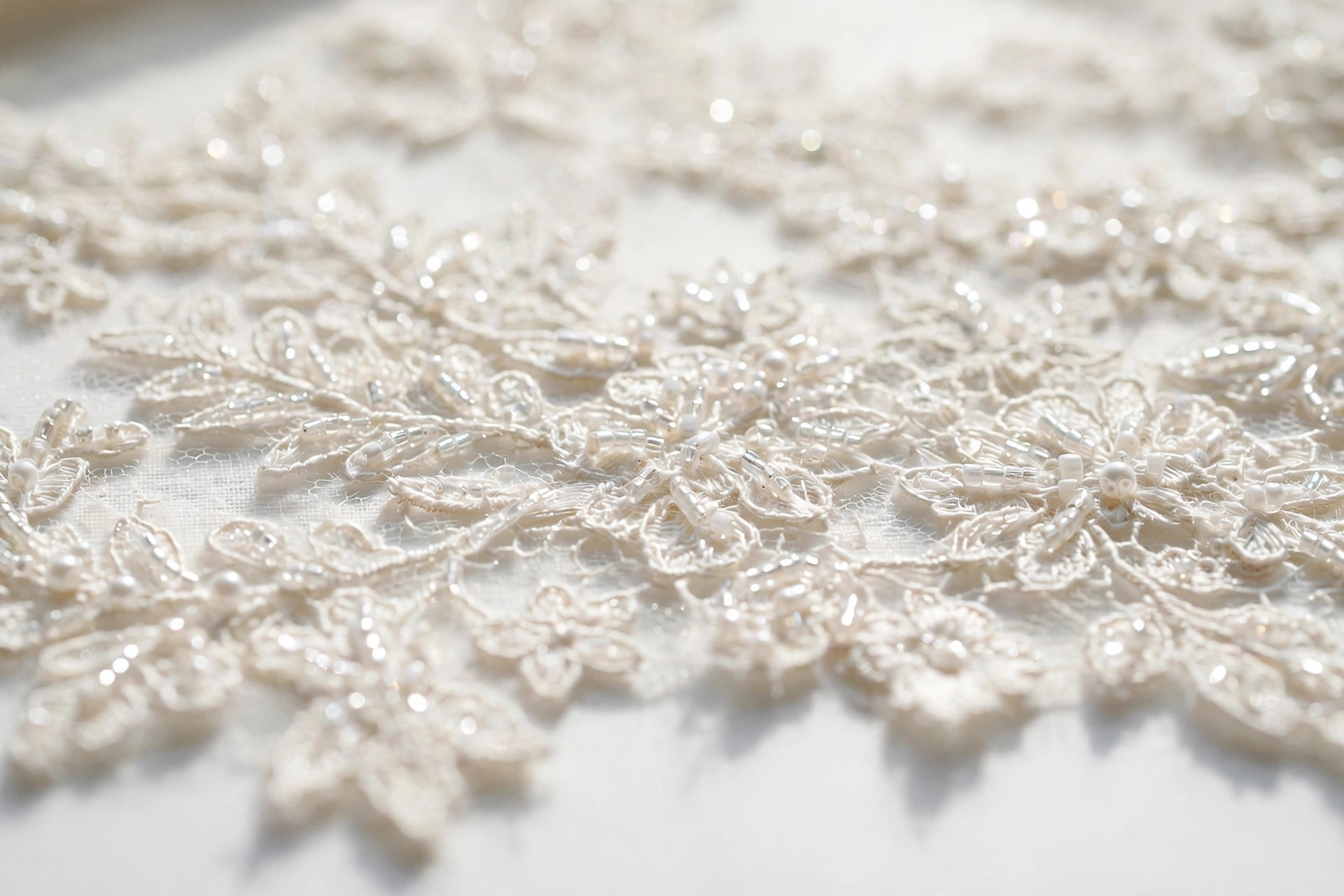
Custom lace runs on a calendar that ignores buyer launch dates. When a mill weaves lace to a buyer’s pattern, the mill needs two to four weeks before the sample room cuts anything. The mill is not slow. The mill has looms, dye lots, a queue. A twelve-meter order does not jump any of them. Specialty beading, hand-dyed veiling, custom embroidery threads, all of them carry independent lead times. Every wedding dress sample quote assumes materials in hand. Materials are so often not in hand that the real day one is “materials confirmed,” not “tech pack received.” Buyers who ask when the wedding dress sample ships without asking where the lace comes from are asking the questions in the wrong order.
Beading quotes look dishonest, and here is the insider reason they never match: workshops price their own invisible queues, not your gown. Hand-beaded bodices add anywhere from 10 days to a full month to sampling time, depending on bead density, and two factories never quote the same number because no two workshops carry the same backlog. Light scattered beading, maybe ten days. Dense all-over work, a month. Buyers comparing three quotes assume someone is lying. Nobody is lying. She still thinks the other two padded their margins.
Lock the lace in January, calm March. Start asking about lace in March, panic in April.
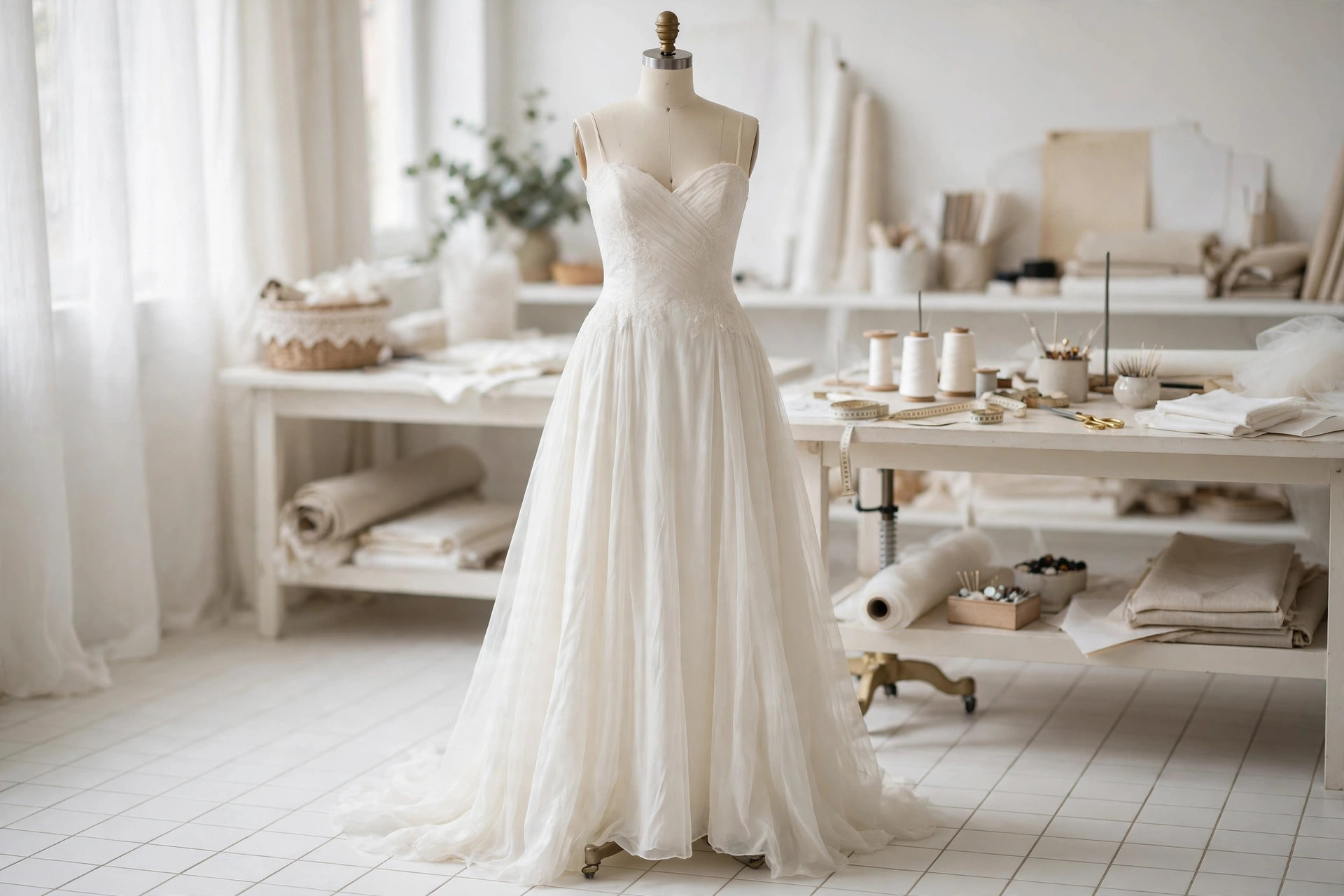
A wedding gown is architecture, not fabric. The bodice alone stacks four to six layers. Outer shell. Interfacing or fused canvas. Boning channels with the boning actually sewn in. Inner lining. Often a modesty panel or built-in cups. Each layer gets cut in sequence and assembled in sequence. Skipping the interfacing to save a day collapses the bodice by the third fitting. Nobody lists these layers in the quote because the list reads like an excuse. The layers are not an excuse. Every layer is a day that cannot be compressed, and buyers planning timelines around sewing speed alone are missing most of the calendar.
Bridal fittings consume whole weeks that quotes never itemize. A bridal proto almost always needs a live fitting or a photo review shot from six angles. Six angles. Front, back, both sides. A close-up of the bodice. The hem in motion. Marks go back, the gown gets recut and resewn, and each loop runs seven to fifteen days plus courier. Two loops are normal. Three are common on a new silhouette, and later loops surface smaller, pricier disagreements, because by round three nobody argues about design anymore, they argue about taste. Buyers should run this math before promising delivery dates to their accounts. The loops do not care about launch calendars.
People ask whether I get tired of typing the same wedding dress sample explanation every March. I do. But the alternative is watching another buyer learn it the expensive way, and that never gets easier to watch. So I keep typing the emails, and I keep asking which wedding dress sample they meant.
Every March the same emails arrive, the same panic, the same “but you said two weeks.” I used to type long explanations about the bridal sample timeline. Now I ask one question back and let the silence do the explaining. Some seasons I feel optimistic that the industry will sort out its vocabulary. Most seasons I do not, and the inbox keeps proving me right.
Frequently Asked Questions
Seven to 15 days for a proto. So why does my sample land on day 24?
Seven to 15 business days is the number a sample room quotes for the proto, and it is also the number buyers plan around, which is exactly where the trouble starts. That clock starts when the tech pack is confirmed, not when the request email goes out. Tech packs sit on buyer desks for two weeks while buyers count from the send date. Then the full wedding dress sample cycle stacks on top. Four to eight weeks door to door. A revision round or two. Custom lace from the mill runs its own two to four weeks before the sample room touches anything. Heavy hand-beading adds 10 days to a month. Day 24 was never late. It was the honest number all along, and nobody wanted to hear it.
Ten pieces per style. Is that real, or is there a catch nobody mentions?
Ten pieces per style is real at OEMOD, colors and sizes mixable, and the catch is the part nobody asks about. Those runs go on stock fabric, not the main bulk line. Your labels, your packaging, the factory’s existing patterns. The color can drift a few percent from the confirmed sample because stock dye lots are what they are. Buyers hear “ten pieces” and picture a miniature bulk order. It is not that. It is a test order wearing bulk’s clothes, priced accordingly. Anyone promising ten pieces on fully custom tooling is either losing money or not telling you something.
A sample costs $150 to $300. What is the part nobody budgets for?
The courier both ways is the part nobody budgets for. The sample fee itself, $150 to $300 for a basic wedding dress sample and more for beaded, is the number everyone sees coming. The number that ambushes buyers is the express freight. Four to seven days each way. Paid by the buyer. Both directions. I have seen freight on a beaded gown outrun the sample price adjustment a buyer spent a week negotiating down. Buyers will fight over twenty dollars on the sample fee and then sign the courier invoice without blinking. The invoice always wins.
What do I need before requesting a sample that most buyers forget to send?
The zipper specification is what most buyers forget to send. Sketches get remembered, fabric swatches get remembered, sometimes even the measurement chart makes it. The zipper spec is the line everyone skips, and it is the line that stops the proto halfway. Without it the sample room waits on confirmation, the confirmation waits on the buyer, and the buyer is at a trunk show. A week evaporates over a five-dollar component. The measurement chart gets all the respect. The zipper gets none, and then it collects its revenge in calendar days.
The salesman sample is sealed. Can I still tweak just one thing?
You can still tweak one thing, and it will cost you a full new wedding dress sample round. The sealed sample is the binding reference inspectors hold against every finished gown, which is why “just one tweak” is never just one tweak. The tweak needs a revised proto, the proto needs courier both ways, the line needs a new reference to follow. I have watched buyers approve a sealed sample on Friday and request “one small change” on Monday, as if the weekend had not happened. The most expensive sentence in sampling is “just one thing.” It is never one thing.
So. Seven to fifteen days for the proto. Four to eight weeks for the full wedding dress sample cycle. Add time for beads, for lace, for busy season, for thin paperwork, for slow approvals. That is the honest math, and it has not changed in all the years I have been on this side of the table.
Whether buyers will ever stop hearing “seven” when the factory says “seven to fifteen,” I am still waiting to find out.