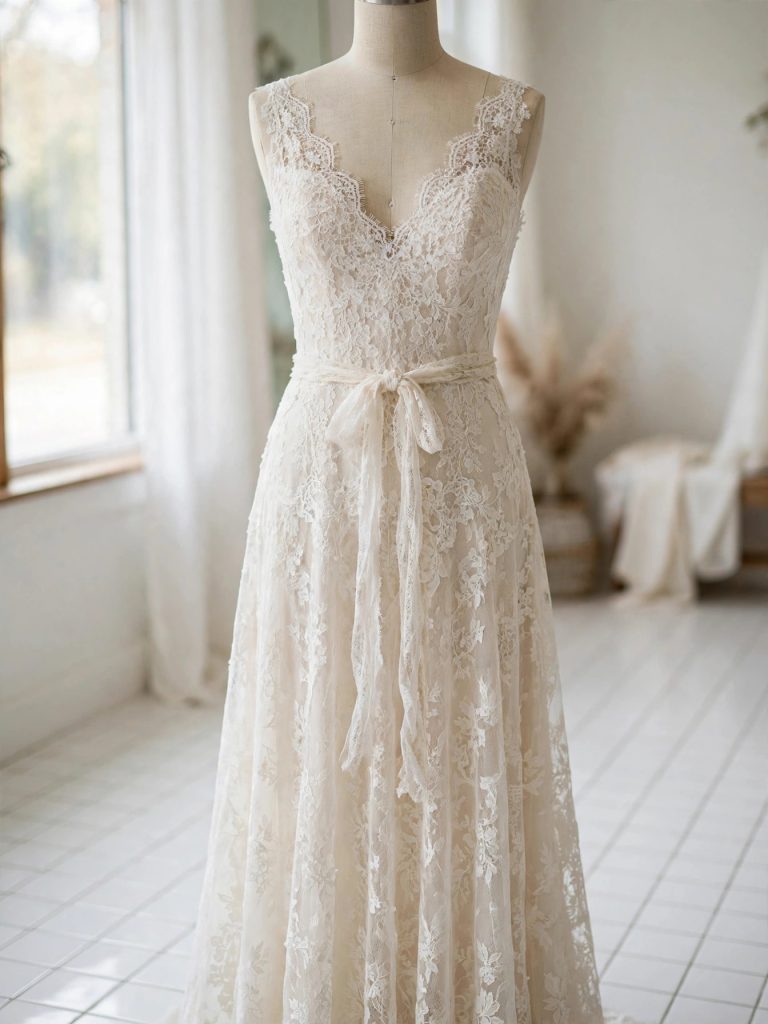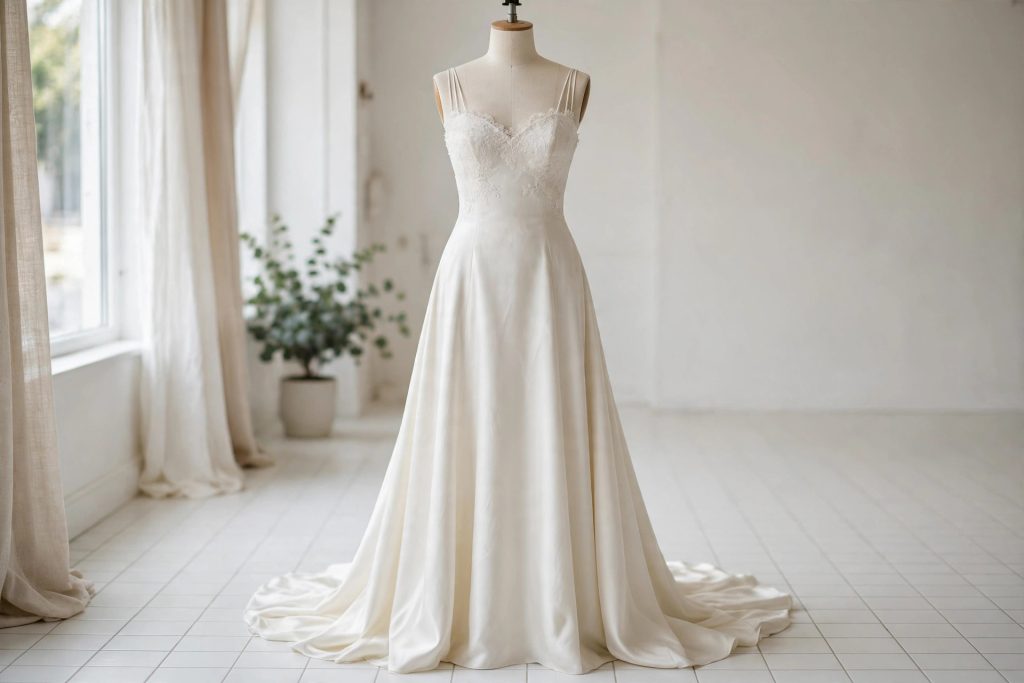
Thirty percent. That was the deposit on a run of double-shoulder floor-length gowns, and thirty percent is the number I think about whenever a buyer tells me deposits are just a formality. Orders taken at 30% deposit see the buyer walk away from the balance roughly three times more often than orders taken at 50%. That is not a theory I read somewhere. It is the pattern the payment side keeps tripping over, season after season, and the gown in question here — two straps, floor length, nothing exotic — sat finished in a warehouse while the balance argument ran its course.
The factories are not stupid about this, whatever buyers assume. A factory that accepts 30% buries an 8 to 12% risk premium in the unit price, which means the buyer who negotiates the deposit down is usually paying for his own risk through the back door. He feels clever for a week. Then the invoice math catches up with him at reorder, and he cannot work out why the same wholesale wedding dress costs more for him than for the boutique across town that paid 50% without blinking.
I handle the money side of these deals. That is my seat. I do not cut fabric, I do not stand at the end of the line with a clipboard, and when a buyer asks me whether a double-shoulder bodice will hold up through a full day of wear I tell him honestly that is not my side of the business. What I see is the paper: deposits, balances, documents, and the exact moment a deal quietly dies, which is almost never the moment either side admits it died.
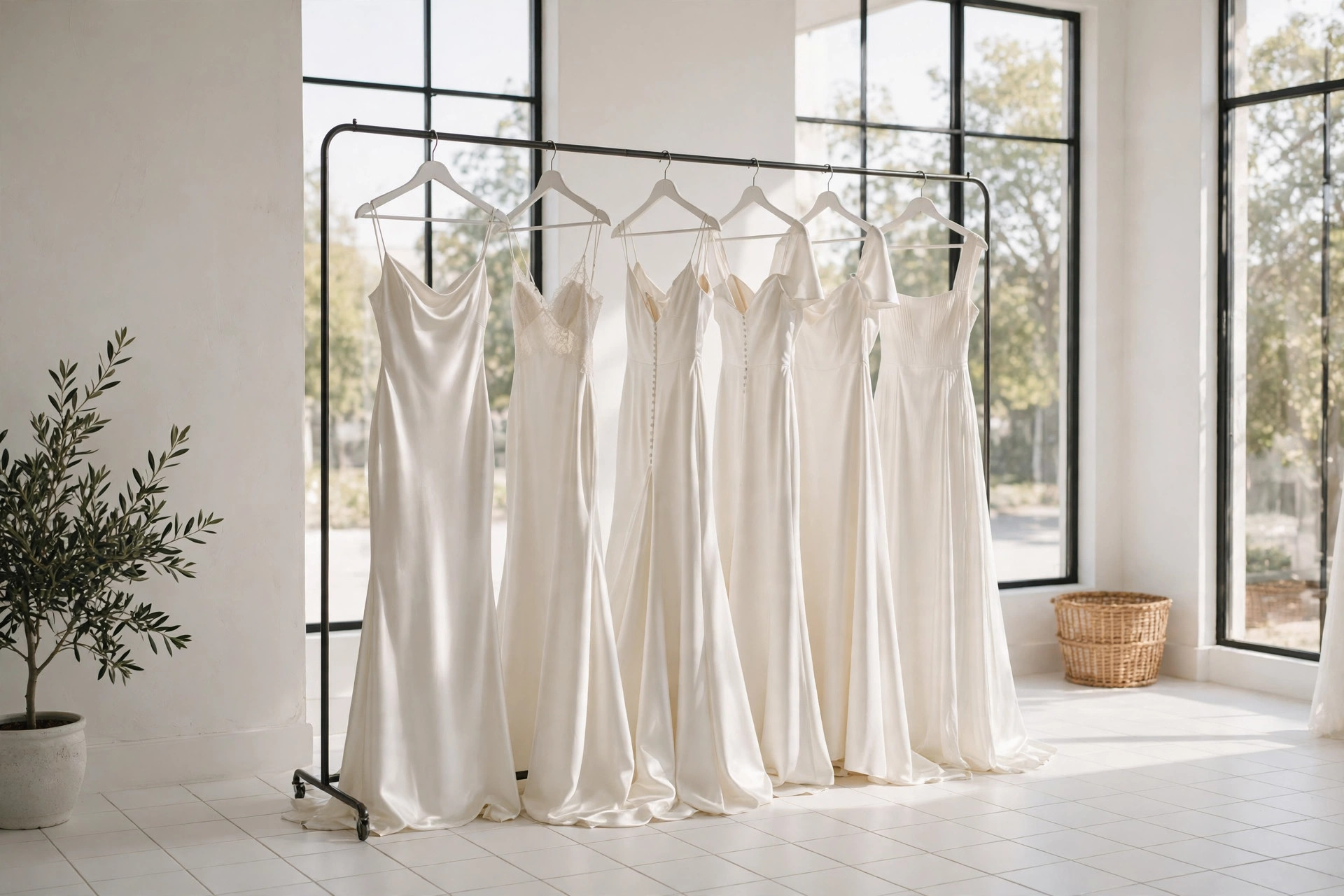
For a store pricing this gown as a wholesale line rather than a one-off, the buying facts sit underneath the cost story. This is a floor-length bridal gown category piece, and at the OEMOD factory in Guangzhou a catalog wedding style runs at 5 pieces per style for wholesale, while a made-to-order gown starts from a single piece. Sampling takes 10 to 15 days once fabric is confirmed, and bulk production runs 20 to 30 days after deposit. The buyer this suits is a bridal store building a repeat rail, where the deposit, the cutting order, and the QC checkpoints in this article repeat on every reorder.
The gowns were finished. The money was not.
The most common dispute shape on custom bridal is boring, which is why nobody writes about it. The buyer holds the 70% balance citing quality issues that are really cash-flow issues. Finished gowns sit in the factory warehouse while both sides pay for the standoff — storage on one side, an empty rack on the other. With a floor-length gown there is no resale market waiting to rescue anyone. Custom means custom. If the buyer walks, the factory owns a rack of dresses built to somebody else’s spec, in somebody else’s sizes, and the deposit is the only money that ever existed.
Bridal runs a dispute rate around 12%, against roughly 7% for B2B apparel generally, and that gap is mostly this one fact: a standard dress can be resold to the next buyer, a custom gown cannot. Buyers learn the deposit is structurally non-refundable only after they try to refund it. Sellers of custom dresses online get one-star reviews saying the seller kept the deposit, as if keeping it were a character flaw. It is arithmetic. The deposit bought fabric and line time that cannot be un-bought.
There is a sentence that predicts a default more reliably than any credit check I have ever seen. It is: can we do 20% deposit? Buyers who push the deposit below 30% fail to pay the balance at a rate that experienced hands recognize the second the words land. I cannot prove the mechanism. Maybe a thin deposit means a thin bank account. Maybe it means the buyer never fully committed and the gown run was always a maybe. Either way, when I hear that sentence on a custom bridal order, I start pricing the risk in, or I start looking for the door.
Cutting starts when the money lands, not when the paper is signed
Here is a piece of timing almost no buyer budgets for. Fabric cutting starts only after the deposit clears, not when the pro forma is signed. The gap between signature and cleared money averages about 11 days. Eleven days in which the buyer believes his floor-length gowns are already on the line and the factory has not touched a bolt of fabric. Then the buyer counts his delivery date from the signature, the factory counts from the clearance, and both of them think the other one is lying about the calendar.
I have watched that exact argument poison a deal that had nothing else wrong with it. The gowns were fine. The price was fine. The deposit landed late, the slot moved, and the buyer blamed the factory for a delay he had personally financed. Late deposit means late production, but the contract delivery date does not move just because the money did. If you take one thing from the payment side, take that: the production clock is a bank clock, not a paperwork clock.
The structure that survives defaults, the one the older factories keep coming back to, splits the money into pieces small enough to lose. Forty percent deposit, thirty at pre-shipment inspection, thirty against the bill of lading copy. Each tranche is survivable. A mid-size bridal importer once defaulted owing eleven factories, and when people picked through the wreckage the common thread was 30/70 terms with no inspection tranche. The factories with a mid-production payment got paid. The rest wrote it off and learned the lesson at full price.
Letters of credit look safer on paper and behave worse in practice for small bridal orders. Under the UCP 600 rules, banks examine documents, not goods. A one-word typo — dress instead of dresses on a packing list — can stall an otherwise clean credit for weeks while the factory absorbs the delay. And LC at sight versus 60-day usance is a single clause and sixty days of the factory’s cash locked in a drawer; small buyers often do not know which one they signed until the documents arrive. More than one factory on my side of the table says it would rather lose the order than take a 100% LC from a buyer it has never met. First orders go by telegraphic transfer. The credit comes after two clean cycles, if it comes at all.
Escrow sounds like the grown-up compromise until you watch it used. The 72-hour inspection window gets treated as renegotiation leverage after the gowns are already made. Escrow releases on paperwork, not on satisfaction, so the inspection is never really about inspection. It is about reopening a price that was closed months earlier, with finished custom gowns as the hostage. I am not against escrow. I am against pretending it removes the trust problem when it mostly relocates it.
The $18 dress that actually cost $42
Under-declared invoice values deserve their own paragraph of regret. A buyer asks the factory to declare $18 a gown to save duty when the real price was $42, the factory agrees because factories agree to keep orders, and then the buyer defaults. In arbitration the factory cannot claim the real value, because its own paperwork swears the dresses were worth $18. The duty saving was a few dollars a piece. The claim it destroyed was the whole balance. I keep seeing this trade get made by people who would never make it if it were written out in one sentence.
Then there are the friendly terms. Ninety days, offered to win an order, regretted by month two. Bridal factories that offer 90 days to new buyers write off roughly one in five of those accounts. When a boutique says our finance needs 60 days, the translation from the payment desk is simple: the boutique’s cash is sitting in next season’s inventory and the factory has just become the bank, unpaid, unthanked, and last in line. The factories that survive say one sentence and say it early: we hold the goods until the balance clears. Always. The ones that ship on promises do not survive to say anything, which is why you never hear their version.
At Canton Fair one year I noticed the booths closing the most orders printed their payment-terms board larger than their product catalog. Terms first, product second. I laughed at the time. I do not laugh anymore. A new buyer with a big order promising 100% transfer in advance from a free email domain is a fraud pattern so well worn that factories burned once now split even advance payments into two tranches. The money side of a custom bridal gown order is not the boring part of the deal. It is the part where the deal either becomes real or stays a conversation.
No wait. Earlier I said the deposit is the only money that ever existed when a buyer walks. That is not quite right either. On split terms the inspection tranche sometimes exists too, and I have seen that 30% in the middle do more to keep a buyer honest than the deposit ever did, because by inspection day he has seen photographs of finished gowns with his labels in them and walking away suddenly feels like losing something instead of saving something. The deposit tests his cash. The middle tranche tests his intentions. Different tests. I keep conflating them and I should stop.
Questions buyers actually ask out loud
A 30% deposit on 300 gowns. Why does the factory quote me more per dress than my competitor pays?
The higher unit price at a 30% deposit is usually the risk premium, and it runs about 8 to 12% buried inside the quote. Factories that take thin deposits price in the walk-away rate, because orders at 30% see the buyer abandon the balance roughly three times more often than orders at 50%. Your competitor is not getting a friendship discount. He is getting the price of a buyer whose money showed up in full and on time, and honestly I get this one wrong myself sometimes when I assume the difference must be fabric. Usually it is the terms.
My deposit was signed off 11 days ago. Why has cutting not started on my floor-length gowns?
Cutting has not started because the production clock starts when the deposit clears, not when the pro forma is signed, and the gap between those two events averages about 11 days. The signature is paperwork. The clearance is money in the account, and factories cut against money, not against signatures. If your transfer sat in an intermediary bank for a week, that week came out of your production slot, not out of the factory’s goodwill, which is a hard thing to hear in week three of an argument about a delivery date.
Forty, thirty, thirty. Is splitting the payment just the factory being difficult?
Forty percent deposit, thirty at pre-shipment inspection and thirty against the bill of lading copy is the structure that survives defaults, and it exists because of deals where 30/70 terms left factories holding finished custom gowns they could not resell. Each tranche is small enough to lose, which sounds pessimistic until you have watched an importer default owing eleven factories at once. The factories that had the middle tranche got paid. I would rather explain that once, slowly, than have the other conversation later.
The listing said custom, the deposit was non-refundable. I changed my mind at week six. Where does that leave me?
It leaves you where most buyers land on this one: the deposit bought fabric and line time against a gown built to your spec, and neither the fabric nor the time can be handed back. Custom bridal disputes run around 12% against about 7% for standard apparel, and the deposit fights are nearly all of it. Sellers get one-star reviews for keeping deposits on gowns they cannot sell to anyone else. Whether the deposit comes back usually depends on whether cutting had started, and cutting starts the day the money clears, so by week six it almost certainly had.
We declared $18 a dress to save duty and the real price was $42. Does that matter if nobody defaults?
It matters the moment anything goes wrong, and it matters in arbitration most of all, because the factory cannot claim $42 for dresses its own paperwork values at $18. The duty saving is a few dollars a piece. The exposure is the entire balance. Plenty of deals run for years with under-declared values and no problem at all, which is exactly why the habit survives, but I would rather find that out from a quiet deal than from a loud one, and the loud ones are the only ones I ever get shown.
The double-shoulder gowns from that 30% order eventually shipped, most of them, months late and at a renegotiated price nobody was happy with. The buyer still orders from Guangzhou. He pays 50% now and does not argue about it, and the factory still takes his calls, which surprises people who have not sat on the money side of this trade. Nobody in that story was a villain. There was just a deposit too thin to mean anything, and a warehouse full of finished dresses teaching the lesson that invoices never quite manage to teach.