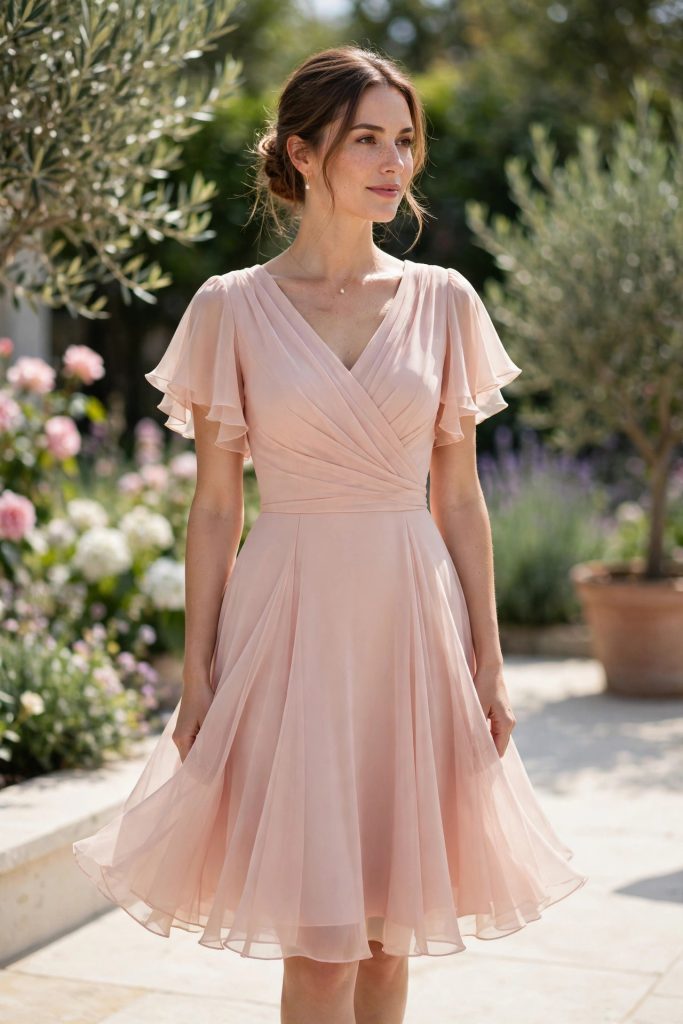
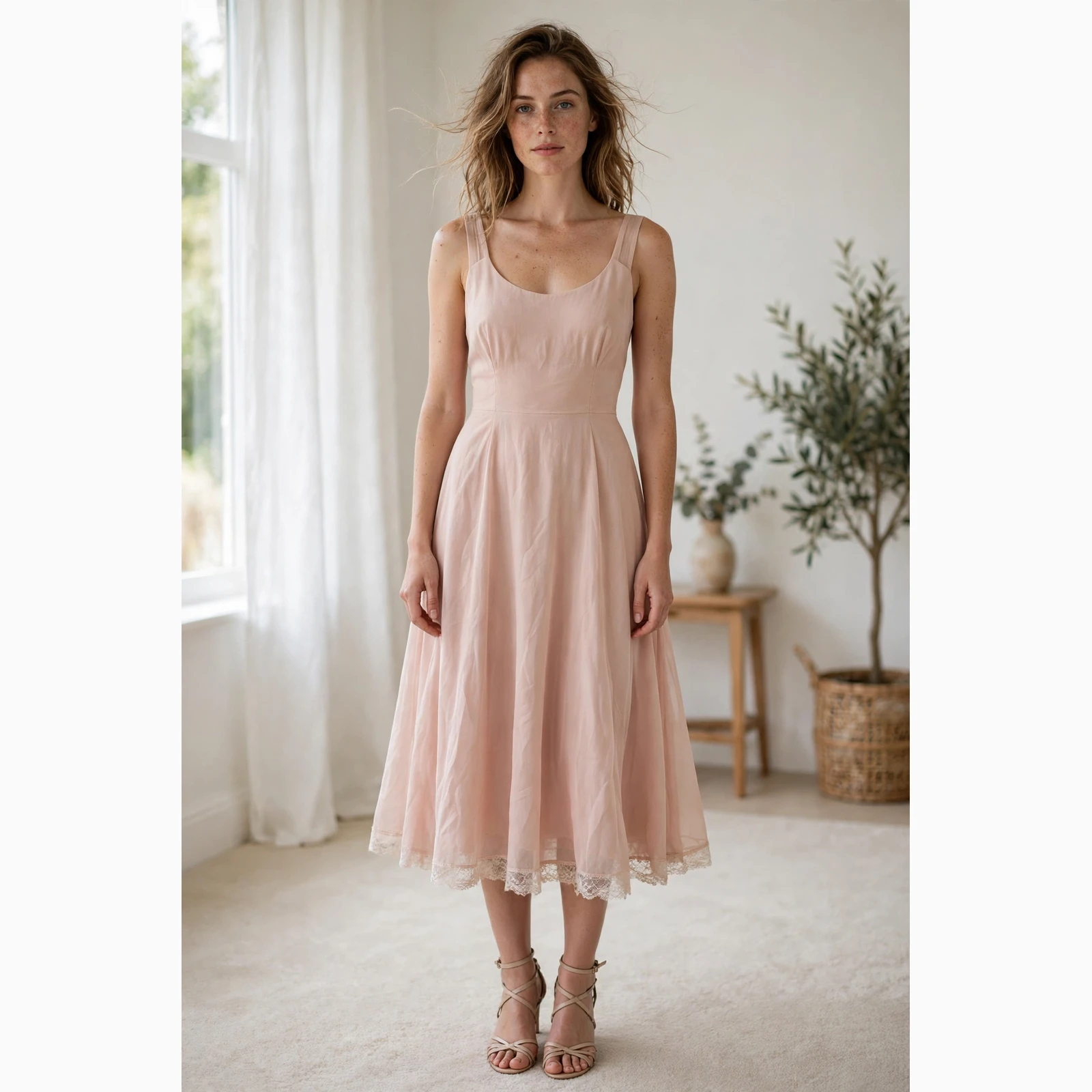
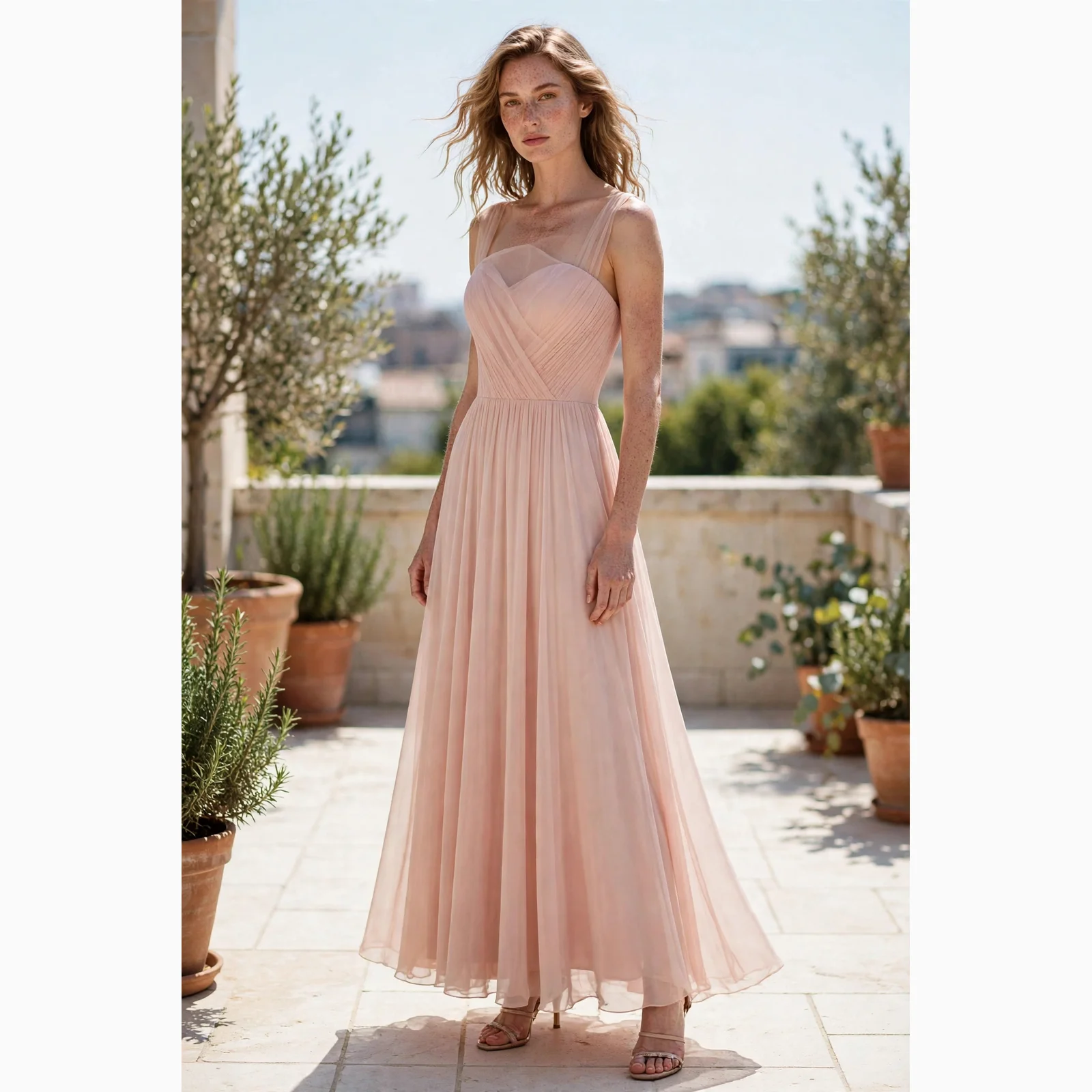
It starts small, the way it always starts. A rail of blush party dresses in a closeout stall, flutter sleeves, soft chiffon, the kind of dress that photographs like a sigh. The tag says a number that makes the dress sound like a rescue. I pick one up, hold it to the light out of habit, and the light comes through more than it should. Not scandalously. Just enough. That is incident one, and on its own it means nothing, because a party dress is allowed to be light. I put it back and tell myself I am being unfair to a dress that was never built to be inspected by a man holding it up to a strip light in a wholesale market.
I work the distribution end of this trade — closeout lots, leftover stock, the long tail of dresses that boutiques ordered with hope and returned with paperwork. My side of the business sees dresses after the story is over, which gives you a particular kind of knowledge and a particular blindness to go with it. I cannot tell you how a flutter sleeve gets sewn. I can tell you, in detail, what happens to a formal party dress after the season turns, because that is when it comes to me.
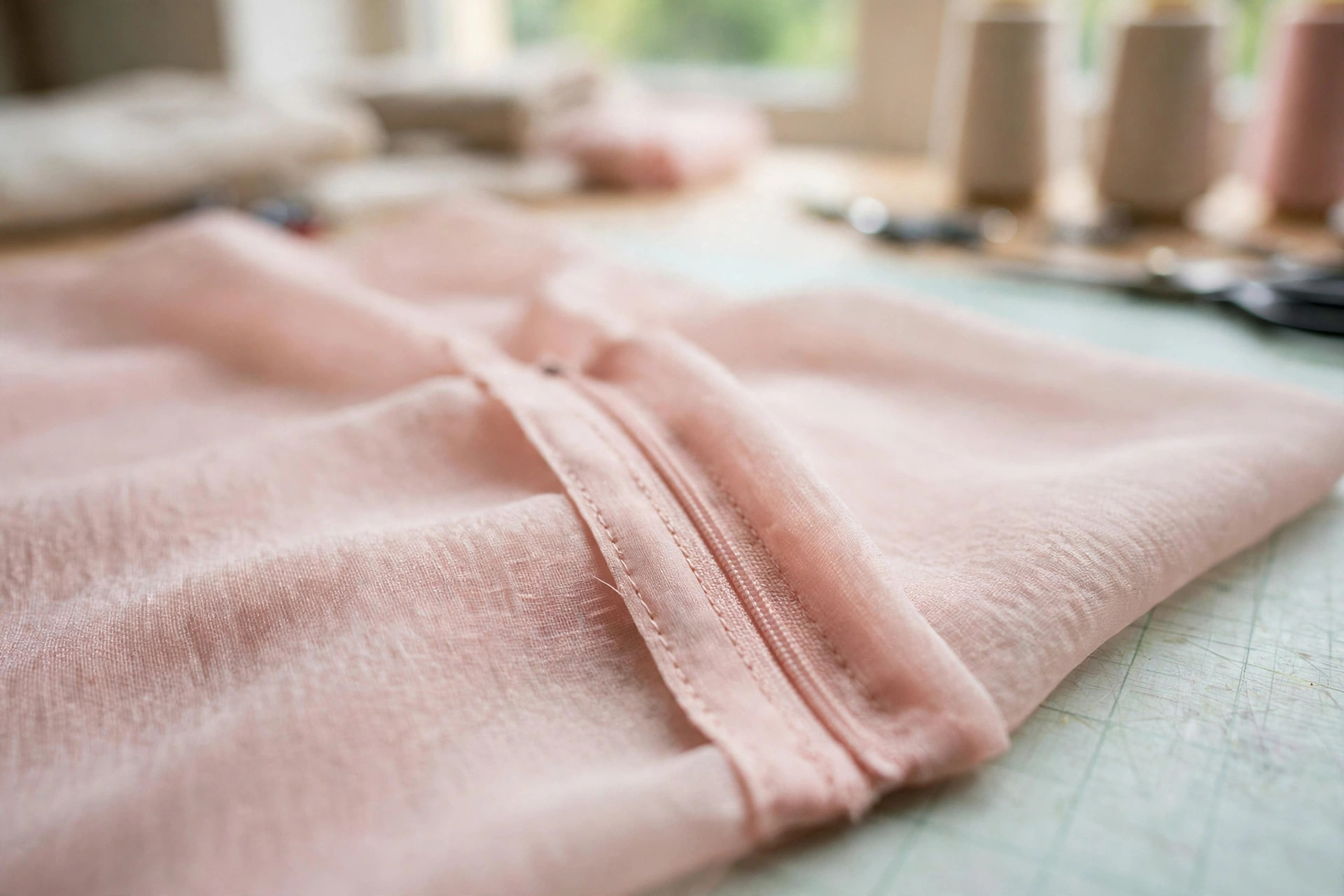
Incident two arrives about a week later, in a different lot. Same family of dress, soft pink, short flutter sleeves, the BeryLove style that sells under a dozen labels if you count the ones with the tags cut out. This one I turn inside out, which is the stall habit nobody teaches you — you learn it from buying one bad lot. The seam allowance on the spec should sit around a centimeter. What I am looking at is closer to six or eight millimeters in the places where the work was rushed. The dress is fine. It will survive a party, a wedding, probably a year of occasional wear. But the margin for repair, for letting out, for the small violence of normal use, has been shaved down to almost nothing, and shaved seam allowance never appears in a product photo or a listing. It only appears later, in the language of returns, where it gets described as poor quality by people who have no way of knowing which specific corner was cut.
The lots keep arriving, and a pattern puts its coat on
There are two waves in my year, and this style of dress rides both of them. The first wave comes in late summer — boutique leftovers, shelf-sorted, the dresses that hung in real shops and simply did not move. Those lots are honest. The second wave lands in October and it is a different animal: consolidated returns from online selling, priced fifteen to twenty percent under the August wave, because return-sorted stock is a gamble in a way shelf-sorted stock is not. A returned dress has been tried on, maybe worn, certainly handled by someone who had already decided against it. When buyers ask me why the October lots are cheaper, that is the answer, and it is not a satisfying one, because it means the discount is not generosity. The discount is information about what the lot has been through.
A flutter-sleeve party dress in blush lives a hard life between those two waves. It gets ordered for wedding season, for proms, for the long calendar of events where a guest needs to look soft and formal at the same time. Then the season turns, the color cools from romantic to leftover in about a fortnight, and down it comes to people like me. Stall owners sort incoming lots by fabric weight first and color second. Color is the story in the photograph. Weight is the story in the hand, and in the closeout market the hand outranks the eye every single time, because the hand is predicting how many washes the thing has left in it.
Which brings me to the wash test nobody runs and everybody should. In the stalls, layered dresses get sorted by how their joins survive washing. Topstitched joins hold their price. Serged-only joins get dumped first. The seam decides the closeout price, not the print, not the color, not the brand name on a tag that half the lot is missing anyway. A flutter sleeve is a join wearing a costume — a small piece of chiffon attached at the shoulder, expected to move prettily and survive the wash — and the way it is attached tells you more about the dress’s future than anything on the front of it.
Incident three was quieter. A roll question, of all things, in a conversation with a fabric trader who had no reason to perform for me. Mills quote a comfortable weight for chiffon-type grounds when the sampling season is calm. When the looms have to run faster to hit volume, the bulk rolls land thinner than the quote. Same color, same name, lighter cloth. Workshops under pressure swap a roll mid-run when yarn prices move — half a yuan is enough, I was told, and I believed it because I have held the evidence: two dresses, same style, same label, same supposed fabric, one of which you could read a newspaper through and one of which you could not. The customer who got the first one wrote a review about sheerness. The customer who got the second one wrote nothing at all, which is how good production usually gets reviewed.
What the numbers say when the dresses come back
Review data for casual and occasion dresses in this price family — roughly twenty to forty-six dollars at retail, ratings clustering around 4.0 to 4.3 — has a shape I have learned to recognize from the other end. Sheerness language runs near a third of the one and two star complaints in the closest categories. Sizing drives about forty percent of returns. Wrinkles, fading after washing, the slow catalogue of a light fabric being asked to live a heavy life. Budget tier complaints center on thin fabric. Mid tier complaints center on value — not worth it for the price — which sounds like the same complaint wearing better shoes, and is not. Not worth it is a pricing judgment, and the dress caught between them is often the same dress, sold at two price points by two sellers with different ideas about what the tag should claim.
The size pattern deserves its own slow look, because it accumulates too. Larger sizes in these lots come back marked too tight in the bust at several times the rate of the small sizes. That is a grading problem, not a fabric problem — the pattern was graded up by arithmetic instead of being re-fitted on a body, and a flutter sleeve party dress graded that way keeps its proportions on paper while losing them on a person. The boutique buyer who ordered the size run cannot see it in a sample set that usually arrives in one middle size. I see it in October, in the returns wave, where the XL dresses come back with the tags still on and the same sentence attached in different handwriting.
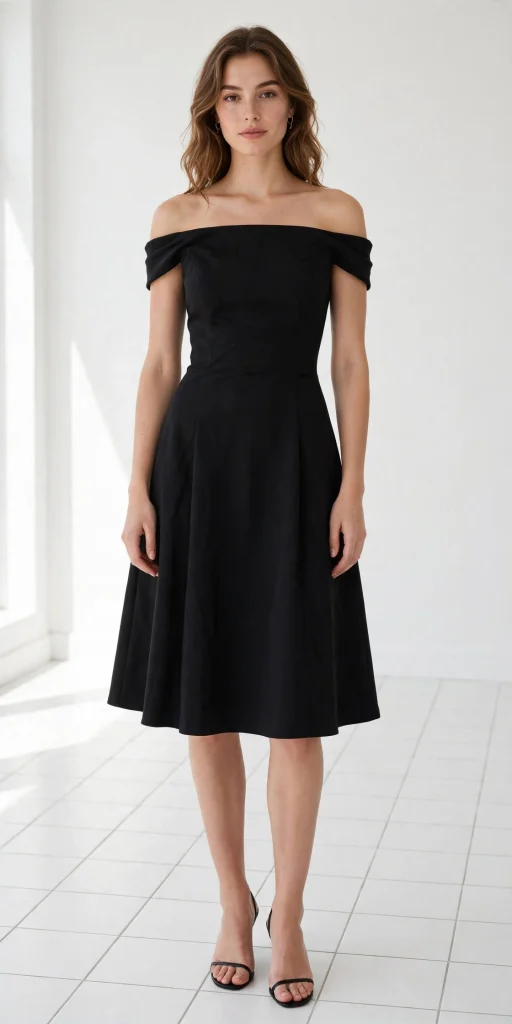
There is a rule of thumb among sourcing agents that I used to think was cynical and now think is merely early. A listing that boasts about a tiny minimum order usually comes from a workshop that survives on tiny orders, and tiny-order workshops are the ones who swap rolls mid-run and shave allowances when the week gets tight. That is not a moral judgment. A workshop living hand to mouth makes the decisions that hand-to-mouth living produces. But it explains why the closeout market exists at all, and why a buyer ordering a party dress program for a boutique should care about the shape of the workshop behind the quote, not just the quote. For what it is worth, the standard wholesale entry on women’s occasion styles here runs at 10 pieces per style with colors and sizes mixed — the sleeveless off-shoulder occasion style sits in that same program family, and the party accessories buying notes cover the other half of what guests actually purchase for the same events, while the sequin guest dress review covers what happens to the louder end of the same rail.
Incident four, if I am counting honestly, was a dress I bought. I took a blush flutter-sleeve home from a lot I had already sorted once, washed it the way a normal person washes a party dress, which is to say carelessly and at the wrong temperature, and the sleeves came out of the machine looking like they had made a decision to retire. The joins held. The chiffon did not forgive. I stood in my own kitchen holding a dress that had survived a wedding season, a return, a consolidation warehouse and my sorting table, only to be finished off by my washing machine, and I felt the specific irritation of a man whose professional knowledge did not extend to his own laundry. No wait. That is not quite the lesson. The dress was already tired when I bought it. The wash just announced it. Which is, now I think about it, exactly what returns do — they announce tiredness that was built in months earlier, upstream, in decisions about roll weight and seam allowance that nobody downstream can see until the fabric gives up.
Sell-through reporting on summer occasion dresses has the same blind spot at scale. The reports celebrate unit growth in the category. What they leave out is that the growth is in units, not in money — average selling prices fell as faster fashion squeezed the category, and the margin went somewhere that was not the fabric. Cotton and yarn prices swung by double digits in a recent year and the workshops absorbed it, in the main, by making the cloth thinner rather than the quote higher. The number on the listing stayed the same. The dress got lighter. Somewhere between those two facts is most of what my October lots are trying to tell me.
The questions that follow me around the market
The August lot and the October lot look identical. Why is October 15 to 20 percent cheaper?
October is cheaper because October has been worn, tried, returned and consolidated, and August mostly just sat on a rail. Shelf-sorted leftovers carry a known history, which in my trade is worth money, and return-sorted stock carries an unknown one that the price has to apologize for. I buy both, but I do not buy them the same way — the October lots get the inside-out check, the sleeve joins pulled gently, the seam allowance measured with a thumbnail, and a couple of pieces sacrificed to a wash before the money fully commits. Buyers who treat the two waves as the same stock at different prices learn the difference from their customers, usually in writing, usually in December when the party calendar peaks and the tired dresses get asked to perform one more time.
A centimeter of seam allowance was promised. Mine arrived closer to 7 millimeters. Does that actually matter?
It matters in the second year of the dress’s life, which is why it survives inspection in the first month. Seven millimeters holds a seam together well enough to pass a fitting and a first wear, and then it gives the owner nothing to work with — no room to let out, no margin when a join gets stressed, no repair worth paying for when something finally splits at a party. The shaving happens on rush orders, when the workshop is saving cloth and minutes at the same time, and the buyer who never turns a sample inside out will never know it happened until the returns language starts using the word quality in a tone.
Two sellers, same party dress, and the reviews disagree about the fabric completely. Who is lying?
Probably nobody, which is the uncomfortable answer I give most often at the stall. If the two sellers drew from different production runs — and with roll swaps happening mid-run when yarn prices move, sometimes even different weeks of the same run — then both sets of reviewers are describing real dresses. One batch came off the heavier roll, one off the lighter, and the reviews are faithfully reporting two different garments that share a listing photo. What I tell boutique buyers is to order the size run from a single run and keep a piece from it, so that a reorder argument starts from a garment instead of a photograph. It is the difference between an argument you can win and one where everyone is telling the truth and nobody gets helped, which in my experience is the commonest kind.
So the pattern, once all the small incidents are standing in a row, is not that this is a bad dress. It is a pretty, light, event-shaped dress whose weaknesses were decided before it was a dress at all — in the roll weight, in the allowance, in which wave of stock it eventually surfed into a shop on. I still hold them up to the light first, every time, and I no longer apologize for the habit or pretend the gesture is about the dress in my hands. It is about all the ones that came before it, stacked in my memory by fabric weight, arguing quietly about what a party dress owes the person who buys it for the biggest night of her year. I have never fully decided whether the October price is the dress’s real price with the hope removed, or its unfair price with the story removed. The lots keep arriving either way.