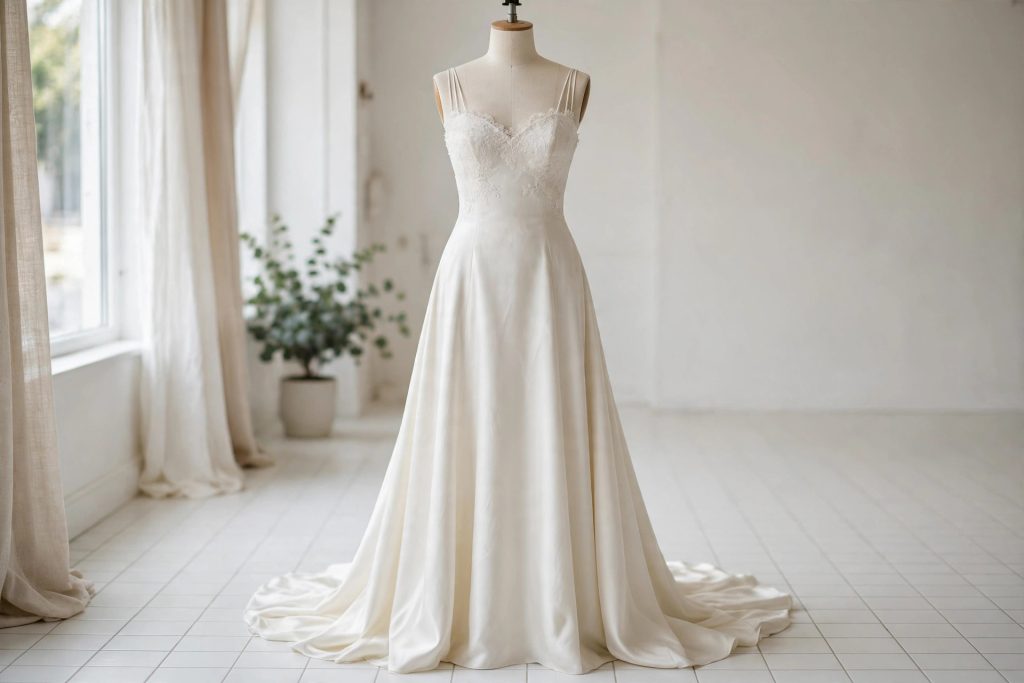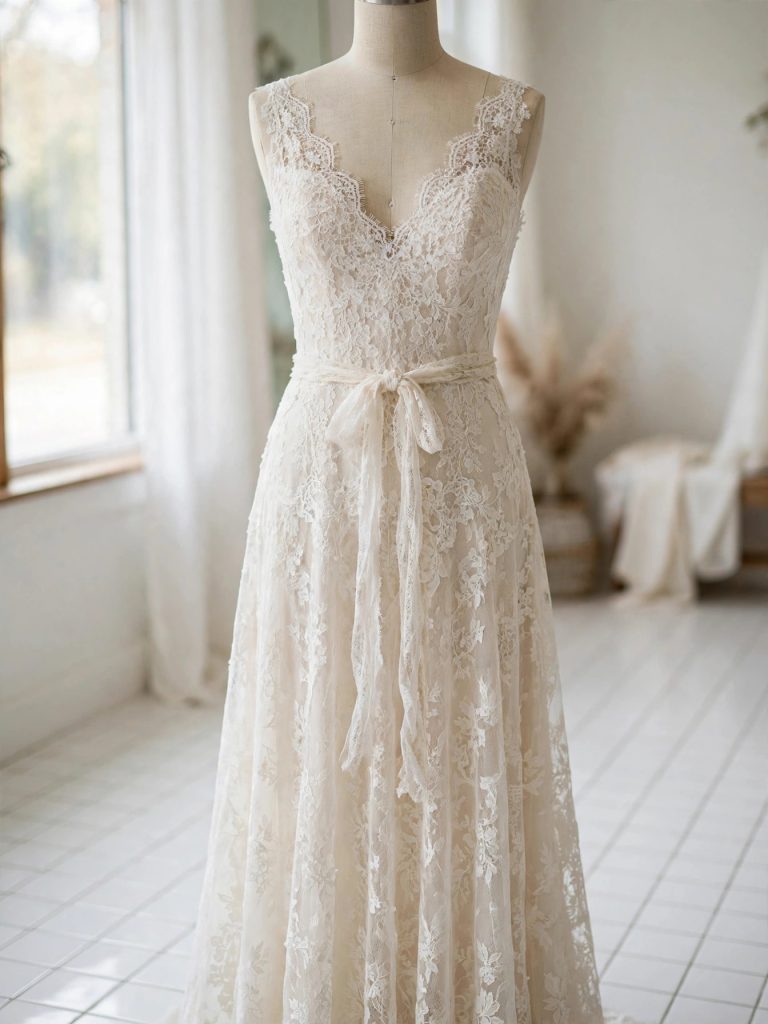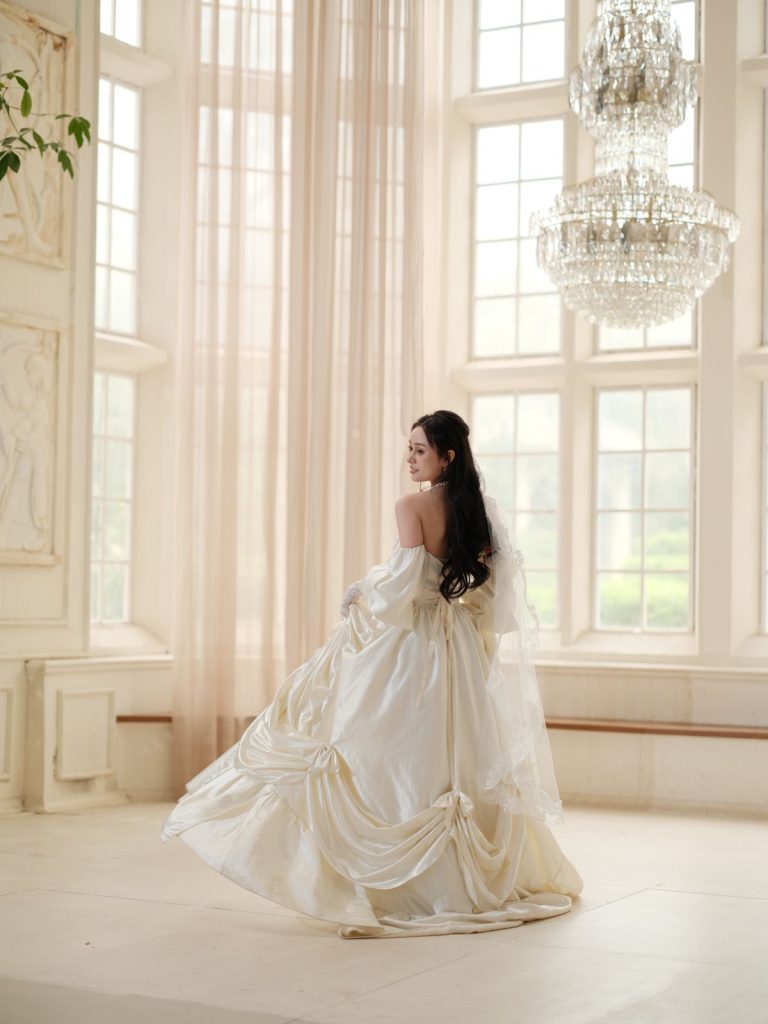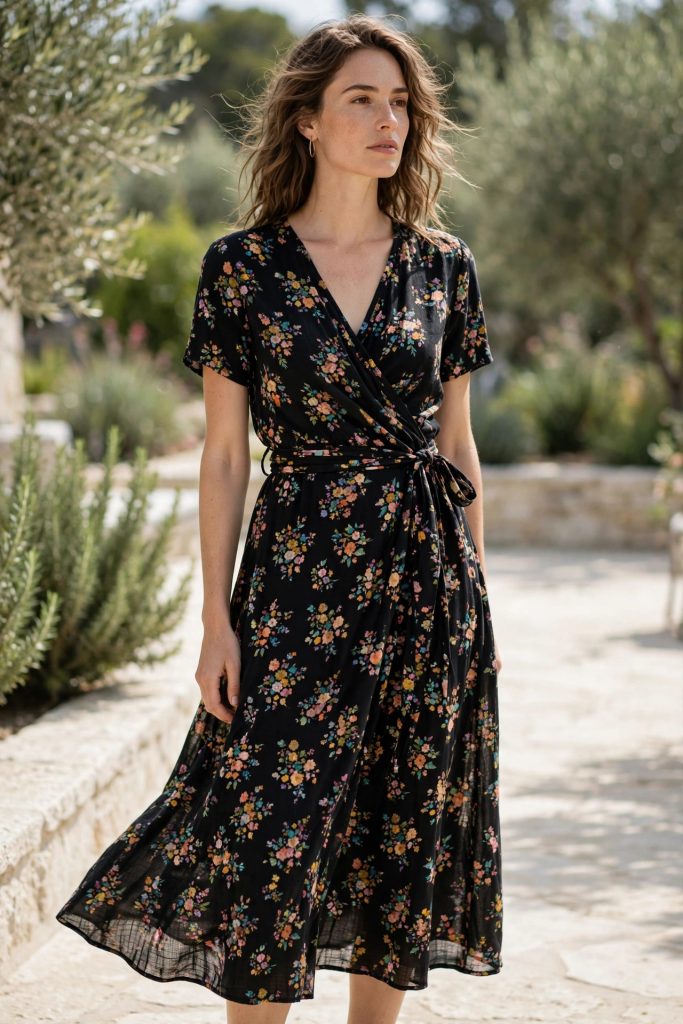
The flowers on the dress are bigger than the flowers on the swatch. Not by much. Three to five percent, sometimes a touch more, and nobody notices on a single garment laid flat on a table. Put that dress on a body, next to the product photo the buyer approved, and the whole mood of the print shifts. The pattern reads bolder. The spacing reads wider. A bohemian floral that looked scattered and soft in the approval photo comes out looking like it is shouting, slightly, and the returns language that follows is almost never about size at all. It says the print looked different in person. Which it did. Because it was.
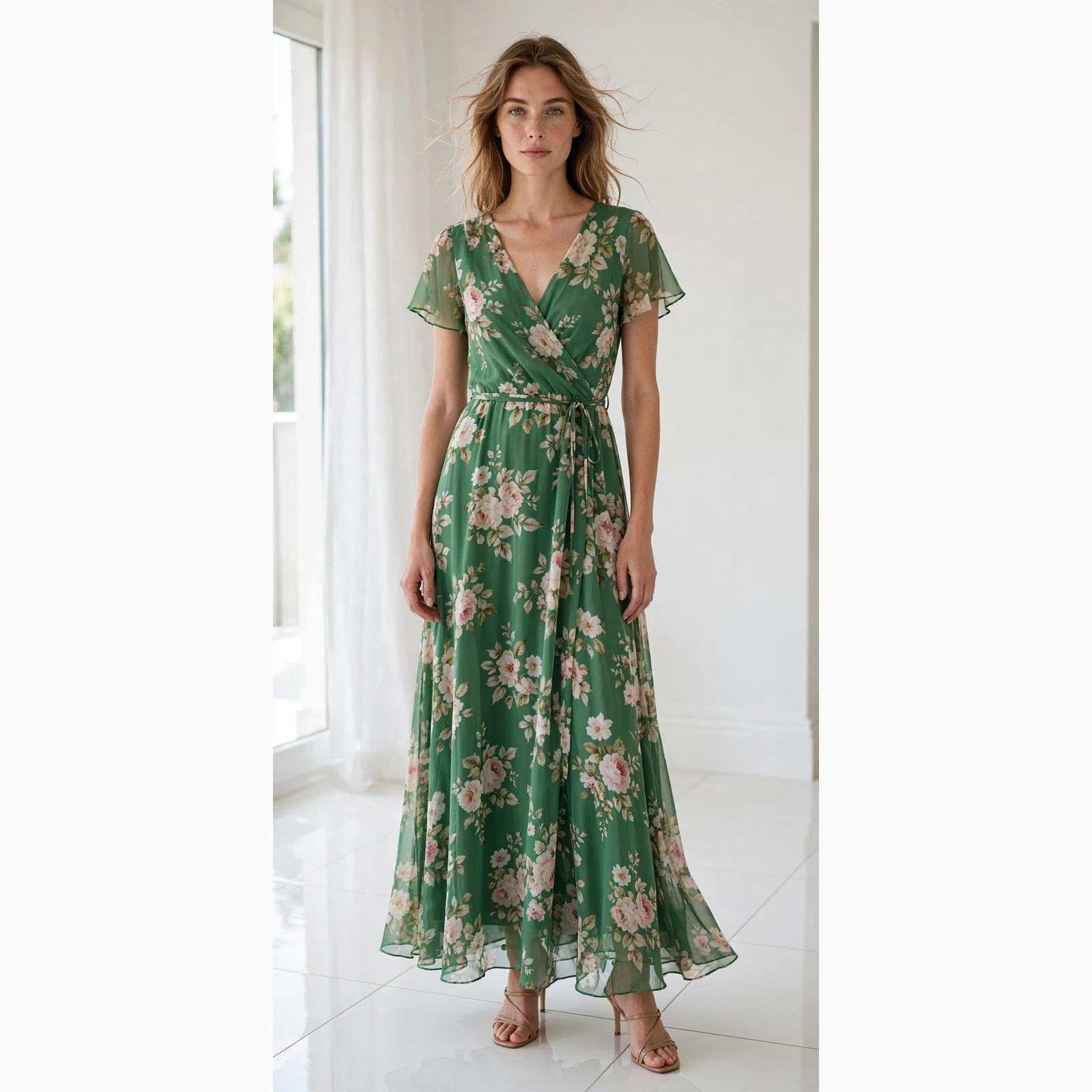
I sell printed fabric for a living, from the stall side of the market, which means my knowledge stops at the roll. What a cutting room does after the roll leaves is their business and I will say so plainly when it matters. But the print itself, the width, the dye behavior, the way a floral file changes between a flat swatch table and a roll held under tension on a print line — that part I can talk about all day, and this BTFBM style, a summer bohemian floral casual wrap dress with a V neck, lives or dies on exactly that part. The wrap shape is forgiving. The fabric is not.
Here is the piece buyers get wrong first, and they get it wrong with total confidence. A strike-off gets printed flat. The swatch sits calm on a table, nobody is pulling it anywhere, the floral lands at exactly the scale in the file. Bulk production does not work like that. The roll runs under tension, the ground fabric stretches a little as it moves, and the same file prints three to five percent larger. On a solid color you would never know. On a floral with a repeat you can measure, the dress that arrives has flowers that are simply bigger than the flowers somebody signed off on. I have watched buyers hold a finished dress next to their approved swatch and go quiet, because both pieces are technically correct and they still do not match.
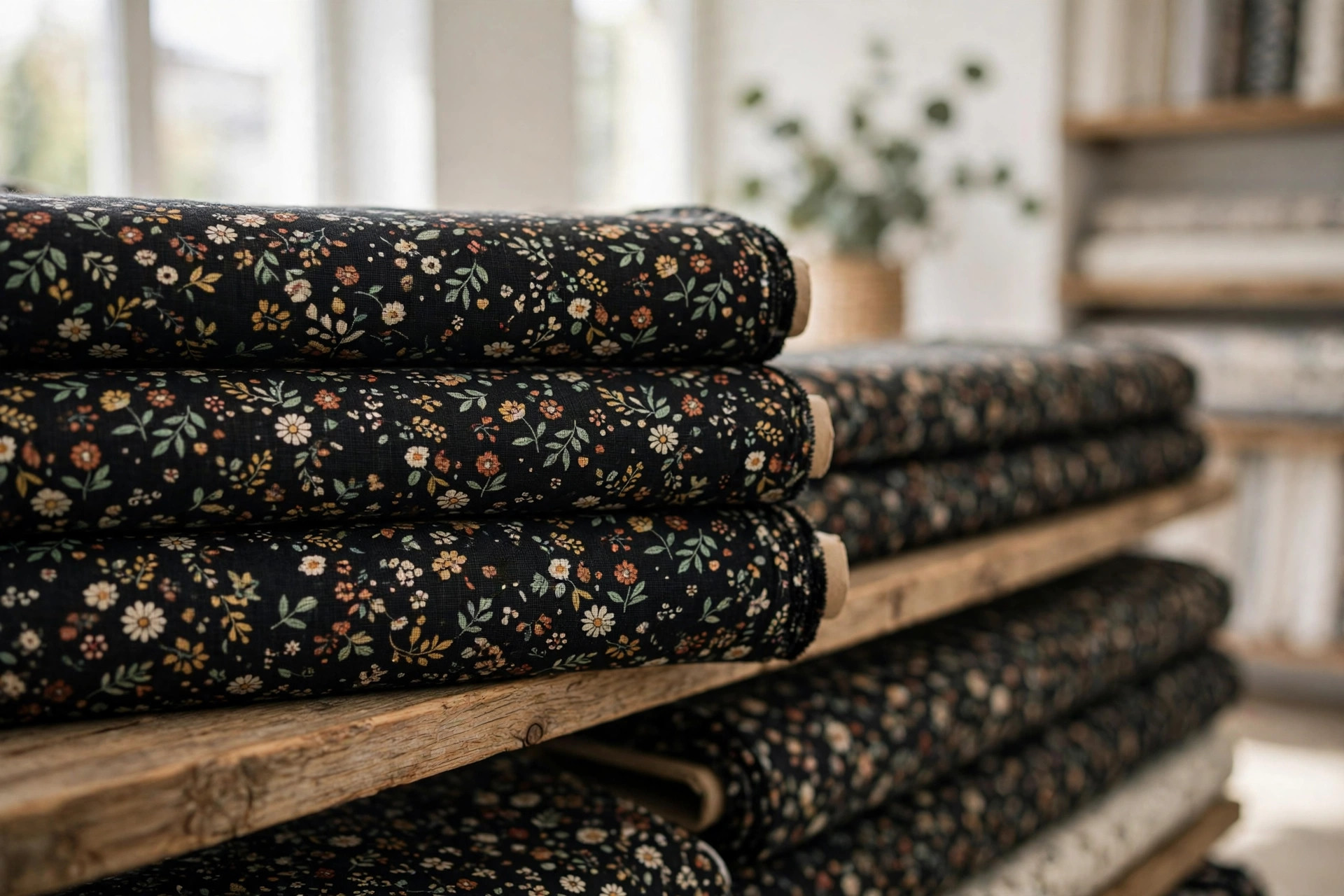
Nobody prints a warning about that on the quote.
The width number on the spec sheet is not the width you get
Lightweight printed grounds like the ones used for this kind of summer wrap dress come off the loom at around 150 centimeters. Then heat-setting takes its cut. Five to eight centimeters disappear, and the usable width lands somewhere near 142 to 145. A marker plan drawn at the full 150 wastes roughly five percent of every roll, and that waste does not vanish into the air. It lands in the unit price, quietly, where a buyer comparing two quotes side by side will read it as one factory being greedier than the other. Sometimes it is greed. Sometimes it is just arithmetic done on the honest width.
The roll length matters in a way buyers rarely ask about. A standard roll runs 50 to 60 meters. Short rolls, the 20 to 30 meter ones, sell about ten percent cheaper, and that discount looks lovely on a spreadsheet until the joins start eating the yield. Every join is a dead zone. The cheap roll and the standard roll can carry the same print and produce a different number of finished dresses.
And the hand feel question, the one buyers ask me most, has an answer they do not enjoy. Two rolls can share a spec sheet down to the last digit and stretch completely differently in the hand. Stall owners sort rolls by hand, not by the numbers printed on the ticket, because the numbers describe the recipe and the hand describes the roll that actually showed up. A wrap dress lives on drape. The V neck has to fall, the tie has to close without fighting, the skirt has to move when the wearer walks. A roll with the right numbers and the wrong hand makes a dress that photographs fine and wears stiff, and stiff is a word that shows up in reviews wearing other clothes — cheap, scratchy, not like the picture.
Dark florals drift, and the drift gets blamed on the wrong person
Dark floral prints drift against the approved lab dip by ten percent or more once you get them under retail lighting. That is not a scandal, that is the tolerance doing what tolerance does, except nobody experiences a dress as a tolerance. A buyer approves a deep-ground floral in a fabric market under one kind of light, the boutique hangs it under warm spots, the customer tries it at home near a window, and three different dresses appear from one roll of cloth. The review language for dark floral mesh and printed summer dresses runs at about 1.8 times the color complaint rate of solid fabrics. The print scale reading differently on a body than on a flat lay is part of the same pile.
Reorders make it worse. A reprint three months later never matches the first run exactly, the mill will say the words within tolerance, and on paper the mill is right, which is the most annoying kind of right there is. If a boutique sold through the first batch of a summer wrap dress and reorders for the back half of the season, the second batch should be checked against a garment from the first batch, in the light the shop actually uses, before the balance gets paid and the boxes leave. Checking against the lab dip again tells you almost nothing. The dip was never the dress.
What the reviews on this kind of dress are actually counting
Platform review data for same-category floral printed dresses puts prices around $25 to $55 with ratings clustering near 4.0 to 4.4, and the one-star language is not mysterious once you have spent time around the fabric side. See-through shows up around 31 percent of the low reviews. Runs small sits near 24 percent. Snags easily, roughly 18 percent. Read those three together and they stop sounding like three separate factory failures. Sheerness is a ground weight and lining decision. Snagging is a yarn decision — finer yarns around 20D look softer and cost about 15 percent less than the heavier option, and they catch on jewelry and rough skin in a way the heavier yarn mostly does not. The review never says yarn. The review says it caught on my bracelet and tore, which is the same sentence translated.
The itch complaints are my favorite example of blame landing one layer away from the cause. Itchy appears in about 12 percent of two-star reviews on overlay-style printed dresses, and when you pull those garments apart the problem is usually the lining, not the printed shell. Buyers save money on the layer nobody photographs. An unbrushed, cheaper lining goes in, the dress itches, and the listing takes the hit for a decision made on an invoice line nobody outside the trade ever sees.
Wedding guest and summer dress returns overall run around 9 to 11 percent in the industry reporting, with printed lightweight styles clustering at the high end of that band. Stand in a market in September and you can see the category’s failures stacked physically. Printed fabric deadstock floods in after the summer season, September into October, priced 20 to 30 percent below normal, and it is always last season’s prints. The flowers that did not sell through do not disappear. They wait, get cheaper, and come back as somebody else’s bargain line.
Retailers building a summer program around a style like this usually pair it with other warm-weather pieces rather than betting the rail on one print, and the strapless floral mesh maxi style sits in that same family of printed summer occasion dresses, while the 2026 dress trends overview for boutique buyers covers how these prints are being ranged this year, and the flutter sleeve cocktail dress notes cover the lined-versus-unlined question that decides half the returns on styles like it. For a mixed order, wholesale on women’s summer styles like this one runs from 10 pieces per style, colors and sizes mixed, which is a low enough entry that the fabric checks above matter more than the quantity negotiation does. Ten pieces of the wrong-hand roll is still the wrong roll.
Questions buyers ask me at the stall, answered the way I answer them there
The swatch matched perfectly. So why do the flowers on my bulk dresses look bigger?
The flowers on your bulk dresses look bigger because the bulk was printed with the roll under tension and the swatch was not. Three to five percent growth is the normal range, and on a floral repeat that is enough to change how the print reads on a body. The mill is not cheating you and the file did not change. What you can do about it is boring and it works — approve from a bulk-run sample, cut from a running roll, and keep one garment from the approved batch as the comparison piece for every reorder.
500 meters minimum for a custom shade. Is that the mill being difficult?
500 meters is roughly where a custom dye or print run stops costing the mill money to set up, and below it you are on stock color whether anyone says so or not. The stall version of this answer is shorter. Small quantity, stock color, no arguments. If the shade is the whole identity of the dress, order the quantity that buys the custom run or pick a stock shade you genuinely like under your own shop lighting. What I would not do is pay a small-order price and expect a custom-run match, because the gap between those two things is where most of the angry phone calls I overhear are born, and they all sound the same by the third minute.
Two quotes, same dress, and one fabric price is way lower. Where is the catch hiding?
The catch is usually hiding in the roll, in the width, or in the lining, and of those three the roll is the one I would check first. Short rolls sell about ten percent cheaper and eat the saving in join waste. A quote built on the loom width instead of the heat-set width is five percent optimistic before anyone sews a stitch. And the lining swap never appears as a line anyone reads twice. Ask each side for roll length, usable width after setting, and what the lining actually is, in writing, and watch how quickly the gap between the two quotes explains itself. Sometimes the cheaper quote is just a hungrier workshop and the fabric is identical, which does happen, but I would rather find that out from the answers than from the returns.
The reviews keep saying see-through. Is that a fabric fault I can spec away?
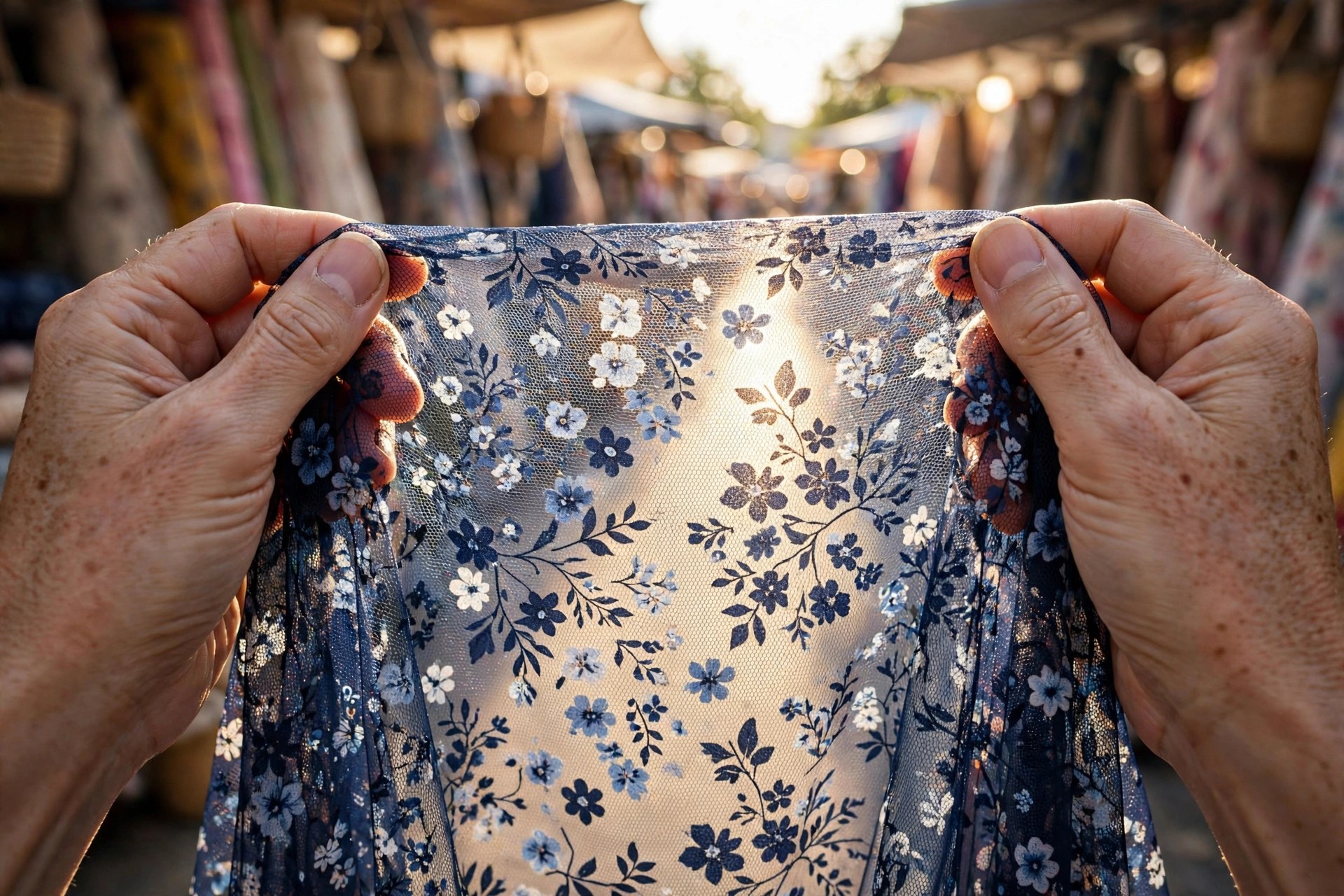
See-through complaints on this category run near a third of the low reviews, and you can spec most of it away, though not for free. A heavier ground, a real lining where the wrap overlap is thin, and a darker print placement over the bust all move the number, and each one costs something the listing price then has to carry. The version that gets ordered most is the one where the sheerness gets discovered by customers under daylight, because daylight is the one test nobody ran. Hold the sample up against a bright window before you approve it. That is the whole test. It takes ten seconds and I have watched buyers skip it to save ten seconds, which still puzzles me a bit, honestly.
Can I reorder the same print mid-season and expect it to sit next to the first batch?
You can expect it to be close, and close is doing real work in that sentence. A reprint drifts, dark grounds drift the most visibly under shop lighting, and the mill’s tolerance paperwork will not protect your rail if batch two reads warmer than batch one. Send a garment from batch one with the reorder, get the match checked against the garment and not the old lab dip, and keep the two batches in separate size runs on the rail if the drift is visible. Plenty of boutiques do exactly that and never hear a complaint. The ones who mix the batches piece by piece in the same stack are the ones who get the review saying the dress in the photo was a different color, and on that review, I have to say, the customer is usually right.
What I keep coming back to, standing among the rolls, is that this dress is a simple garment built on an unstable material. A wrap front, a tie, a floral — nothing in the sewing should scare anyone. Everything that goes wrong with it goes wrong earlier, in tension and dye and width and the quiet decisions about lining that never make it onto a product page. Buyers who learn to interrogate the fabric get a boring, reliable summer dress. It was probably made before the fabric reached a factory at all.