“Same dress,” the buyer said, holding her phone next to the sample on my desk. “Same flowers. Hers is four dollars cheaper a piece. So explain yours.”
The flowers were the same. That was exactly the problem, and it is where any honest conversation about a floral maxi dress for beach weddings has to start, in the middle, with two identical-looking dresses that are not the same purchase at all. One of them is a stock print, a design the mill printed in quantity and offers to anyone who walks in, which means the dress made from it will show up in other stores, other listings, other towns, at whatever price each seller’s costs allow. The other is the same visual idea on a different base cloth, with a different print repeat, cut by a different factory. The photograph cannot tell these apart. The invoice, over a season, can.
I sit in the sourcing middle of this business, between buyers who want a number they can trust and factories that quote numbers with weather inside them. A flowy floral maxi looks like the simplest garment in the world. It is a surprising amount of negotiation wearing a summer print.
Four dollars is never one thing
When two quotes for the same-looking floral maxi land four dollars apart, new buyers assume the dearer factory is padding. Sometimes it is. More often the gap is a pile of small, boring, real differences that nobody itemized. The base cloth is the biggest one. A rayon challis and a polyester chiffon can carry the identical floral print and behave like different species of garment: the rayon drapes heavier, breathes better, wrinkles if you look at it sternly, and costs more per meter; the chiffon floats, resists wrinkles, feels warmer against the skin on a humid beach afternoon, and comes cheaper. Both are sold as a lightweight summer floral maxi. The four dollars lives in that paragraph.
Print repeat is the quiet second item. A small, tight floral repeat tiles across the cloth with little waste, and the flowers land where they land, bodice or seam or somewhere unflattering, because placing them is impossible at that scale. A large repeat, big peonies, dramatic spacing, has to be placed or at least supervised during cutting, and placement burns fabric. A cutting table working a large-repeat floral can lose an extra tenth or more of the cloth to getting the print to sit decently across a bodice, and that loss is inside the unit price whether the quote names it or not. When a buyer asks why the same dress costs more from the factory that places its prints, the honest answer is that she is buying the waste. The alternative is a cheaper dress where a peony lands wherever chance puts it, including directly across the bust point, which has ended more than one beach wedding photo session’s worth of five-star reviews.
The third item is the one buyers resist hearing. Timing. The base cloth for summer florals is not priced evenly across the year, because the mills print for the season in waves, and a buyer ordering in the off months can sometimes take cloth from a wave that is already printed and sitting in a warehouse, priced to move. The same buyer ordering at the season’s front edge pays for fresh printing on a busy line. Neither factory changed its sewing price by a cent. The calendar did the negotiating.
What the review patterns say about this dress
Read enough customer feedback on floral beach maxis, across the big marketplaces and the boutiques’ own sites, and a shape emerges that the factory side never sees on its own. The complaints about this category are rarely about sewing. They cluster around color, the print looking different in person from the screen, and around length, because a maxi is a promise about where a hem ends and that promise depends on the height of the woman wearing it, which no size chart fully solves. Color complaints run roughly double on the saturated prints, the deep teals and strong corals, compared with the pale watercolor florals, because saturation is where screens and sunlight disagree most violently. A pale pink floral looks like itself in most lights. A saturated teal can arrive looking like a different decision.
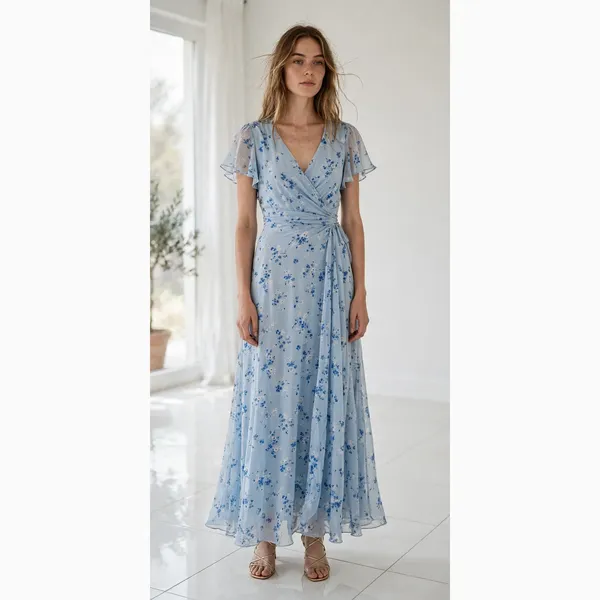
Length complaints have a pattern too, and it is a sourcing pattern in disguise. Maxis cut for one market’s average height get sold into another market where average height runs shorter, and the dress that was ankle length in the product photo becomes floor length with a trip hazard. Factories cut to the market they think they are serving. Buyers who specify the actual hem length they want, in centimeters, for their actual customers, get a different dress from buyers who order “maxi, standard.” Standard is a rumor. Centimeters are a specification.
There is a number in this category I have learned to ask about before price, and it is the reorder number. Not the first order price. The second. A first order of a floral maxi is often sewn from cloth that was already in the building, and the quote reflects that luck. The reorder, three months later, needs fresh cloth at the new month’s price, and if the base cloth has moved, the unit price moves with it and the buyer feels ambushed. Ask, at the first order, what the reorder price depends on and how long the quoted figure holds. A factory that answers plainly, naming the cloth and the validity window, is telling you it has been through this argument before and would rather have it now, cheaply, than later. A factory that waves the question away is saving the argument for the expensive date.
Halfway through most of these sourcing conversations I end up correcting myself on one point, so I will do it here as well. I tell buyers the print is the dress, and that is too strong. No wait. The print is the photograph of the dress. The dress itself is the cloth weight in a sea breeze, because a beach wedding has wind in it, and a maxi skirt in a very light cloth becomes a management problem for the wearer the moment the ceremony moves outdoors, billowing, wrapping around legs, lifting. A slightly heavier drape, or a lining in the skirt’s upper half, is what separates the dress women describe as flowy from the dress they describe as fighting them. The print gets the dress bought. The weight decides whether it gets worn twice.
Ordering it as a store, not as a photograph
As an existing women apparel style, this is the kind of dress the OEMOD Factory wholesale catalog carries at ten pieces per style, sizes and colors mixed in the run, and ten pieces is the right size of bet for a print-driven style, because prints are fashion in a way a plain slip dress is not: the store is testing a pattern on its own customers, in its own light. One more habit separates the stores that reorder from the stores that return. Before we start sampling, we always photograph the fabrics and send them to you to review and choose from, and with florals that photo should be a large piece, a meter across at least, not a palm-sized swatch. A small swatch of a large-repeat floral is a lie of omission. It shows one flower and hides the spacing, and the spacing is half the print’s character.
Print choice also deserves a harder look than it usually gets across the table. The stock prints a mill pushes are the prints every other buyer is being shown in the same month, and a beach wedding guest dress is a garment women buy specifically not to match another guest in. Stores with the volume for it sometimes commission a colorway change on a stock print, same flowers, different ground color, which is a modest change at the mill and a real difference on the rail. It costs less than a fully exclusive print and buys most of the distinctiveness. That option rarely appears in a first quote, because factories quote what was asked. Ask.
It is worth setting this dress next to a harder one before ordering. The plus size lace chiffon maxi review on this site covers a maxi where grading and lining do the damage, and reading the two together gives a fair map of the category: the floral beach version fails on print and color and wind, the formal version fails on fit architecture, and a buyer who knows which failure she is shopping against asks noticeably better questions of both factories.
Asked across my desk, most months
Her price is four dollars lower for the same flowers. Is your factory just expensive?
Four dollars lower for the same flowers usually means a different cloth under the flowers, or a smaller print repeat with no placement at cutting, or cloth that was already sitting printed in a warehouse when she ordered. Any of those can be a perfectly sensible purchase if the buyer knows which one she is making. The danger is not the cheaper dress. The danger is ordering the cheaper dress while believing it is the dearer one, then pricing it, photographing it, and promising it as though the drape and the color and the print placement will match a sample they never will. Ask what the four dollars is made of, item by item, and watch which factory can answer.
Ten pieces of a floral. What if the print dies in my store in three weeks?
Then it dies at ten pieces, which is the entire point of ordering a fashion print at that depth. A floral maxi is a taste bet dressed as a stock decision, and taste bets should be sized so that being wrong is an annoyance rather than a season. Put the ten out, watch which sizes and which colorway move, and let your own rail cast the vote. If the print dies, it told you something about your customers’ taste in florals that no trend report could have, and it told you at wholesale prices for ten dresses. I have seen the same lesson bought at three hundred pieces. It does not get truer. It just gets dearer.
The color looked different in the store from the photo. Whose fault is that, honestly?
Honestly, it is shared, and I say that as someone whose side of the table benefits from blaming the screen. Screens oversaturate, sunlight desaturates, and a strong teal or coral floral lives exactly in the range where the gap yawns widest, which is why those colorways collect roughly twice the color complaints of the pale prints. The factory’s share of the fault is approving color from a screen image instead of a physical piece in daylight. The buyer’s share is skipping the fabric photo. A meter of the actual cloth, photographed outside, settles most of it before a single dress is sewn, if anyone bothers.
Should I order one long length and let customers hem it?
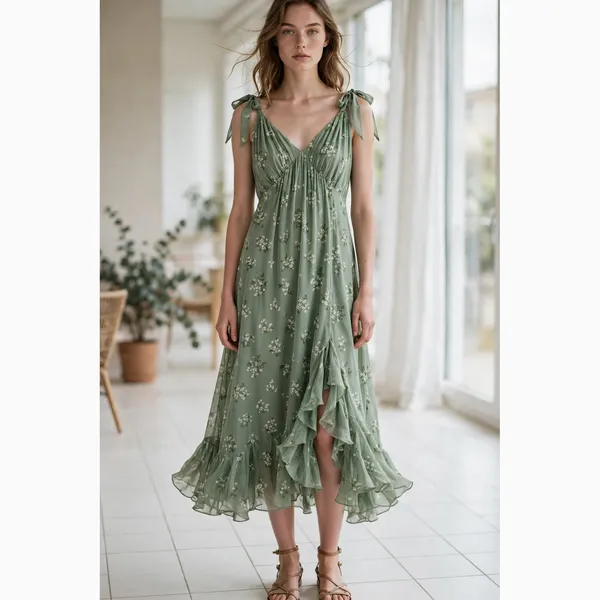
That plan sounds tidy and works badly for this style, because a tiered or bordered floral hem cannot simply be cut shorter without losing the border or breaking the tier proportions, and a plain hem that gets cut still costs your customer a tailor’s fee on a dress she bought for a beach weekend. Better to specify the length properly at ordering, in centimeters, for the height range your customers actually are, and split the run between two lengths if your market spans one. Factories cut lengths all day. What they cannot do is guess which country’s “standard maxi” you were picturing when you wrote the order.
The buyer with the phone never did tell me which dress she bought. She left with a list of questions about cloth and repeat and reorder pricing, which was either a good sign or a slower way of saying no, and in the sourcing chair you learn to accept that ambiguity as the job. The flowers on her screen are still identical to the flowers on mine. Everything that matters about the two dresses is somewhere else entirely, in meters and centimeters and months, and I suspect she knows that now, even if her next order still goes to the cheaper quote.