Everyone who handles tulle for a living knows the thing buyers get backwards about a short veil. They assume short means simple, a scrap of net, a comb, done. Short means exposed. A cathedral veil can hide a wavy cut inside three metres of drape and nobody will ever know. A short two-tier veil hangs right beside the face, at photograph distance, and every decision the maker made shows up at full size.
From the fabric side of the trade, the stall side, where tulle is sold by the roll and judged by the hand, a veil like this Nanchor-style short piece is a small product with a strangely long list of ways to be slightly wrong. The net can be too stiff, so the two tiers stand away from the head like a lampshade. The net can be too soft, so the tiers collapse onto each other and the volume the bride paid for disappears by the time she reaches the aisle. The cut can wave. The gather at the comb can bunch to one side. None of these are defects a warehouse would reject. All of them are visible from the second row.
The length is the argument for the style, and also its trap. A short veil suits a bride who wants the idea of a veil without managing a train of net through doorways, car doors, and other people’s feet. It suits themed weddings and October weddings, where a full-length veil would fight the costume energy instead of joining it. And it suits a boutique’s rail, because it photographs as a complete look at an accessory price. That is a lot of jobs for one small piece of netting to do, and the jobs pull against each other, bridal finish at a costume-friendly cost.
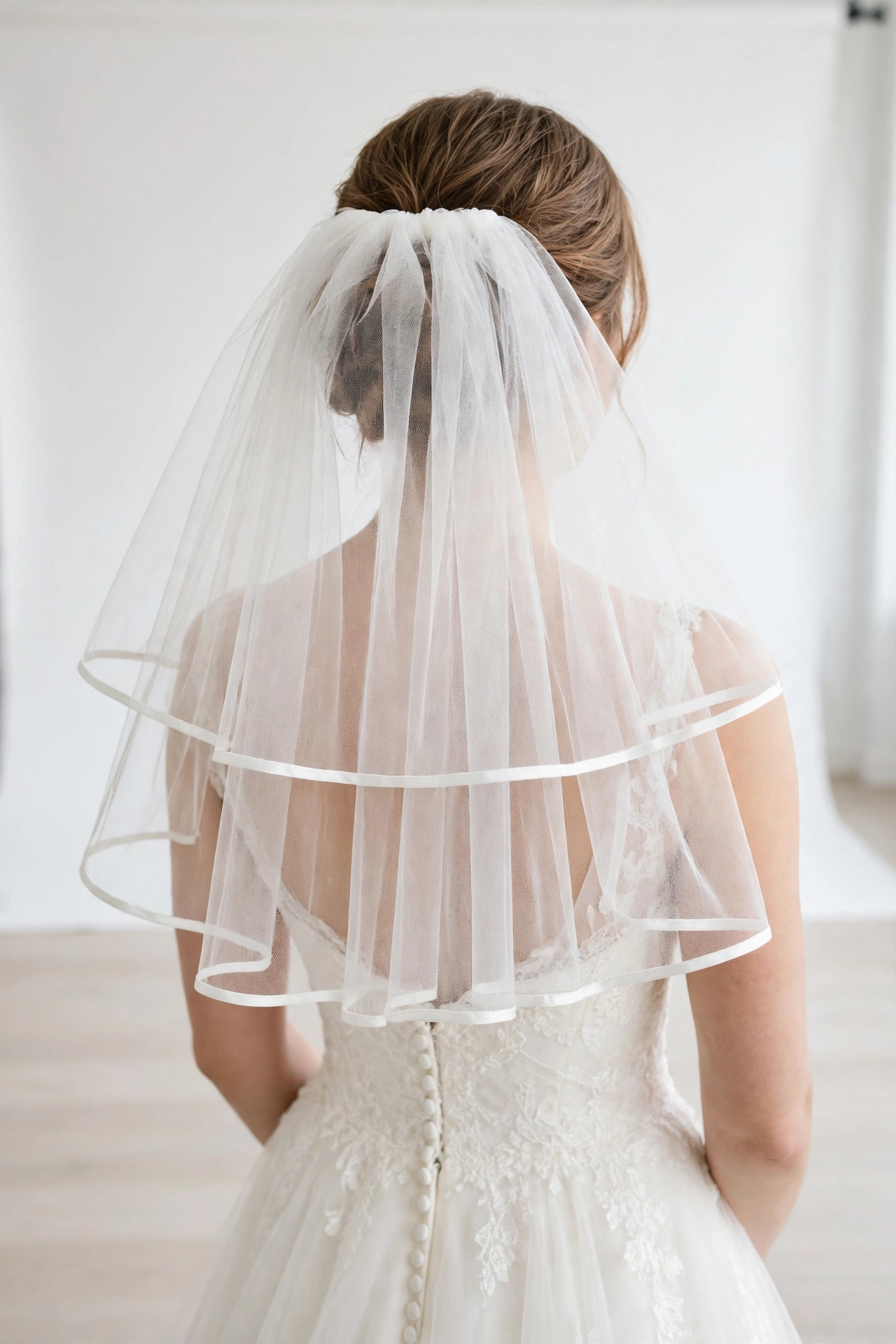
Stiff net, soft net, and the hand knows first
Tulle is sold in grades that listings almost never name. Bridal tulle at the softer end, around twenty denier in the yarn, drapes and clouds nicely and is what most wedding veils get made from. Firmer net, the kind costume work reaches for, holds a shape and holds a gather, and reads slightly harsh that close to a face. A fabric stall keeper tests a roll the way stall keepers have always tested fabric, by scrunching a corner in the fist and watching what it does when the hand opens. Soft bridal net falls back into place and forgets the fist. Stiff net remembers it, creased, and a short veil made from a remembering net will carry a fitting-room crease into the ceremony photographs.
Width matters more than buyers expect, too, and it is one of those upstream details that never makes it onto a product page. Veiling tulle comes in wide rolls, and a two-tier short veil is often cut across a width that leaves the second tier narrower than the first if the cutter is chasing yield. On a long veil that difference vanishes into the fall. On a short one the tiers are the whole product, and a top tier that ends two centimetres inside the lower tier’s edge looks like a mistake even to people who cannot name what they are seeing. Asking how the tiers are cut sounds like a fussy question. It is a two-second question, and it separates makers who cut veils from makers who cut rectangles.
The edge finish is where I would put my own money if I had to judge a sample blind. A raw-cut edge on tulle is defensible on a long veil that will be seen from across a room. Beside a face it reads unfinished, because it is unfinished, a line where the product simply stops. A bound edge or a fine rolled finish gives the tiers a drawn outline, the thing that makes a short veil look deliberate in photographs. Binding costs more than the net it finishes, which is the whole problem in one sentence, the finish on this product costs more than the fabric, and the discount versions quietly leave it off.
Then the comb, because a veil is really a comb with decoration attached. Short veils have almost no weight, and weight is what keeps a long veil honest on a head. A short veil’s comb does all the work, through a ceremony, photographs, hugging, and a first dance, in hair that may be fine, may be heavily sprayed, may be mostly an updo built that morning. Metal teeth with a slight flex grip better than stiff plastic teeth that either skate on smooth hair or snap when a stylist pushes them home. Whether the comb is sewn to the gather or glued to it is a question I would ask out loud, because glue on tulle lets go in heat, and weddings have a habit of happening in warm rooms full of lights.

Two markets wearing the same veil
The weddings-and-Halloween double life of this style is not a marketing invention, it is a calendar fact that fabric people watch every year. Bridal orders for short veils run through the spring and summer. Then September arrives and the same construction, in white, in ivory, and in black when a maker offers it, starts moving for costume weddings, themed parties, and the general October appetite for a bride costume with the volume turned up. A boutique that stocks the style is really stocking two seasons in one SKU, which is why it survives on rails that drop most single-purpose accessories.
That double life creates one genuine sourcing headache, and it is colour. White tulle from one dye lot and white tulle from another are cousins rather than twins, and a veil bought in May to sit beside a gown may be joined in October by a reorder that does not quite match it. Beside an ivory gown the mismatch doubles, because veil white against gown ivory is already a negotiation before lots enter into it. The boring fix is the one that works, keep a swatch of the accepted veil with the order paperwork, and judge reorders against the swatch rather than against a screen. Screens lie about white with complete confidence.
No, I should correct the emphasis there. The swatch matters, but the comb matters more, and I keep demoting it because it is a small grey piece of metal that photographs badly. More short veils fail at the comb than at every other point combined, in the specific sense that matters, a bride takes the veil off early and the accessory simply stops existing for the rest of the day. A veil in a handbag has failed at its only job. When a store tells me a short veil did not sell, what I usually hear, translated out of retail politeness, is that the first few brides could not keep it on.
Decoration changes the equation in ways worth pricing properly. A rhinestone scattered across a short veil catches light beautifully and adds almost no weight, but each stone is a fixing point in a net that tears if the fixing is done hot and careless. On a short veil the stones sit close to the face, so a bride feels a badly set stone’s rough back every time she turns her head. Checking the back of a decorated sample with a fingertip, eyes closed, tells you more than a magnifier does. If it scratches a fingertip it will scratch a neck, all day, in photographs where she is supposed to be glowing.
Ten pieces and a handbag test
Ten pieces is the sensible test order for a style like this, not because a factory loves the number, but because ten veils will show you the spread. One sample can be the maker’s best behaviour. Ten pieces show whether the gather sits centred nine times out of ten, whether the edge finish survives being made on a Tuesday afternoon, and whether the combs arrive all sewn the same way. Accessories live and die on consistency in a way gowns do not, because a boutique sells them quickly, at a counter, often without a fitting, and the second bride’s veil has to behave like the first bride’s did.
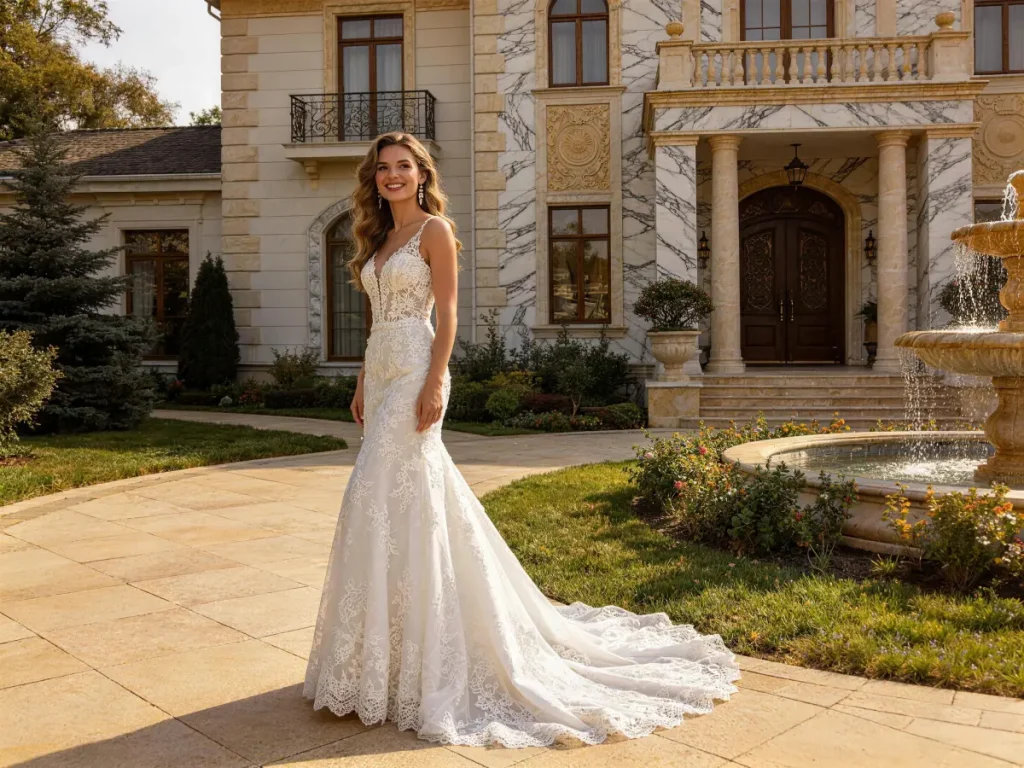
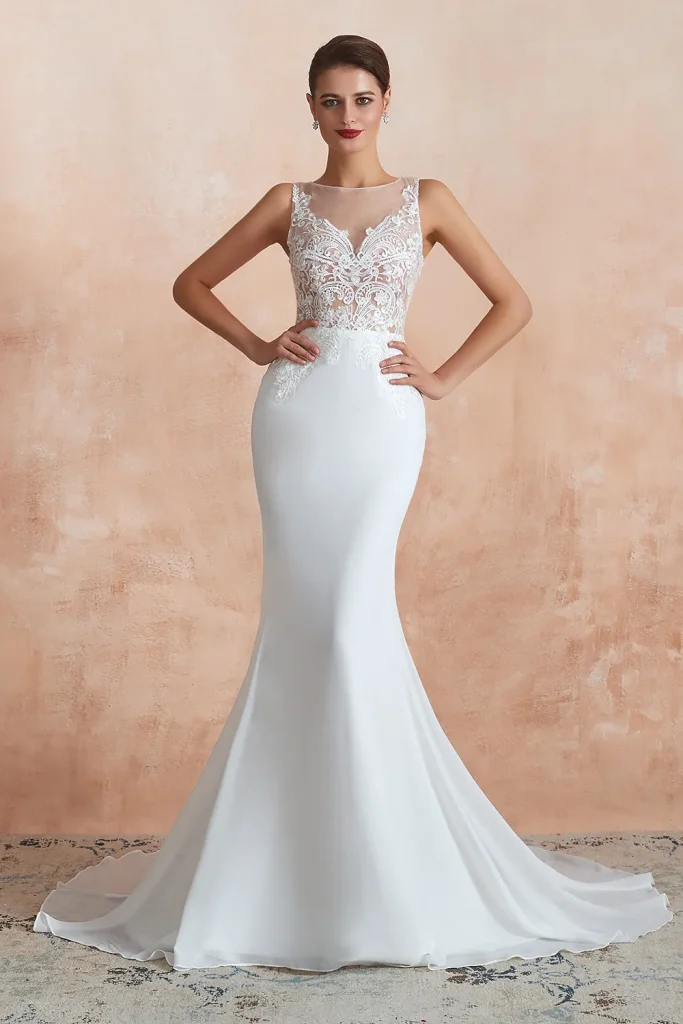
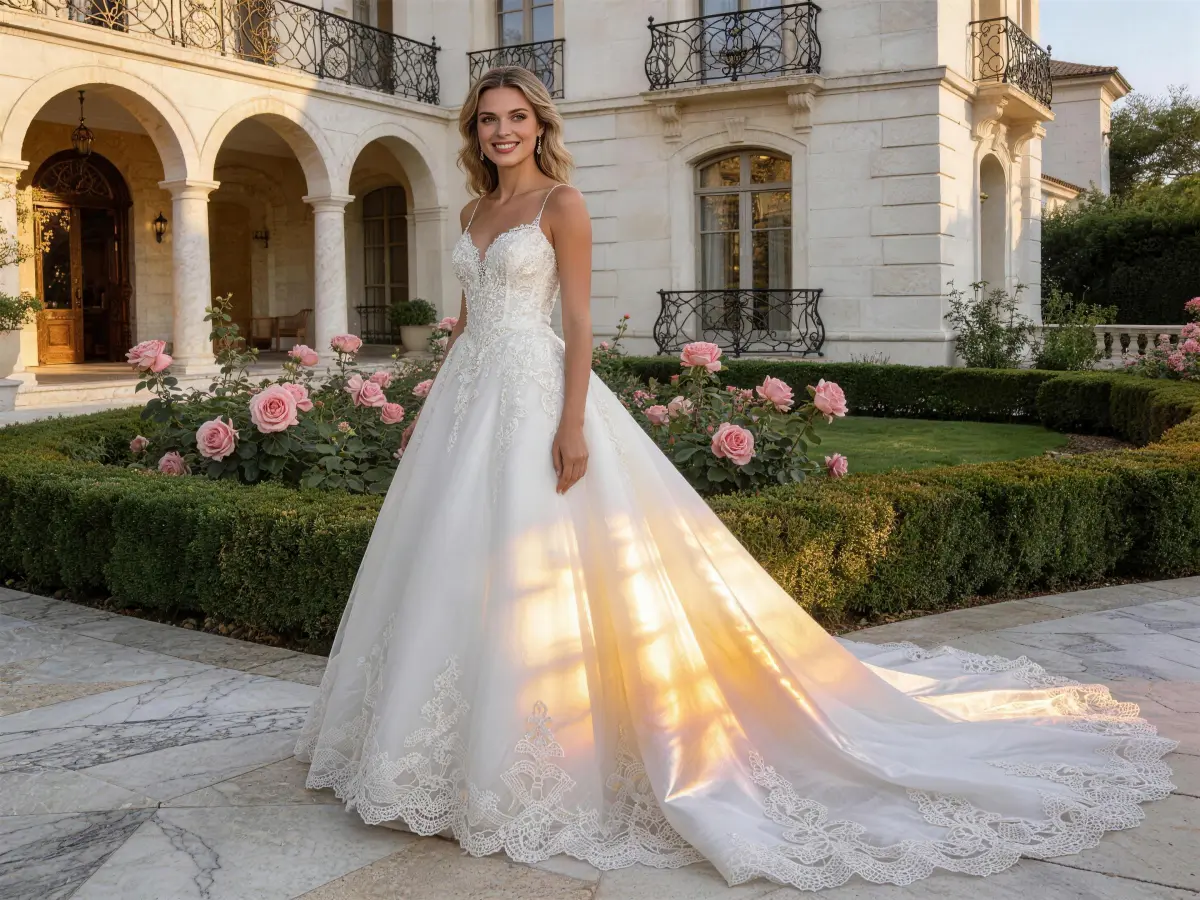
The gown side of the rail matters for context here. A short veil is usually bought against a dress that is already chosen, which is why the range in the wedding dress wholesale catalog is the right backdrop for judging one, neckline by neckline. A short veil over an ornate bodice competes. A short veil over a clean crepe gown completes it. Stores that display the veil on its own little stand, divorced from any dress, tend to undersell what it actually does on a person, which is the oldest merchandising mistake in bridal and somehow still made daily.
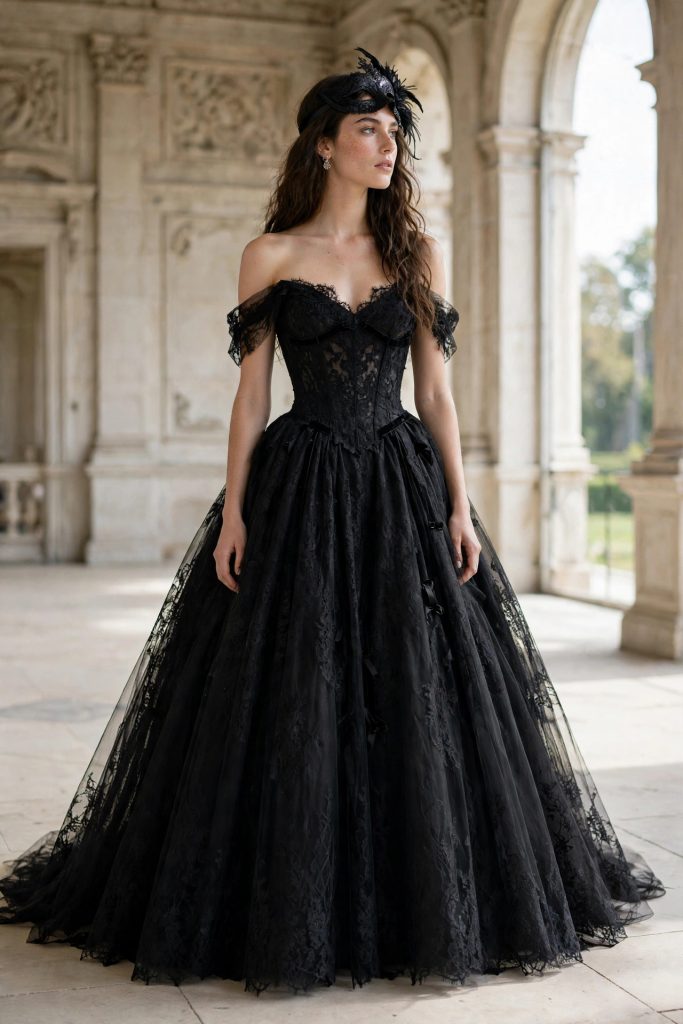
It pairs, commercially, with the other tulle pieces a themed bride assembles. The high-low tulle skirt from the corpse bride end of the range, the one in the tulle skirt review on this site, is the same net doing body duty while the veil does head duty, and a store that understands the pairing sells the October bride a whole silhouette instead of two separate accessories. That is not an upsell trick. It is how the customer was already thinking, standing in the shop holding one piece and picturing the other.
What the fabric side cannot tell a buyer is whether their brides will reach for short at all this season. Length fashion in veils swings slowly, driven by gown silhouettes and by whatever a few very photographed weddings did last year, and stalls feel that swing a season late, in the orders that stop arriving. What the fabric side can say is that when short veils do move, they move on finish. The net is cheap. The net was always cheap. The money and the reputation sit in the edge, the gather, and a small grey comb that nobody photographs and everybody depends on.
I still scrunch the corner of every new roll that comes in. Habit, mostly. The hand opens, the net falls or it remembers, and in that half second the whole argument about a short veil is sitting right there in my fist, whether three metres of drape will be available to hide the answer. On a short veil there is no drape to hide behind. There never was. That is the product.
Questions buyers keep asking about this one
Two tiers and barely any length. Why does a short veil cost more to make well than a long one?
Because nothing on it can hide, honestly. A long veil drapes its mistakes away over three metres, while a short veil shows the cut, the gather, and the edge at face distance in every photograph. The finish that makes it look deliberate, a bound or rolled edge, costs more than the tulle itself. I get asked this at the stall a lot and the answer never gets more popular. Small is not the same as simple, not in net.
Is the comb sewn or glued? It feels like a rude question to ask a supplier.
It is not rude, it is the question, and suppliers who sew their combs answer it without blinking. Glue on tulle softens in warm rooms and lets go at the gather, usually mid-event rather than in the fitting room where it would be a kindness. A sewn comb on a short veil matters more than on a long one because the short veil has no weight helping it stay put. If the answer comes back vague, treat the vagueness as the answer and price accordingly.
Ten pieces to test a veil. What am I actually looking for across ten pieces?
Consistency, mostly. One sample is a maker’s best behaviour, while ten pieces show whether the gather lands centred, the tiers match in width, and the edge finish holds up across a normal production run. Check the combs are all attached the same way while you are at it. A boutique sells veils fast, at a counter, with no fitting to catch a dud, so the spread across ten is the closest thing to the truth you can buy cheaply.
The white looked right in the shop and wrong against the gown. Is it the veil or the dress?
Usually it is the pairing, since veil white and gown ivory are different colours pretending to be the same one, and dye lots shift the veil’s white a little further each reorder. Judging the veil alone under shop light tells you almost nothing. Judge it against the actual gown fabric, in daylight if the shop will let you stand near a door. Keeping a swatch of the accepted veil with your paperwork sounds fussy until the October reorder arrives as a cousin instead of a twin.
A rhinestone veil for a wedding. Will the stones drive the bride mad by hour three?
They will if the backs are rough, and the backs are where cheap fixing shows. Run a fingertip over the reverse of a decorated sample with your eyes closed. A well-set stone feels smooth because the fixing was done at a sane temperature with the net supported. A rough one scratches, and what scratches a fingertip will work on a neck all day. The sparkle is the easy part of that product. The underside is the craftsmanship, as usual.