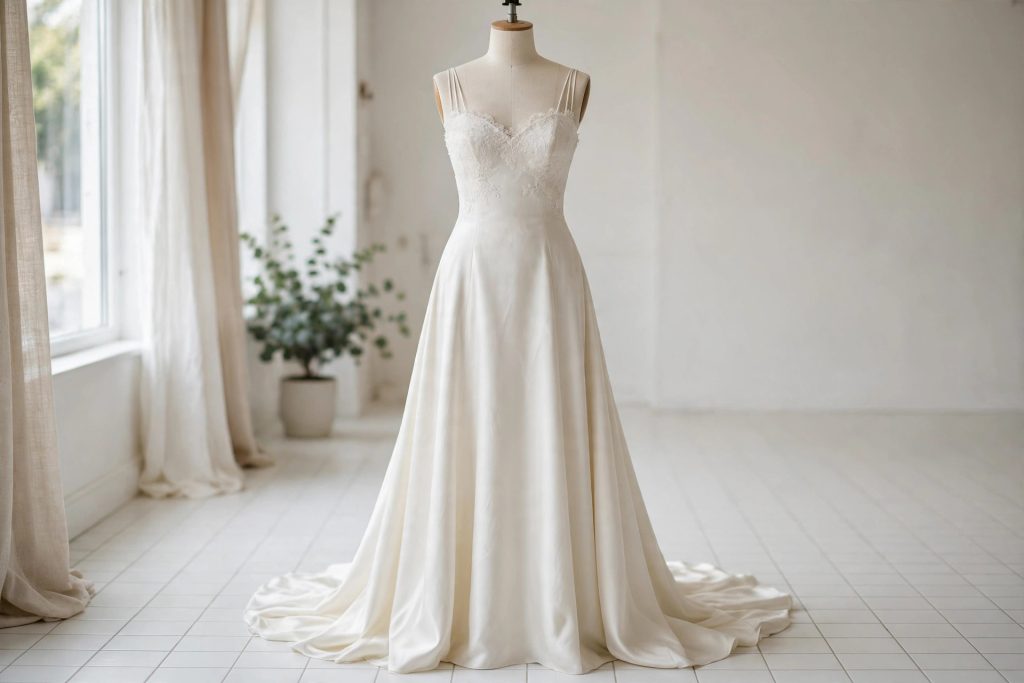
What does custom actually buy a bride on a double-shoulder, floor-length gown? I have sourced bridal long enough to have heard the word custom used for at least four different products, and the honest spread between the best and worst of them is wider than the price spread, which is the wrong way around and everybody in the chain knows it.
At one end, custom means a pattern adjusted to one set of measurements, shoulder slope included, strap placement set for that body, the gown built around a person rather than a size. At the other end it means a standard size with the hem taken up and the word doing the rest of the work in the listing. In the middle sits made-to-order, a standard pattern cut when the order lands, which is a perfectly respectable product that somehow keeps getting sold wearing the first product’s clothes.
The double shoulder is why this question matters more on this gown than on most. Two straps look like the safe option, the balanced option, the option nobody has to think about. Two straps are also two placement decisions, two lengths, two chances for a shoulder slope that was never measured to announce itself by sliding. A strapless gown fails honestly, all at once, in the fitting. A double-shoulder gown can fail politely, a few millimetres an hour, all evening.
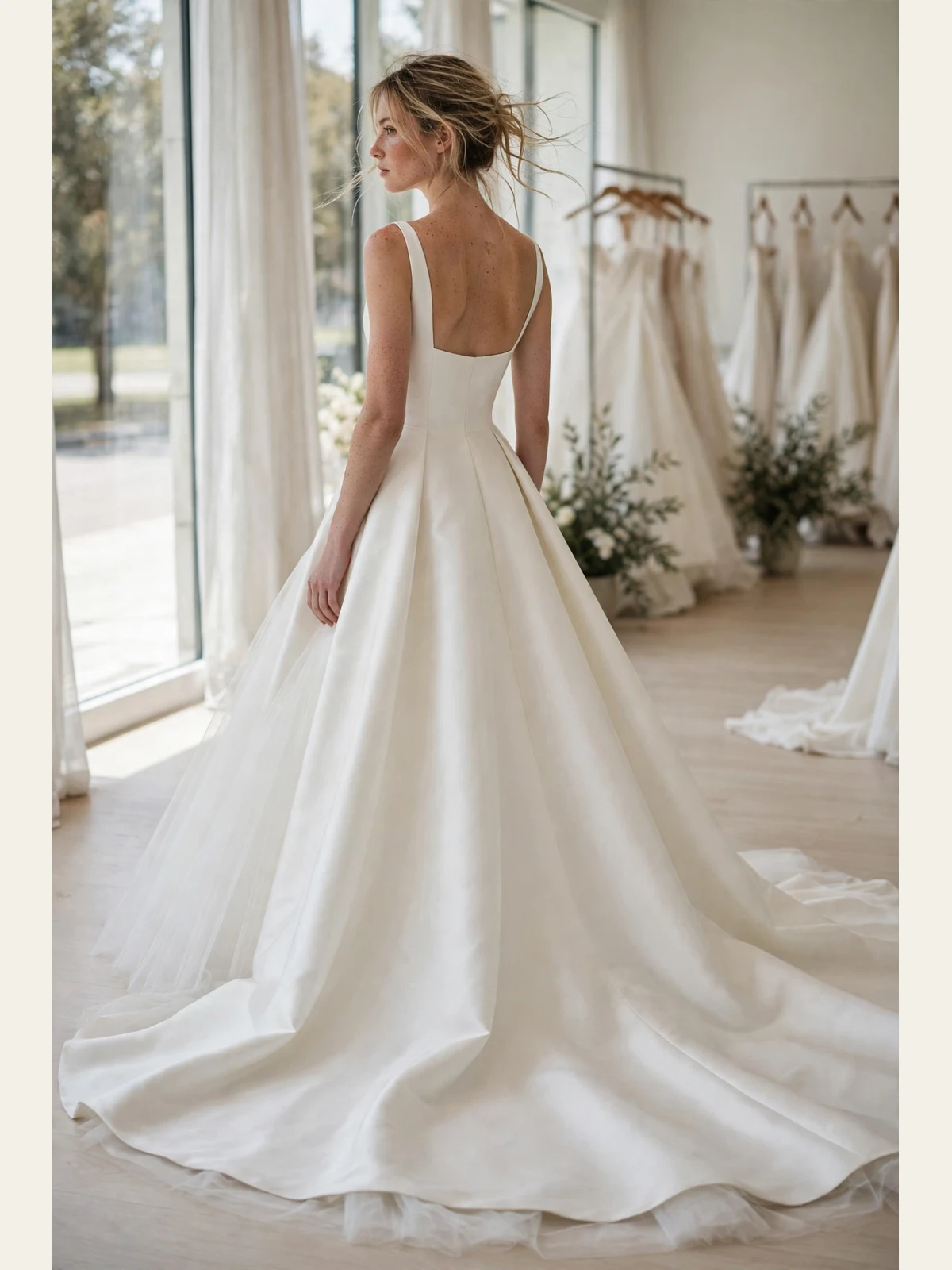
The shoulder is a measurement nobody sends
Ask a room of buyers what measurements a custom gown needs and the list comes back confident. Bust. Waist. Hip. Hollow to hem. The list is fine as far as it goes, and it stops exactly one measurement short of the one this silhouette depends on, which is the shoulder itself, its slope, its width, and where on it a strap wants to sit before gravity starts negotiating. Shoulder slope varies more between bodies than most size charts admit, and a strap placed for the chart’s imaginary shoulder will sit on the real one like a guest who arrived at the wrong angle.
This is where the sourcing conversation usually gets vague, and vagueness is expensive in bridal. A supplier quoting a custom double-shoulder gown should be able to say, in plain words, which measurements change the pattern and which ones only change the cutting ticket. If strap placement cannot move, the shoulder is not custom, whatever the bust is doing. If the bodice gets graded up from a base size and the strap angle grades with it, then larger sizes inherit a strap set for a smaller shoulder, which is how a gown can be right everywhere on the chart and wrong in every photograph.
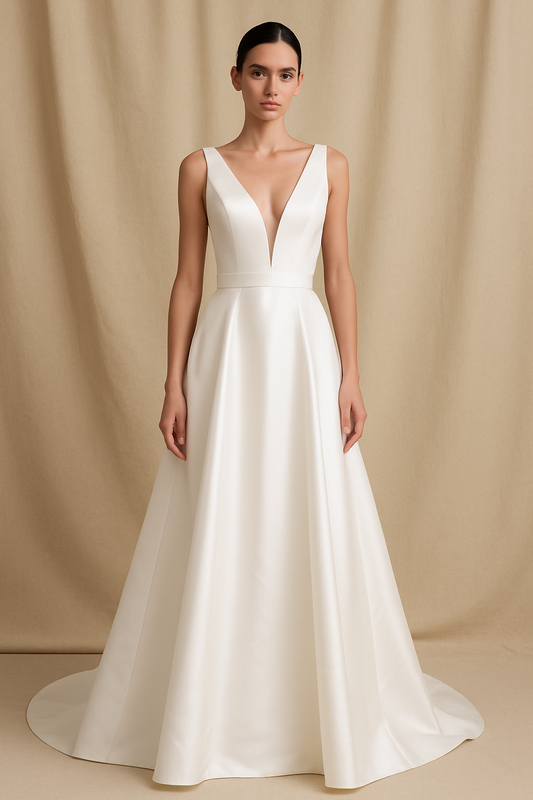
The comparison pieces in the wedding dress wholesale catalog make the shoulder spectrum visible in a way descriptions never do. A square neckline with structured shoulders holds its line because the shoulder is practically a seam, engineered and fixed. An off-shoulder style gives up the strap entirely and puts the work into the bodice and the sleeve head. A bateau neckline covers the shoulder and fits it like a yoke. The double-strap gown sits between all of these, asking two narrow bands to do quietly what the other designs do with structure, and that is a legitimate design choice as long as everyone prices the fitting work it creates.
Length is the quieter half of this gown’s promise and the half that survives contact with reality best. Floor-length means a number, hollow to hem, taken in the shoes the bride will actually wear, and it is astonishing how often the shoe part of that sentence gets lost between the order form and the cutting room. A two-centimetre heel difference is a hem that pools or a hem that hovers, and on a full skirt the pooling version reads as luxury while the hovering version reads as a mistake, even though both are the same two centimetres and the same workmanship.
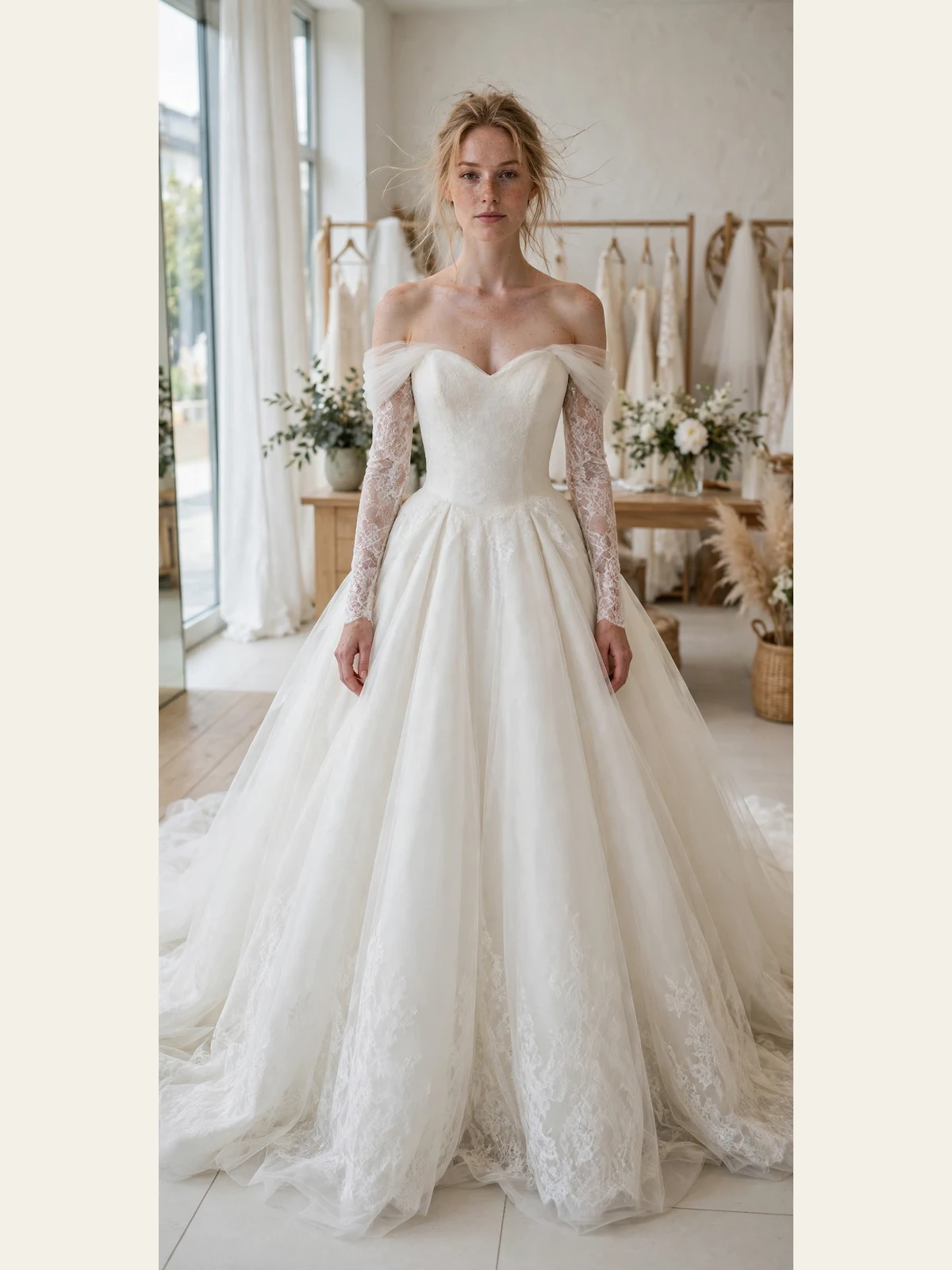
What the quote is really made of
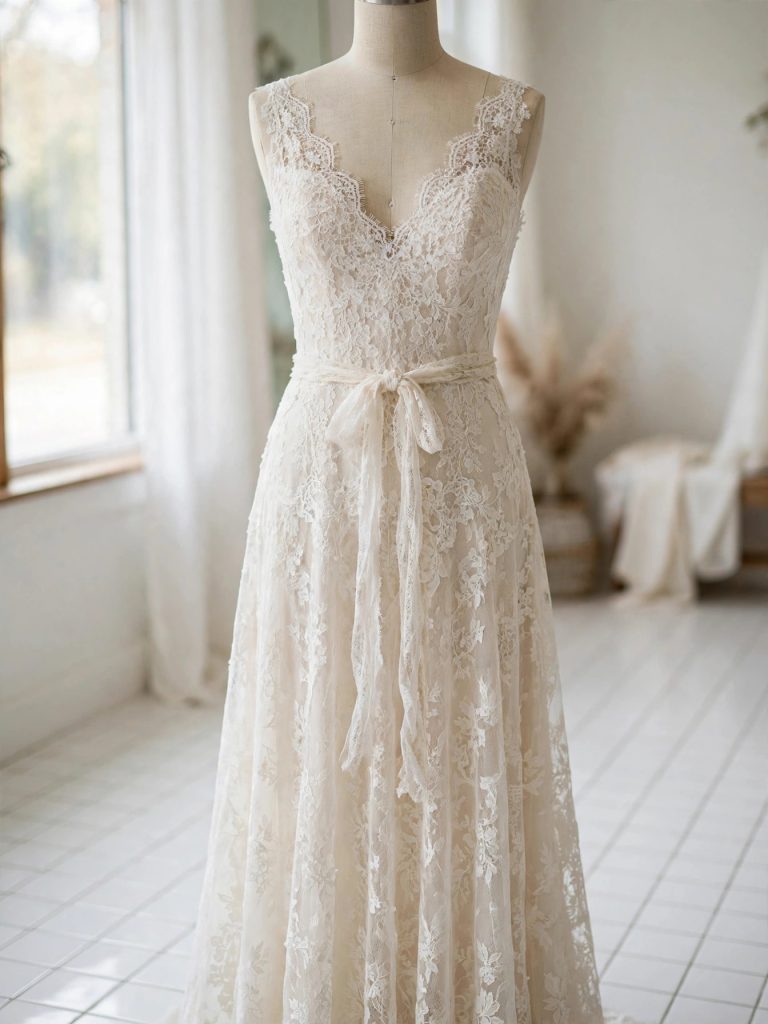
A sourcing manager reads a quote for a gown like this by taking it apart, and the parts are worth naming because buyers new to bridal tend to read the total and stop. There is the fabric, satin or lace, and lace carries a motif-placement cost that satin never will, since a lace bodice has to be cut so the pattern sits symmetrically on a body that is not. There is the structure, boning and cups and the interlining that decides whether the bodice stands up by itself in a box. There is the handwork, and then there is the part nobody itemises, the allowance for the fitting that has not happened yet, the alteration reserve that honest suppliers build in and dishonest ones leave for the boutique to discover.
Small-order pricing bends all of this out of shape in a predictable direction. A one-off custom gown carries pattern work that a run of ten spreads thin, which is why a single custom piece can cost a store more per unit than a standard gown at several times its apparent complexity, and why the deposit conversation matters more than the unit-price conversation on custom work. Money paid in stages, with a stage tied to photographs of the finished gown before it ships, changes supplier behaviour in a way that arguing about the headline price never does. The photographs are not vanity. They are the last cheap moment to move a strap.
No wait, that is not quite the order of it. The cheapest moment to move a strap is not the photograph stage, it is the measurement stage, before anything is cut, and I keep watching buyers spend their energy at the wrong end of the process because the photograph stage feels like control. By the time a gown is finished enough to photograph, moving a strap means opening seams. At the measurement stage it means writing one more number on a form. The number costs nothing. The form just has to ask for it, and most forms do not, because most forms were designed for gowns whose shoulders did not matter.
There is a data habit worth borrowing from the way structured gowns get costed elsewhere on this site. The breakdown in the basque waist cost piece shows how a few millimetres at one point of a bodice decide whether a whole style looks right. Straps are the same problem wearing less fabric. Three or four millimetres of placement, decided by a graded chart instead of a measured shoulder, is the difference between a gown that stays where it was fitted and a gown the bride holds onto in photographs without knowing she is doing it.
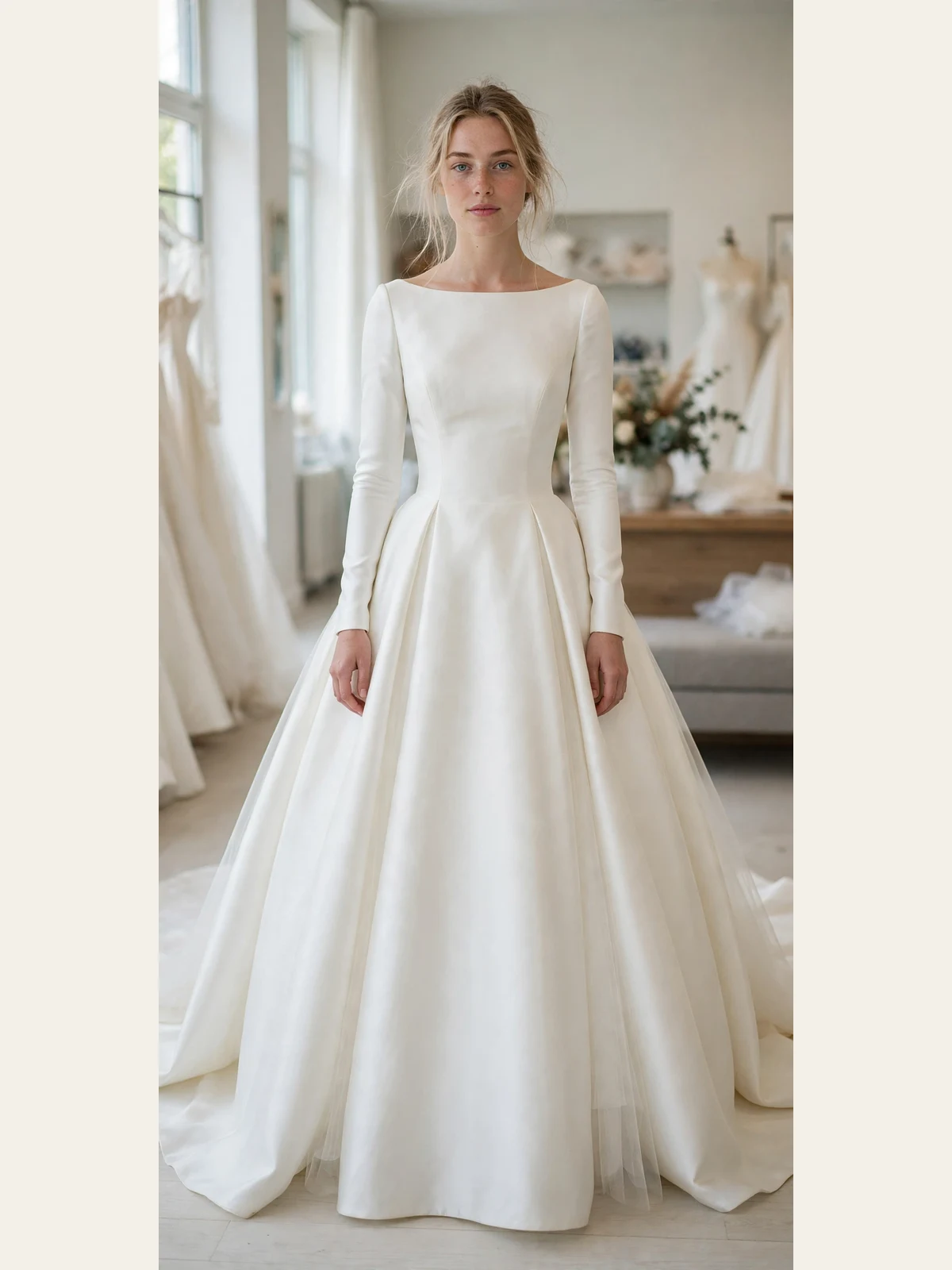
Five pieces, ten pieces, or one bride
Wedding gowns break the usual wholesale logic, and this style is a clean example of why. The standing arrangement on bridal is that a single gown can be made to order for one bride, while catalog styles move at five pieces per style for stores stocking a rail, and that split exists because bridal demand arrives one bride at a time in a way that dress demand does not. A boutique does not need ten of a double-shoulder gown. It needs one that fits the bride in the fitting room and a supplier whose measurements conversation it trusts for the next one.
That trust is built, or lost, on exactly the unglamorous details above. Did the order form ask about shoulder slope. Did the supplier say which measurements move the pattern. Did the finished-gown photographs get taken from the side, where a strap’s angle tells the truth, or only from the front, where every gown looks like its listing. Buyers who source custom bridal through the women apparel factory catalog learn to ask these in the first exchange rather than the fifth, because the fifth exchange is usually a complaint with photographs attached.
And still, the question I opened with does not fully close. Custom buys a bride a gown built around her measurements in the places the supplier actually measures, and the gap between that sentence and the marketing sentence is where this whole category quietly lives. The double shoulder makes the gap visible because shoulders are personal in a way waists are not, two brides with identical charts can carry completely different slopes, and a chart cannot see either of them. Whether the industry ever fixes its forms to ask the one question this silhouette needs, I genuinely do not know. The forms are older than most of the people filling them in.
So the gown hangs there, floor-length, double-shouldered, beautiful in the still photograph and honest only in motion. I would source it, with the measurement conversation held properly and the strap placement written down where a cutter can see it. I would not source it off a listing that says custom and means hemmed. Somewhere between those two decisions is most of bridal sourcing, and it never gets less strange that the difference comes down to a number nobody thought to ask for, about a shoulder, on a dress held up by two narrow straps and a word.
Questions buyers keep asking about this one
Custom, made-to-order, or a hemmed standard size. How do I tell which one I am actually buying?
Ask which measurements change the pattern, and listen for whether strap placement is on the list. A genuinely custom gown moves the pattern for the bride, a made-to-order gown cuts a standard pattern when ordered, and a hemmed size only ever changes length. Suppliers who are doing the real thing answer this question without getting slippery about it. The slippery answer is the answer, usually, and I would rather hear an honest made-to-order than a custom that dissolves under one question.
One gown for one bride. Why does a single custom piece cost more than its fabric seems to justify?
Because the pattern work, the fitting allowance, and the hand-finishing all land on one unit instead of being spread across a run. A single piece also carries the alteration reserve an honest supplier builds in, the room to adjust a strap or a hem after the fitting. It looks expensive next to a stocked style because a stocked style divided those costs ten ways before you ever saw the price. The maths is not mysterious. It is just rarely shown, which keeps the suspicion alive longer than it should.
Five pieces per style for the catalog rail. Does that minimum apply to a custom gown too?
No, and the split is deliberate in bridal. A catalog style stocked for a rail moves at five pieces per style, while a custom gown is made for one bride at a time, because that is how brides actually arrive. What changes on the single piece is the price structure and the measurement conversation, not the existence of a minimum. If a supplier tries to put a five-piece floor under a one-bride custom order, something has been mixed up between the wholesale program and the custom one.
The gown fit at the first fitting and slipped at the wedding. What moved, the dress or the bride?
Neither, most likely, the strap was set for the size chart’s shoulder rather than hers and a fitting room does not reproduce an evening. Standing still for twenty minutes in a shop is a gentle test. Hours of hugging, dancing, and reaching are the real one, and a strap a few millimetres off its natural resting point travels slowly rather than suddenly. I would rather that showed up as a question on the order form than as a photograph afterward, but here we are, it usually shows up as the photograph.
Before I send measurements, what is the one thing buyers forget that this silhouette actually needs?
The shoulder itself, its slope and where a strap naturally sits, because the standard form asks for bust, waist, hip, and length and then stops. Buyers forget it because the form forgets it first. Add the heel height of the actual wedding shoes while you are at it, since floor-length is a promise made in centimetres and two centimetres of heel is the difference between pooling and hovering. Neither item takes a minute to write down. Both take a seam ripper to fix later.