The one-shoulder neckline is an engineering problem wearing a pretty dress. Every other neckline splits the work: two straps, two shoulders, a zip that only has to close. A one-shoulder bodice hangs the entire front of the dress off a single seam, which means that seam, the waist stay underneath it and the boning on the bare side do all the holding. The ANRABESS midi on this page is the standard market version of the style — one shoulder, midi length, formal enough for a wedding guest — and whether it flatters or fails comes down to three structural facts that have nothing to do with the colour you pick.
Why this neckline has the highest return rate on the rack
Asymmetry forgives nothing. On a symmetric dress, a half-centimetre of fit error hides because the other side matches it. On a one-shoulder dress, the same error slides the diagonal line across the chest, and the eye reads the whole dress as twisted. That is fact one. Fact two is the bare side: with no strap, the bodice on that side is held by friction and structure alone, so a bodice cut even slightly loose gaps every time the wearer raises an arm — which at a wedding is every dance, every toast, every photograph. Fact three is the shoulder seam itself. It carries double duty, so it needs to sit exactly on the shoulder point. Two centimetres forward and it digs; two back and the whole front rotates.
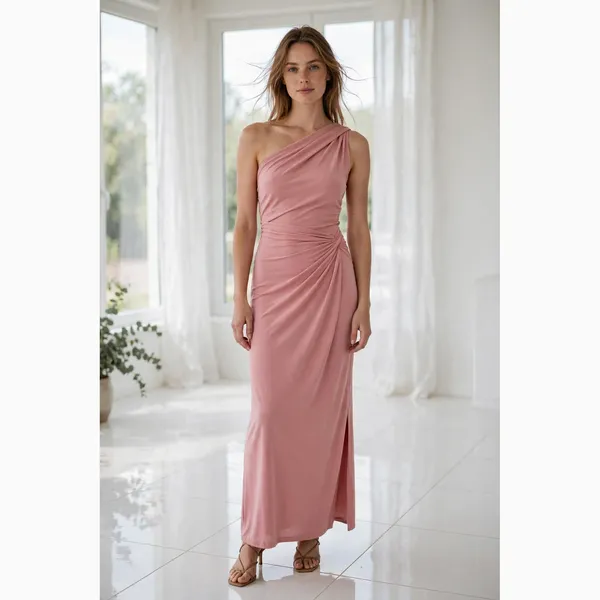
None of this makes the style a bad buy. It makes it a fit-first buy. The shoppers who keep one-shoulder dresses are the ones who check three things in the mirror before the tags come off: the diagonal sits flat with both arms raised, the bare side stays put through a deep breath and a turn, and the shoulder seam lands on the bone rather than the slope. A dress that passes those three checks at home will pass a whole wedding. A dress that needs adjusting in the mirror will need adjusting all night, and no amount of fashion tape changes the geometry — tape is a patch on a structure problem.
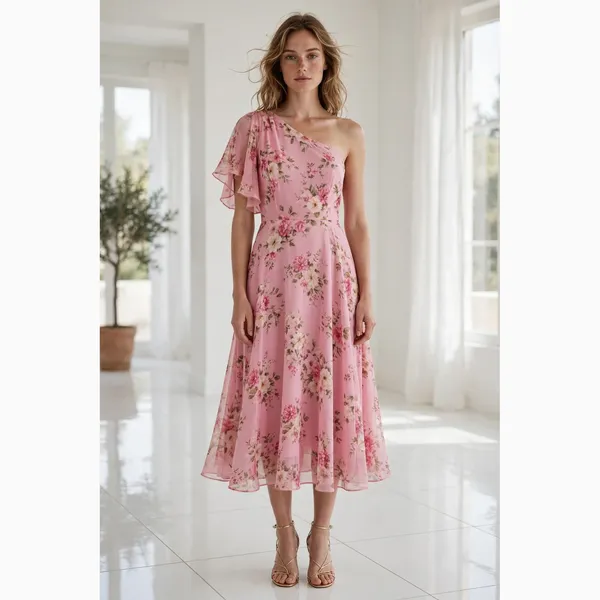
What the midi length does to the equation
Midi is the kind length for this neckline. A floor-length one-shoulder dress adds skirt weight to the single seam’s workload, and by hour four the bodice has crept. A midi skirt is lighter, the creep is slower, and the hem clears chair legs and dance floors without a handful of fabric in one fist. For wedding guests it also threads the dress-code needle: formal enough for an evening reception, short enough not to read as competing with the bridal party. If a store could only stock one length in this neckline, midi is the one that comes back least, and the return data across seasons says so plainly.
Sizing advice for this style runs against habit. Shoppers size for the waist and hope the top behaves; with one shoulder, size for the bust and the shoulder first, because a waist can be taken in at any alterations counter in twenty minutes while a rotated bodice cannot be un-rotated. Between sizes, the larger one with a waist adjustment almost always wears better than the smaller one worn at the edge of its seam’s patience.
The same structure-before-photograph rule runs through the other fitted styles on this site — the boning and grommet checks in the KUTUMAI Bardot corset maxi review are the corset version of it, and the finishing details in the pearl and rhinestone hair accessory set piece are where a guest outfit gets completed once the dress itself behaves.
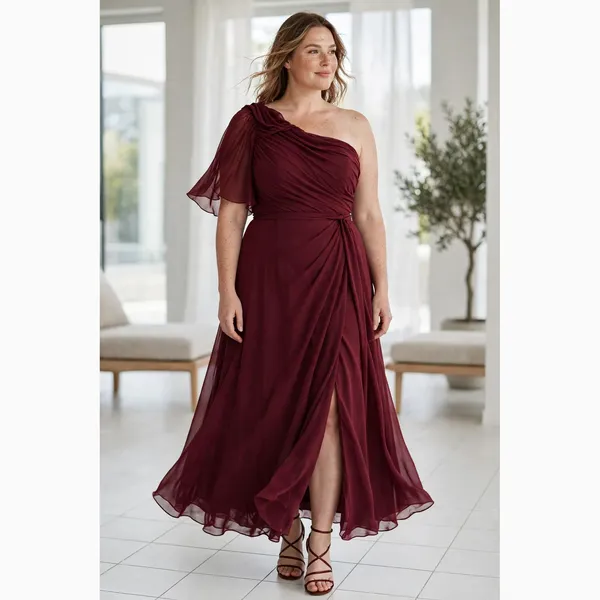
Questions buyers and stores actually ask
Why do one-shoulder dresses get returned so often?
Because asymmetry shows every fit error. On a two-strap dress a small error hides against its matching side; on a one-shoulder dress the diagonal line slides and the whole bodice reads as twisted. The bare side also has no strap, so a slightly loose bodice gaps whenever the wearer raises an arm. Shoppers who check the diagonal with arms raised, and the bare side through a turn, keep the dress. Shoppers who judge it standing still in front of a mirror often do not.
How should I size a one-shoulder midi dress?
Size for the bust and shoulder seam first, waist second. The single shoulder seam has to land on the shoulder point, and the bodice has to hold on the bare side without help. A waist that is a little loose is a quick, cheap alteration. A bodice that rotates or gaps is a construction problem no tailor can fully undo, so between sizes, take the larger and have the waist brought in.
Is a midi length better than floor length for this neckline?
For most wedding guests, yes. The single shoulder seam carries the skirt’s weight as well as the bodice’s, and a midi skirt is lighter, so the bodice creeps less over a long evening. Midi also clears dance floors and chair legs without being carried, and it reads formal without echoing the bridal party. Floor length works, but it asks more of the seam and of the wearer.
Buy it for the structure, not the photograph. The photograph is what the neckline promises; the waist stay, the seam placement and the bare-side fit are what it delivers. Check those three, and this is the dress people ask about in the receiving line. Skip the checks, and it is the dress that gets returned with the tags still smelling of one long evening.