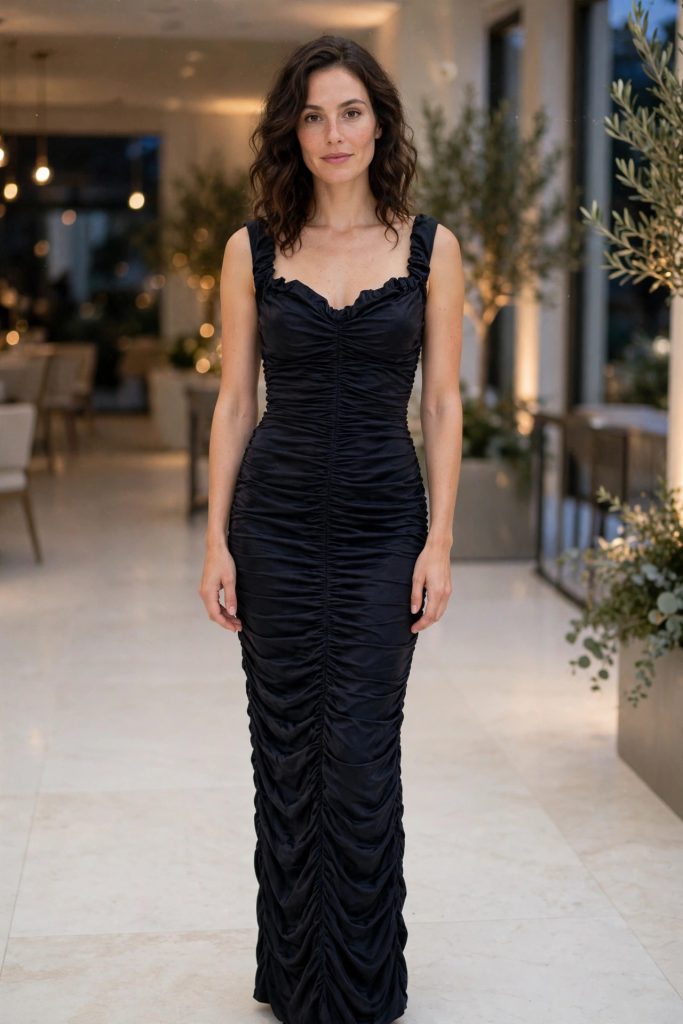
1.8. That number, the gather ratio written on the pattern of a ruched bodycon maxi, is where this dress begins and, if it goes wrong, where it ends. Ruching is cloth gathered into soft folds along the body, and the ratio says how much cloth is pulled into each length of seam: too little and the folds sit flat and apologetic, too much and the dress carries bulk at exactly the places a bodycon is supposed to be clean. Production knows the number the way bakers know an oven. The listing photographs never mention it. Every return in this category is, underneath the wording, a complaint about that ratio or about the knit asked to hold it.
For buyers pricing this style against their own range, the factory facts are plain enough. OEMOD makes women’s dresses like this one under private label and OEM arrangements from its Guangzhou factory, and a style runs at a minimum of 10 pieces, sizes mixed inside that minimum. A sample takes 10 to 15 days once the fabric is settled, and a bulk order runs 20 to 30 days after the pre-production sample is approved. The fit for this dress is a boutique or a private-label brand building a repeat style, because the gather ratio and the knit recovery only pay a buyer back across reorders, not on a single event.
The knit does the shaping, so the knit is the dress
A ruched bodycon has almost no structure doing its shaping work. There is no boning to speak of, no stiff canvas, just a stretch knit, its recovery, and the gathers. Recovery is the word that matters: how completely the cloth comes back after it is stretched over a hip and sat in for three hours. A knit with strong recovery holds the ruching in soft, even folds all evening. A knit whose recovery fades goes slack in patches, and the folds travel, bunching where the body bends and smoothing where it does not, until the dress looks tired in a way ironing cannot fix. Benches that sew wholesale women’s dresses in this category test recovery by hand on every new roll, a hard pull and a watch for the snap back, because the lab figure on the roll ticket and the cloth in the hand disagree often enough to matter.
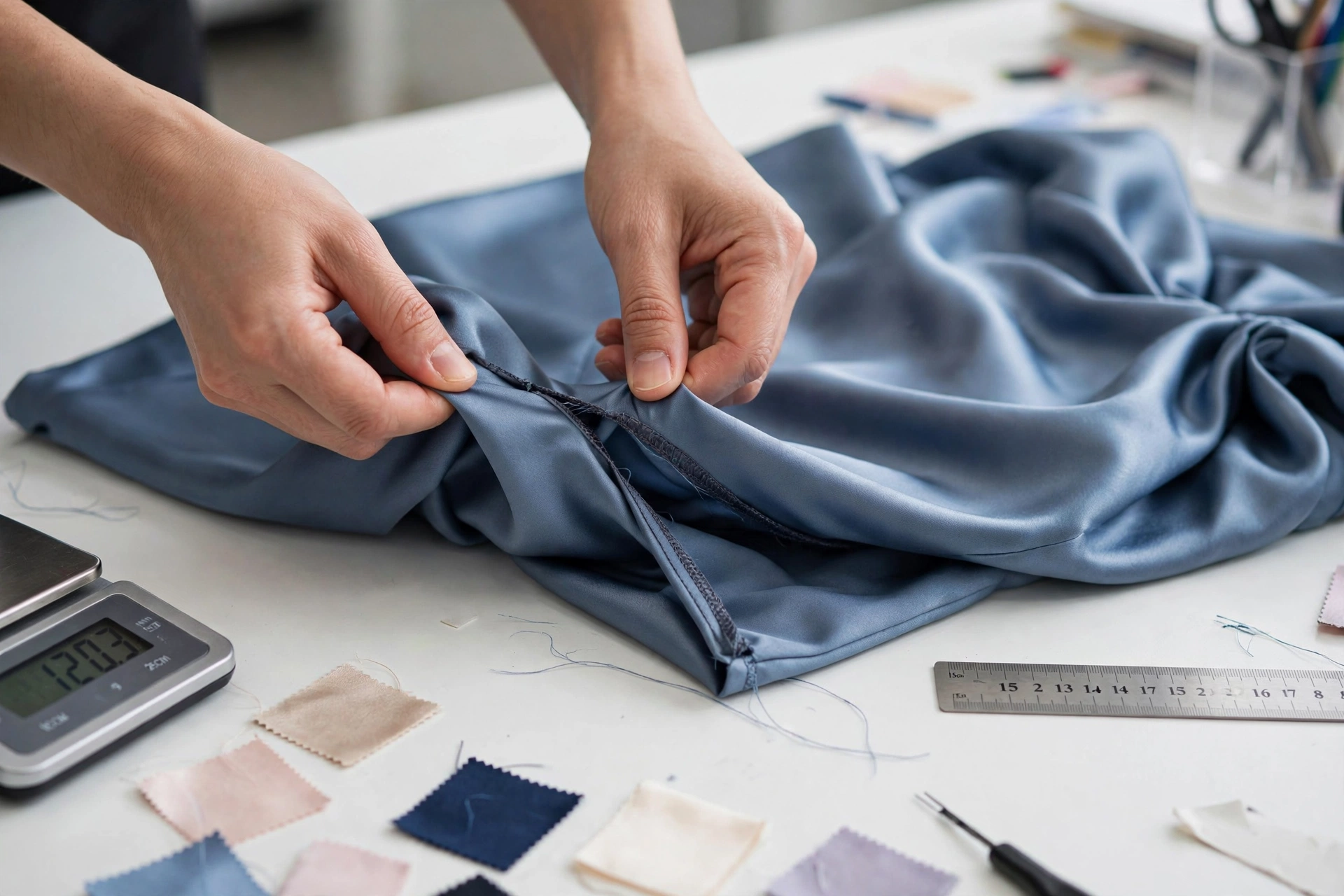
Stitching is the second quiet decision. A stretch dress sewn with a rigid stitch is a dress with a countdown on it, because the thread cannot travel with the cloth and the first deep sit pulls stitches at the hip seam. The seams on a sound bodycon are sewn to stretch with the garment, and the gathers are anchored at intervals so a fold cannot migrate the length of the body. None of this shows on a hanger. All of it shows by the second wearing, which is why this category’s reviews so often praise the dress warmly on arrival and revise the opinion a month later, in a different tone entirely.
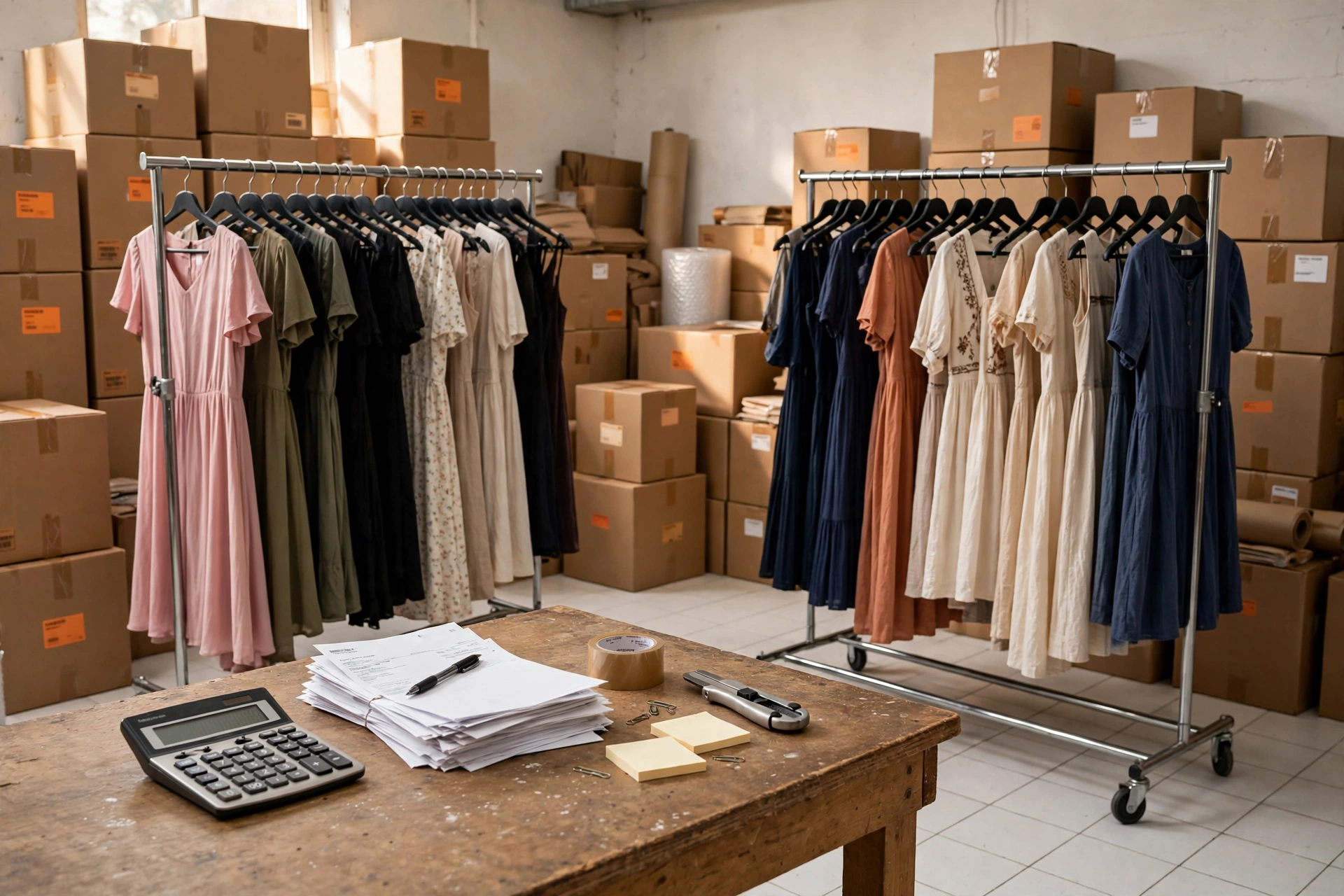
Grading a dress that fits by tension
Most dresses are graded by adding room. A bodycon is graded by managing tension, because the fit comes from negative ease, the garment measuring a little smaller than the body and stretching to meet it. Keep that stretch percentage steady across sizes and the dress feels like the same dress at every size. Let it drift, grading the cloth up by the same flat amount at every seam, and the largest sizes end up stretched far thinner than the sample size, with the ruching pulled flat exactly where a larger body most wants its softness. Careful makers grade the ease, not just the outline. No wait, they grade the ease first and let the outline follow, and the order of those two decisions is the whole difference between a size run and a size argument.
Sampling settles what paper cannot. A pre-production sample of this style has to be worn sitting, standing, and walking stairs, because ruching that behaves on a stand can still crawl upward on a moving body if the hem weight and the gather anchors disagree. A clothing manufacturer working for repeat boutique orders builds that worn test into sample development as a matter of course. A buyer who approves this dress from photographs alone has approved the one version of it that never has to sit down, and bulk production will introduce her to the other version at scale.
On the factory calendar this ruched run is sewn ahead of the square neck ruched bodycon maxi dresses order, costed beside the formal dresses for guests and bridesmaids file, and checked against the lace mermaid gowns with flare sleeves range, because all three are fitted dresses whose fit is decided long before anyone wears them.
Questions buyers and stores actually ask
10 pieces per style at a bodycon fit. Is a trial order even fair to this dress?
Yes, and it may be the fairest test this category gets. A small batch run on the actual bulk knit shows recovery and gather behaviour on real bodies within weeks, which is exactly what a buyer needs before a bulk order. What a trial cannot do is average away a weak knit: if the cloth fades in the small run, it will fade at scale, only louder.
The ruching sits flat on the sample and travels on the bulk dresses. Same pattern. What moved?
The cloth, most likely. A bulk roll with weaker recovery than the sample roll lets the gathers slide and bunch where the body bends. The pattern did not change; the memory of the knit did. Pull-testing each new roll against the approved sample, before cutting, is the bench habit that catches it while it is still a cloth argument instead of a returns pile.
Bulk pricing drops as the quantity rises. What gets cheaper, the cloth or the minutes?
Both, in different proportions. Cloth per dress falls a little with a longer cut, but the larger saving is minutes: a long run lets one operator settle into the gather rhythm, and sewing speed on ruching is a rhythm skill. That is also why a very cheap bulk quote should be read with care. The minutes have to come from somewhere, and on this style they usually come out of the anchoring.
Private label on a knit this tight. Where does the label go so it does not show through?
Off the body lines. A woven label at the centre back neck can print through a stretched knit and itch through it too, so private label buyers in this category usually move the branding to a small side-seam label and a hang tag, and put the care information on a printed transfer inside the back. The tech pack should say so at sampling, not after the first run arrives wearing its label on its skin.
The style earns its place honestly. Done on the right knit, with the ratio held and the ease graded, a ruched maxi gives a small store a cocktail and guest dress that fits many bodies from a short size run and reorders cleanly under a private label. Done on a tired knit to hit a price, it gives the same store a month of good reviews and a season of returns. The pattern is rarely the difference. The cloth’s memory is, and memory is the one specification that never appears in the listing that sold the dress.