So the stall holder lays two rolls side by side and says, same print, pick one. And the buyer says, they look identical. And he says, run your palm down both, then tell me that. That small conversation, repeated in fabric markets every spring, is where a dress like the Caracilia floral mesh maxi is actually decided. The style is a summer piece, deep neckline, long skirt, flowers on mesh over a lining, and it photographs as one dress. On the table it is two, because mesh is a cloth with a memory for tension, and the print sits on it differently depending on how the roll was wound, stretched, and rested. The buyer who learns to feel that difference buys a different summer from the buyer who only looks.
The flowers are not the same size twice
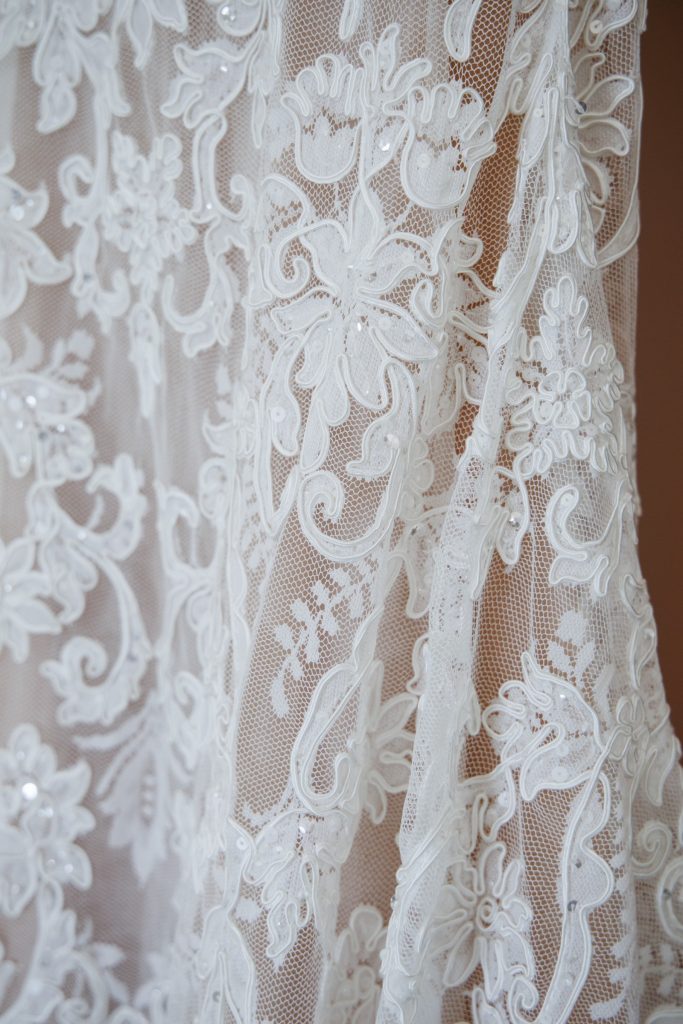
Printed mesh stretches a little under its own handling, and a floral motif printed on it grows a little with it, a few percent here and there, nothing a tape measure argues with and everything a neckline argues with. A deep V asks the print to behave at the one place the eye lands first. Where the two sides of the V meet, a large flower either centres itself like it was placed there or lands cut in half, and that landing was decided at the cutting table, not the printing mill. Better cutting rooms mark the motif position for the front bodice before the lay is spread. Faster ones let the repeat fall where it falls, and one dress in a run then carries the flower the photograph promised while its sisters carry halves.
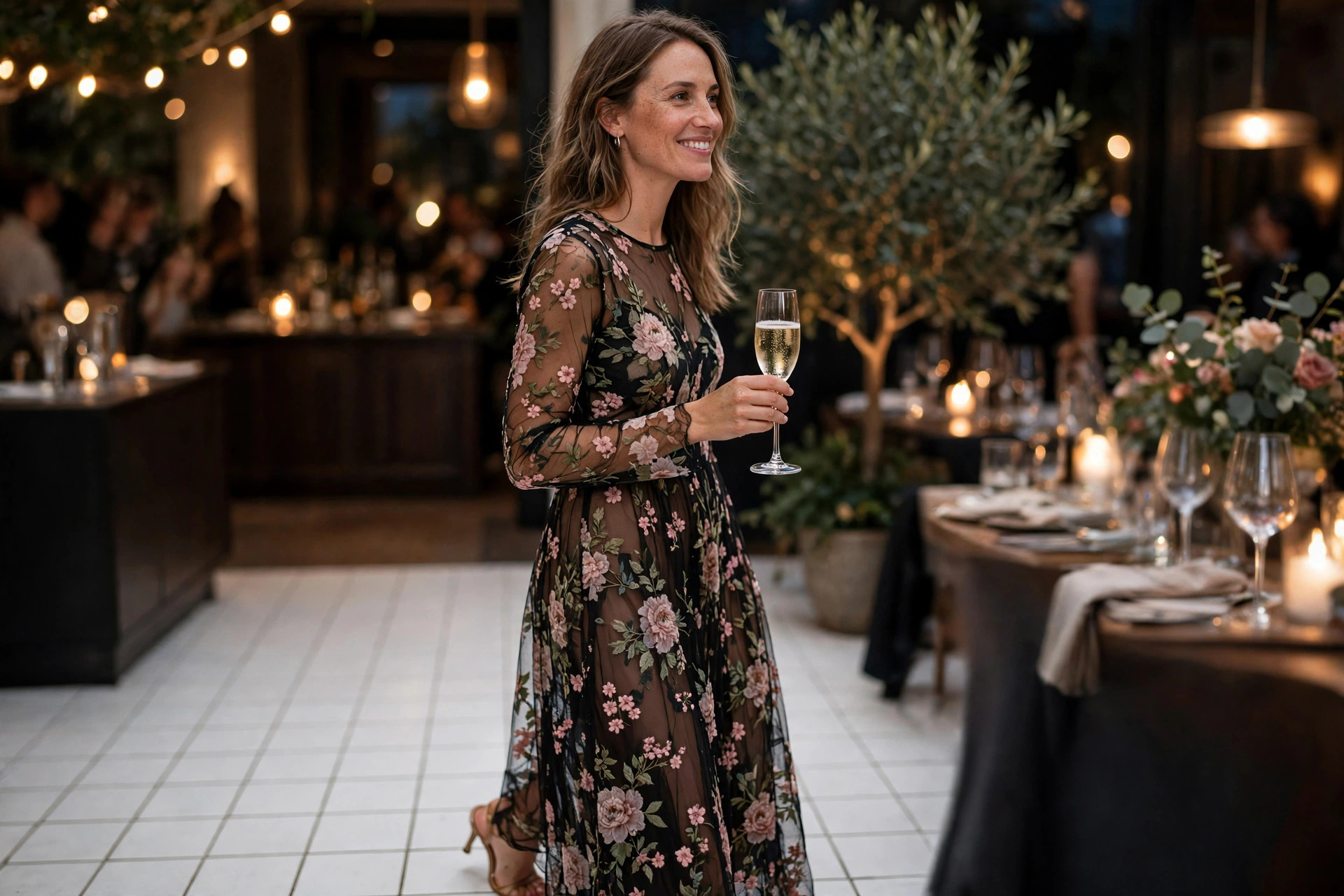
Then there is the lining, which nobody photographs and everybody sees. A floral mesh is a pattern floating on air, and the lining underneath sets the colour the pattern reads as. Over a skin-tone lining the flowers go soft and romantic. Over white they go bright and a little hard. Over a lining one shade too dark the whole dress reads evening when it was bought for a garden. The sample a buyer approved was approved over one specific lining, and if the bulk run quietly swaps that lining for a stock shade, the print has not changed and the dress has. Upstream says this plainly to anyone who asks. The trouble is how rarely the lining gets asked about, compared with the flowers it carries.
Summer is bought in winter, and the cloth knows it
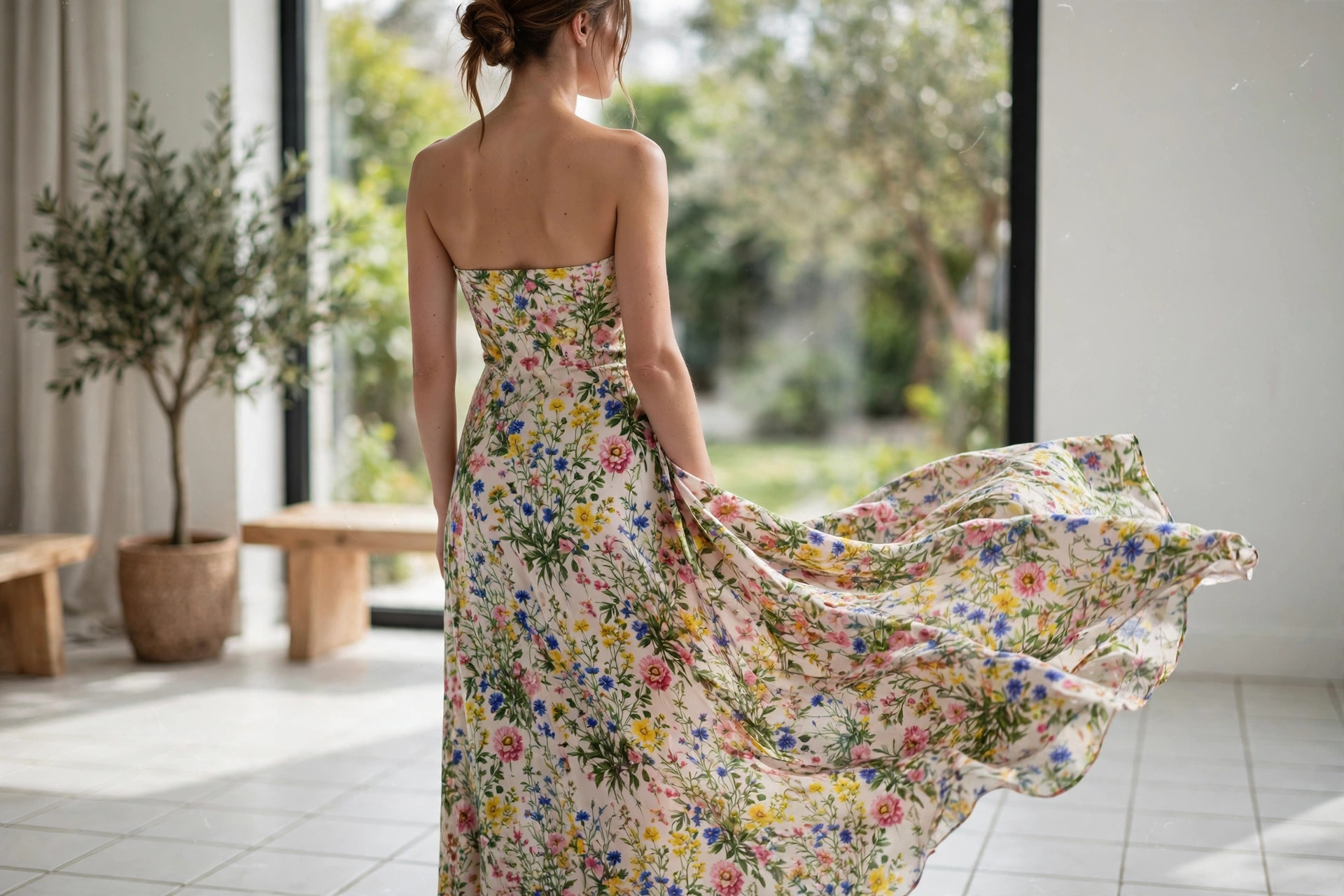
A summer maxi is ordered months before summer, which means its cloth is bought in the market’s quiet season, when mills are clearing and a good mesh can be had kindly. That timing is a gift and a trap. The gift is price. The trap is that the roll bought in January rests until cutting, and mesh that rests rolled tight for months comes off the roll with a set in it, a curl at the edges and a stretch memory that flattens only if the cutting room lets the cloth relax overnight before the lay. No wait, overnight is the polite version. A roll that sat for a season wants a full day opened out, and the rooms that give it the day get hems that hang straight, while the rooms that cut it straight off the roll get hems that keep remembering the roll for weeks.
At the cloth end of the trade this mesh gets quoted beside the formal dresses for guests and bridesmaids file, argued over next to the red floral dresses for holidays and weddings print notes, and compared with the black short sleeve guest dresses range, because all three are bought on the strength of a pattern and judged on the cloth underneath it.
Questions buyers and stores actually ask
The flowers look bigger on the bulk dresses than on the sample. Printing fault, or something else?
Usually tension, not printing. Mesh stretches slightly under handling and winding, and the motif grows a few percent with it, most visibly at the neckline. Cloth rested open before cutting, and a motif position marked for the front bodice, keep the bulk flowers the size the sample promised. A run cut straight off a tight roll carries the growth into every dress.
Same print, two linings, two different dresses. Which one did the buyer approve?
The one on the sample, whichever it was. Lining colour sets how a floral mesh reads: soft over skin tones, bright over white, darker and more evening over a deep shade. If bulk production swaps the lining for a stock colour, the dress changes without the print changing at all. Naming the lining shade in the tech pack is the guard, and it takes one line.
A deep neckline on a printed mesh. Who decides where the big flower lands?
The cutting room, whether it means to or not. A motif centred at the point of the V looks placed; one cut in half looks like an accident, and the difference is a marker drawn before the lay is spread. Buyers who care should ask whether bodice motif placement is marked or left to the repeat. The answer predicts the photographs better than the print itself does.
Summer dresses ordered in January. Why does the cloth price move before the season starts?
Because summer cloth is a winter purchase. Mills clear mesh and print bases in the quiet months, so early buyers get kind pricing and late buyers pay the season’s real rate for the same roll. The price moves when the market wakes up, weeks before a single summer dress is worn, and reorder quotes in spring are priced off the new cloth, not the old kindness.
10 pieces per style in a printed mesh. Does the repeat even allow a trial that small?
Yes, with one honest cost. Print placement and roll width mean a small cut wastes a little more cloth per dress than a long run does, so a trial order carries that waste inside its price. It still works as a trial: the store learns whether the flower scale and the neckline suit its customers, and the reorder then runs longer and cheaper per piece, with the lining and motif placement already settled.
None of this makes the style fragile. A floral mesh maxi is one of the honest summer dresses, light, forgiving below the waist, and kind about sizing because the skirt does the work. Its whole quality argument happens before sewing, in the choice of roll, the placing of one flower, the naming of one lining. The stalls know which buyers will ask about those three things, and they save their better rolls for them, the way stalls have always saved things for the buyer whose palm checks the cloth before her eyes check the price.