Dear buyer who asked why the butterflies moved,
You sent photographs from the wedding and photographs from the listing side by side, and you were right to. In the listing the butterflies sit spaced and calm across the fingertip tulle. In your photographs two have slid toward each other, one sits lower than its partner, and one is simply not there anymore. I run a sewing floor, so let me tell you what you are actually looking at. You are looking at an attachment method. Nothing else about that veil changed between the two sets of photographs.
Sewn, glued, or wired is the whole veil
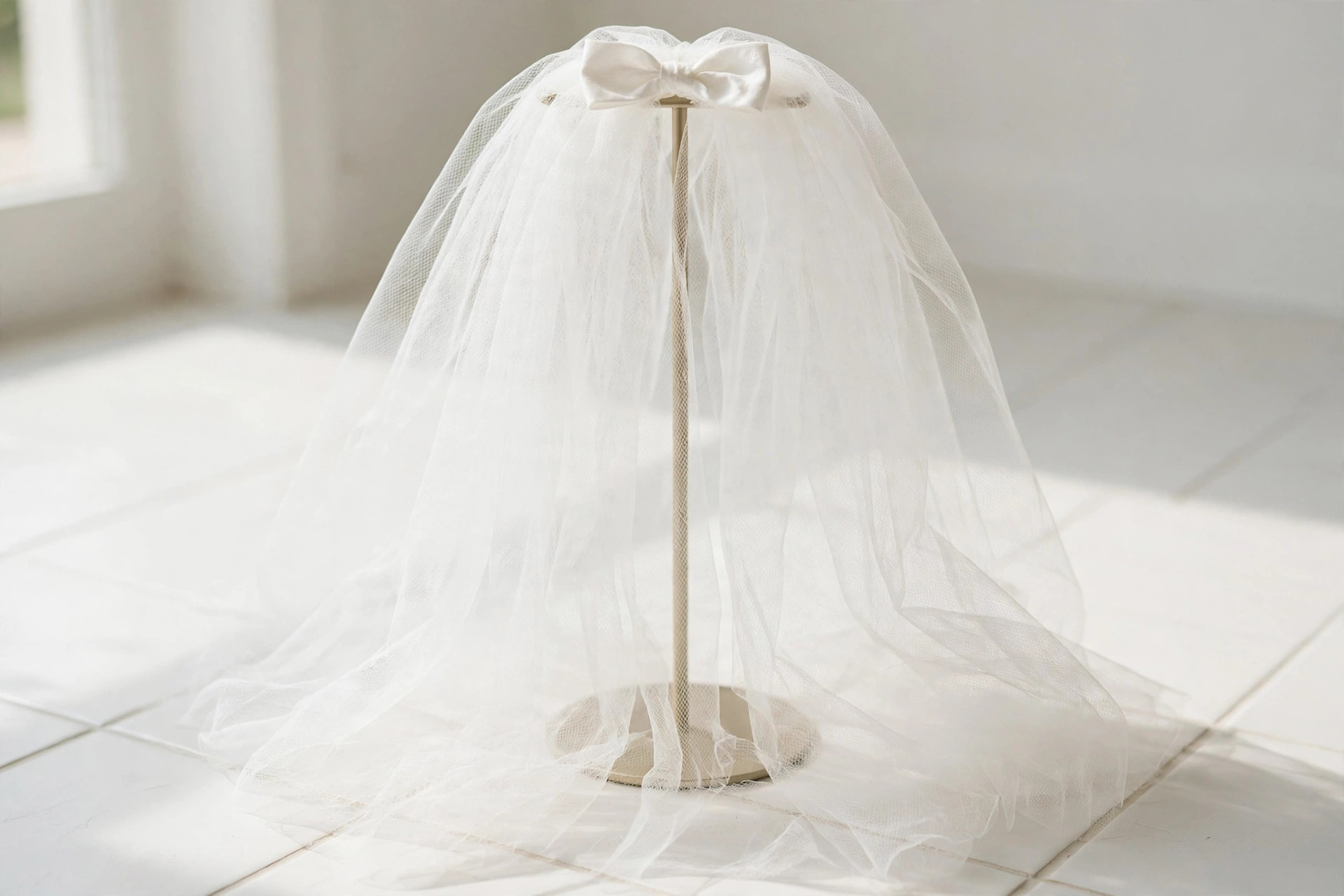
A butterfly on tulle can be held three ways and each way has a price written in minutes. Stitched down, it stays. It also takes slow, fiddly work, the net puckers a little around the stitch, and the hand doing it has to keep the wings from folding while the needle passes. Glued flat, it looks cleaner on day one and it is fast, which is why price-led runs love it, but glue on net gives up with heat, movement, and a long afternoon. Wired at the base sits between the two, steadier than glue, stiffer than thread, and you can feel that stiffness if you run a finger under the wing.
Tulle itself is part of the problem and nobody warns the buyer about that part. Net has almost no body. It moves with air. A decoration with any weight at all will travel across it over hours unless the attachment bites properly, and a corpse bride style veil is worn for photographs, dancing, hugging, and a car ride, not for standing still in a studio. The gothic styling hides a lot in photographs, dark light, dark background, but it cannot hide a gap where a butterfly used to be once someone looks closely.
What I would ask before ordering it in quantity
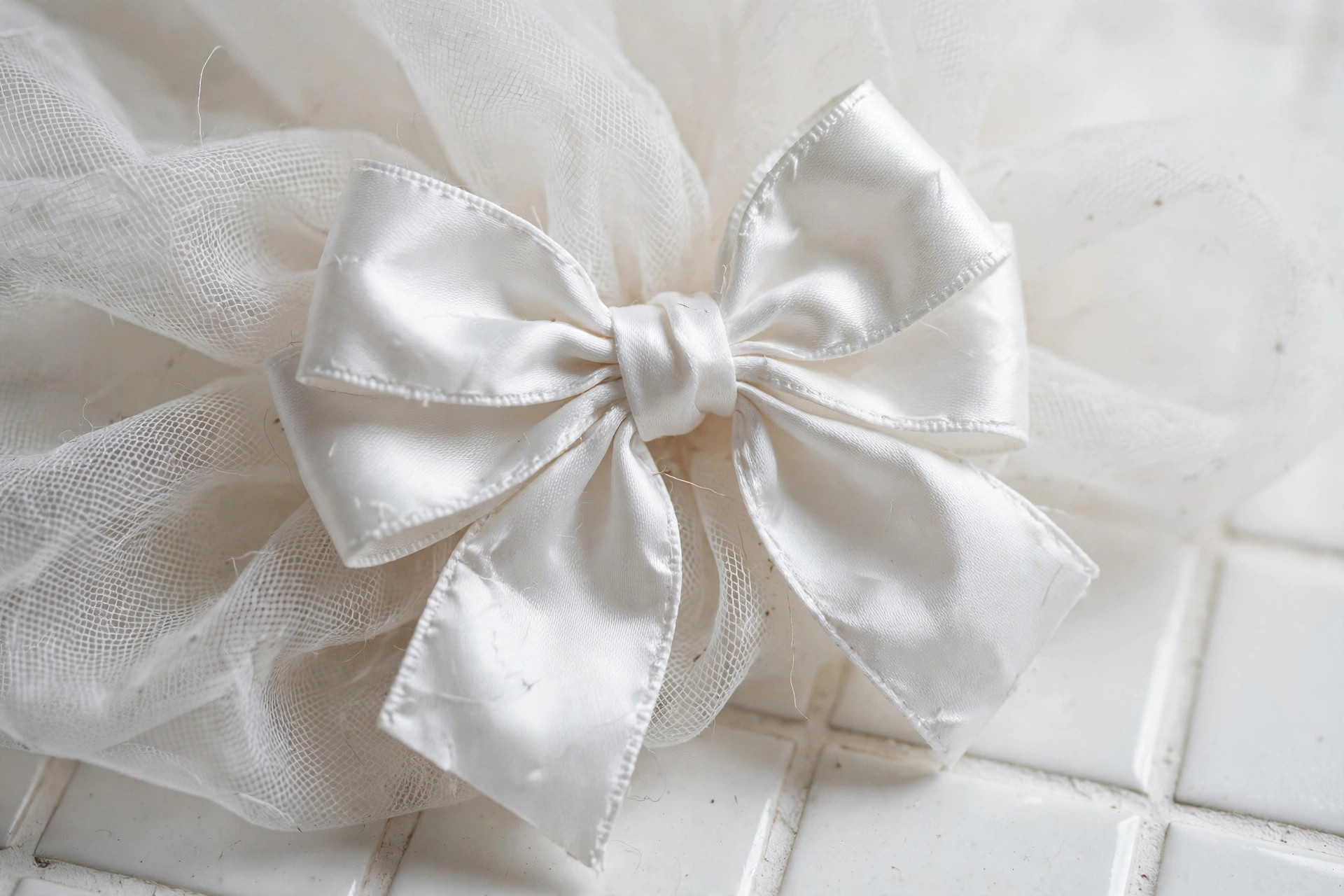
Ask the dress supplier, in writing, how the butterflies are attached, and ask for a close photograph of the back of one butterfly rather than the front of the whole veil. The back tells the truth. Thread shows as thread. Glue shows as a flat shiny patch. Wire shows as a twist. A wedding dress manufacturer that sews them will answer that question without drama. A seller who cannot answer it is selling photographs, and photographs are the one thing this product already has enough of.
Then hang one sample overnight and handle it the way a wearer will, lift it, fold it into a bag, take it out, shake it once. Count the butterflies before and after. No wait. Count them after a full day on a stand near a door that opens and closes, because the draught through a shop door does more of the slow work than careful handling does, and a veil that keeps its spacing through that will keep it through a wedding.
One more thing from the bench, since you asked about the comb as well. The comb matters almost as much as the wings. A metal comb sewn to the net holds through styling and removal. A plastic comb glued at the crown can crack at the spine the first time a stylist pushes it into thick hair, and then the veil is held by hope and hairpins for the rest of the day. When you photograph the back of a butterfly, photograph the comb joint in the same shot. The two attachments fail together more often than stores expect, and a supplier who sews both will not mind showing both.
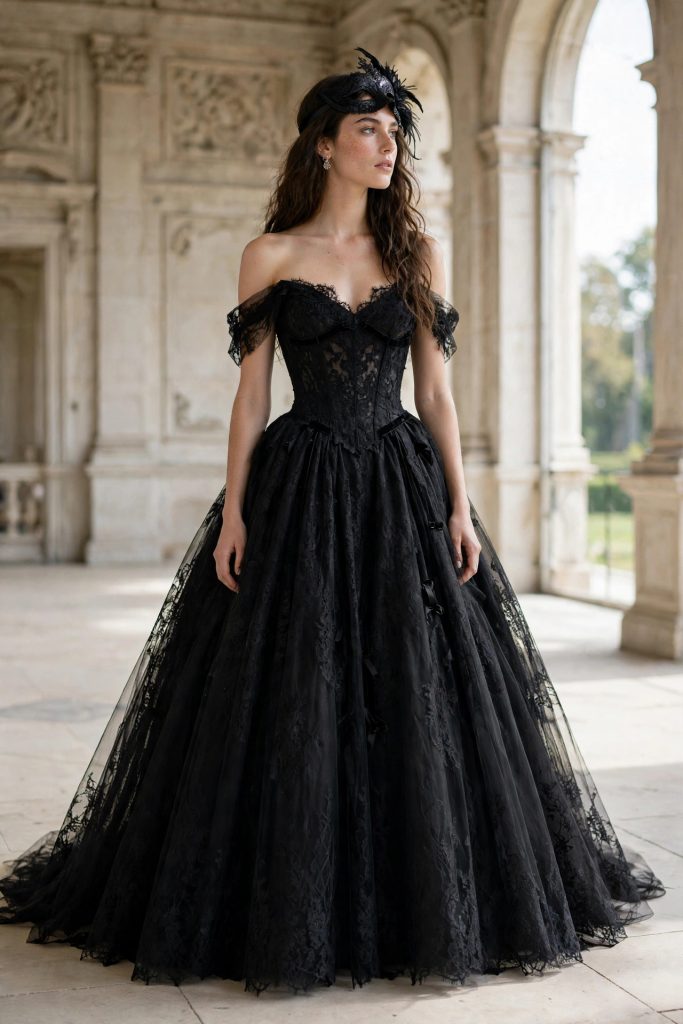
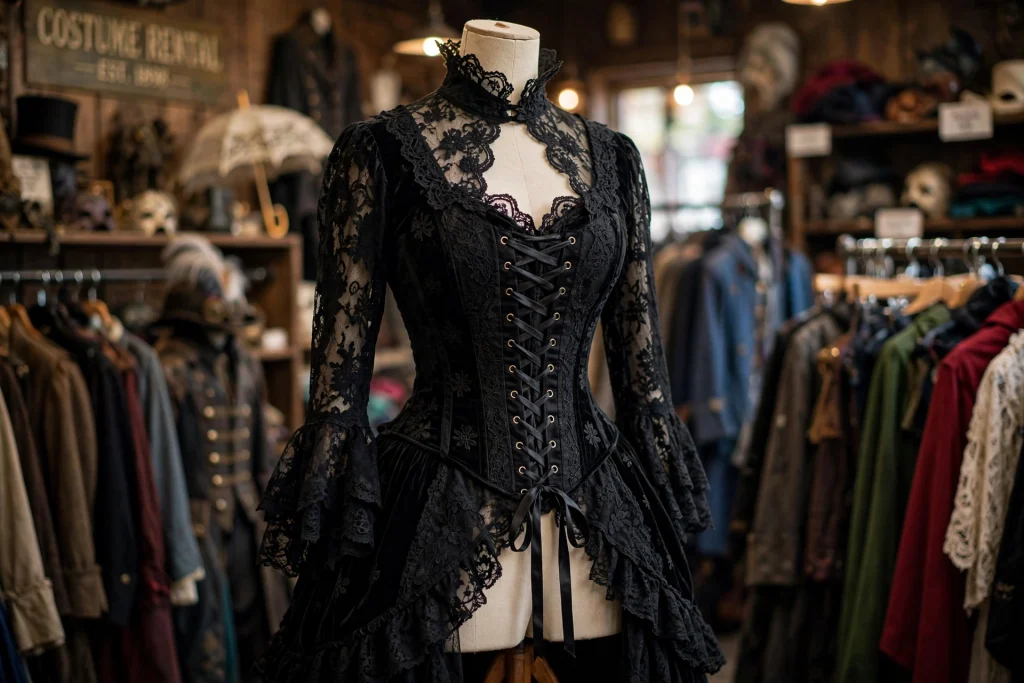
You will see the same net and the same arguments about attachment show up across the dark end of the catalogue, in the gothic Victorian bustle wedding gown file, in the layered skirt story of the layered convertible quinceanera and bridal gown file, and even in the plainer guest rail covered by the formal dresses for wedding guests and bridesmaids file, because tulle forgives nothing and every factory that sews it learns that in its own order.

Questions buyers and stores actually ask
The listing never says sewn or glued. Is there a catch behind that silence?
Usually the silence just means the seller is copying a factory description that never named the method either, and the method is the one thing that decides the veil after two hours of wear. Ask for a photograph of the back of a single butterfly before a bulk order. Thread, a flat glue patch, or a wire twist will be visible in that one shot, and I would rather settle it there than argue about spacing after a themed wedding has already happened.
Ten pieces per style for a themed veil. Can a store test it that small?
Ten pieces per style is a workable test size for a seasonal style like this, and a store can learn most of what it needs from that run if it hangs one piece, handles it, and counts attachments before the rest go out. Themed stock has a short selling window, so the test has to happen on arrival, not after the season turns. A small trial order read carefully teaches more than a large order read late, which is a lesson this category repeats every autumn.
Butterflies clustered after one wearing. Is that a fault or just tulle being tulle?
A little drift is tulle being tulle, because net moves and a glued wing will walk across it over an afternoon. A missing butterfly is a fault in attachment, full stop. The line between the two sits in the back-of-the-wing photograph a buyer should have taken at sampling. Without that record the argument goes in circles, and I find myself siding with whoever documented first, which is not a satisfying way to settle anything.
None of this makes the veil a bad product. At its price it is a costume-leaning statement piece for a themed wedding, and judged as that, the effect in the first hour is honestly strong. The trouble starts when a store sells it with heirloom language, or when a buyer plans around the listing spacing as if spacing on net were a fixed property. It is not fixed. It is held, and how it is held is the product.