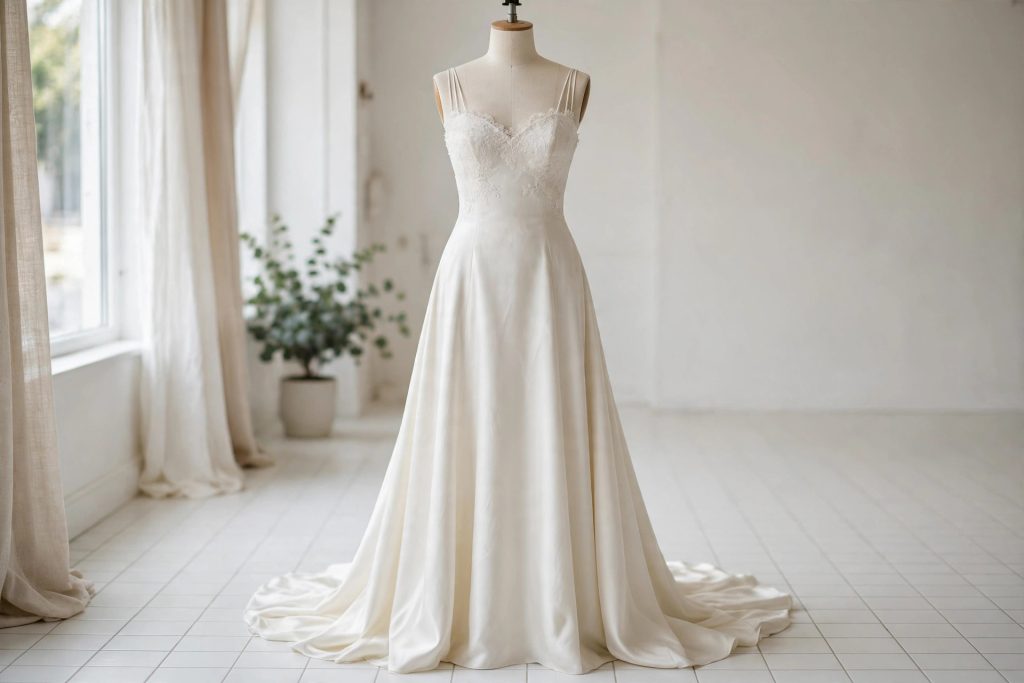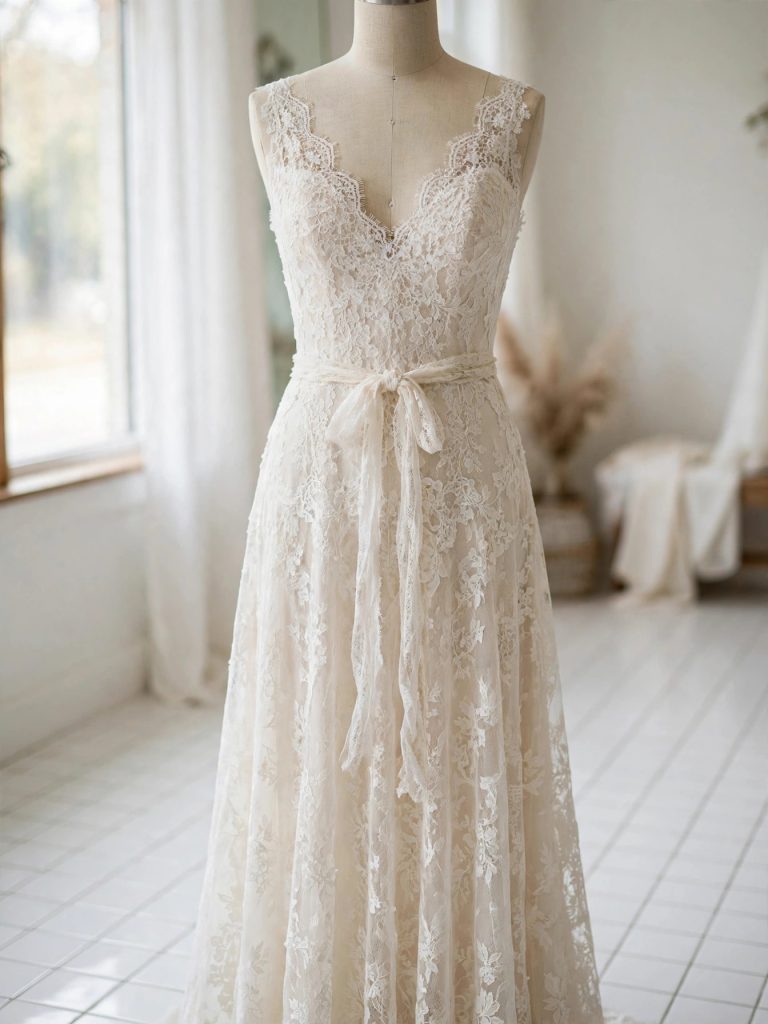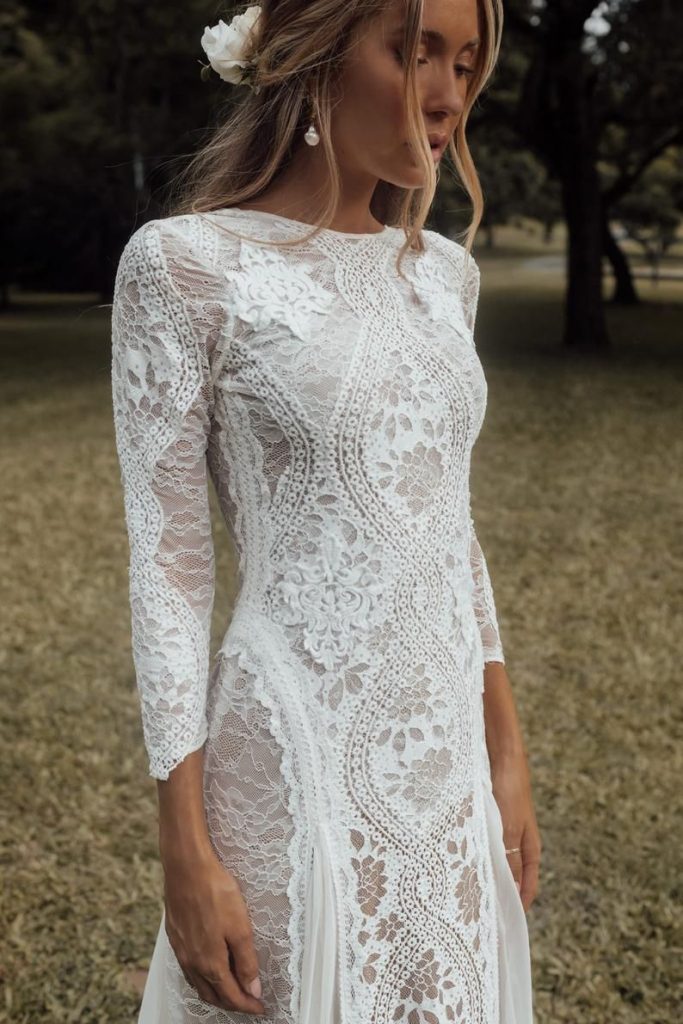
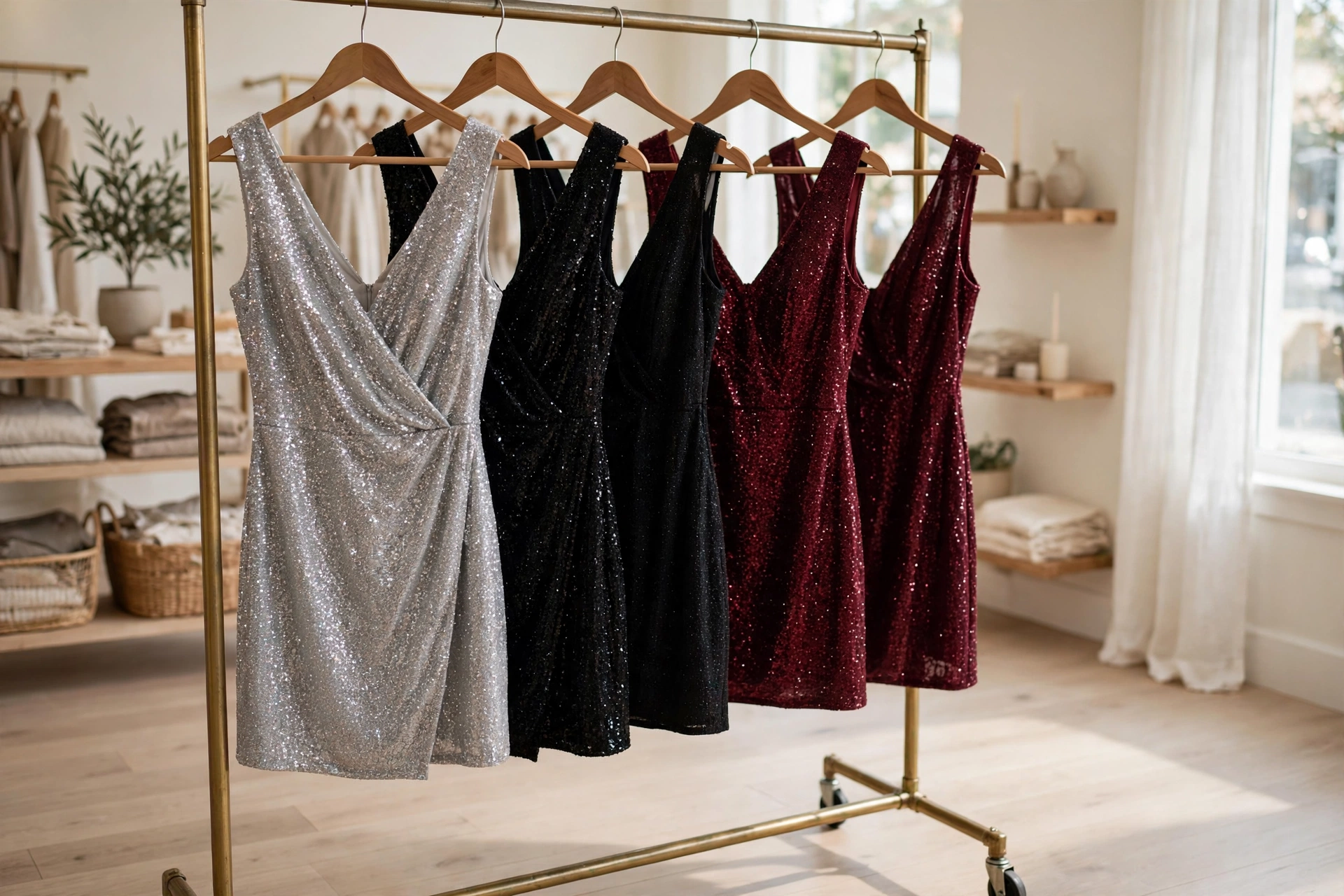
Everyone assumes a sequin dress fails on looks. Production will tell you it fails on weight and on thread. A fully covered sequin and glitter style like this Wedtrend piece carries its decoration as a second skin, stitched scale over scale onto a mesh base, and that skin has opinions. It pulls the bodice down a fraction over an evening, it argues with the zip every time the wearer sits, and it sheds exactly where the bag strap and the seat belt rub. The photograph sells the sparkle. The bench worries about the three places the sparkle is attached, because attachment is the whole dress.
The shine is the cheap part. The stitching is the dress
Sequins stay on a dress one of two ways. They are sewn through the centre with a locked stitch that lets each disc lie flat and overlap its neighbour, or they are run on in a chain that moves faster and lets go faster. A thumb dragged firmly across a hidden seam allowance tells a buyer which one she is holding, and it takes four seconds. Discs that lift and chatter under the thumb are telling her about the third wearing, not the first. A dress manufacturer sewing wholesale dresses in this category for reorder business locks the rows at the stress points, the side seam, the strap join, the top of the slit, because those are the points where a chain stitch starts unzipping itself in public.
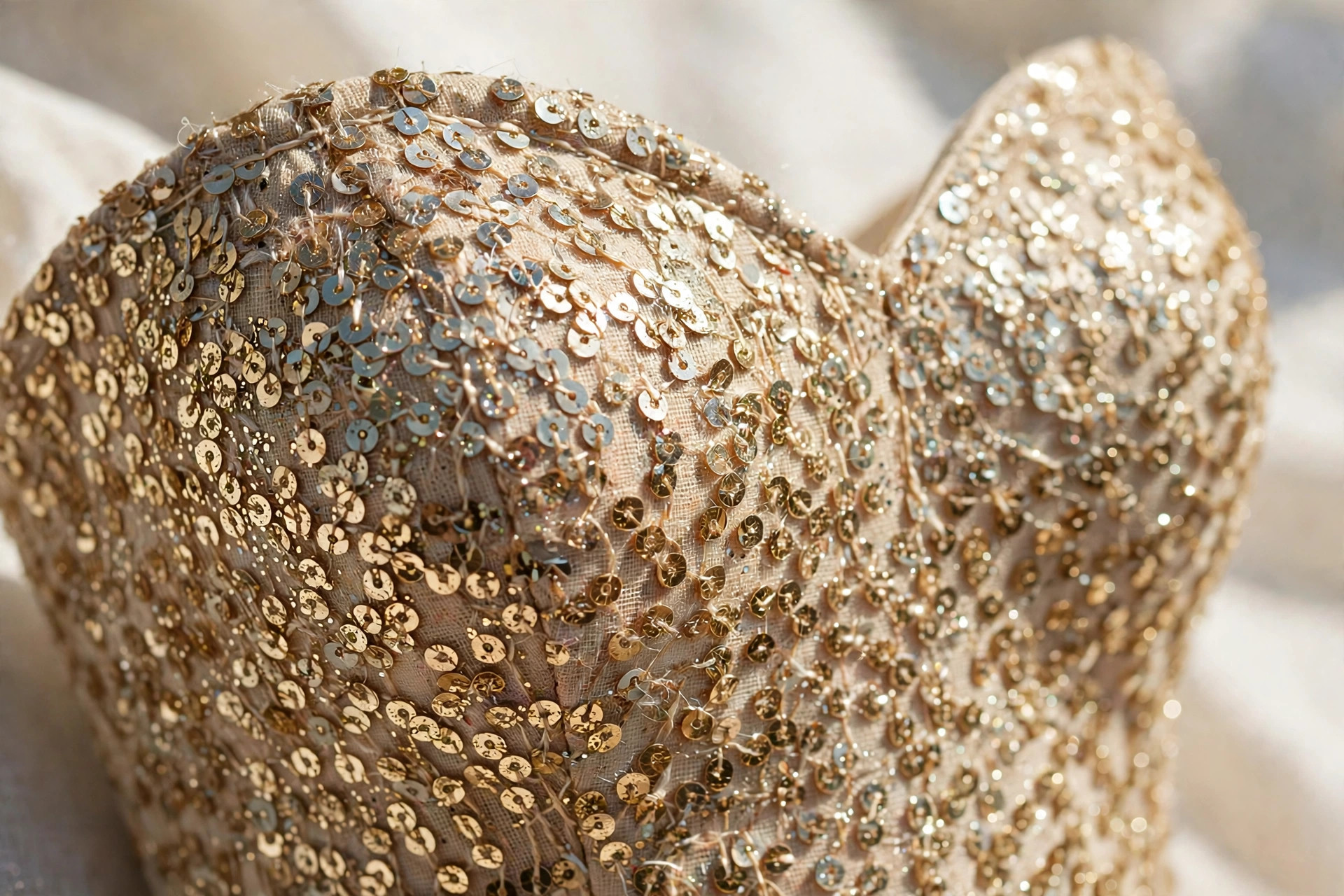
Glitter is a different argument. Glitter is not sewn at all, it is bonded, and bonded sparkle has a half-life that depends on the binder far more than on the cloth underneath. The honest check is dull: fold a swatch glitter-side in, rub it against itself twenty times, open it and count what moved to the other side. Cloth that passes that test in the fabric sourcing stage still sheds a little in wear, around the seat and under the arms. Cloth that fails it turns a boutique floor into a craft fair by the second week, and no care label written anywhere will talk a customer out of what her car seat looks like.

A heavy skin changes the grading, not just the price
A sequin skin adds real weight, and weight hangs on the body differently at every size. Grade this style the way a plain dress is graded and the larger sizes arrive with the bodice dragged lower and the straps under more load than the sample size ever carried. Careful size grading on a covered style adds support as it adds size, a wider strap, a firmer bodice lining, sometimes an inner waist stay that the listing never mentions and the wearer never sees. Skip that work and the size run looks identical on the rail while fitting like three different dresses, which is how a style earns five stars in a medium and one star in a 2X for what reads like a sizing fault and is really a support fault.
The lining earns its money here too. Sequin mesh against skin is a rash with good lighting, so the lining has to cover every place the skin of the dress touches the skin of the wearer, including the inside of the strap and the edge of the armhole. Linings that stop a centimetre short to save cloth leave a scratchy border exactly where the arm moves. No wait, the armhole is not even the worst of it. The top edge of the bodice is, because it sits still against the chest for hours while the wearer breathes against those cut disc edges.
On the factory calendar this sparkle run gets sewn beside the sequin and beaded mermaid gowns order, costed against the formal dresses in the same sourcing file file, and checked next to the party dresses costed for the same season range, because all three are judged on cloth behaviour long before anyone talks about shine.
Questions buyers and stores actually ask
Sequins started coming off at the side seam by the second wear. Bad dress, or bad luck?
Usually neither, it is a chain-stitched row letting go where the body bends. Side seams flex all evening, and a fast run-on stitch unzips from the first loose disc. Rows locked at the stress points survive the same evening without drama. A thumb dragged over the seam allowance on the sample tells you which build you are buying, before the bulk order makes the lesson expensive.
10 pieces per style for a trial. Does a sequin dress even cut fairly at that size?
Yes, and the trial earns its keep on this category. Ten pieces across the size run show a store the shedding behaviour and the strap load on real bodies within a few weeks. What the trial cannot fix is a weak binder in the glitter cloth. If the swatch sheds in the rub test, the small run will shed too, just in fewer homes.
The big sizes fit worse than the medium in the same style. Is the pattern wrong?
The pattern is probably fine and the support grading is missing. A sequin skin weighs more as the dress gets bigger, and the straps and bodice lining have to grow with that weight. When they do not, the larger dress drags and gaps while the medium sits pretty. Ask how support changes across the run, not just how the outline does.
Glitter all over the car seat after one evening. Should the store have known?
Honestly, yes, if anybody folded a swatch and rubbed it before ordering. Bonded glitter moves in proportion to its binder, and the fold-and-rub check on a cutting of the actual cloth predicts the car seat fairly well. A little transfer is normal for the category. A seat that sparkles for a week means the cloth was bought on its photograph.
None of this makes the style a bad buy. A covered sequin dress is one of the reliable party earners a boutique can stock, bright in photographs, forgiving about styling, happy under a private label. Its quality was decided at three unglamorous moments: the stitch that locked the rows, the rub test nobody photographed, and the grading decision about support. The sparkle was never the risk. The sparkle is the one part of this dress that does exactly what it promised.