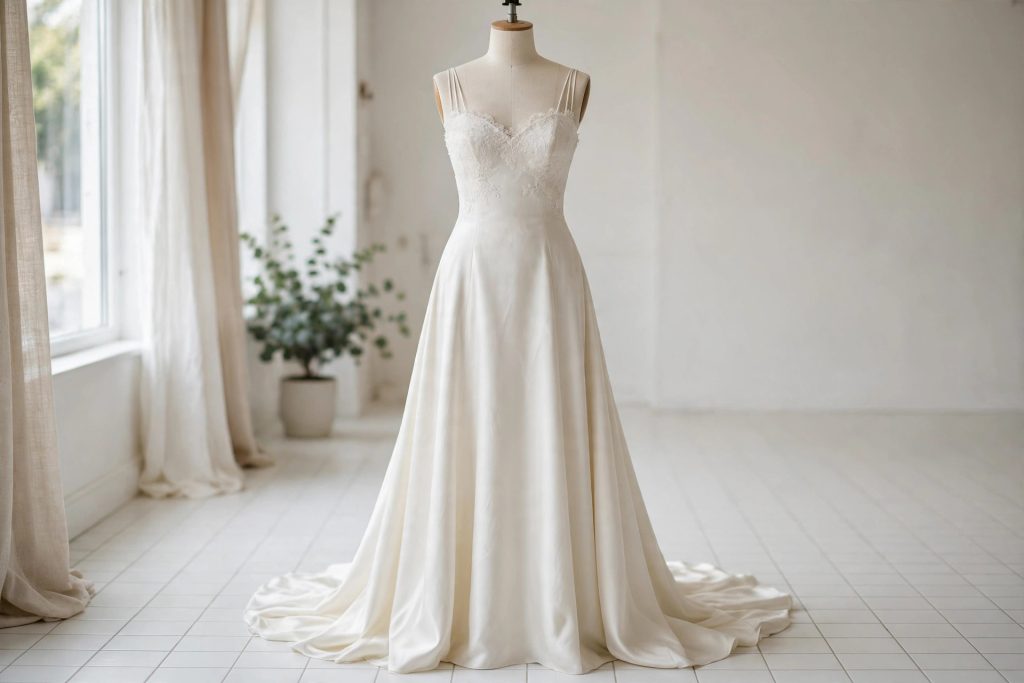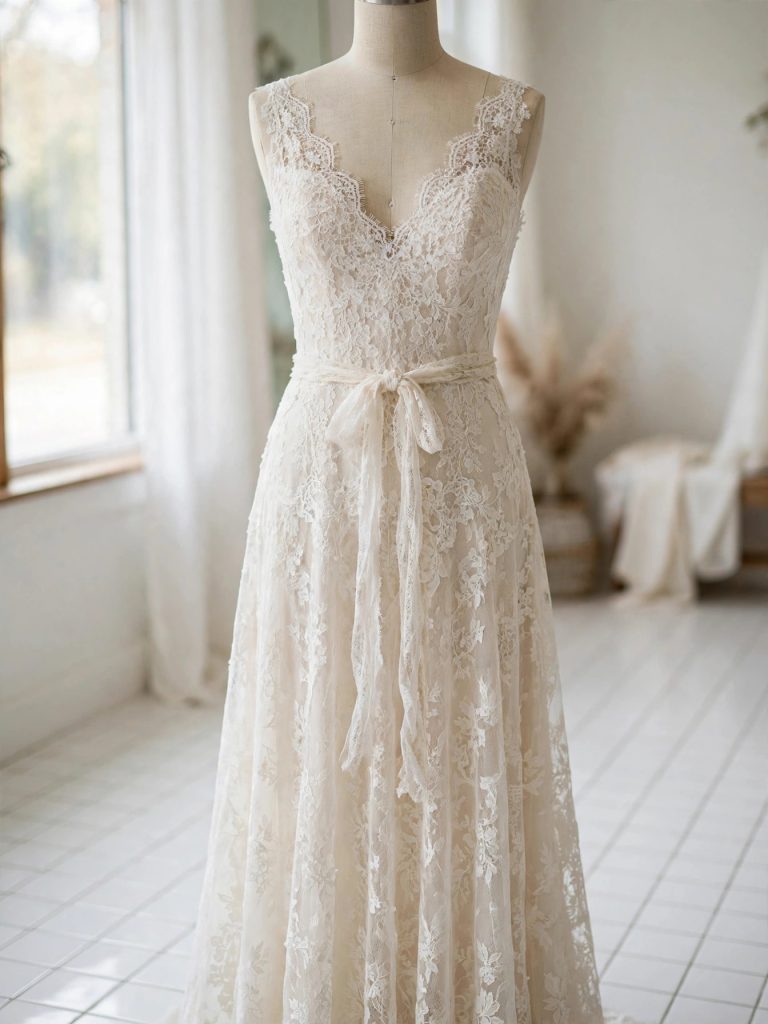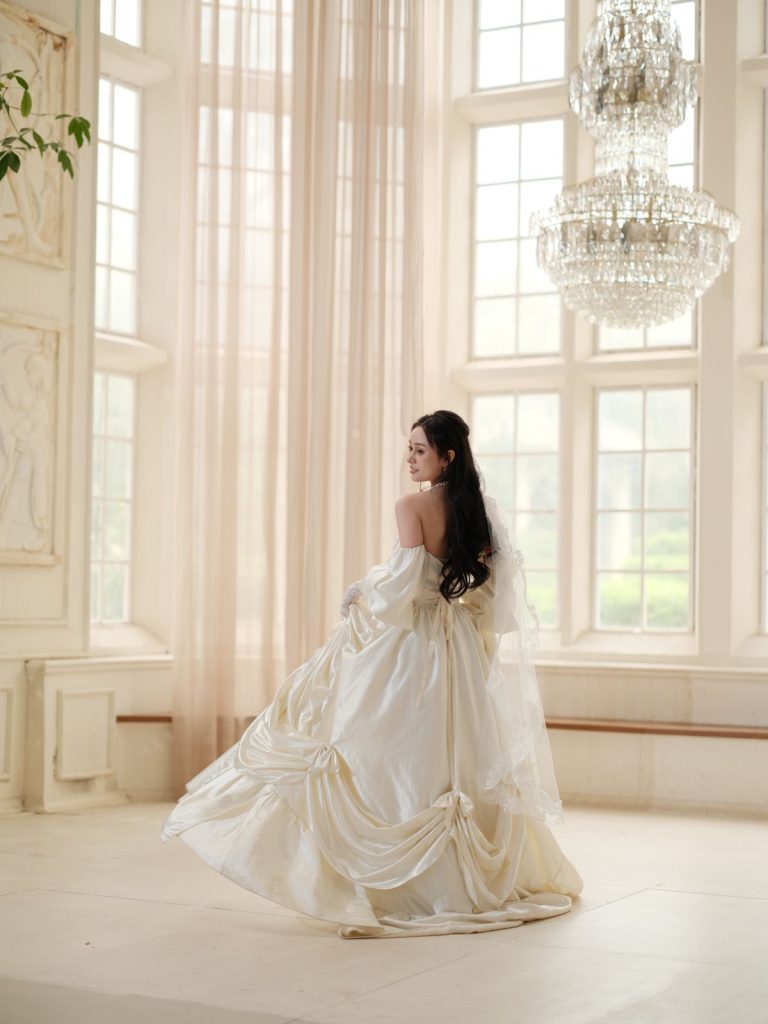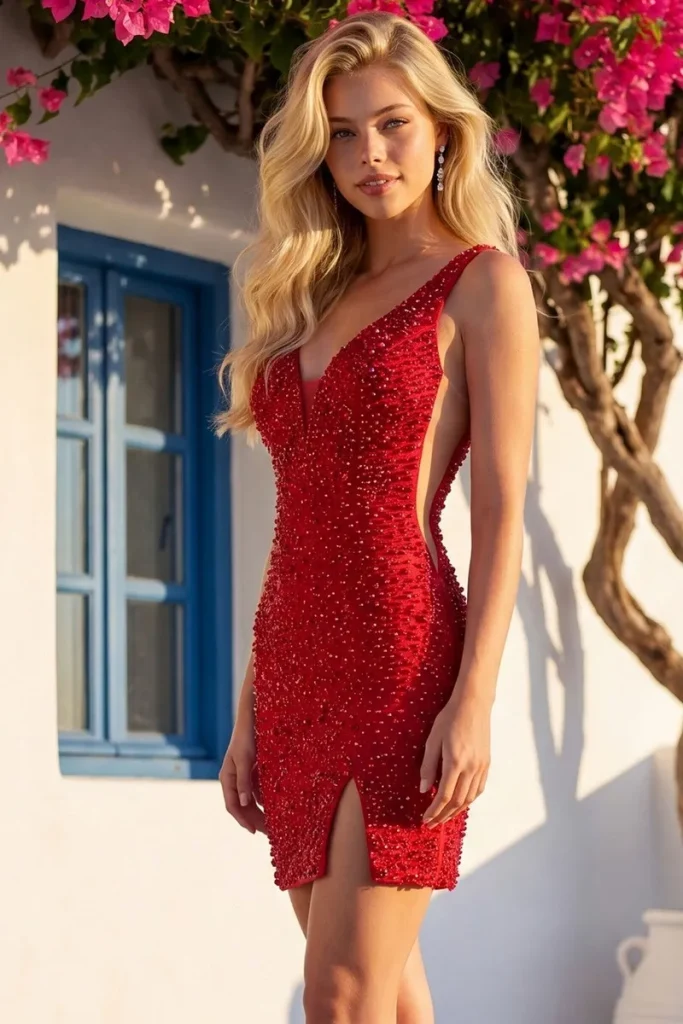
Start where distribution always starts, at the shelf, six weeks after the dresses landed. The Isolde one-shoulder, mesh and ruched, sold as a black tie wedding guest dress, is either a quiet reorder by then or a quiet problem, and which of the two it became was decided long before the carton was sealed. Work backwards with me, because forwards is how the mistakes get made. The shelf only reports the ending. The ending was written in four earlier rooms, and each room charged its own price for being skipped.
Backwards from the rail
Before the shelf there was the fitting room, and the fitting room question for a one-shoulder dress is never the colour. It is whether the single strap side carries the bodice without the wearer spending the evening aware of it. Ruching over mesh forgives a lot across the body, which is why this style survives events that kill plainer dresses, but ruching cannot hold a neckline up. That job belongs to the anchor at the shoulder and whatever support is built into the bodice on the strapped side, and a dress that was only ever fitted standing still, arms down, has not met its own evening yet. Arms go up at weddings. Bouquets get caught. A one-shoulder bodice is auditioned by movement or it is not auditioned at all. Distribution runs the same test at intake with less ceremony. One dress out of the carton gets hung, tugged at the strap side, walked across the warehouse floor with an arm raised, and that crude minute has predicted more reorders than any supplier photograph I have ever filed.
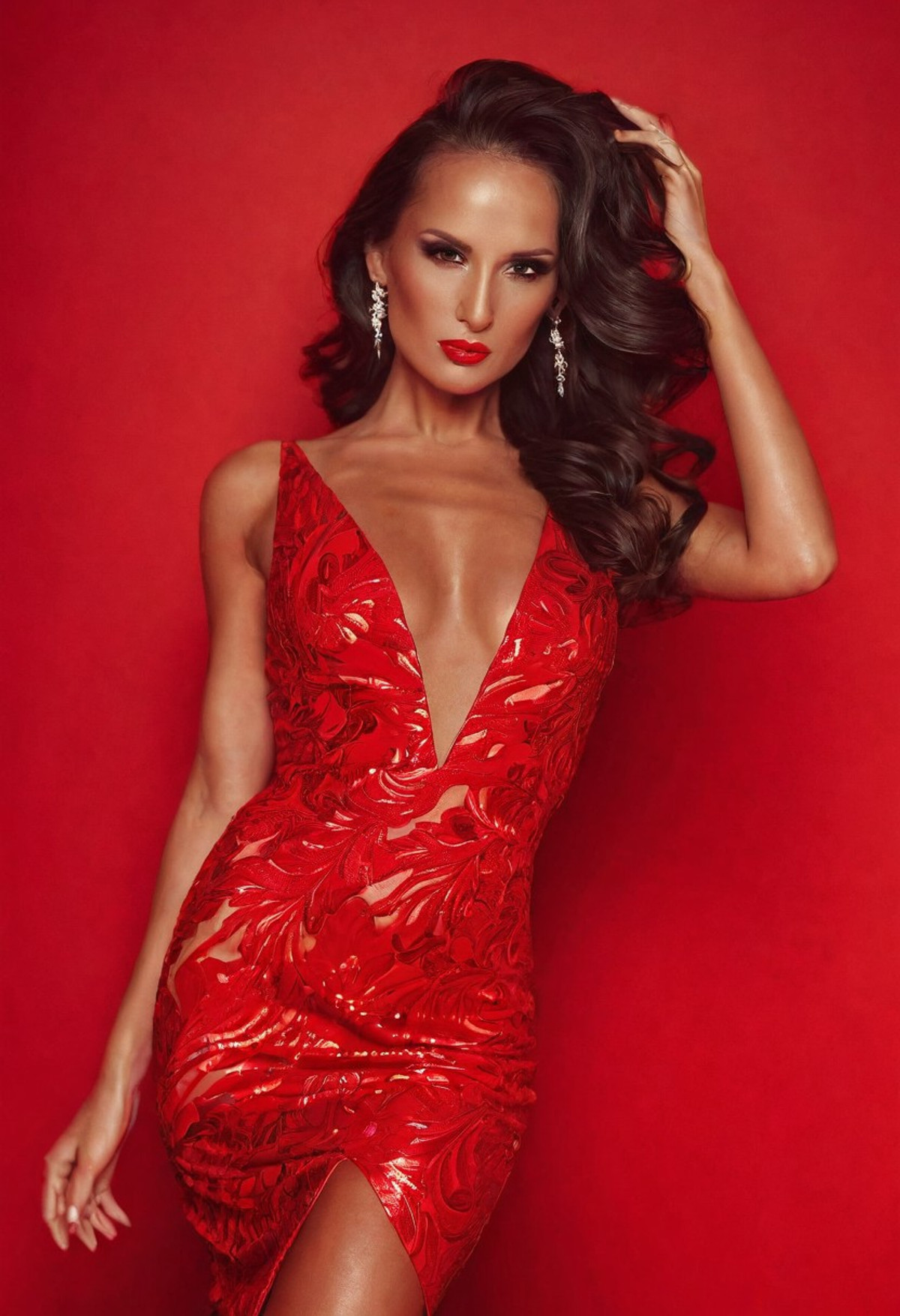
Before the fitting room there was the order, and the order is where a boutique either writes the dress down properly or buys a photograph. A tech pack for this style has to say things a listing never will, how the ruching is distributed, where the mesh is lined and where it is left sheer, what the strap is anchored to. Skip those lines and the factory fills them in at line speed, which is a polite way of saying the cheapest reading wins. The sampling money sits here too, $45 to $75 on a general style with half credited back if the style goes to bulk, and the shops that begrudge it end up paying the same sum later in alteration credits, wearing a worse dress while they pay.
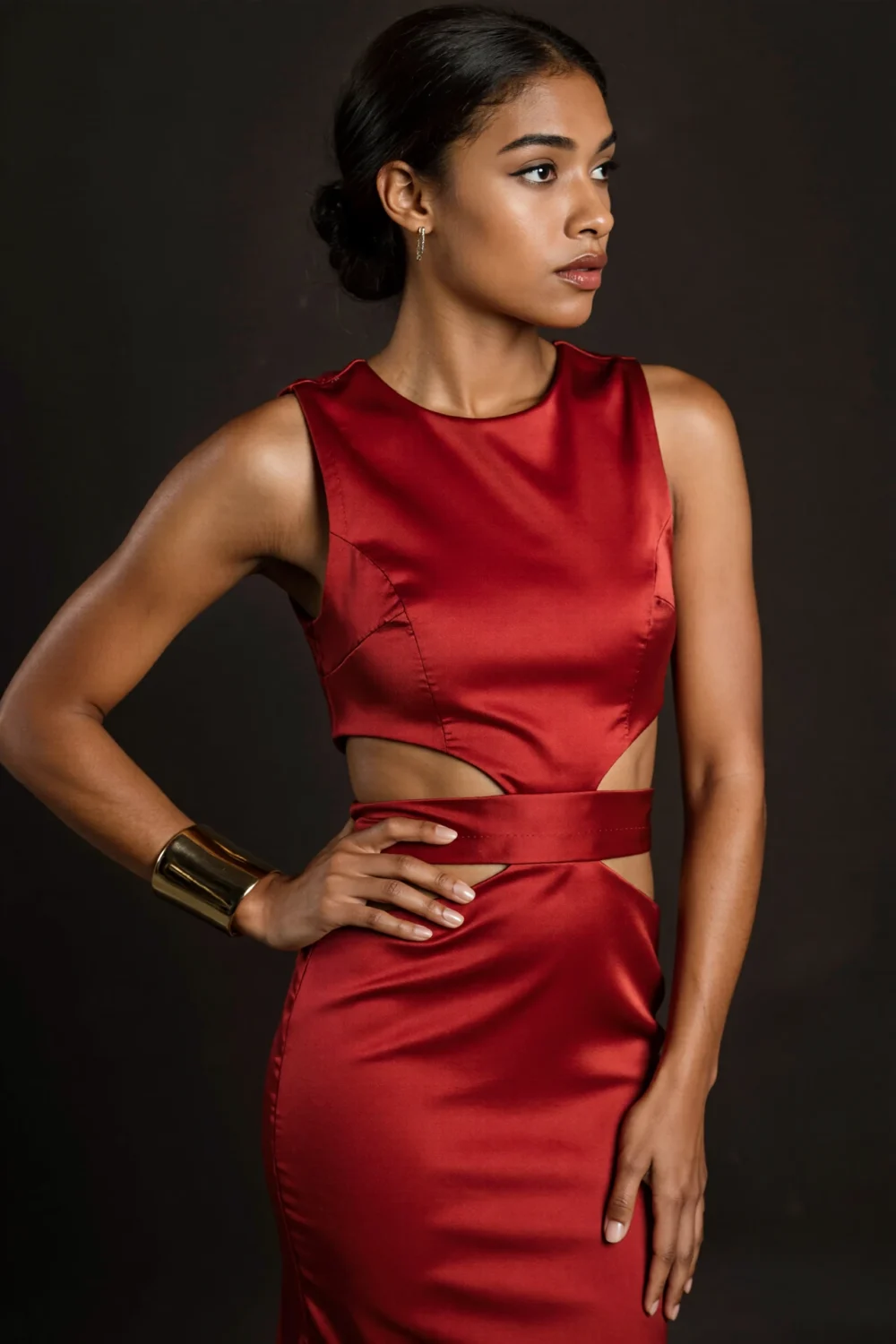
The rooms before the order
Before the order there was the selection, and selection for black tie stock has a calendar problem nobody prices. Black tie guest dresses are event dated in a way day dresses are not. They are bought against named weddings, which means the trial order, 10 pieces per style at the usual dress minimum, has to land with weeks to spare or the whole test misses its season and the data comes back useless. Freight teaches the same lesson from the other end. A small order under 20 pieces rides at roughly $17 to $22 a kilo, and a ruched mesh dress is light, so the freight stings less than the timing does. No wait, the timing is the freight, in this category. A cheap sailing that lands after the wedding weekend is not cheap. It is a donation to next season’s rail, at this season’s prices.
On the freight side this one-shoulder file travels with the sequin ball gown review for mothers, gets shelved against the emerald green plus size A-line guest dress, and is checked at intake against the black tie wrap cocktail dress review, because all three arrive in the same cartons and get judged by the same fitting rooms.

Questions buyers and stores actually ask
A trial of 10 pieces has to land before a named wedding in 6 weeks. Does the calendar actually close?
It closes, and tighter than buyers plan for. Sampling takes 10 to 15 days once the tech pack is confirmed, bulk takes 20 to 30, and freight rides on top of both. Six weeks is enough only if the tech pack leaves complete the first time, because every revision round eats the same days the freight was counting on. Shops that work event dated stock backwards from the wedding date, not forwards from the order date, are the ones whose rails are full on the right weekend.
The strap side feels fine standing still and travels when the wearer dances. Sample fault or style fault?
Usually a sample that was never auditioned in movement, which is a process fault wearing a style costume. A one-shoulder bodice has to be checked with arms raised and turning, because the anchor load changes completely once the wearer moves. If the bulk was sewn to that same untested sample, the travel will repeat across the run. It can sometimes be steadied in alterations, but the honest fix lives back at the sample stage, where nobody wanted to spend an extra fitting.
Ruching hides a lot, the listing implies. What does ruching not hide on this dress?
It does not hide a weak shoulder anchor, and it does not hide a lining that stops where the mesh turns sheer in the wrong place. Ruching is kind to the midsection and honest everywhere else. It also has to be distributed evenly or it pulls the side seam with it over a long evening. Buyers who read ruching as forgiveness tend to underwrite the tech pack, and the dress spends the wedding correcting them.
And before selection there was the first room of all, the one where somebody chose this silhouette for this shop’s customers, and that choice is the one I keep coming back to in the warehouse. A one-shoulder black tie dress asks more of a fitting than a strapped dress does and gives back more when it works, which makes it a poor style for a shop that sells by post and a fine style for a shop that fits in person. The dresses on the shelf six weeks later are not reporting on the factory, most of the time. They are reporting on whether that first room understood its own customers, and the report, as usual, arrived without an appointment and could not be argued with.