Nobody buying a Swiss dot dress asks how the dot got there, and that is the whole trouble with the style. The name sounds woven. It sounds like the little raised dots grew inside the cloth at the mill, the way a stripe does, permanent and part of the fabric itself. On most guest dresses at this level the dot is nothing of the sort. It is flocking: short fibres stood up in adhesive on a finished overlay, a print job wearing a fabric name. I work the production side of dresses like this flattering Swiss dot A-line, and from where I stand the dress is honest about everything except its dots. The A-line is real. The fit is real. The dots are a surface treatment with a lifespan, decided in two rooms the buyer never sees: where the adhesive cures, and where the panels get laid.
A dot that is glued on lives on borrowed time
Flocking holds when the adhesive is mixed right, spread thin and even, and given its full cure before the cloth is rolled. Rush any of that and the dots sit on the surface instead of in it. The difference does not show on delivery day. A badly cured dot and a well cured one photograph the same and pass the same cheerful inspection under office light. They part company in water. Wash a poorly cured overlay three or four times and the dots start leaving, not evenly, which would at least look deliberate, but in patches where the adhesive was thinnest: a shoulder, a hip, wherever the spread ran light. The dress does not look worn at that point. It looks unfinished, like the pattern gave up halfway across the body, and that is a harder complaint for a store to answer than honest wear would be.
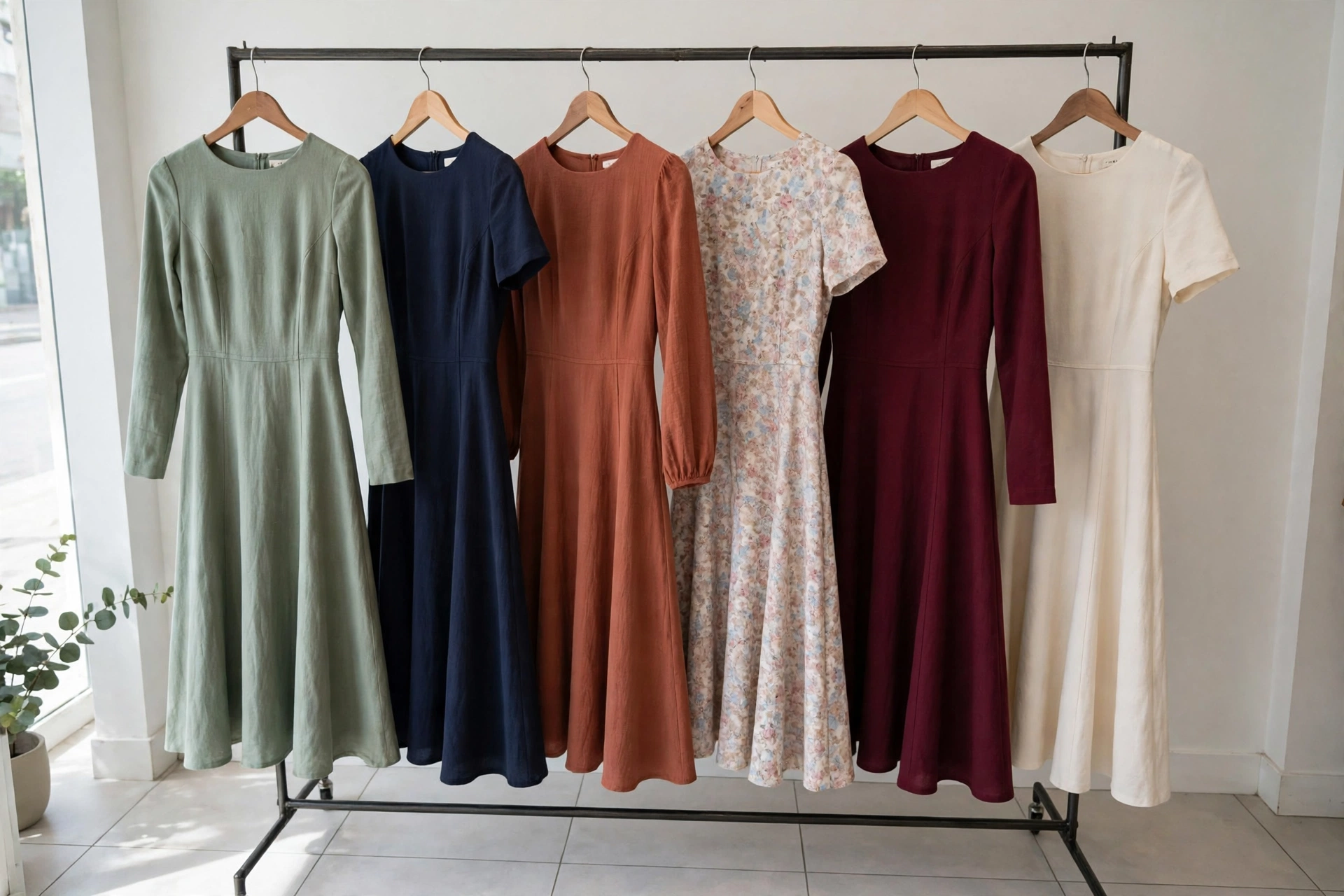
The second room is quieter about its damage. Dots sit in a repeat, and a repeat has to meet at the seams or the eye catches the jump, so the cutting lay for this style cannot nest panels tight the way a plain chiffon lay can. Pieces get turned and spaced so the dot rows run true across the waist seam and the side seams, and the cloth that falls between them falls as waste. On a plain overlay the waste on an A-line is already generous because of the flare. Add pattern matching and several extra points of cloth go into the bin, real money on a guest dress that sells on charm and a friendly ticket. No buyer ever sees that bin. She sees the price, and the price decides whether her run got the matched lay or the tight one.

The pressing iron is the third room
Heat is the other quiet enemy, and it arrives dressed as care. Flocked dots flatten under a hot iron and under steam pressed too close, and a flattened dot reads as a bald patch at exactly the places a wearer irons hardest: the bodice front, the waist, the skirt where it sat creased in a suitcase. The overlay wants low heat, distance, and patience, three things a hotel room before a wedding rarely holds at once. The care talk takes twenty seconds. The bald shoulder in the photographs lasts as long as photographs do.
What can a buyer actually hold a factory to, on a dress like this? Two plain things, both written before the order, neither costing a cent to ask for. A wash result on production cloth, not on the sample-yardage the mill sends out in its best mood: how the dots look after several washes, in writing, with the washed piece kept beside the order. And the lay question, asked out loud: are the dot rows matched at the waist and side seams on the bulk, or only on the sample the store approved? No wait, that second one is not a question, it is a price fork wearing a question’s clothes. A matched lay costs more cloth. An honest quote says so and charges for it. A cheap quote says nothing and lets the seams jump where they like. The sample will not tell you which fork you took. The bulk will, one opened carton at a time.
On the line this dotted A-line is cut after the swing A-line guest dress file, checked beside the formal A-line range for guests and parties, and read next to the floral wrap guest dress notes, because all three are guest dresses whose photographs promise more than their cloth was ever asked to hold.
Questions buyers and stores actually ask
The dots looked fine in the sample and patchy after three washes. Which step actually failed?
The cure, usually, back when the flocking adhesive was spread and set. Dots that shed in patches after a few washes were sitting on the cloth instead of bonded into it, and water finds the thin places first. It is rarely the washing itself. A store can rub a hidden corner of a sample with a damp white cloth before ordering. Dots or flock dust on that cloth is the answer, delivered early and cheap.
Matching the dot rows at the seams costs real cloth. How much waste are we honestly talking about?
Enough to see on a quote, not enough to justify hiding. Pattern matching on a flared overlay pushes cutting waste up by a few points against a plain lay, because panels cannot nest tight when every piece sits on the repeat. On a ten piece trial that waste is divided by very few dresses, which is why matched small runs look dear per piece. The waste is not the scandal. Quoting as if it does not exist is.
Ten pieces per style is the trial minimum here. What can ten dotted dresses actually prove?
Whether the cure and the lay survived contact with real bodies, if the ten get worn and washed instead of admired. Ten dresses across a size run, each worn to one event and washed once, will show patchy shedding and seam jumps that a rail inspection waves through. What ten cannot prove is the fifth wash. That part still rides on the written wash result, which is why the paper matters as much as the pieces.
A guest ironed the bodice flat and the dots went bald in one stripe. Can that be saved?
Honestly, no, not back to new. Flattened flock has lost the fibres standing up in the adhesive, and no home fix stands them back up at a matching height and colour. Steaming from a distance makes the stripe less rude in soft light, and that is about the whole menu. It is a pressing accident, not a sewing fault, and the kindest thing a store can do is say the low heat talk before the first ironing, not after.
I still like this dress, which surprises people who have read this far. The A-line shape is kind to most bodies, the overlay moves well, and a dotted guest dress that was cured properly and cut on a matched lay will go through a whole wedding season looking like the photograph. What I no longer believe is that the dot is a detail. On this style the dot is the dress, and the dress stands or falls in a curing room and on a cutting table, weeks before anybody zips it up and smiles for a camera.