“Can you do this pleated midi at nine dollars?” she asked. “At nine dollars,” I said, “you get pleats that last until the first wash.” She laughed. I did not. That conversation happens every spring, with a different buyer and the same nine dollars, and it always ends the same way, which is why I stopped trying to talk anyone out of anything years ago, long before I learned that price has its own gravity. “The last factory did it at nine.” “The last factory,” I said, “is why you are talking to me.” She ordered at eleven fifty, which nobody remembers, and the pleats survived, which everybody does. That is the whole story.
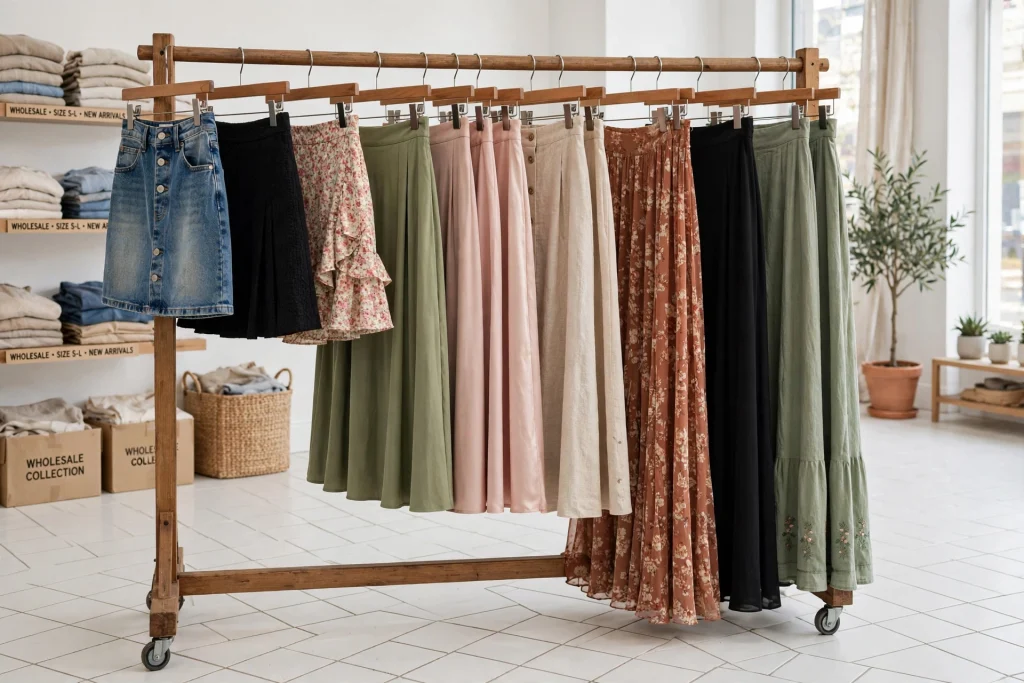
Minis are a young woman’s game and everyone knows it, including the young women. They spike in spring, they die by August, and the leftover prints sit in the warehouse making you feel stupid every time you walk past them. Midis are the workhorse. A midi does not excite anyone at a trade show and then it quietly outsells everything else on your shelf for eleven months, which is the least romantic success story in this business and also the most reliable one. The midi buyer is thirty-four, employed, and done with trends, which is exactly the customer you want, because she buys the same skirt in three colors and never writes a review. Maxis belong to two tribes that never overlap: the resort crowd and the modest-fashion buyer, and both of them will pay more and complain less than the mini customer, because a woman buying a maxi in March already knows exactly where she is wearing it in July. I stopped believing in fixed ratios a long time ago. Three-four-three, four-three-three, whatever the spreadsheet says this quarter, the ratio that works is last year’s sales with the dead prints removed, and nobody needs a consultant to run that math. Denim minis are the exception that proves nothing, because denim customers will forgive anything except a bad wash.
Here is the ritual I have watched for fifteen years. Every spring. A buyer takes the lowest quote, the factory takes the order at a price that cannot possibly work, and then the margin gets recovered somewhere nobody is looking: thinner interfacing in the waistband, a size run that quietly skips XL, thread that was not in the sample. The thread is always where the money went, because nobody checks the thread until it is too late. The skirt arrives, the price was right, and everything about it is slightly wrong in ways that only show up after the customer washes it. I check the waistband before I check the fabric now. A waistband without real interfacing rolls by the third wear, and no print, however pretty, survives a waistband that will not stay up. Ask for the full size run, XS to XL at minimum, and confirm in writing that mixed sizes ship inside your quantity, because the factory that nods and ships S through L only has cost someone a month of plus-size sales, and I have watched that exact nod happen more times than I can count. Same nod. A ten-piece order is the smallest commitment a factory will take seriously, and it is the largest commitment you should make before you wash-test the bulk, because the bulk always drifts from the sample and ten pieces is cheap enough to sacrifice two to the washing machine.
People ask me when to place the spring skirt order, as if there is a secret date. There is not. There is just the factory’s calendar and yours, and the factory’s always wins. Place it when the fabric you want is in stock, not when your launch plan says so, because the launch plan is a document and the fabric is a physical object, and I have watched buyers wait three weeks for a plan to feel right while the mill sold their color to someone else. That someone else is now selling your skirt. Winter orders are worse. Everyone wants December delivery, nobody wants to pay for air freight in November, and the sea freight cutoff does not care about your promotion schedule, which I stopped explaining to people around year six.
The lead time lie is the oldest one in the book. Always the dye house. Thirty days on the quote, forty-five on the water, and the missing two weeks are always the dye house’s fault, except the dye house was booked solid a month before the order was placed and everyone in the chain knew it. I stopped fighting this around year eight. Now I add three weeks to every quote in my head and place the order three weeks early, which makes me look like a genius to buyers who still believe in thirty days.
New buyers always ask me for the one rule. There is not one, but if I am forced, it is this: never let a single style be more than a third of the order, because the style you love most is the one the market will punish first, and I say this as someone who once watched a buyer put eighty percent of a spring order into a pleated mini that died in April. She survived. The store did not.
What I actually reorder, when nobody is watching, is the boring stuff. The black midi in the fabric that never pills, which I have reordered eleven times without ever photographing it for the catalog, because some garments are infrastructure, and infrastructure does not need a photoshoot, it needs a purchase order. The navy wrap that survived three seasons without a single ticket about the ties. The A-line in the print that looks like nothing in the photo and everything on a body. None of them win awards. All of them pay rent.
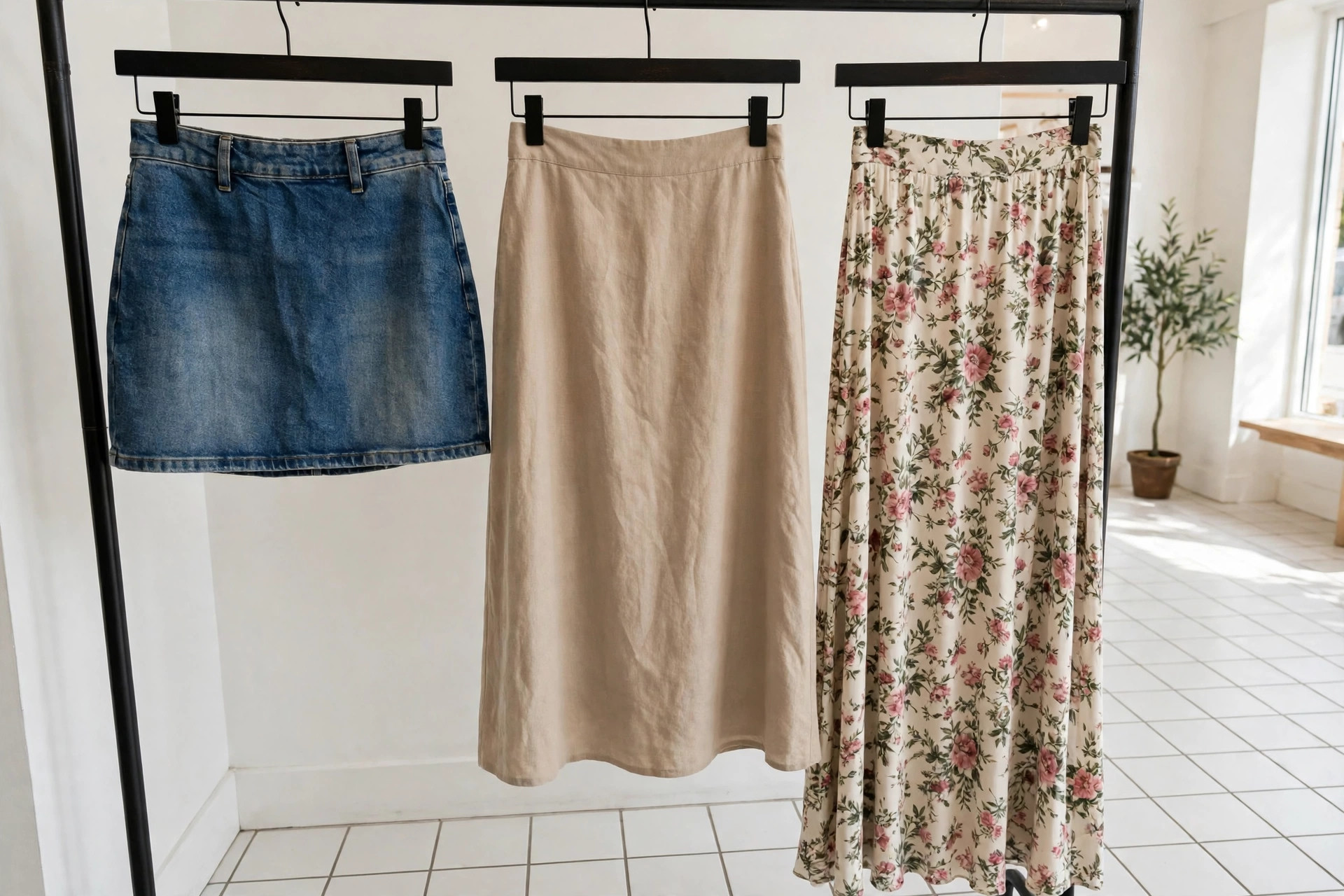
I used to tell buyers to go deep on minis ahead of festival season. Actually, no. I told myself that, because the margin on paper looked beautiful and I wanted it to be true. The sell-through was fine. The returns were not, and nobody remembers the sell-through. What I do not know, and will not pretend to know, is what the customer does with the skirt after the return label prints. That side of the business is not mine. My side ends at the loading dock, and I have opinions about thread that nobody asks for. On silhouettes, the short version is that pleats are a wash test, wraps are a tie test, and the A-line is a hem test, and if you want the longer argument we keep a separate comparison of pleated, wrap and A-line skirts that goes silhouette by silhouette. The same fit logic shows up one rack over in women’s jeans wholesale, where the rise does what the waistband does here.
Woven labels. Everyone asks about them, nobody budgets for them. They cost almost nothing at fifty pieces and they are the difference between a skirt and a brand, which sounds like a slogan until you watch a customer keep a labeled garment two years longer in her closet. I have drawers of samples with beautiful labels and dead styles. The unlabeled ones are the ones that come back.
I have a quote on my desk for minis at a price that makes no sense, eleven dollars under the fabric cost I know by heart, and I have not answered it, because answering it means another spring of the same conversation with a different buyer and the same nine dollars. Part of me wants to see what shows up. The quote will still be there tomorrow, and the tired part of me already knows. Still sitting there.