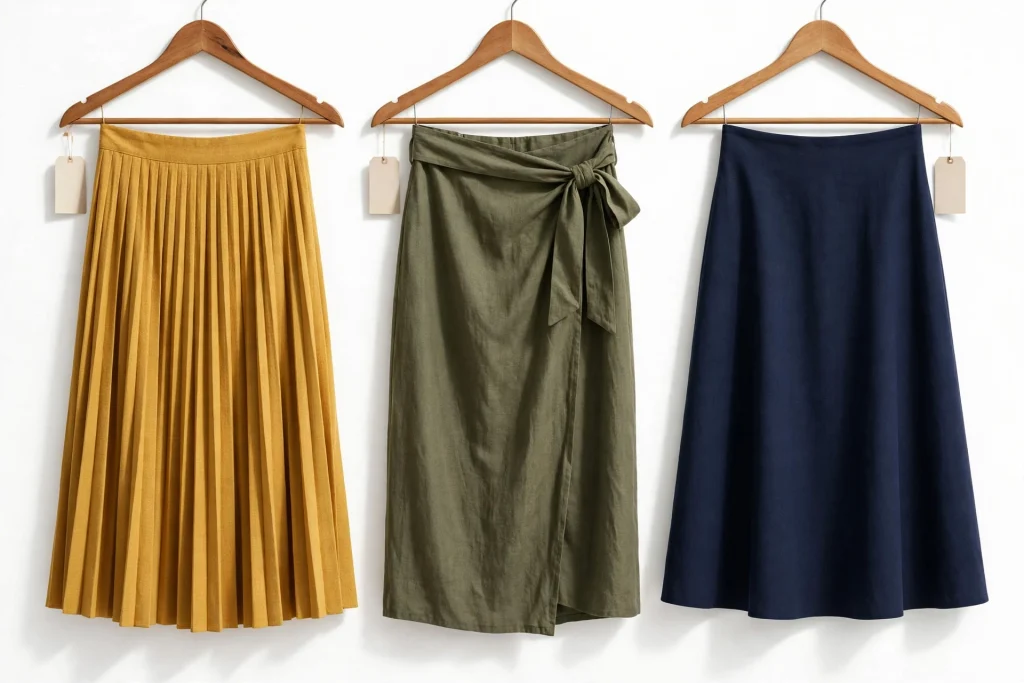
Everyone in wholesale will tell you the A-line skirt is the safe bet. Wrong. From my desk, where the returns pile up every morning like weather reports, the wrap skirt is the one I almost never see, because a tie that gives two inches in either direction quietly absorbs every little size lie a customer tells herself at checkout. The A-line does come back. Just for a dumber reason. It is so safe that nobody feels anything when the box opens, and feeling nothing has turned out to be a perfectly good reason to start a return. That is the part nobody puts in a buying guide. For whatever it is worth, the wrap skirts are the ones I see come back the least of anything with a waistband.
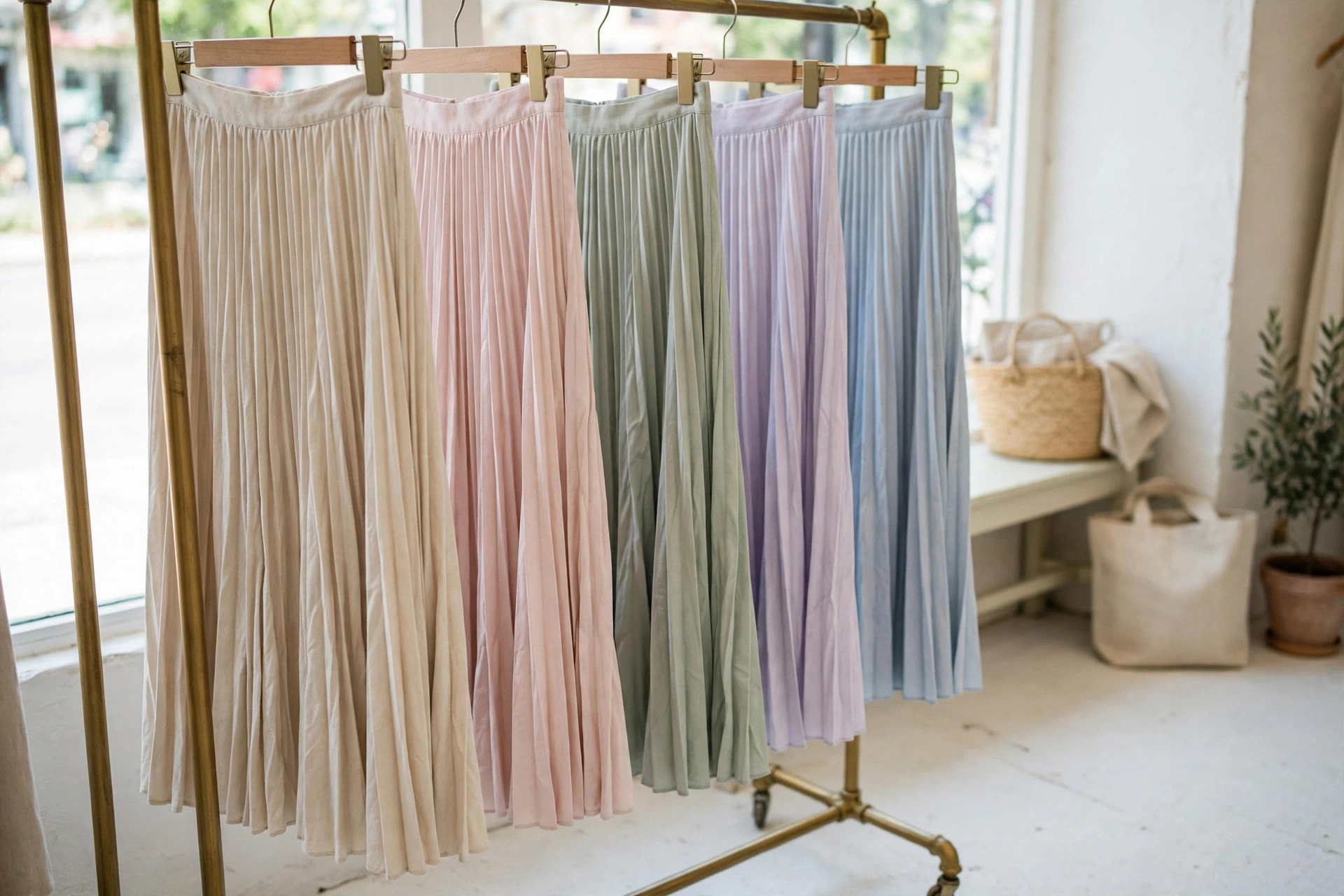
I have stopped being polite about pleated skirts in bulk. Three years of return tickets taught me that, and the tuition was paid in one-star reviews. The sample arrives with knife pleats so sharp you could cut paper. Then the cartons land and the pleats are soft pressed lines that relax into a sad drape after the very first customer wash, and that is exactly when the one-star reviews start arriving with photos of a skirt that looks like a deflated accordion. Heat-set pleats survive. Stitched-only pleats lie. The one-star review never says the factory switched the pleat-setting method after sampling, because the customer does not know that sentence exists, so the review says the skirt is cheap, the brand is a scam, and the boutique that sold it should be ashamed, and all three of those land on the seller. Nobody at the factory tells the buyer which method ran after the sample passed, because the buyer, who has never stood next to a pleating machine in her life, does not know which question would have caught it. I do not blame her. Much. Ask me how I know and I will show you the queue.
The size tickets are their own comedy. A customer orders a medium, receives a medium, and leaves a review saying the medium runs small, as if the medium personally betrayed her. I answer those with the size chart attached and a straight face, even though the chart has been on the listing since before she was born, or so it feels. And then the same customer orders a large in the same skirt, keeps it, and never updates the review, which means the next hundred shoppers read that the medium runs small and order large, and the returns wheel keeps turning. Every week.
I used to think sizing was the biggest returns driver on skirts. Actually, no. That is not right. What I meant was that sizing is the biggest returns driver on dresses, where a bodice either closes or it does not, and where a half inch at the bust ends the whole conversation. On skirts the killer is the wash. The pleats die, the elastic in the cheap waistbands relaxes half an inch, and the customer who measured herself honestly still ends up holding a garment that no longer matches the one in the photos. A ten-piece trial order is enough to catch a pleat swap, because the bulk always drifts away from the sample and ten pieces is cheap enough to wash-test twice before you commit to anything bigger this season. Ask for the pleat-setting method by name. Heat-set. Say the word out loud and watch who goes quiet. Ask how the pleats are set, ask what happens to them after three washes, and ask it in writing, because the written answer is the only one that counts later.
Wrap skirts are a different animal and I will admit they generate their own ticket category. The ties come undone. They do. The ones that survive have the tie anchored with a bar tack at the side seam, and the ones that do not have it are the ones I hear about. Customers write in saying the knot slipped at a wedding, which is a specific kind of fury, and I have read that exact email often enough to recite it. But here is the thing nobody admits at buying meetings: those customers almost never return the skirt. They exchange it for another print, or they keep it, because a garment that adjusts is a garment that forgives, and forgiveness is rarer in this business than good fabric. Every quarter the pattern holds, because when a customer can retie the waist two inches looser after lunch, the fit argument that drives nearly half of all size-related returns across every category I touch simply never gets started. What I cannot tell you is what the heat-setting costs the factory per piece, because that is not my side of the business. I see the ticket. I do not see the costing sheet.
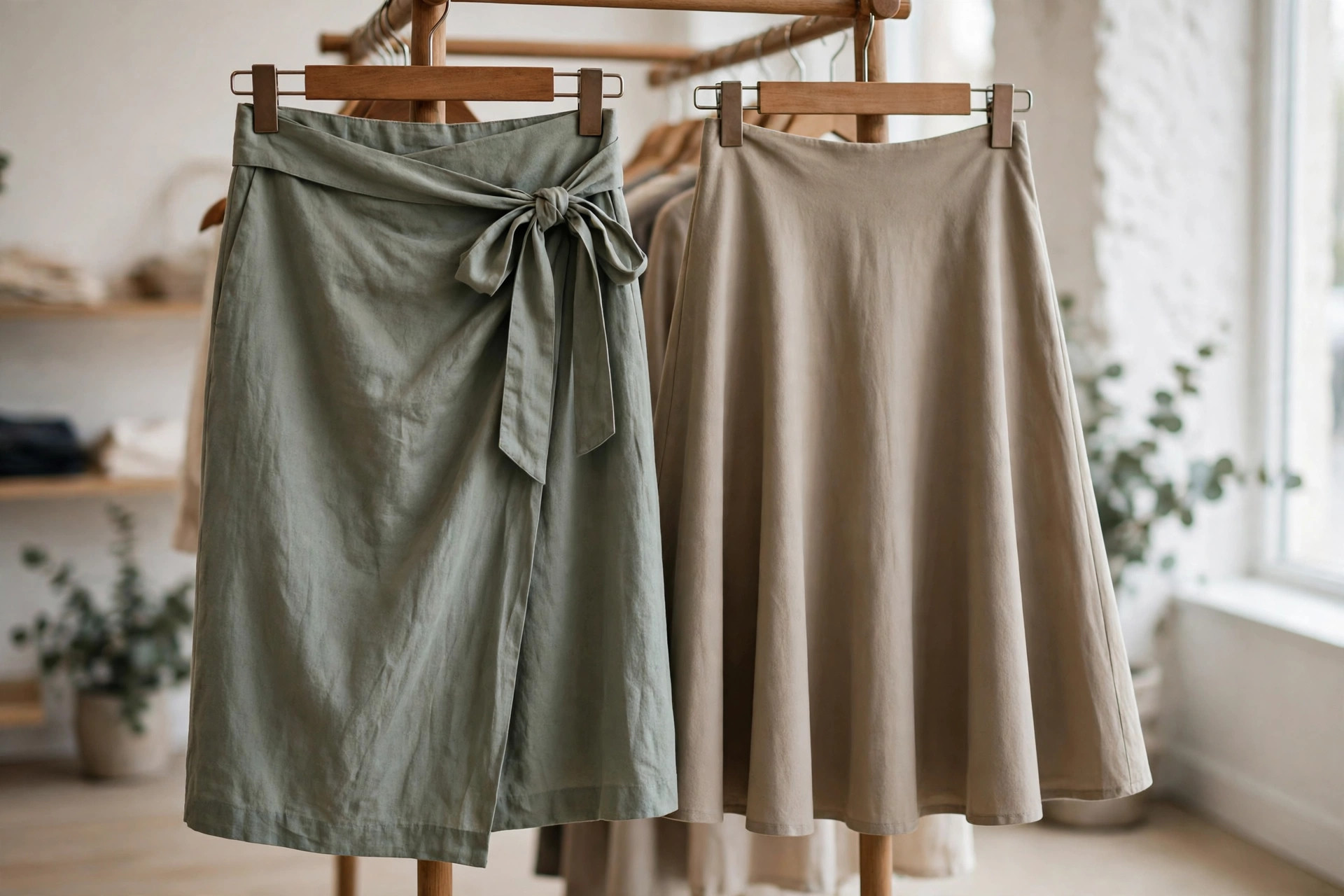
The A-line is the handshake of skirts. Nobody hates it, and nobody loves it either. It moves steadily, it offends no one, and it comes back for the most human reason of all: the customer bought it because an ad told her she needed a safe skirt, and safety turned out to be boring in person. The quality check that actually matters on an A-line is not the silhouette at all, because every factory on earth can cut a triangle. It is the hem. A cheap A-line shows an uneven hem the first time it hangs, and a waistband without proper interfacing rolls over like a tired dog by the third wear, which is when the customer decides the safe choice was a mistake and opens a return. If you are building the skirt section of your store from scratch, start with the full length breakdown in our wholesale skirts guide before you argue about silhouettes, and remember that skirts sit inside a bigger assortment where women’s dresses wholesale usually carries the revenue while skirts carry the margin.
One more thing. A returned pleated skirt costs you the shipping both ways. A one-star review about dead pleats costs you the next fifty customers who read it. The review stays on the listing for years, outliving the style, the season, and sometimes the store itself, while the returned skirt at least gets resold or written off within a month, which is why I tell every buyer I talk to that the review is the real return and the parcel is just the paperwork. I have started flagging pleated styles in our internal notes the way other people flag allergens. I know which one keeps me up.
There is a ticket in my queue right now from a woman who washed her pleated midi once and wants to know if it is her fault. I have the reply drafted. It explains heat-setting, gently, and offers a partial refund, and I have not sent it, because I am still deciding whether to tell her the truth, which is that nobody’s fault is a category we do not have. Still sitting there.