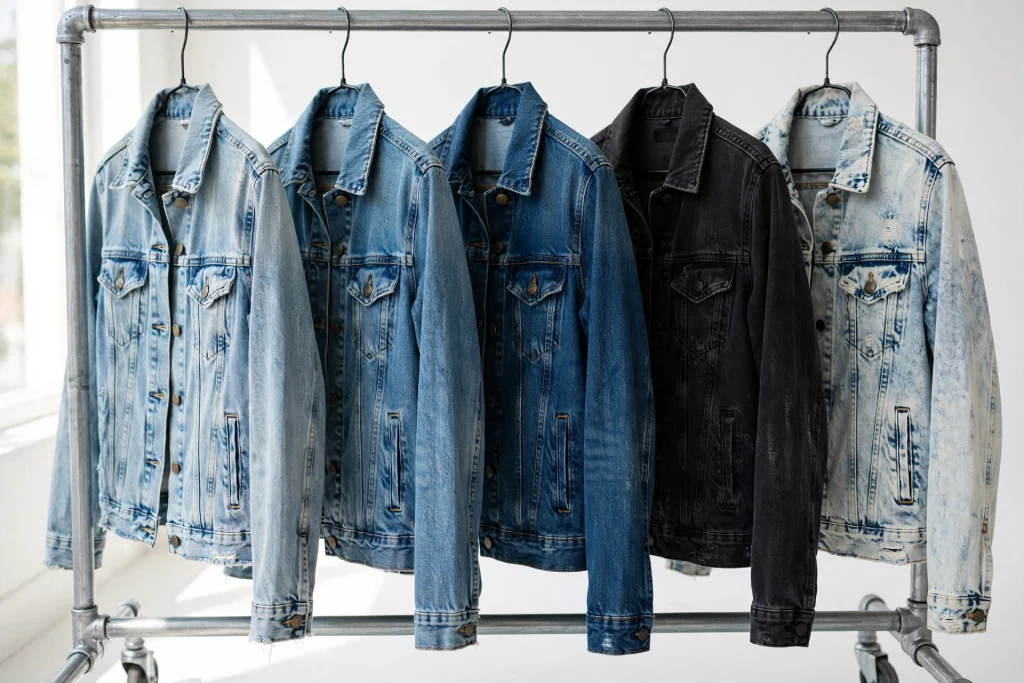
“Can you wash ten jackets for me this week? Our own wash, the light one, like the photo.” The factory client who called me that morning was polite about it, the way people are polite when they do not yet know they are asking for something that does not exist. I said what I always say. Ten jackets is not a wash load. A wash load is a machine filled by weight, hundreds of pieces of denim jacket wholesale production moving through one recipe, one water ratio, one clock. Ten jackets ride inside somebody else’s order and come out wearing that order’s decisions.
He went quiet in the particular way buyers go quiet when a number they trusted turns out to be a sewing number only. The sewing side had promised him a 10-piece start, and the promise was real, on their side of the wall. Nobody had lied. The wash simply had never been consulted, and the wash is where a denim jacket becomes the thing a customer photographs, complains about, or wears for six years.
Indigo is the first thing nobody explains to a small buyer. It is a surface dye. It sits on the yarn rather than soaking through it, which is why a jacket fades at the elbows and the pocket edges first, and why two loads run on the same recipe in the same week can walk apart visibly after ten home washes, one going grey at the folds while the other holds. From my side of the plant that is chemistry. From the boutique’s side it looks like inconsistency, and the word inconsistency ends up in emails addressed to people who never touched the drum.
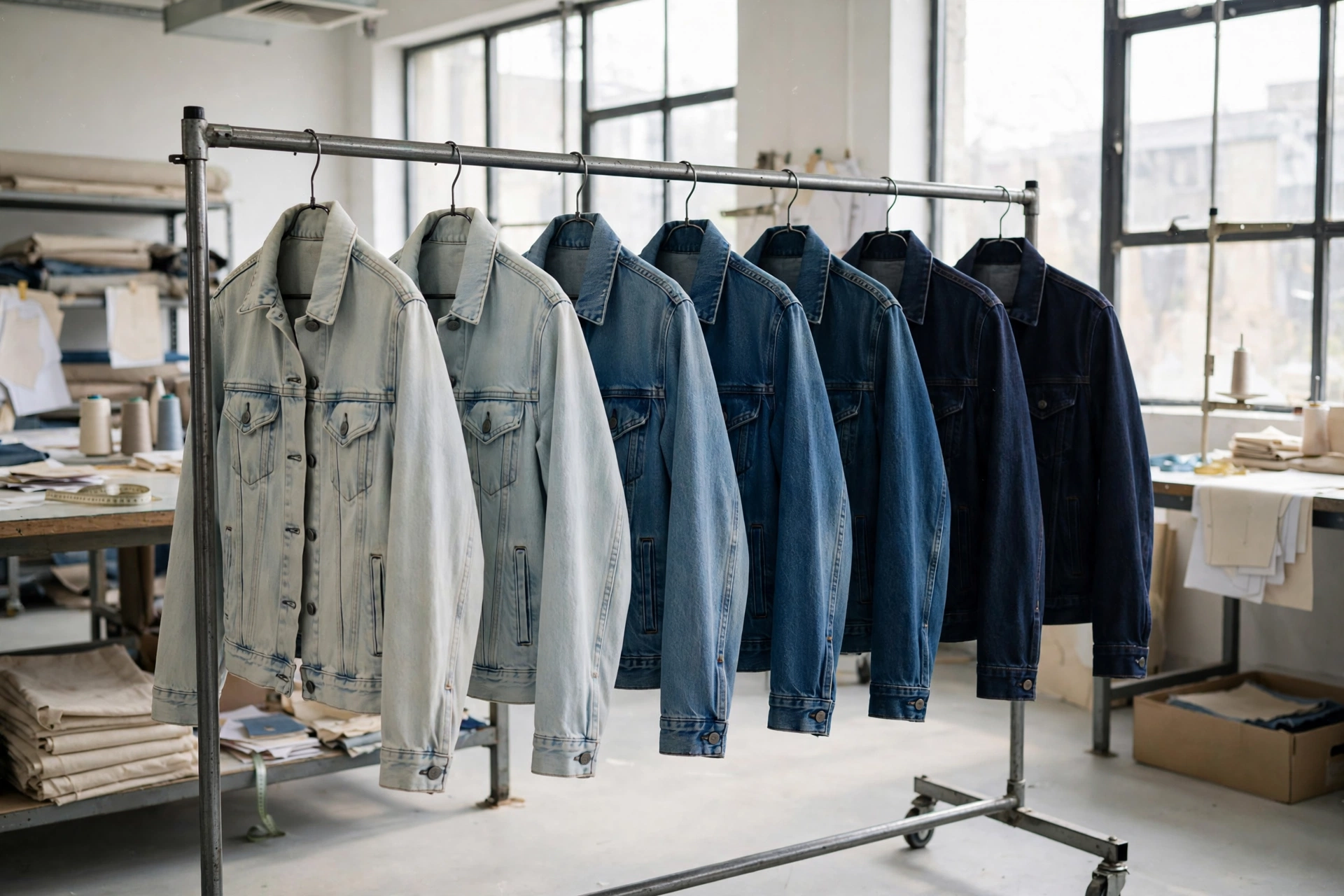
The wash sets the date, not the sewing line
Every district like ours runs on an inspection calendar that nobody writes down for a buyer. The environmental rounds come through, plants shut for days or weeks, and every factory client in the area starts phoning the same three wash houses on the same morning. Capacity in those weeks is not sold. It is remembered. Emergency load space goes to the clients who were standing in front of you before the emergency, and a new buyer with a seasonless staple and a ship date learns that “seasonless” describes the customer’s wardrobe, not my building.
The trade press calls the denim jacket the piece that sells all year, and on the retail side that is true enough. What the reports leave out is that in inspection season it is wash capacity, not sewing capacity, that sets the delivery date. A jacket can be cut and sewn in a fortnight and then sit in a queue for a drum for longer than the sewing took, ageing in a pile while everyone involved explains to someone else that production is finished. Production is a word that covers several buildings. Only one of them has the drums.
Eleven ounces is a shirt, fourteen is a punishment
Jacket-weight denim has a working band and it is narrower than buyers think. Eleven to thirteen and a half ounces is where a women’s jacket lives. Under ten ounces the garment reads as a shirt the moment it is on a body, no matter what the line sheet calls it. Over fourteen, the fabric starts fighting the shank-button machines, seams pucker around the hardware, and the finished jacket comes back stiff enough to hold a shape on an empty chair. Then the reviews arrive calling it stiff out of the box, and they are right, and the stiffness was purchased on purpose at the fabric stage by someone who thought heavier meant better.
The smell complaints belong in the same drawer. A jacket that arrives carrying a chemical wash smell is usually carrying an honest enzyme or stone wash that was never aired properly before packing, and the smell fades after the first home wash while the review written about it does not fade at all. Weight nobody stated on the listing, stiffness nobody warned about, smell nobody aired out. The drum did its job each time. The paperwork around the drum is where these orders actually fail, the same as it ever was with the women’s jeans wholesale guide and its vanishing leg openings.
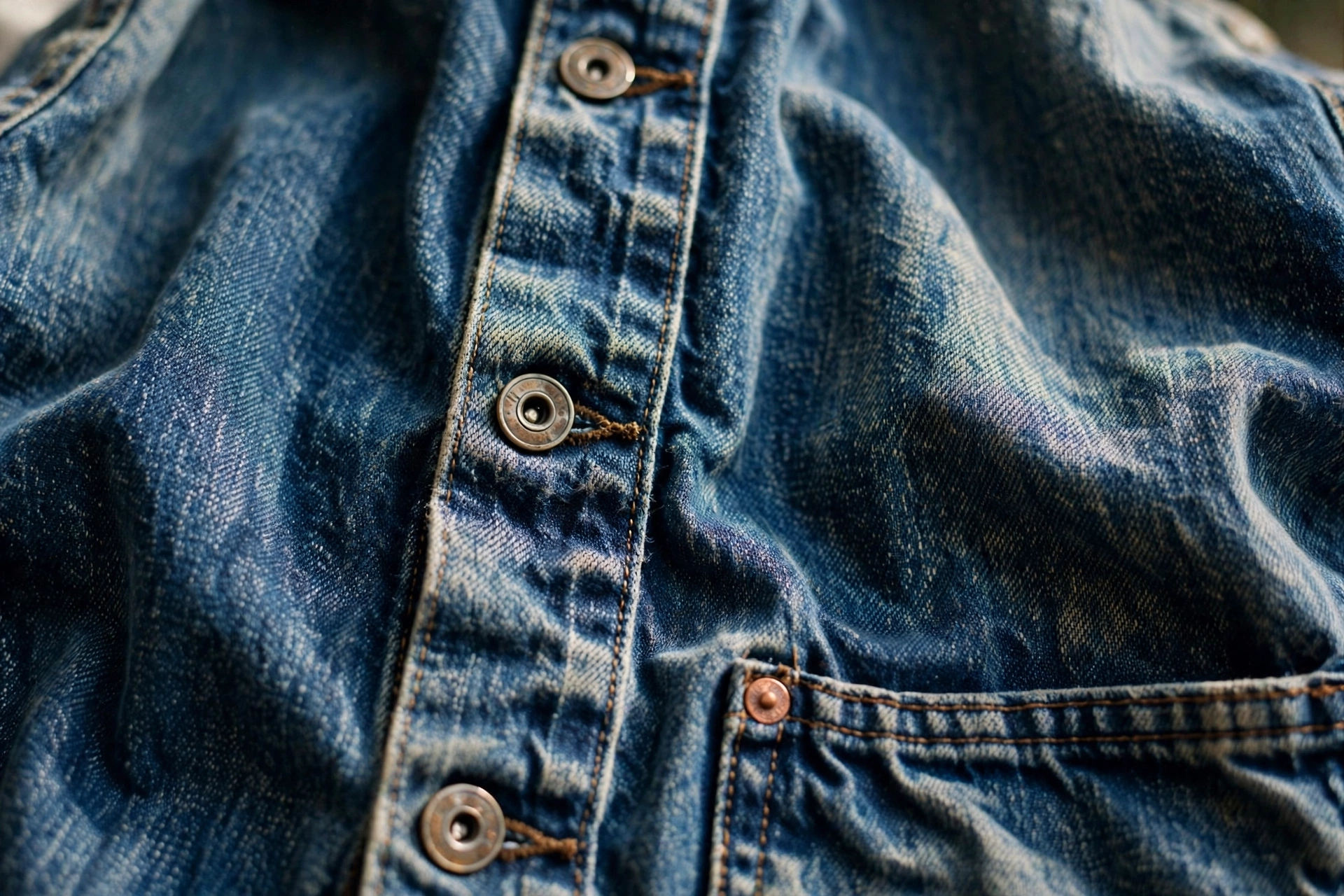
Buttons are a QC line, not a trim decision
Shank buttons and rivets go on after the wash, in their own pass, with their own failure rate that never appears in any factory report I have ever been shown. A loose shank does not show up as a production metric. It shows up as a one-star review in another country, three months later, under a photo of a jacket with its front hanging open. Pull strength gets checked properly on the sample, the way everything gets checked properly on the sample, and then spot-checked in bulk at whatever rate the day’s schedule allows. Buyers ask me about wash recipes for an hour and about button attachment for zero seconds, and I have stopped correcting the ratio. Their customers will correct it for them.
Hand-finishing drifts the same way. Whiskers and hand-sanding are priced per piece and done by people, and people’s Tuesday work is not their Friday work. The laser and ozone rooms even all of that out beautifully, and small plants like the ones feeding small jacket runs do not own those machines, so a small buyer’s wash variance is not a mystery to solve. It is a staffing fact. I tell clients to judge a wash by its worst jacket in the load, not its best. Nobody ever does. The best jacket is the one that gets photographed.
No, I’m misremembering the last inspection round. We were not down for a month. We were down eleven days. It only felt like a month because the phone started at seven every morning with somebody new explaining that their jackets were already sewn, as if the sewing were the part of the building that was closed.
What ten pieces can and cannot buy
Here is what a 10-piece start genuinely gets a boutique, because it does get real things. A woven neck label with your own name on it is cheap and entirely real at ten pieces, and it changes how the garment reads on a rail next to the women’s dresses wholesale range it will hang beside. Your choice of the plant’s running washes is real too, within the week you are given. What is not real at ten pieces is a custom wash of your own, developed for you, held for you, repeated for you across a season. The wash menu at small volume is whatever the drums are already running, and a supplier who tells you otherwise is planning to let your ten jackets ride a bulk load and call the result yours.
Boutique buyers tell me jackets cross-sell over dresses harder than over jeans, that a customer who came in for a dress leaves with the jacket over her arm. Sell-through data is not something a wash plant ever sees, so I cannot confirm it and I notice nobody who repeats it can either. It sounds right. A lot of expensive things in this trade sound right. What I can see from my end is that jacket orders come back for reorders in a steadier rhythm than dress orders, less feast and famine, more like the women’s tops programs that tick over all year. Whether that is the garment or the kind of buyer it attracts, I genuinely do not know.
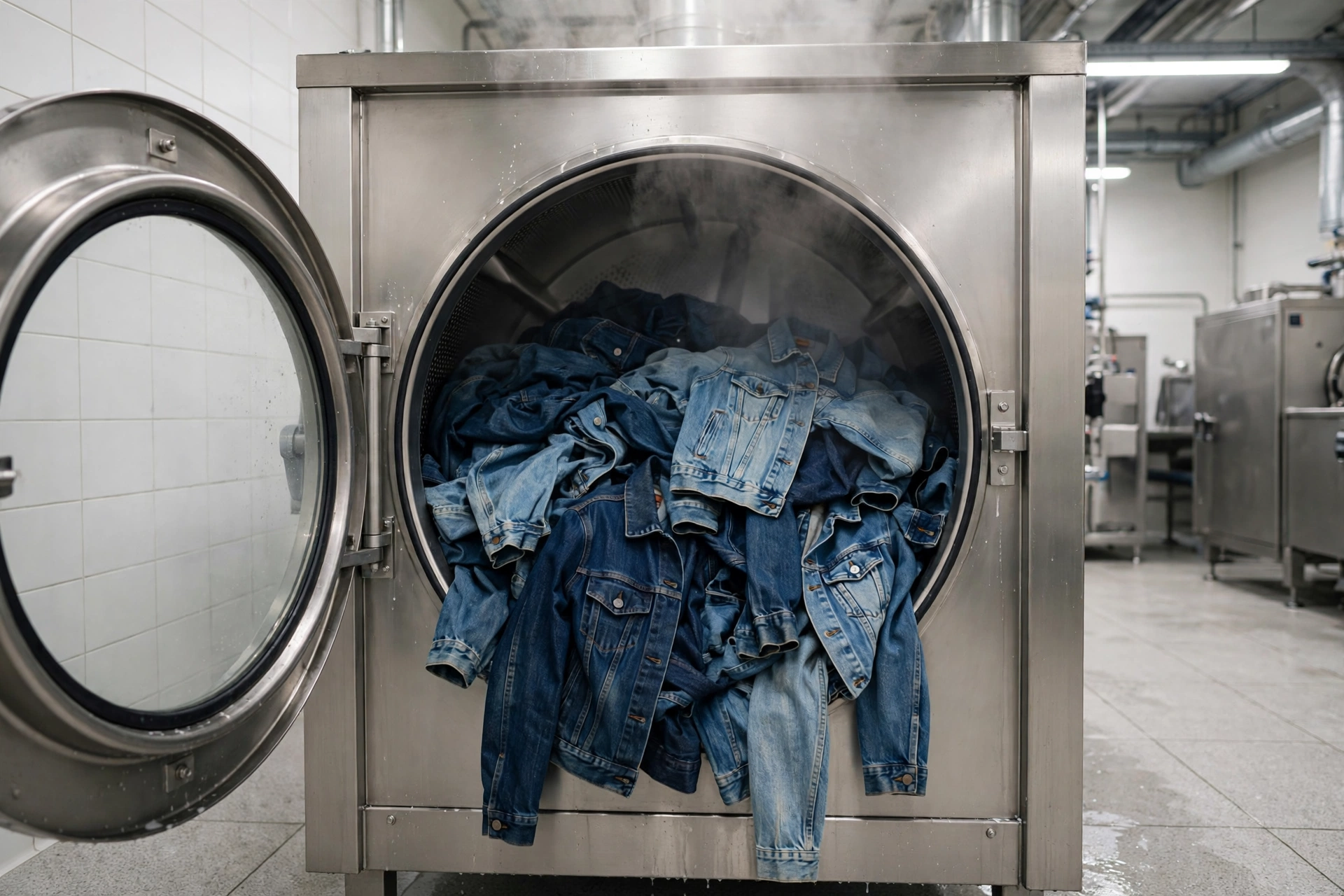
Asked on the phone, usually on a Friday
Ten pieces with my own label, fine. So why can’t I have my own wash at ten pieces?
Because the label is sewn one jacket at a time and the wash is not. A drum load runs by weight, and ten jackets in a production drum would tumble like stones in a bucket, scrubbing unevenly and costing the plant a full load’s water, heat and time for a tenth of a load’s output. So small runs ride inside a bulk order and take that order’s recipe. You are not being refused out of stubbornness, whatever it feels like from your end. The physics of the drum is the refusal, and it does not negotiate with either of us.
The fabric was quoted at 12 ounces. Why did the jackets arrive stiff enough to stand up?
Twelve ounces should not do that, so either the cloth ran heavy, which happens at the top of a mill’s tolerance, or the wash left the fabric unsoftened to hold a darker colour, which happens when a buyer pushes for shade and nobody prices the softening rinse. Stiffness complaints in reviews usually trace back to one of those two, and both are knowable before bulk, from a washed and finished sample rather than a fabric swatch. A swatch has never once been worn by anybody. I would judge the jacket, in the hand, after its real wash, and I say that as the man who runs the wash.
Sewing took two weeks. So why did delivery take six?
Because sewing finishing is not production finishing. After the sewing line, the jackets still owe a wash slot, a drying cycle, hardware attachment, pressing and packing, and the wash slot is the one with a queue in front of it, longest in inspection season when half the district’s plants are dark. Two weeks of sewing plus three weeks of waiting for drums plus a week of everything else is an ordinary six, not a scandal. It only reads as a scandal because the calendar you were given counted the buildings as one. Ask for the wash date by name when you place the order. Watch how the answer changes.
A shank button came off in the first week. Defect, or just denim being denim?
Defect. A shank button set at proper pressure does not come off in a week of ordinary wear, not on a jacket, not at any weight of denim. It means that pass ran fast or the spot-check missed its section of the run. Send the photo, keep the button if it was found, and expect a repair credit rather than an argument. What I would not do is accept “denim being denim” as the explanation. Denim being denim is fading at the folds and blue on a pale handbag. Hardware on the floor is a factory’s signature, and factories know it, even the ones that argue.
The client from the phone call did send his ten jackets, in the end. They rode inside a bulk load of a similar light wash, came out well, and as far as I know he believes to this day that they got a wash of their own, because the shade matched his photograph closely enough that nobody’s story needed correcting. I think about that more than the order was worth. The next inspection round is already on the district calendar, and his reorder, when it comes, will come in the same weeks as everyone else’s emergency, and I will have to decide again whose jackets get the drum. I still have not found a fair way to make that decision. I have only found fast ones.