I got the sample. Beautiful dress. Perfect stitching. Great fabric feel. I was ready to wire the deposit.
Then I did two things that took less than ten minutes. And I’m glad I did, because they saved me from a $4,000 mistake.

The Dress Looked Perfect. The Numbers Told a Different Story.
This was a satin bridesmaid dress. The factory quoted 230 GSM fabric, 12 SPI stitching, and a 45-day production timeline. The sample felt substantial. The seams looked clean. Everything my eyes told me said “approve it.”
But I’ve been doing this long enough to know that eyes lie. Scales don’t.
Skill #1: The Pull Test That Exposes Weak Seams
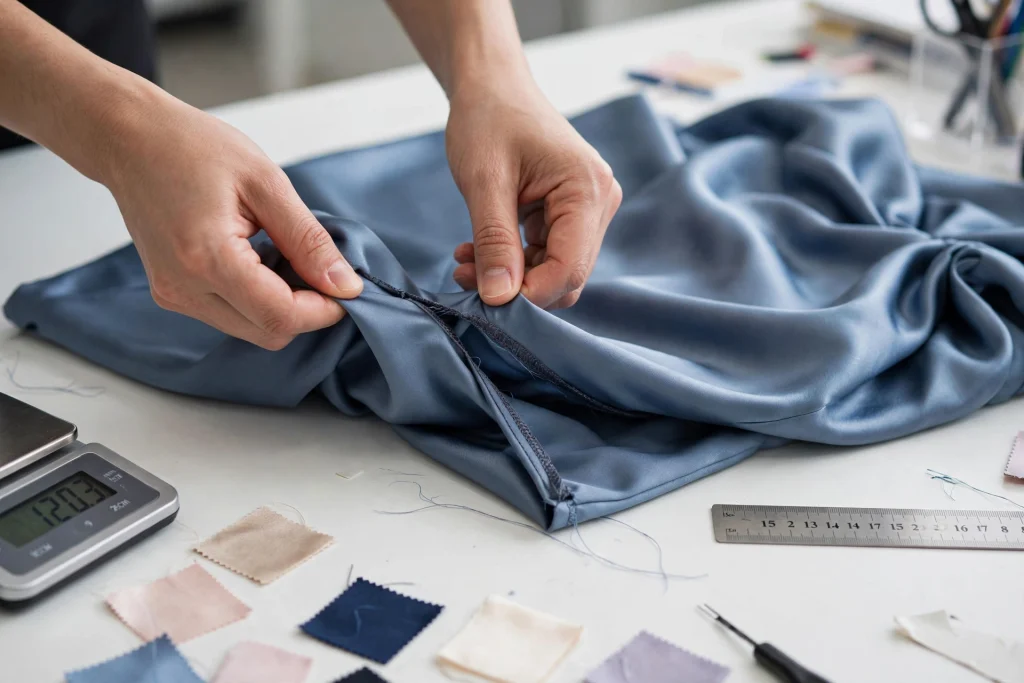
Here’s what I do with every sample. I grab the side seam with both hands — about six inches apart — and pull horizontally. Not gently. Like I’m trying to break it.
A good seam will show fabric distortion first. The material stretches, the threads hold. That’s what you want — it means the thread is stronger than the fabric, which is correct.
On this sample? I heard a faint popping sound on the third pull. Just one thread. But one is enough.
I flipped it inside out and looked closely at the side seam under my desk lamp. The stitching looked fine at first glance. But when I pulled the seam open slightly, I could see that the thread tension was uneven — some stitches were tight, others had slack. Under stress, the tight ones take all the load and snap first.
This is classic rush-job sewing. The operator was going too fast, the tension disc wasn’t calibrated, and quality control didn’t catch it because they only looked at the outside.
My rule: if I hear any popping on a pull test, I flag it. One pop might be a fluke. But it tells me the factory’s tension calibration is off, which means the bulk order — sewn faster, by less experienced operators — will be worse.
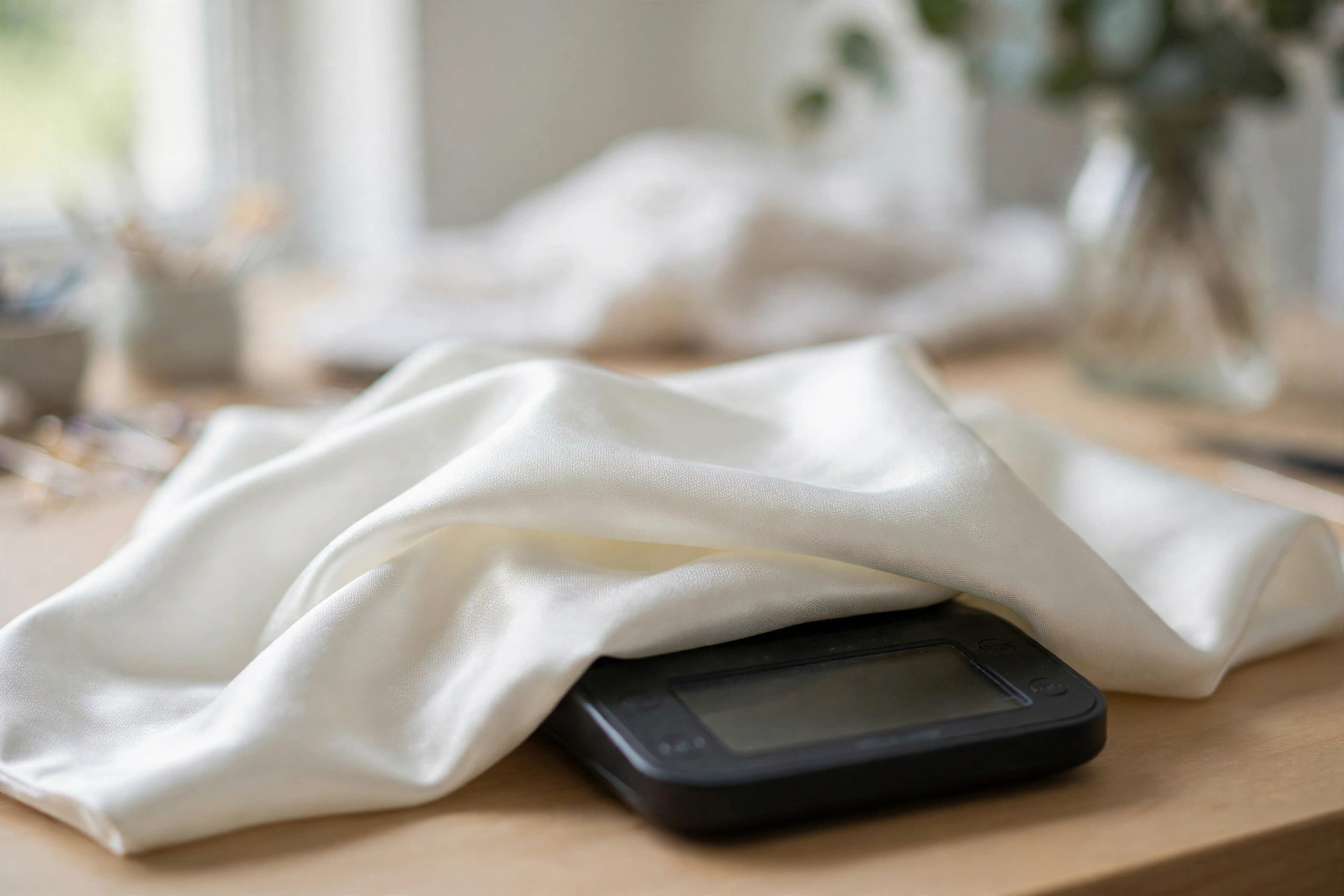
Skill #2: The GSM Weigh-In That Catches Fabric Swaps
The factory claimed 230 GSM. I cut a 10×10cm square from inside the side seam allowance and put it on my scale: 1.95 grams.
1.95 × 100 = 195 GSM.
That’s 15% below spec. Right at my rejection threshold.
Now, 195 vs 230 — can you feel the difference? Honestly, holding the sample, I couldn’t. It felt fine. That’s what makes this fraud so effective. The difference shows up in drape, in how the dress photographs, in how it holds up after three washes. Your customer won’t say “the GSM is off.” She’ll say “it doesn’t look like the pictures” or “it feels cheap.”
I emailed the factory with my findings. Their response? “Oh, the sample was made with available stock, bulk will use correct fabric.”
Sure it will. And I’m the Queen of England.
Here’s the thing: if they’ll cut corners on the sample — the one piece designed to win your business — what do you think happens on unit 347 of a 500-piece order when they’re behind schedule?
The Timeline Lie
They quoted 45 days production. I asked for a breakdown: how many days for fabric procurement, cutting, sewing, finishing, QC, packing?
The answer was vague. “About 10 days fabric, 25 days sewing, 10 days finishing.”
That’s not a production plan. That’s three numbers someone made up on the spot.
A real production schedule accounts for: fabric lead time from the mill (which the factory doesn’t control), cutting (1-2 days for 500 units), sewing line allocation (are they running your order exclusively or interleaving with others?), inline QC checkpoints, final inspection, and buffer for rework.
When I pushed for specifics, the timeline stretched to “maybe 55 days.” That “maybe” told me everything. They hadn’t actually scheduled my order. They were quoting aspirationally.
What I Did Next
I didn’t reject outright. The design was good and the price was competitive. But I changed the terms.
First, I sent a spec sheet with my verified measurements: minimum 200 GSM (I gave them slight tolerance from my 195 reading, but not all the way to their claimed 230), minimum 10 SPI on all structural seams, and a pull-test standard.
Second, I split the deposit: 20% upfront, 10% after inline inspection at 30% completion. If the inline inspection fails, I can walk away having lost 20%, not 30%.
Third, I required a production sample from the actual bulk fabric roll before they cut the full order. Not the original PPS — a new cut from the real material.
The factory agreed to all three. That’s a good sign. A factory planning to cheat doesn’t agree to inline inspections.
Is This Bridesmaid Dress Worth the Risk?
The design is solid but the factory needs tighter oversight. The sample revealed tension issues and a 15% GSM shortfall — not dealbreakers, but warning signs that bulk production needs monitoring. With a signed spec sheet and inline inspection rights, this could work. Without them, you’re gambling.
The Same Two Tests Apply to Women’s Apparel Orders
Everything above was a bridesmaid dress, but seam tension and fabric weight don’t care what the garment is called. If you order women’s dresses or apparel in bulk — for a boutique, a private label, or your own brand — run the same two tests on the sample before you wire anything.
For reference, here is what the terms look like at our own factory, so you can compare any quote against a real baseline:
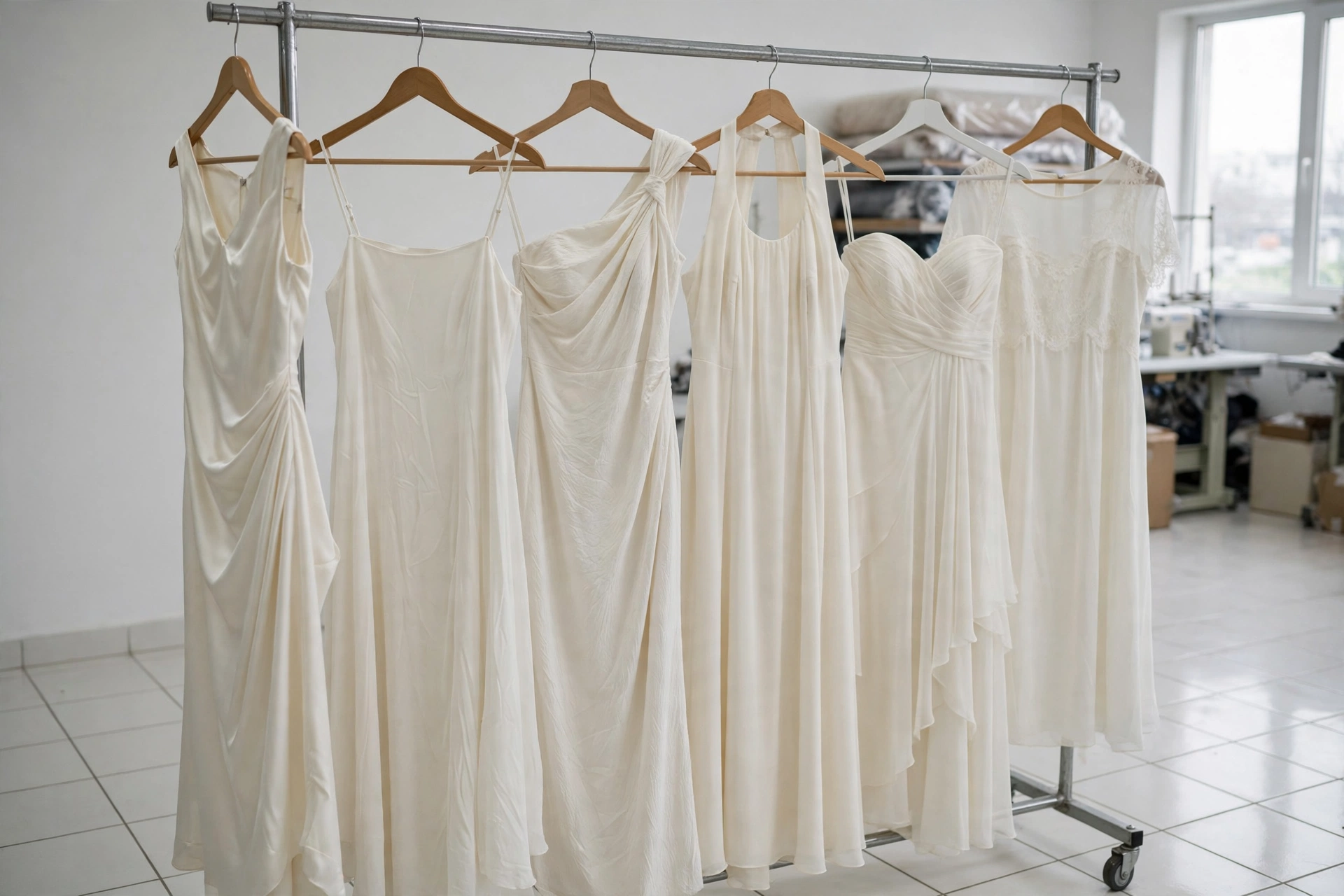
- Minimums: ready styles from our women’s apparel catalog from 10 pieces per style with your label; your own designs from 20 pieces per style. Bridesmaid and wedding-party styles from the wedding catalog start at 5 pieces per style.
- Samples: $75 per piece, with $35 per piece refunded when the style goes into bulk. A sample takes about 5–10 days to make — test it the week it arrives, not the week production is supposed to start.
- Bulk timeline: about 20–30 days after deposit, and it comes with an actual breakdown — fabric and trims 5–7 days, cutting 1–2 days, sewing 10–15 days, finishing, QC and packing 3–5 days. If a factory can’t break its timeline down like this, it hasn’t scheduled your order.
- Payment: 50% deposit to start, 50% balance before shipment — and yes, an inline inspection around 30% completion is welcome. A factory that is confident in its sewing does not fear your pull test.
What Should You Test Before Wiring Any Deposit?
Minimum two physical tests: pull test on stress seams and GSM weight verification. These take 10 minutes combined and catch the two most common bulk-order problems — rushed sewing and material substitution. Document your findings with photos and put the numbers in your contract. A factory that balks at written specifications is telling you their plan.
Don’t trust the sample. Test the sample. There’s a difference, and that difference is worth thousands of dollars.
Before placing any bulk apparel order, request the factory’s detailed production schedule with milestones, get material specifications in writing with tolerance ranges, and negotiate inline inspection rights. The 10 minutes you spend testing the sample is the highest-ROI time in the entire sourcing process.