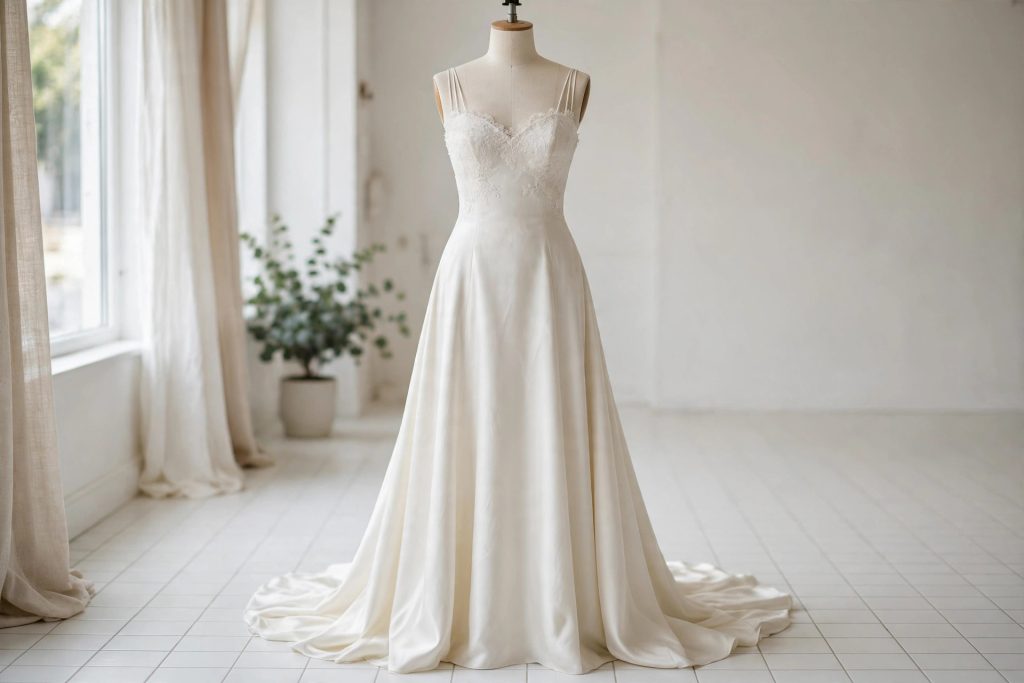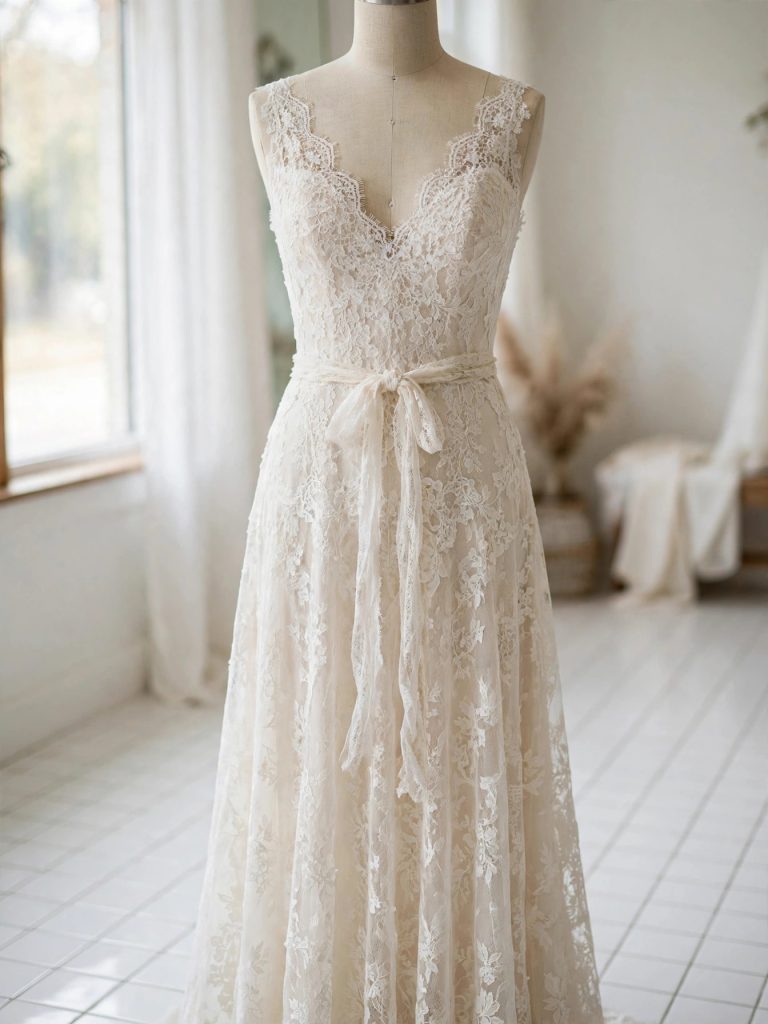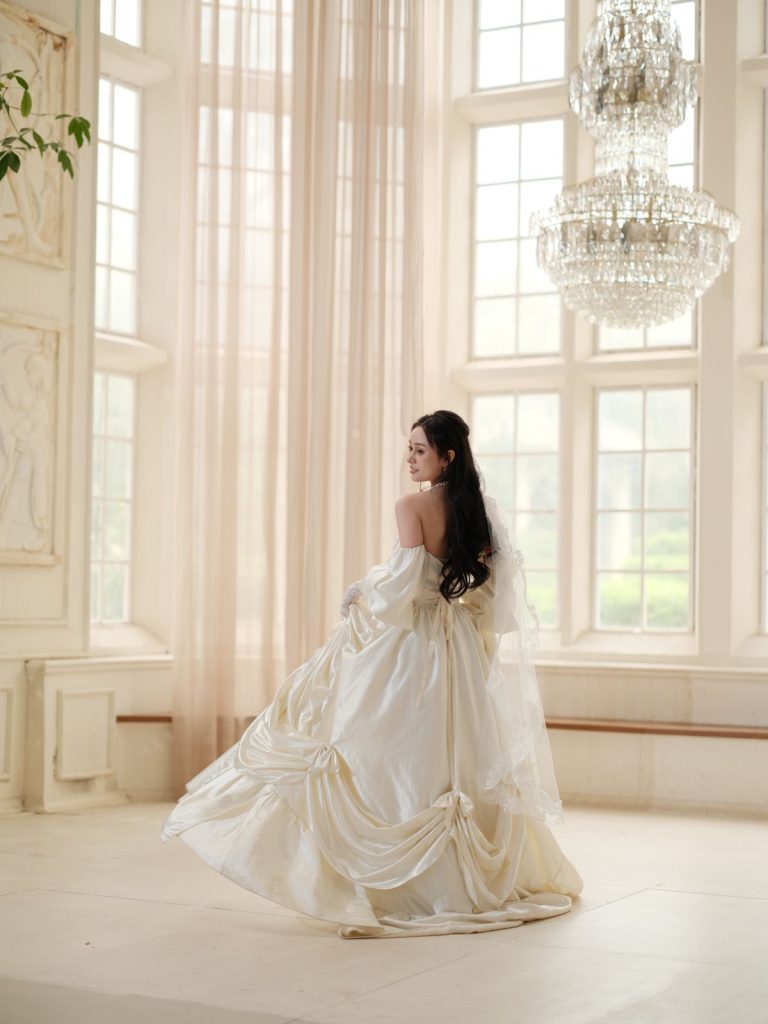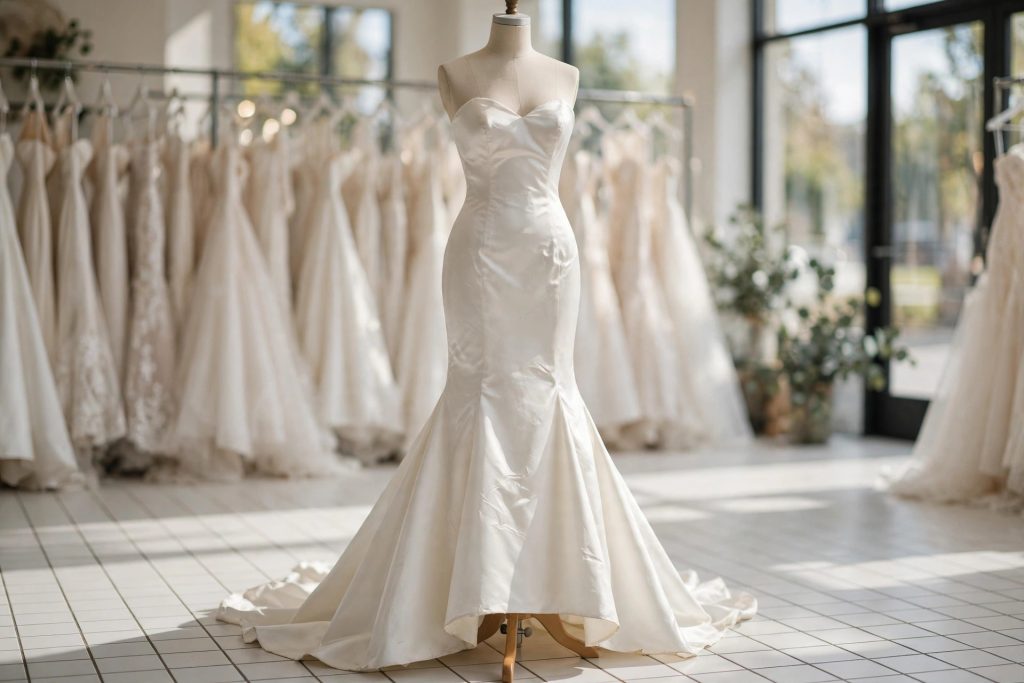
Satin wedding dresses don’t photograph badly. They photograph selectively.
The gown came back in a box twice its shipping size, stuffed with tissue like the bride was trying to apologize to it. Ivory satin, mermaid cut, the kind that looks poured-on in the listing video. The return reason, typed in all caps: LOOKS CHEAP IN PERSON.
Nothing was broken.
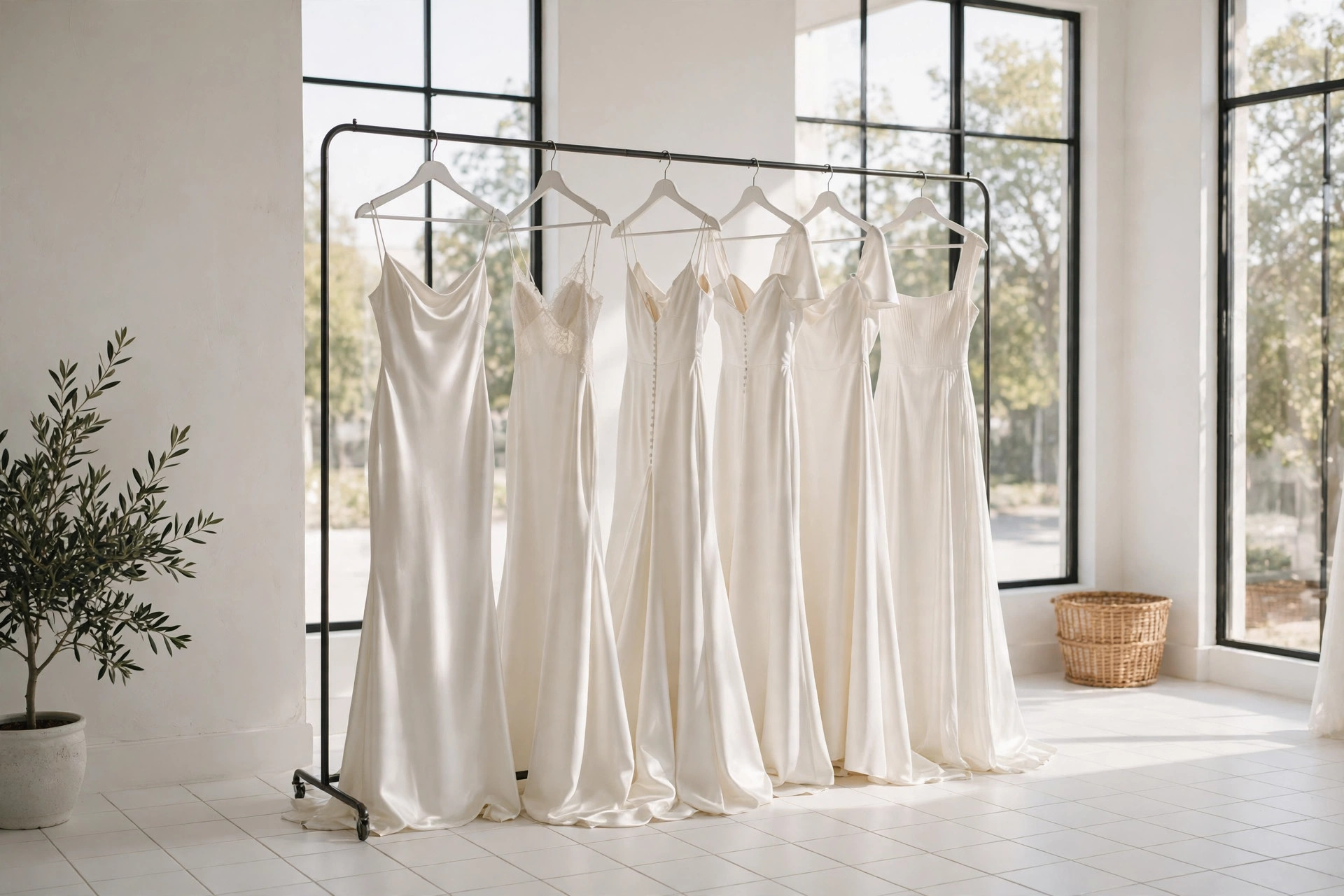
I see this one more than any other. Not the torn seam, not the wrong size — those at least have a fix. This one has no fix because the dress is exactly what shipped. The problem is the screen it was bought on. Satin is the worst fabric for this. On a short-video shopping app, under a ring light, satin reads as liquid. In a bedroom with one overhead bulb, the same gown reads as a costume.
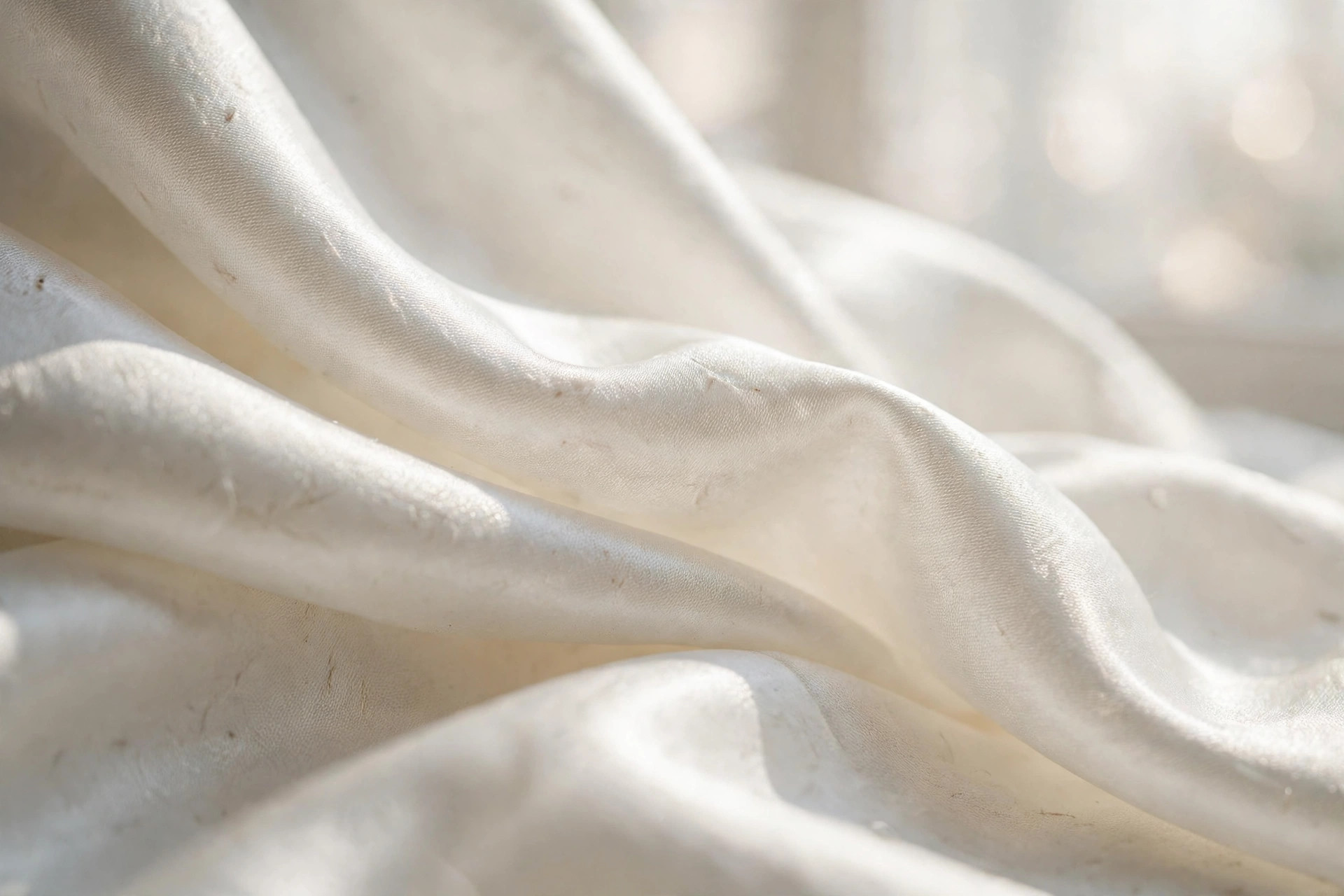
The numbers stopped surprising me years ago. Formal gowns bought on the big platforms come back with “different from picture” on roughly four in ten returns. Ball gowns run twelve to fifteen percent returns overall, and nearly half of those cite the picture gap. Satin sits at the ugly end of both numbers — the widest gap between video and reality of any bridal fabric I track. If you are new to the fabric side of this business, start with what wedding dresses are actually made of — satin sits at the unforgiving end of that list. And right now boutiques are ordering more of it, because the fall 2026 trend reports all list sleek satin gowns, and Barcelona’s bridal week put “Simple Satin” at the center of the quiet-luxury wave — clean lines and lustrous fabric with almost nothing else on the gown. The reports never mention what the fabric does to a return rate.
Ivory is not a color. It’s an argument.
The second most common satin return has nothing to do with quality either. “Ordered ivory, looks white.” Or the reverse: “looked white online, arrived cream.” Same gown, same roll of fabric, different photons. A bride approves the color on her phone at noon and opens the box under warm LEDs at midnight, and somebody is getting a one-star review.
I have watched this fight from the middle for a decade and nobody wins it. The boutique shows the listing photo. The bride shows the gown. Both are telling the truth. Satin is a mirror with opinions — it throws back whatever light is in the room, and rooms disagree with each other. Matte fabrics forgive this. Satin files a complaint.
Wholesale buyers ask me what to put in the purchase terms about color. My answer disappoints them: you cannot contract your way out of physics. What you can do is approve the sample under the light your customers will stand in — warm boutique spots, not the factory’s fluorescents — and write down which one you used. If a dispute ever lands on someone’s desk, “approved under warm spots” beats “it looked fine on the call.” Before any of that, most buyers should spend an hour reading a wedding dress factory quotation line by line, because the color line is never where the money leaks — the money leaks everywhere around it.
The $300 alteration hiding inside the wholesale price
The third failure is the one boutiques feel in the wallet without ever seeing it on a return form. A bride buys the satin gown, takes it to a tailor, and the hem plus the bodice work plus the bustle comes back at three to five hundred dollars. In the two-to-four-hundred price band, I have seen alteration bills land above the price of the dress itself.
She does not blame the tailor. She blames the boutique for selling her a dress that “doesn’t fit.” The review says the sizing is off. The sizing was fine. The gown was cut for a sample body and finished for a photo, and nobody told her that satin shows every millimeter the tailor takes in — which is exactly why the tailor charges what he charges.
This is the failure I wish wholesale buyers priced in. Not the alteration itself — that is the bride’s bill — but the review it generates. A boutique that warns the bride at purchase (“budget for alterations, this fabric shows everything”) gets fewer surprises than one that lets her discover it at the tailor.
The warning costs nothing. The surprise costs the reorder.
Squeeze the bodice before you ask the price
At every trade show I have worked, the serious buyers do the same thing before they talk numbers. They pick up the gown, find the bodice, and squeeze the boning between thumb and finger. Soft, flexible boning — they keep talking. Hard plastic that crackles — they put the dress down and walk. No brochure survives the squeeze test.
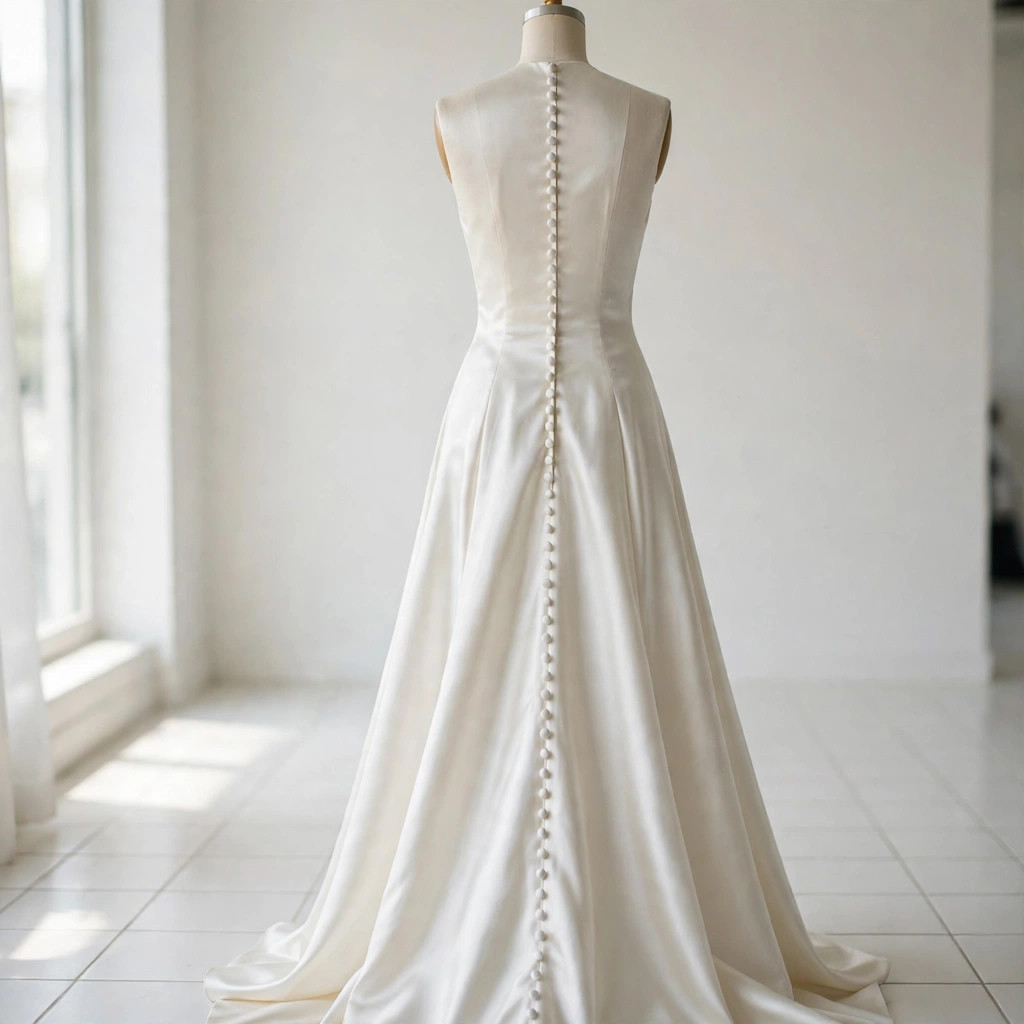
They are checking the thing the reviews complain about most. Nearly a third of sizing complaints on boned gowns say the bodice runs small, and the reason is mechanical: boning does not stretch. A street size 8 body does not fit a bridal size 8 bodice. The line we give every caller, word for word, is to order one to two sizes up from street size on anything boned, then tailor down. Brides who ignore it become the “runs small” statistics. Boutiques that print it on the size guide get fewer of them.
Here is the wholesale version of the same lesson. When your sample arrives, do the squeeze test yourself, then check the stitching density where the boning channels meet the waist seam. That junction is where bulk orders die — the sample gets hand-finished channels, the bulk gets whatever the line had time for. I have seen channel ends fray straight out of satin, because satin unravels if you look at it wrong and the bulk sewer knows she has forty more gowns after this one. For the rest of the routine, there is a solid walkthrough covering quality control on bulk wedding dress orders without flying to the factory.
Four in ten brides ask if she can sit in it
The most common pre-purchase question on satin ball gowns is not about the fabric or the price. It is “can she sit in it,” asked on roughly forty percent of inquiries, with “can she dance in it” running second. Brides are not being difficult. They have seen the photos and done the math on a ten-hour day.
The honest answer is the one nobody wants to give: in a boned satin ball gown, sitting is a negotiation. The reviews back this up — “can’t sit” runs near seventeen percent of one-star keywords on ball gowns, “too heavy” higher still, and the venue-fit complaints (“couldn’t fit through the doorway”) cluster around old churches and narrow restaurant aisles. Satin makes it worse because it creases where you fold it, and the crease stays for the photos.
No wait — I told you the camera flatters and the mirror tells the truth, and that is only half of it. The camera does not flatter. The camera edits. Flattery you can argue with; an edit you cannot see. Nobody returns a dress the listing was honest about. They return the edit.
For the boutique owner reading this as a buying guide: the sit-down test belongs in your sample approval. Put the sample on a real body, sit her in a real chair, and photograph the lap. If the satin creases into a roadmap, your brides will find it before you do. And stock one style your staff can honestly describe as “you can dance in this” — it will outsell the prettier one, because the brides who ask are the brides who buy.
January is when the satin comes home
Returns have a calendar and satin follows it. The first two weeks of January bring the wave — New Year weddings, gifts, impulse orders placed under holiday lights. Then a smaller swell after June, when spring wedding season clears out. The gowns that come back in January were bought in November, which means somebody’s fall ordering decided this in advance.
I watch boutiques reorder into the spike every year, restocking the same satin styles in December because the trend reports say satin is hot. The reports are not wrong — the fabric is moving. But the return data says the same styles come back in January at twelve to fifteen percent, and every return costs the shipping both ways and the inspection, and eventually you will discount the open-box gown to move it. Ordering ten pieces per style instead of thirty does not fix the rate. It fixes the size of the mistake.
The buyers who do best with satin treat it like a seasonal bet, not a staple. They buy the trend, they warn the bride about the light and the tailor, and they do not chase the January returns with a bigger February order. The fabric will still be there in spring. The question is whether your margin is.
Four in ten returns say “different from picture.” What exactly looks different on satin?
The sheen. That is the whole answer, and it is enough. On video, satin’s shine reads as luxury. In a dim bedroom the same shine reads as glare, and glare reads as cheap. Nothing about the gown changed between the two rooms. I tell boutiques to shoot their own listing photos under the same warm light their fitting room uses. It will not look as good as the factory video. It will get returned less. Probably not zero, but less.
One in three bodice complaints says “runs small.” Why doesn’t the size chart fix it?
Because the chart measures the body and the complaint is about the boning. A boned bodice does not stretch, so a body that measures a street size 8 needs a bridal 10 or 12, and the chart’s “true to size” note is doing real damage. Our line tells every caller to go one to two up on anything boned and tailor down. Brides hear “order up” as “the brand runs small” and buy their street size anyway. Honestly I get this one wrong half the time myself when I am guessing from a chat window — the fix is a tape measure, not a better chart, though good luck getting anyone to use one.
Alterations run $300 to $500. Should the boutique warn the bride or eat the cost?
Warn. Eating it trains the customer to expect it, and the math does not survive the second season. The warning has to happen before the purchase, not at pickup — “this fabric shows every adjustment, budget for a tailor” — said plainly, once. Most brides accept it the way they accept that shoes need breaking in. The ones who walk away over it were going to be your worst reviews anyway. Probably.
She wants to dance in it for six hours. Honest answer — can she?
She can sway. She cannot do much else, and the gown will keep score — every fold presses a crease into the satin and the crease stays for the photographer. If dancing matters to her, the A-line in the same fabric is the honest recommendation. It gives her the shine without the negotiation. I would rather find that out in my own fitting room than read about it in July.
The satin wave this fall is real — the trend reports are not inventing it — and I am not telling anyone to skip it. I am saying I know what January looks like from this chair, and it looks like boxes, and half the boxes say the same thing, and the gowns inside are fine. That is the part that bothers me. Nothing is broken. The dress is the dress. The light is the light. And somebody still has to pay for the shipping both ways.