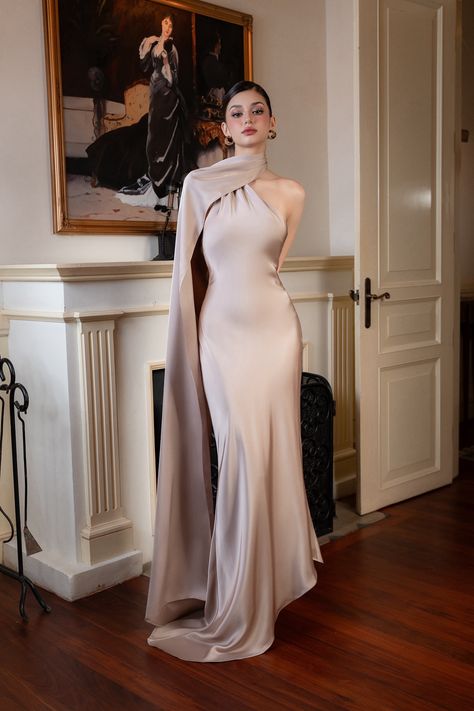
Everyone at the cloth end will tell you the same unfashionable thing: a mother of the bride sequin gown is not a prom dress that grew up. It is a different cloth decision wearing a similar shine. This Ever-Pretty style, a full length sequin maxi for the woman who will be photographed beside the bride all day, asks its sequins to behave at close range, in daylight, next to skin that does not want to be upstaged or scratched. Prom sparkle is judged across a room. This sparkle is judged across a dinner table. Upstream, that difference starts at the sequin cloth itself, before any pattern is cut.
Sequin cloth is sold by density, and density is a mood
Sequin fabric comes off the roll with a coverage story already written into it. Tight coverage on a firm mesh gives a formal, even shine and a heavier cloth that hangs straight. Looser coverage on a stretch mesh moves more, shines in patches, and costs less per metre in a way that photographs almost identically and behaves nothing alike by the third hour. For a mature formal gown the honest buy is usually the calmer cloth, sequins a touch smaller, spacing a touch tighter, sparkle that reads as texture from two metres instead of signal flares from twenty. A buyer can check a cutting without any equipment. Hold it at reading distance under plain light. If the shine argues with your eyes, it will argue with a camera all evening.
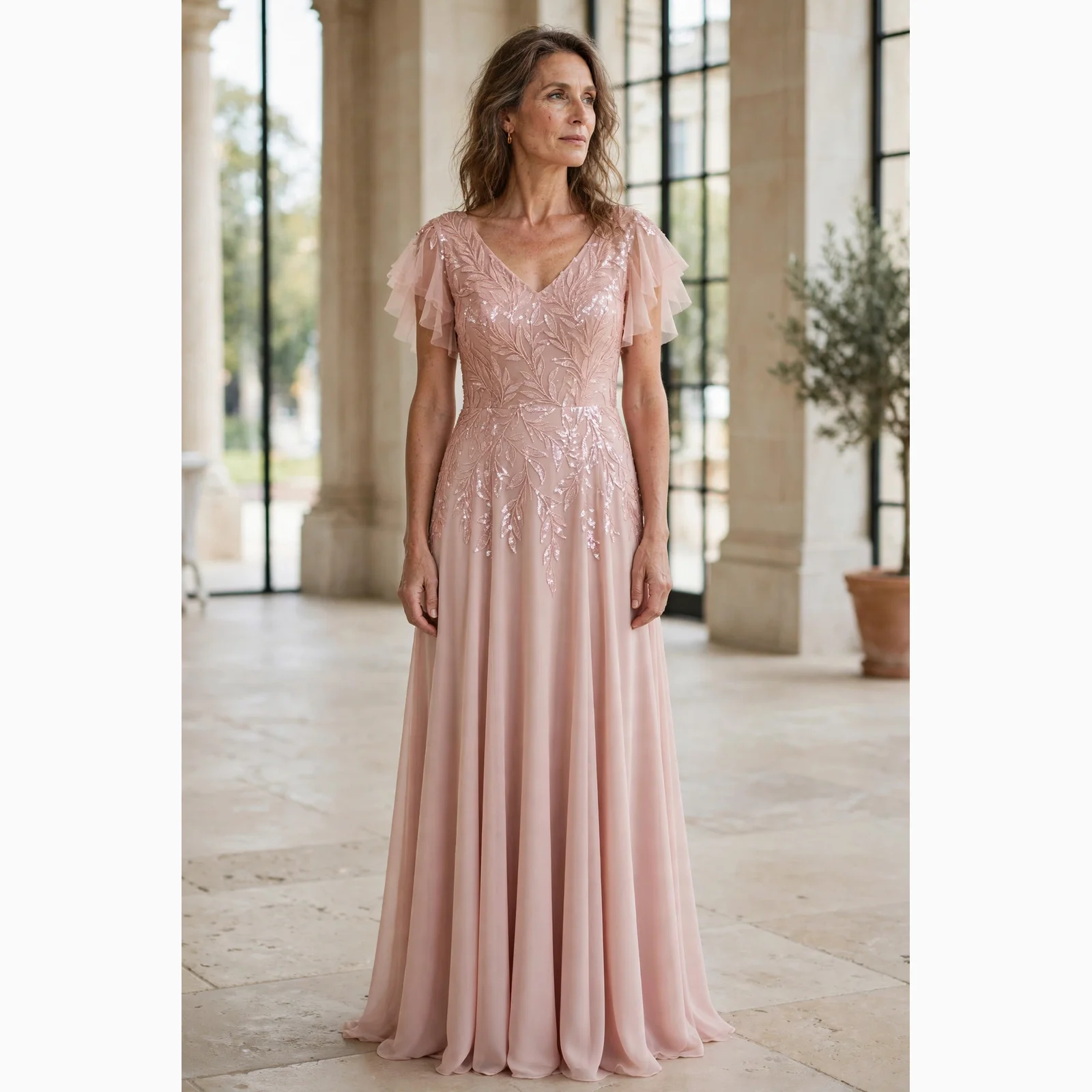
The gradient question sits inside the density question. Many mother of the bride styles scatter sequins heavily at the bodice and thin them down the skirt, which saves cloth cost and saves the wearer from sitting on a full field of discs. That thinning is drawn on a layout, not improvised at the cutting table, and a cheap version thins too fast, leaving a visible tide line across the hips where the sparkle gives up. Ask where the gradient ends. A maker who can answer in centimetres from the waist has drawn it. A maker who waves at the skirt has not, and the tide line will introduce itself at the wedding, at hip height, in every group photograph.
Mature colours are dye lot colours, and dye lots drift
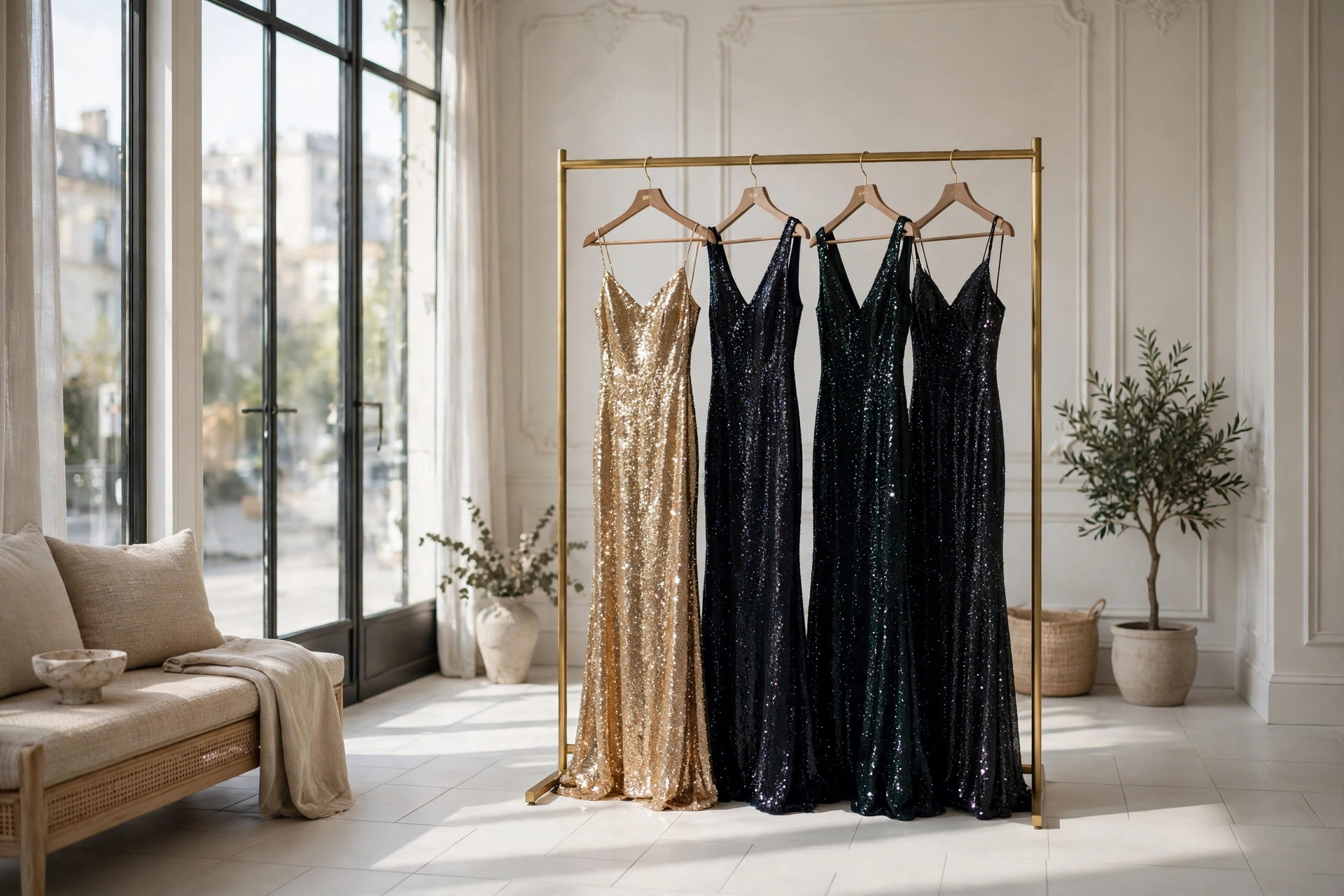
The colours this category lives in are the colours dye lots love to betray: dusty pink that slides mauve, navy that slides black, burgundy that slides brown. A gown ordered for one mother is a single-dress problem. The same style ordered across a wedding party, or reordered after a first fitting, becomes a lot problem, because the second dye lot is a relative of the first, not a twin. Upstream keeps saying the dull sentence and will keep saying it. Lock the lot for any order that has to match, and keep a cutting of the approved lot with the order, because memory is not a colour standard and a phone photograph is even less of one.
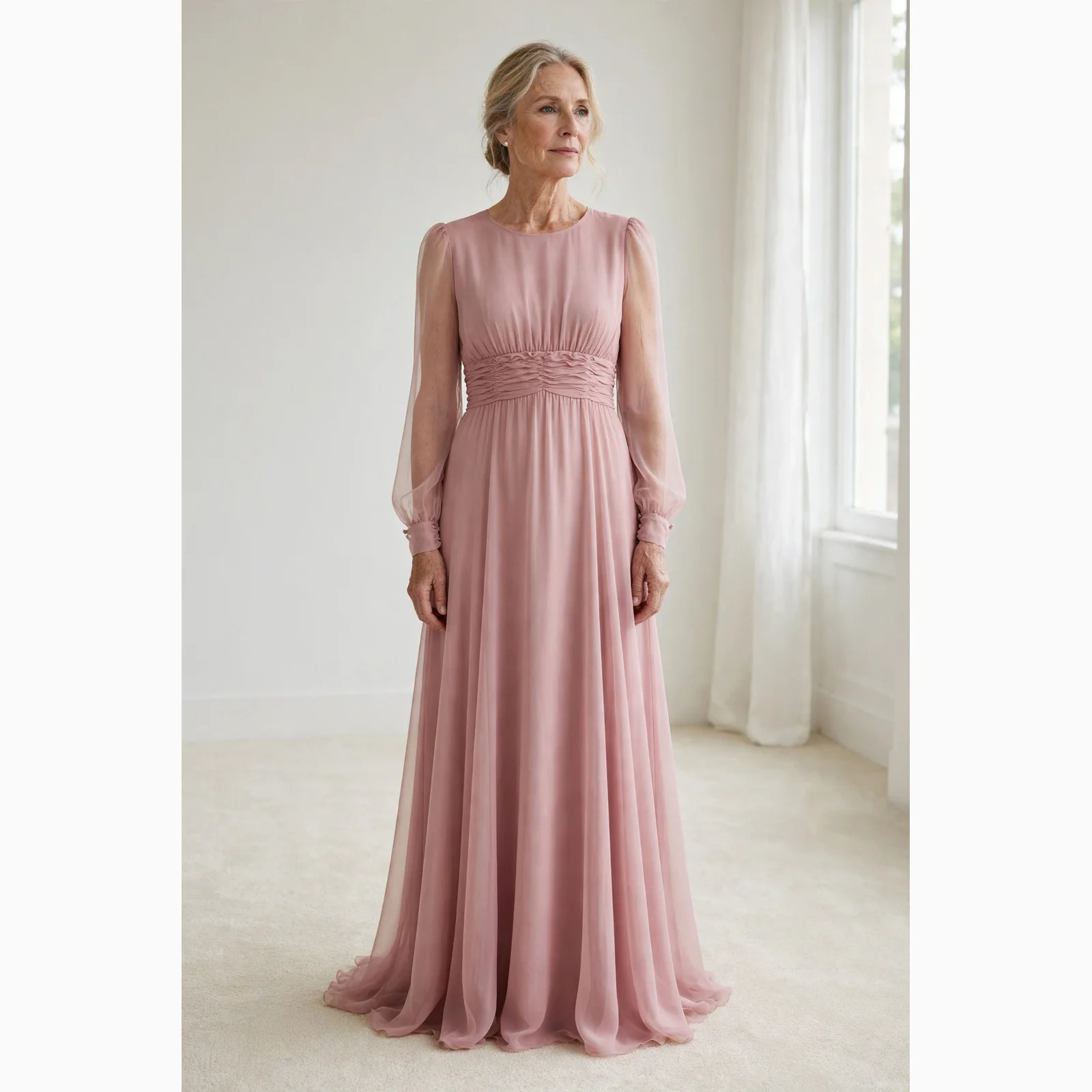
Sleeve mesh deserves its own sentence in the order, and usually gets none. A sheer long sleeve on a formal gown is a different mesh from the bodice base, finer, softer, and weaker at the elbow where it flexes thousands of times in an evening of hugging and dancing. Mesh bought only on price tears at that flex point in a way that looks like carelessness and is really arithmetic. No wait, arithmetic is too kind. It is a buying decision made three desks away from the elbow, by someone who will never wear the sleeve. The elbow always finds out anyway.
Length is the last upstream decision, and it is also a cloth decision. A full length sequin skirt cut long for hemming at the store uses more of the expensive cloth at exactly the part most likely to be cut away, while a skirt cut short to save that cloth leaves a tall wearer with no honest fix at all. Makers state their hem allowance because it is part of the price, in metres as much as in minutes. A gown with a stated allowance can be fitted to the woman. A gown without one has to fit her by luck, and luck is not a size run.
At the cloth end this mother of the bride file gets quoted beside the sequin high-low dresses for bridesmaids and party season range, read against the sequin and beaded mermaid gowns notes, and compared with the sequin and glitter dresses line, because sequin cloth is bought by density and dye lot long before it is bought as a gown.
Questions buyers and stores actually ask
The sequins stop suddenly across the hips and the skirt looks bare. Is that a fault or a design?
It can be a design drawn badly. A gradient that thins from bodice to skirt is normal for this category and kinder to sit in. A tide line at hip height means the thinning was improvised instead of laid out. Ask where the gradient ends, in centimetres from the waist, before a bulk order. A drawn answer usually means a drawn layout.
The reorder came back a slightly different dusty pink. Same style, same supplier. What moved?
The dye lot moved, as dye lots do in exactly these dusty mid tones. A reorder cut from a new lot is a relative of the first dress, not a twin. Locking the lot for matching orders and keeping an approved cutting with the paperwork are the only reliable defences. Photographs on a phone settle nothing, because the phone is guessing at the colour too.
10 pieces per style as a trial for a formal gown. Is that enough to judge sequin cloth?
Enough to judge the cloth behaviour that matters here, yes. Ten gowns show the shine at reading distance, the gradient line on real hips, and the sleeve mesh after an evening of flexing. What ten cannot judge is the next dye lot. That part stays a discipline, not a discovery, which is why the trial should end with a kept cutting, not just a verdict.
Read from the roll outward and the gown stops being mysterious. Calmer sequin cloth, a gradient drawn in centimetres, a dye lot locked with a cutting kept, a sleeve mesh chosen for flexing. A dress manufacturer who supplies wholesale formal gowns for reorder business knows these are the decisions a mother of the bride style is actually made of. The shine was the easy part. The shine is the one part the cloth brought with it.