
The Findlovewedding “Wedding Dresses for Bride with Lace” is marketed to brides, but if you are buying it for a boutique — or comparing it against a factory-made alternative — the only thing that matters is what is inside the garment. This review breaks down the fabric and construction details the listing gives you, what it leaves out, and which of those details actually decide whether the dress holds up.
The one-sentence verdict: The listing names “lace” and “chiffon” but provides no fabric weights, compositions, or construction specs — so judge this dress on the structural details you can verify (closure type, seam allowances, lace application) rather than the marketing words.
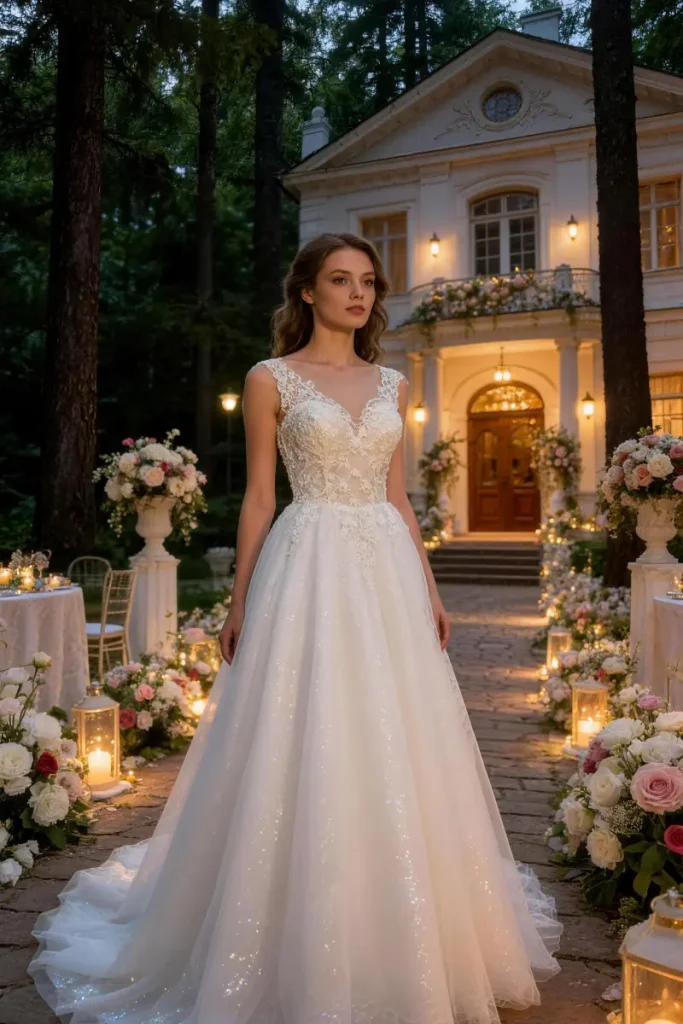
Lace and chiffon: what the listing actually tells you
Conclusion: the listing uses material names as marketing labels, not specifications — “lace” and “chiffon” alone tell you almost nothing about quality. There is no GSM (fabric weight), no fiber composition, and no lining specification in the product description. That matters because the same words cover a wide range: chiffon can be a featherlight 30 GSM that snags on a fingernail or a substantial 75 GSM that drapes and survives shipping. The lace overlay can be machine-embroidered mesh applique stitched down at the edges, or a cheaper glued-on trim that lifts after one fitting. None of that is specified, so treat the material claims as a general description of appearance, not a guarantee of substance.
Internal support: the boning question every V-neck bodice raises
Conclusion: a defined V-neck bodice needs internal structure to keep its shape — and this is the first thing to verify before ordering in quantity. Without boning or equivalent support, a V-neckline bags, wrinkles, and loses its line after the first wear or alteration. At this price tier, steel boning is unrealistic; what you should look for is plastic boning housed in proper fabric channels (not stitched flat onto the lining) and placed along the seam lines through the waist. If the bodice has no boning at all, expect the neckline to need fashion tape or additional support on the day. Ask the seller directly what, if anything, is inside the bodice — that single answer tells you more than the product photos do.
Seam allowances: the hidden spec that decides your alteration bill
Conclusion: generous seam allowances make alterations cheap; skimpy ones make them expensive or impossible. The listing itself hints at this, noting it is easier to take the dress in than to let it out. For bridal, a workable standard is around 1.5 cm on side seams and up to 2 cm at the waist and hips — that gives a seamstress real material to adjust. Mass-produced dresses in this price bracket often ship with far less, which means letting the dress out later is off the table and even taking it in leaves little margin for error. Before a bulk order, ask for the seam allowance spec in writing. It is a small number with an outsized effect on your return and alteration costs.
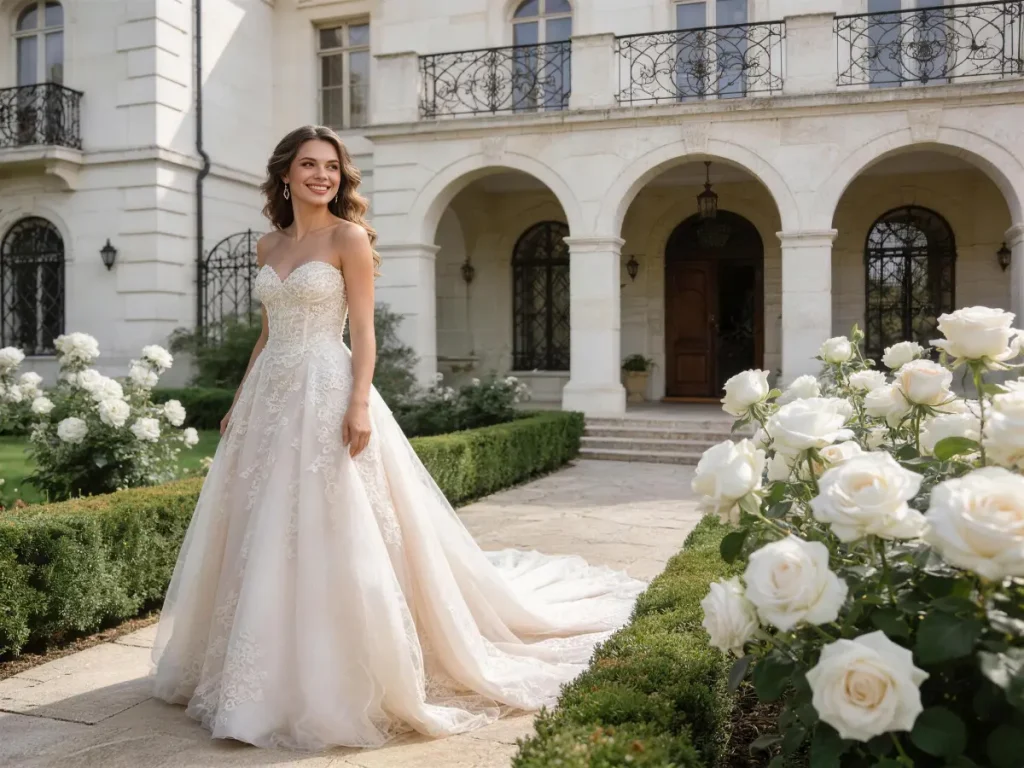
The sash closure: flexibility bought with structural compromise
Conclusion: replacing the zipper with a sash cuts cost and adds sizing flexibility, but it is the structurally weakest part of the design. A zipper costs money twice — the component itself plus the skilled labor to install it with proper reinforcement. A sash skips both, which is why it appears on budget direct-to-consumer gowns. The practical consequence: the closure system depends on loops or ties that take all the stress every time the dress is put on. The failure points to watch are loops tearing away from the garment, the sash fraying under tension, and inconsistent loop placement across sizes. For a boutique doing repeated try-ons, or a rental operation, this closure will show wear faster than any other part of the dress.
Batch consistency: what to ask before you commit to volume
Conclusion: one good sample proves nothing — ask for material and production evidence that covers the whole batch. The listing’s advertised MOQ of 5 units is an honest entry point, but small runs and large runs are different products in practice: dye lots shift, lace applique placement drifts, and lining weights get quietly substituted when material prices spike. Before scaling past a test order, request fabric swatches from the current dye lot, the graded size chart with actual measurements, and production photos from a real run — not just the marketing images. For orders above 20 units, a third-party mid-production inspection is the standard way to confirm that unit #50 matches unit #1.
Frequently Asked Questions
What fabric is the Findlovewedding lace wedding dress made of? The listing describes lace over chiffon, but gives no fiber composition or fabric weight. If the material matters to your buying decision, ask the seller for the composition and GSM in writing before ordering.
Does it have boning or built-in support? The listing does not specify any internal structure. For a V-neck bodice at this price, assume light or no boning unless the seller confirms otherwise — and plan undergarments accordingly.
Can the dress be let out if it is too small? Only if the seam allowances allow it, which the listing does not state. The product description itself notes it is easier to take the dress in than to let it out, so order by your largest measurement.
Is the sash closure durable for boutique try-ons? It is the highest-wear part of the design. For personal one-time wear it is adequate; for repeated try-ons or rental use, expect the loops and sash to need reinforcement or repair sooner than the rest of the garment.
What should I request from the seller before a bulk order? Fabric composition and GSM, boning and seam allowance specs, swatches from the current dye lot, and production photos from an actual run. A seller who can provide these is a seller you can plan around.
Fabric and construction details are where a budget gown either earns its price or quietly costs you more later. If you are sourcing lace bridal gowns wholesale and want a proper spec pack — boning type, seam widths, lining weight — contact us for tiered pricing and production terms.
#Findlovewedding #Wedding #Dresses #Bride #Lace
Keep reading: LILLUSORY Floral Wrap Dress Review and OFEEFAN Flowy A-Line Midi Dress Review.