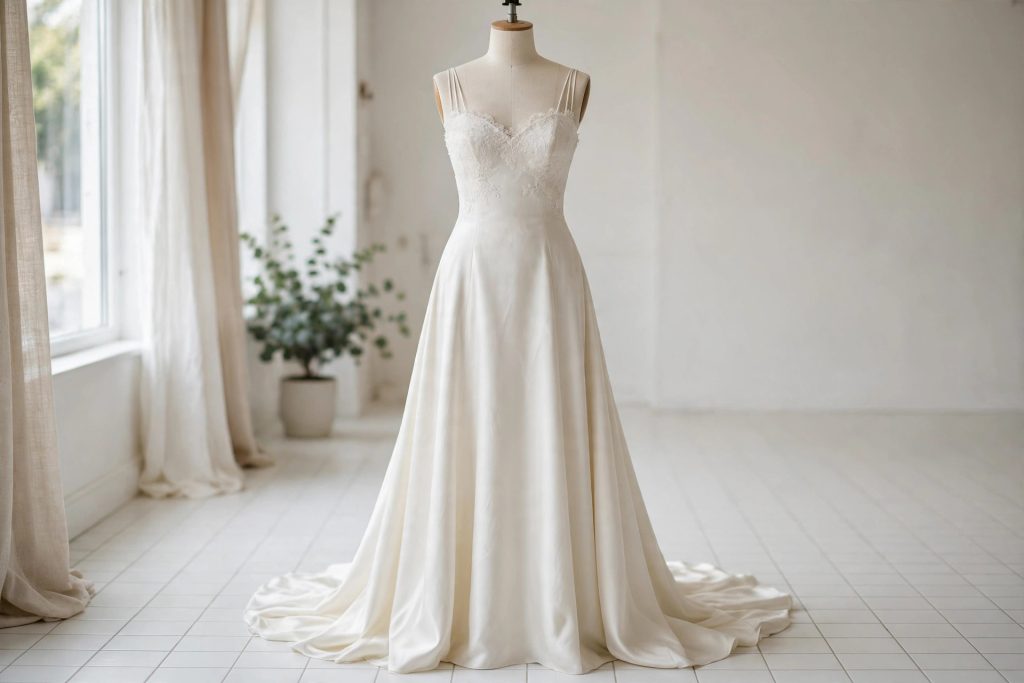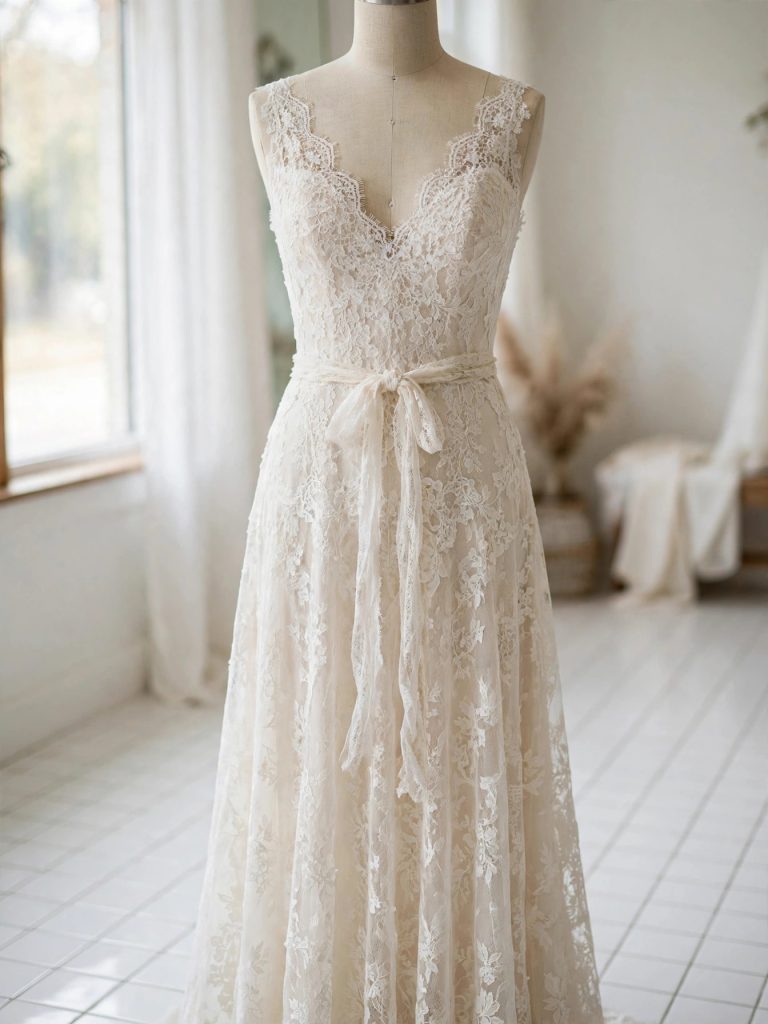
Short answer: Quality control on bulk wedding dress orders means comparing finished gowns against your sealed salesman sample and an agreed defect standard — usually with a final random inspection on a statistically valid sample of cartons, before the balance payment is released. The most effective setup combines an in-line check during sewing with a pre-shipment inspection under AQL 2.5 for major defects.
If you are buying wedding dresses wholesale, the sample stage is only half the battle. Beautiful samples are easy to make one at a time; producing fifty or five hundred identical gowns is where things go wrong. This guide explains how QC actually works for bridal bulk orders — when it happens, what to check, what it costs, and what to do when the goods fail.
What “Quality Control” Actually Means for Bridal Bulk Orders
The short version: QC is not a general look-over — it is a structured comparison of bulk goods against your approved reference sample and your written quality requirements.
Every QC result has three reference points:
- The sealed salesman sample: the final approved gown both sides signed off. Bulk production must match it in silhouette, fabric, color, workmanship, and finishing.
- Your measurement chart and tech pack: the size specs the factory graded from. Bulk goods are measured against these, with agreed tolerances.
- Your defect classification: what counts as critical, major, and minor. Without this, “acceptable” means whatever the factory says it means.
If you skipped the sampling discipline and never sealed a reference sample, go back to our wedding dress sampling guide first — QC without a sealed reference is guesswork.
When QC Happens: Inline Checks vs. Final Inspection
The short version: check once during production and once before shipment; the pre-shipment final inspection is the one that protects your payment.
There are two moments that matter:
- Inline (during-production) inspection: done when roughly 20–30% of the order is sewn. It catches systemic problems early — wrong lining, grading drift, beading placement errors — while there is still time to fix the remaining production.
- Final random inspection (pre-shipment): done when 100% of goods are finished and packed. The inspector pulls a random sample of cartons and gowns, checks them against your specs, and issues a pass/fail report. This is the inspection most buyers mean when they say “QC.”
Final inspection should always happen before you release the balance payment and before goods leave the factory. Once gowns are on a container, your leverage drops sharply. If your order includes custom fabrics or heavy handwork, the inline check is worth the extra cost — fabric problems discovered at the carton stage cannot be fixed.
The AQL System, Explained for Bridal Buyers
The short version: AQL defines how many defective gowns are acceptable in a sample — and bridal buyers typically use AQL 2.5 for major defects, 4.0 for minor defects.
AQL (Acceptable Quality Limit) is the garment industry’s standard sampling system. Instead of checking every gown, the inspector draws a statistically sized sample — for example, 80 pieces from a 1,000-piece order — and counts defects. The lot passes or fails based on how many defects of each class were found.
Defects are classified by severity:
- Critical defects (AQL 0 — not allowed): safety or legal failures. In bridal this means broken needles left in a gown, toxic smell from dye, or anything that could injure a wearer. One critical defect normally fails the whole inspection.
- Major defects (typically AQL 2.5): flaws a customer will notice and complain about — a missing bead cluster, visible lace appliqué misalignment, a zipper that catches, a 2 cm bust measurement error, shading differences between panels.
- Minor defects (typically AQL 4.0): small imperfections most customers would not notice — a tiny loose thread, a barely visible weave irregularity.
Agree the AQL levels in writing with your factory before production starts. Get these terms into the order contract — our guide to reading factory quotations covers what belongs in that paperwork.
A Wedding Dress QC Checklist That Actually Works
The short version: inspect every gown in the sample across six areas — measurements, fabric, embellishment, closures, stitching, and labels/packaging.
| Area | What to check |
|---|---|
| Measurements | Bust, waist, hip, hollow-to-hem against your size chart, within the agreed tolerance (commonly ±1 cm for bridal). Measure multiple sizes, not just one. |
| Fabric and color | Match to the sealed sample under daylight; check for shading between panels, dye-lot streaks, pulls, and stains. See our wedding dress fabrics guide for what each fabric should look like. |
| Beading and appliqué | Count and placement of bead clusters vs. the sample; tug-test a few beads; check lace appliqué symmetry left-to-right; look for glue marks under hand-set stones. |
| Closures | Run every zipper up and down fully; check buttons, hooks, and corset lacing for secure attachment and even spacing. |
| Structure and stitching | Boning channels intact, cups symmetrical, lining fully attached with no raw edges, hem even all around, no skipped stitches or puckering at seams. |
| Labels and packaging | Your private labels sewn in the right position and orientation; each gown individually bagged, folded to your spec, cartons marked with style, size, and quantity. |
Bring the sealed sample — or detailed photos of it — to every inspection. Memory is not a reference standard.
Common Defects Buyers Actually Find in Bulk Gowns
The short version: most bulk bridal defects come from rushing handwork and grading, not from the fabric itself — loose beading, lace misalignment, zipper issues, and size drift top the list.
- Loose or missing beading: the single most common bridal defect. Hand-sewn beads loosen when workers rush; every beaded gown in the sample should get a gentle tug test.
- Lace appliqué asymmetry: hand-placed lace motifs drift left-to-right between gowns. Compare each inspected gown against the sealed sample, not against its neighbor.
- Zipper puckering or catching: invisible zippers in fitted bodices are the highest-stress closure on a gown. Run each one multiple times.
- Size grading drift: the size-8 gown matches spec but the size-16 runs a full size off. Always measure across the size range in the sample.
- Shading and dye-lot differences: satin and mikado panels cut from different fabric rolls can read as different colors under store lighting.
- Stains and handling marks: light fabrics show every fingerprint. Check under good light, especially on skirts and trains.
Knowing these patterns lets you brief your inspector on exactly where to look — generic “check the quality” instructions miss bridal-specific risks.
Put QC in Writing Before Production Starts
The short version: your QC rights exist only if they are in the order contract — agree the inspection standard, timing, and consequences before the first cut.

Before production begins, get these five points in writing with your factory:
- The inspection standard: AQL levels per defect class, measurement tolerances, and the sealed sample as the binding reference.
- When inspection happens: inline at 20–30% completion and final inspection on 100% finished, packed goods — before the balance is paid.
- Who inspects: your inspector or an independent third party, with factory access guaranteed on agreed dates.
- What happens on failure: rework scope and deadline, who pays for the re-inspection, and whether shipment waits for a re-inspection pass.
- Payment linkage: the balance is released after the final inspection passes — not before. This is your real leverage; everything else is paperwork.
Factories that push back on written QC terms are telling you something. A reliable manufacturer expects these clauses — see our guide to vetting a manufacturer for more signals of a factory you can trust.
Inspect Yourself or Hire a Third-Party Inspector?
The short version: hire an independent third-party inspector for any order you cannot inspect in person — it typically costs a few hundred US dollars per man-day, far less than a bad shipment.
Your options, from most to least control:
- Inspect in person: best for large or complex first orders. You know your customer; nothing replaces seeing the goods yourself. The cost is a flight and a few days.
- Third-party inspection company: firms like QIMA, SGS, Bureau Veritas, and TÜV operate across China’s garment regions and offer standard pre-shipment inspection services, usually priced per man-day — commonly a few hundred US dollars. You supply the checklist and the reference sample photos; they supply an inspector and a written report with photos.
- Local freelance QC agent: independent inspectors based near garment clusters (Guangzhou, Suzhou, Chaozhou) charge less than the big firms. Ask for sample reports and bridal experience before hiring — a T-shirt inspector may not know what to look for on a beaded bodice.
- Factory self-inspection: accept the factory’s own QC report. This is better than nothing and normal for small repeat orders with a trusted factory, but it is not independent verification.
For a first order with a new factory, third-party inspection is the default recommendation. The inspection fee is a fraction of one defective shipment’s cost — and of the total manufacturing cost you are already committing.
What to Do When an Inspection Fails
The short version: do not release the balance — require rework of the defective goods, then re-inspect before anything ships.
A failed inspection is not the end of the order; it is the QC system doing its job. Work through it in this order:
- Read the full report: distinguish systemic defects (wrong lining on all gowns — a factory error to fix everywhere) from random defects (a few gowns with loose beads — rework those pieces).
- Hold the balance payment: you agreed to pay after a passed inspection, so a failed inspection means the payment waits. Stay factual and reference the report, not emotions.
- Agree the rework plan in writing: which pieces get fixed, how, and by when. For systemic issues, the factory reworks the full affected batch.
- Re-inspect: the rework gets its own inspection — ideally by the same inspector, ideally checking 100% of the previously failed pieces plus a fresh random sample.
- Negotiate only after facts are on the table: if defects are unfixable (shading across the whole lot), discuss price adjustments, partial shipment of good pieces, or cancellation per your contract terms.
Buyers who release the balance “to keep things moving” almost always regret it. The entire point of pre-shipment QC is that your money moves only when the goods are right. If you are building a label rather than stocking a boutique, the same discipline applies at every reorder — see our brand-startup guide for the full sourcing sequence.
Frequently Asked Questions
What is AQL in wedding dress quality control?
AQL (Acceptable Quality Limit) is the garment industry’s standard sampling system for bulk inspections. The inspector checks a statistically sized random sample of gowns and counts defects by severity — critical (AQL 0, not allowed), major (typically AQL 2.5), and minor (typically AQL 4.0). The lot passes or fails based on the defect count against these agreed limits.
How many wedding dresses does an inspector check?
Inspectors do not check every gown — they draw a random sample sized to your order quantity under AQL tables. For example, a 1,000-piece order typically means around 80 pieces inspected across randomly selected cartons. The sample must be truly random (different cartons, mixed sizes) to be valid.
What is the most common defect in bulk wedding dresses?
Loose or missing hand beading tops the list, followed by lace appliqué asymmetry, zipper puckering or catching, size grading drift across the size range, and shading differences between fabric panels. Most of these come from rushed handwork, which is why beaded and appliquéd gowns need extra inspection attention.
Should I do quality control before or after paying the balance?
Always before. The final pre-shipment inspection should be completed — and passed — before you release the balance payment and before goods leave the factory. Once gowns are on a container, your leverage to demand rework drops sharply. Write this payment linkage into your order contract.
How much does third-party garment inspection cost in China?
Independent inspection companies typically charge per man-day, commonly a few hundred US dollars, with a written report and photos included. Freelance QC agents near garment clusters usually cost less. Either way, the fee is small compared with the cost of receiving a defective bulk shipment.
Can I trust the factory’s own QC report?
A factory QC report is better than nothing and reasonable for small repeat orders with a manufacturer you already trust. For first orders, large orders, or beaded gowns, use an independent inspector — factory self-inspection is not independent verification, and the person reporting the defects should not be the person who caused them.