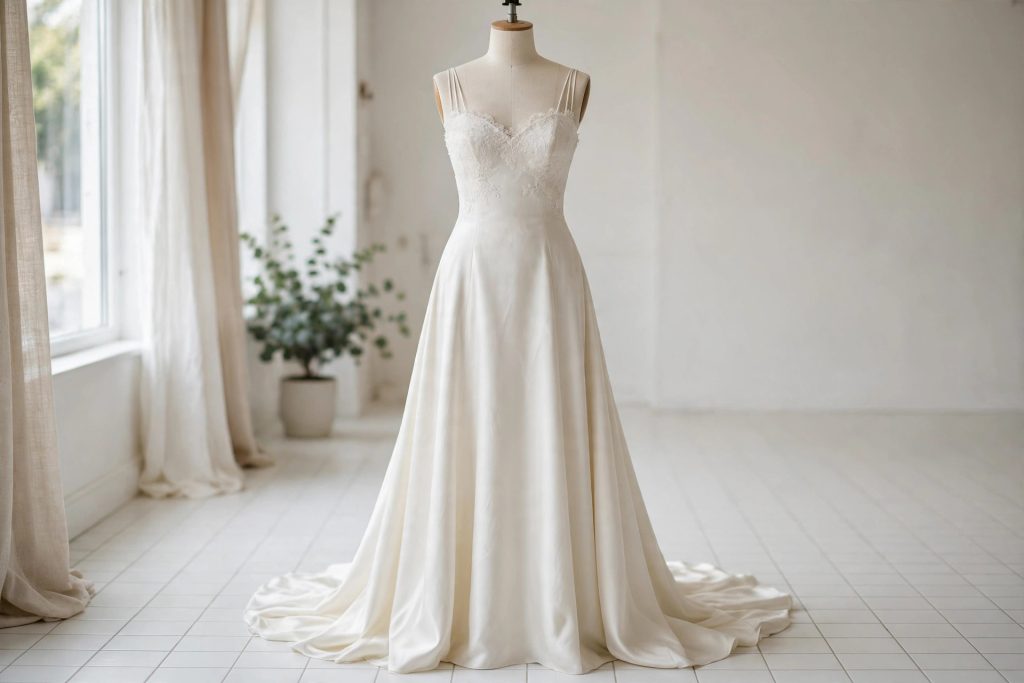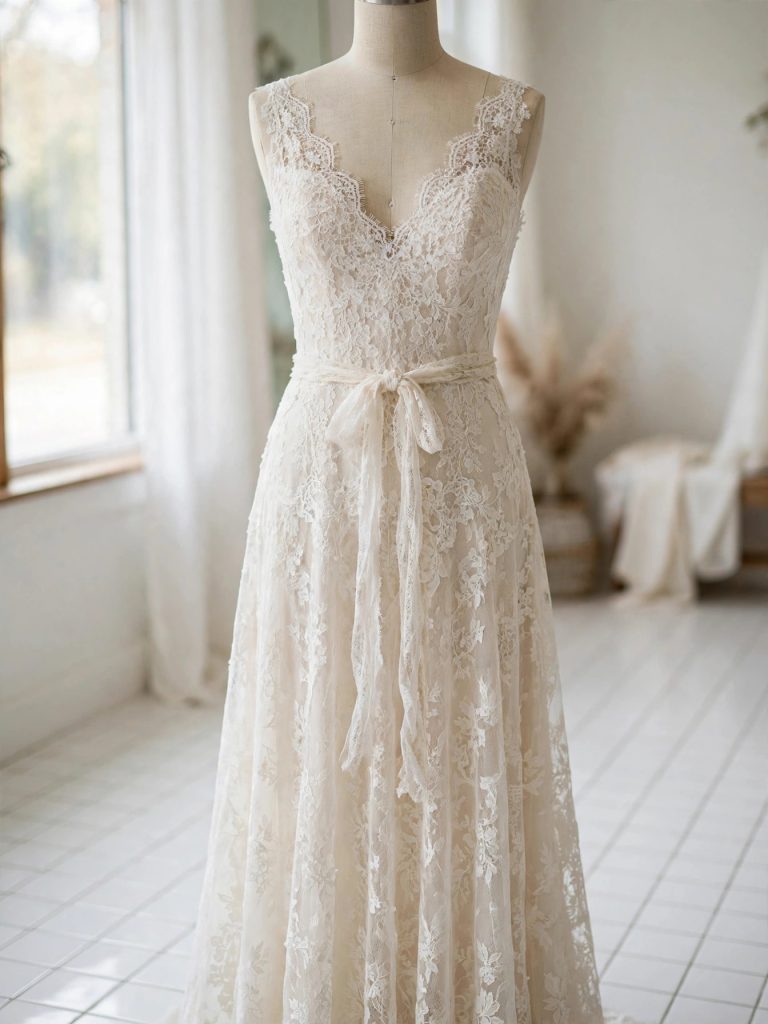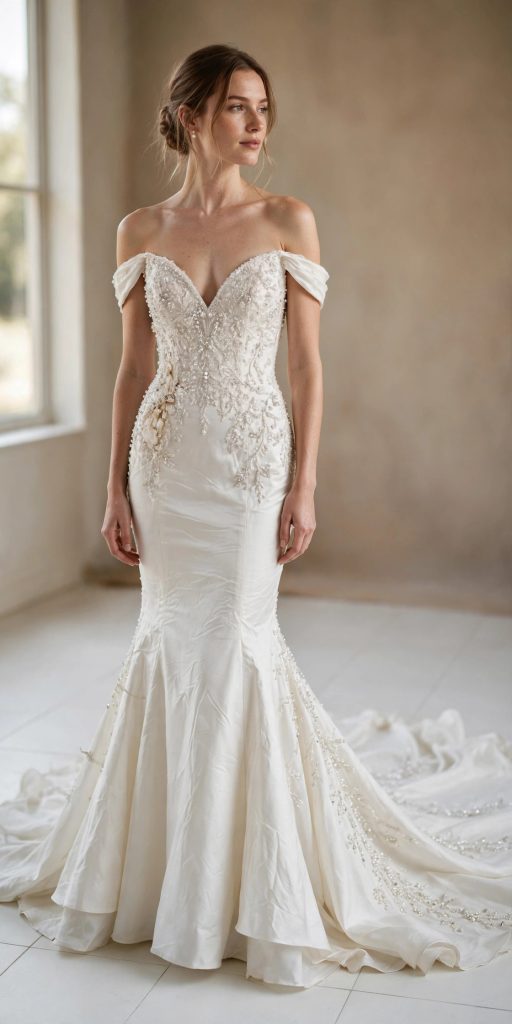
“The vessel left yesterday and the cartons got here this morning.” That was the Thursday call. Forty cartons of mermaid wedding dresses, beaded bodices, sitting in my warehouse while the sailing schedule moved on without them. The buyer had booked the vessel before the cartons arrived. The cartons arrived Thursday night.
Nothing sailed Friday.
She paid a week of storage and rebooked at the higher rate, and I have stopped being surprised by any of it. This is the part of the mermaid wedding dress trade nobody photographs. The mermaid wedding dresses get the pictures. The cartons get the math. And the math on a mermaid wedding dress is worse than the math on almost anything else in the building, for reasons that have nothing to do with the dress and everything to do with the box it ships in.
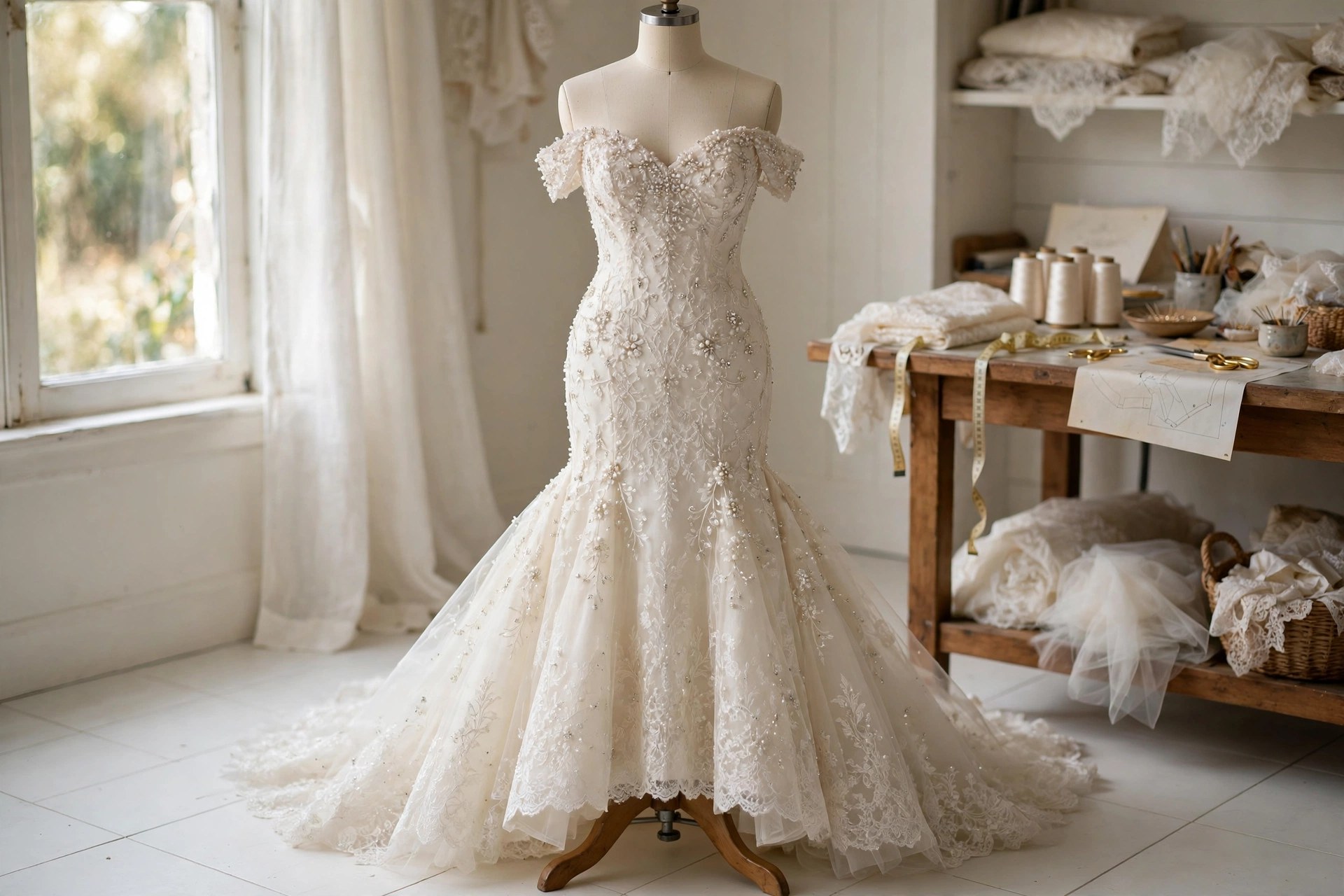
Why a mermaid wedding dress costs more to ship than an A-line
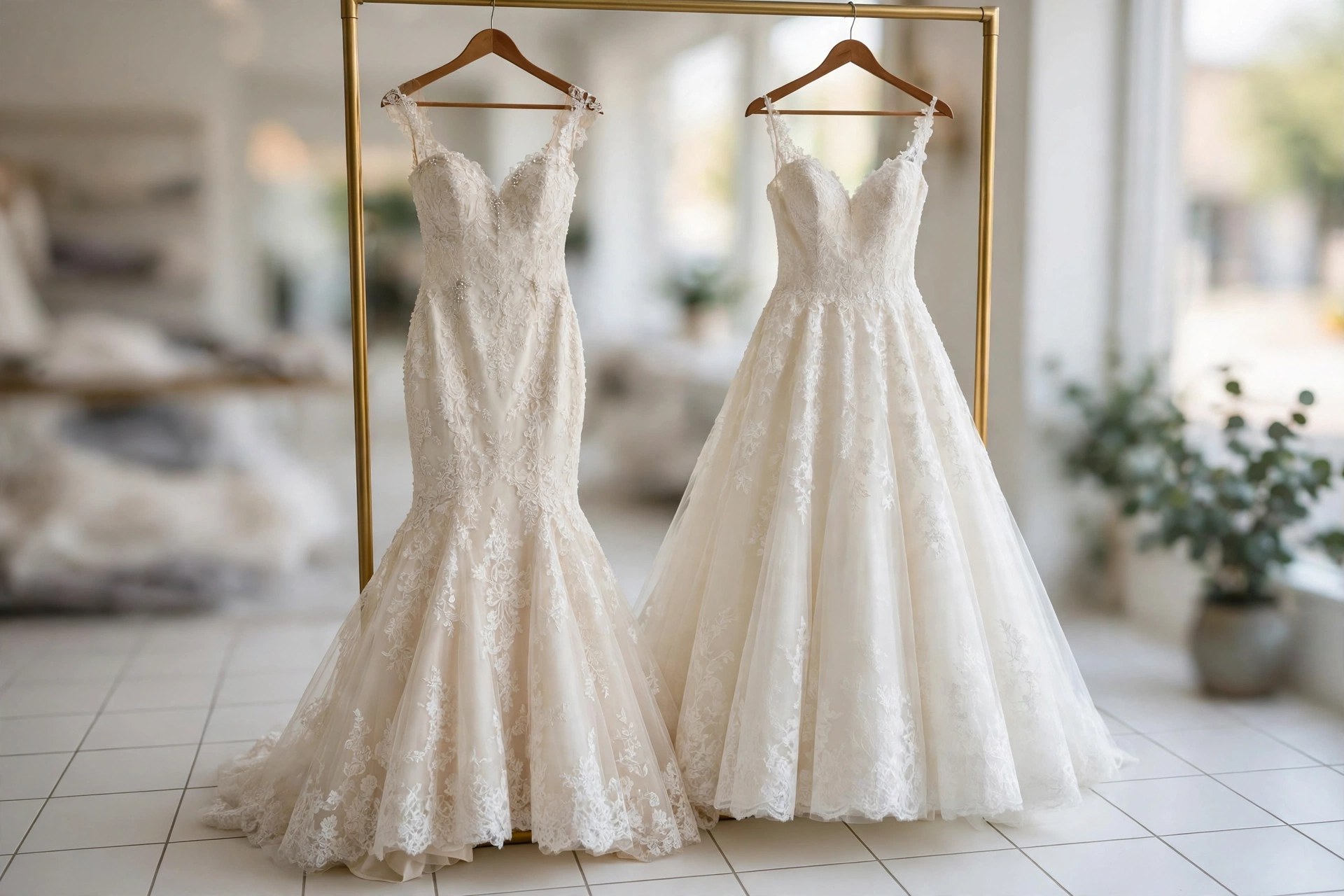
A mermaid wedding dress needs a carton roughly twenty centimeters taller than an A-line, because the skirt flares and you cannot fold that flare flat without crushing it. The consolidator at the port told me mermaid wedding dress cartons are the worst volumetric offenders in apparel, and he was not being poetic. Same two hundred pieces, same actual weight, and the air freight comes in about fifteen percent higher than the buyer budgeted. Every time. The buyer of a mermaid wedding dress budgets by weight. The airline charges by volume. The forwarder is the one who gets to deliver that news.
It gets worse before it gets better. The factory declares the cartons at actual weight on the booking and lets the forwarder discover the volumetric weight at the scale. A shipping clerk admitted this to me once, not proudly, just tiredly. By the time the scale ticket prints, the sailing is fixed. The buyer pays the difference or misses the vessel. There is no third option, and the quotation never mentioned volumetric weight in the first place, because quotations mention what closes the deal.
March makes all of it more expensive. March is peak bridal air freight season for mermaid wedding dresses, and the same lane at the same weight runs twenty to thirty percent higher than September. A buyer asked me once why her spring shipment cost more per kilo than her fall one, and I told her the calendar. Nobody puts the seasonal swing in the quotation. The industry report prints the average across all cargo, and bridal runs hotter than the average in February through April, because every summer wedding season needs its gowns on the water or in the air by spring.
| Mermaid | Fit-and-flare | A-line | |
|---|---|---|---|
| Where the fit is decided | Waist, hip and thigh | Waist and hip | Waist only |
| Beading zone on a typical order | Bodice and hip | Bodice, fading at the hip | Bodice only |
| Hand-beading time, relative | Highest | Middle | Lowest |
| Skirt support inside | Fitted lining, often a kick pleat or godet | Lining with flare panels | Crinoline or layered net on full styles |
| Packed shipping volume, relative | Middle | Lowest | Highest once the skirt is full |
Beads read as metal at the X-ray
Here is the thing I know that the buyer never will. Beaded bodices on a mermaid wedding dress get flagged at port X-ray at roughly three times the rate of plain satin gowns. Glass beads and sequins read as dense metallic objects on the scan. The machine cannot tell a bead from a bullet, so the carton goes to manual inspection, and manual inspection takes two to three days. In March and April, when every beaded ball gown on the coast is trying to make the same sailing, those two to three days are the difference between the season and the deadstock stall.
The trade press wrote about improved X-ray throughput last year. Throughput improved for standard cartons. Beaded and sequined garments still get pulled at the old rate, and the article did not mention product-type variance, because the article was about the machines, not about what goes through them. I read those pieces the way I read weather forecasts now. Accurate for the general area. Useless for my street.
Europe adds its own layer. EU-bound mermaid wedding dress shipments face REACH spot checks, and a hold means the whole container waits, not just the flagged cartons. US-bound mermaid wedding dresses rarely get held for this. EU-bound, about one in twelve in spring season. Then there is the valuation review. When the declared value per gown drops below roughly eighteen dollars on a beaded mermaid wedding dress, several EU ports trigger a review that takes five to eight working days, and the demurrage clock runs the entire time. The buyer saved money on the declaration. The buyer pays it back in demurrage, with interest.

The Wednesday booking window
Booking rates drop Wednesday afternoon. Carriers push to hit their weekly volume targets before Thursday cutoffs, and a Wednesday three-pm booking routinely comes in eight to twelve percent under Monday’s quote on the same lane. A carrier sales rep told me this off the record, years ago, and I have built half my mermaid wedding dress scheduling advice around it since. The buyers who book Monday pay for the privilege of being early. The mermaid wedding dress buyers who book Wednesday pay less and still make the same sailing, as long as the cartons are actually in the warehouse, which brings us back to the Thursday call that opened this whole thing.
Miss the cutoff and the arithmetic changes completely. I watched two mermaid wedding dress buyers compare freight quotes at a sourcing fair once, one twelve percent lower than the other. The cheaper one was LCL with a transshipment. The expensive one was direct. The buyer who took the cheap quote got her gowns eleven days later and missed two trunk shows. She saved twelve percent on freight and lost the season. The math that matters is never the freight math. It is the freight math plus the calendar math, and the calendar math is always bigger.
The surcharge structure punishes small mermaid wedding dress shippers hardest, and the trade press coverage left this out. When congestion surcharges hit last year, every article reported the per-container number. The surcharge applies per container, so LCL gown buyers split it across fewer cartons and feel it three to four times harder per unit than FCL shippers. The articles were not wrong. They were just written for people who ship full containers.
What “damaged in shipping” actually means
“The beads arrived crushed” is the complaint I hear most on off shoulder beaded mermaid wedding dresses, and it almost never traces to the factory. It traces to cartons stacked four high in the container. The factory packed fine. The loader stacked by carton size, not by contents, because the loader is paid by the container, not by the gown. The loaders stack what they are given, and nobody marks the cartons “do not stack,” and the booking never specifies stowage. The fault sits upstream of the hands. It always has.
Humidity does the quiet damage. Off shoulder beaded gowns stored above seventy percent humidity for more than two weeks come out with the bead thread loosening, and the warehouse never tells the forwarder. The forwarder finds out when the buyer opens the carton and finds beads in the bottom like sand. A warehouse supervisor told me this the way you confess something you have watched happen a dozen times. The gowns sat through a rainy fortnight. Nobody moved them. The beads paid for it.
Then there is the mixed consolidation. Gowns and shoes never share a consolidation well. Shoe cartons are dense and square, gown cartons are light and tall, and in a mixed load the gowns ride on top and take all the compression damage. The consolidator knows this. The buyer who asked for the mixed load to save money does not, until the off shoulder beaded bodices arrive with the beadwork pressed flat on one side. Air freight is for mistakes, somebody told me once. I think about that every time a buyer tries to save money by mixing cargo.
The gowns that never made the season
Three hundred mermaid wedding dresses do not fill a forty-foot container. They cube out at about sixty percent, because the cartons are tall and mostly air. A buyer asked me to “just put three hundred gowns in one container to save money,” and I told her she would be paying for air she did not use. FCL only starts making sense past five hundred pieces for gowns. No wait. Five hundred is the number everyone quotes for standard cartons. With the tall mermaid cartons, the real line is closer to six hundred, and I keep giving the five hundred number because it is the one I have said for years. Below the line, you are buying empty space at container rates, which is the most expensive air in logistics.
The deadstock stall at the market sells last season’s mermaid wedding dresses at forty percent of wholesale. The stall owner told me they came from a cancelled order. The buyer’s vessel got rolled twice, she missed her season window, and she walked away from the deposit. The gowns were fine. The timing killed them.
Timing is the whole business.
I see those stalls every year and I have stopped wondering about the gowns. I wonder about the phone calls. Somebody booked late, somebody’s cartons arrived Thursday, somebody did the math on storage versus rebooking and chose wrong.
Wooden pallets without the ISPM-15 stamp get the whole mermaid wedding dress container fumigated at the buyer’s port, billed to the consignee. I have seen it happen to two bridal consolidations in one month. And a missing certificate of origin does not just delay the container, it gets the container moved to the exam yard, where peak-season slots run four to six days out. The paperwork is boring until it is the only thing standing between the gowns and the season. Then it is the whole business.
Buyer questions with expensive answers
200 mermaid gowns, 40 cartons. The air freight came in 15% over the quote. What happened?
Volumetric weight happened. The quote was built on actual weight, and the airline billed on volume, because a mermaid wedding dress ships in a carton twenty centimeters taller than an A-line and the flare cannot be folded flat. Two hundred pieces at the scale ticket always costs more than two hundred pieces on the quotation. The fix is unglamorous: ask for the volumetric quote in writing before you book, and measure one packed carton yourself. Nobody does this the first time. Everybody does it the second time, after paying the difference once.
Beaded bodice held at customs for 3 days. Is that normal or is something wrong?
Normal, unfortunately. Beaded bodices get flagged at X-ray about three times as often as plain satin, because the beads read as dense objects on the scan. Manual inspection takes two to three days, longer in March and April. Nothing is wrong with your gowns. The beads are doing exactly what beads do on a scanner. Build the hold into the timeline or pay for it in missed dates.
300 gowns. LCL or FCL — where is the actual line?
At about five hundred pieces for gowns. Three hundred mermaid gowns cube out at roughly sixty percent of a forty-foot container, because the cartons are tall and mostly air, so FCL means paying container rates for empty space. Below the line, LCL is cheaper per unit even with the transshipment risk. The mistake I keep watching is buyers choosing by the per-kilo number alone. The per-kilo number does not include the eleven extra days, the extra handling, or the trunk shows you miss. I have stopped quoting LCL transit times without saying “plus or minus a week” out loud.
Booked Thursday, sailed the following Wednesday. The cutoff was Thursday. What happened?
The cartons missed the cutoff, or the vessel rolled, or both. Thursday cutoff means the container is sealed and documented Thursday, not that your cartons can arrive Thursday night and still make it. The forty-carton Thursday call I opened with is the classic version. The booking was real. The sailing was real. The cartons were not there, and carriers do not hold vessels for late cartons. The rebooking rate is never the old rate either. Your mermaid wedding dresses sit for a week, you pay storage, and the new sailing costs more. Cartons in the warehouse forty-eight hours before cutoff, or do not book the sailing.
Beads arrived crushed. Factory’s fault or forwarder’s?
Usually neither, which is the annoying answer. Crushed beadwork traces to stacking in the container — cartons four high, loaded by size — or to humidity loosening the thread in storage. The factory packed fine. The damage happened in the gap where nobody’s contract covers stowage. The summer strapless dresses with lighter beadwork survive the same stacking that kills a heavy mermaid bodice. Weight times height, not workmanship.
I have stopped explaining volumetric weight to new buyers. The explanation takes twenty minutes and the scale ticket takes twenty seconds, and the ticket always wins the argument. The cartons are what they are. The vessel leaves when it leaves. Everything else is paperwork, and the paperwork is never the part anyone wants to talk about until it is the only part that matters.