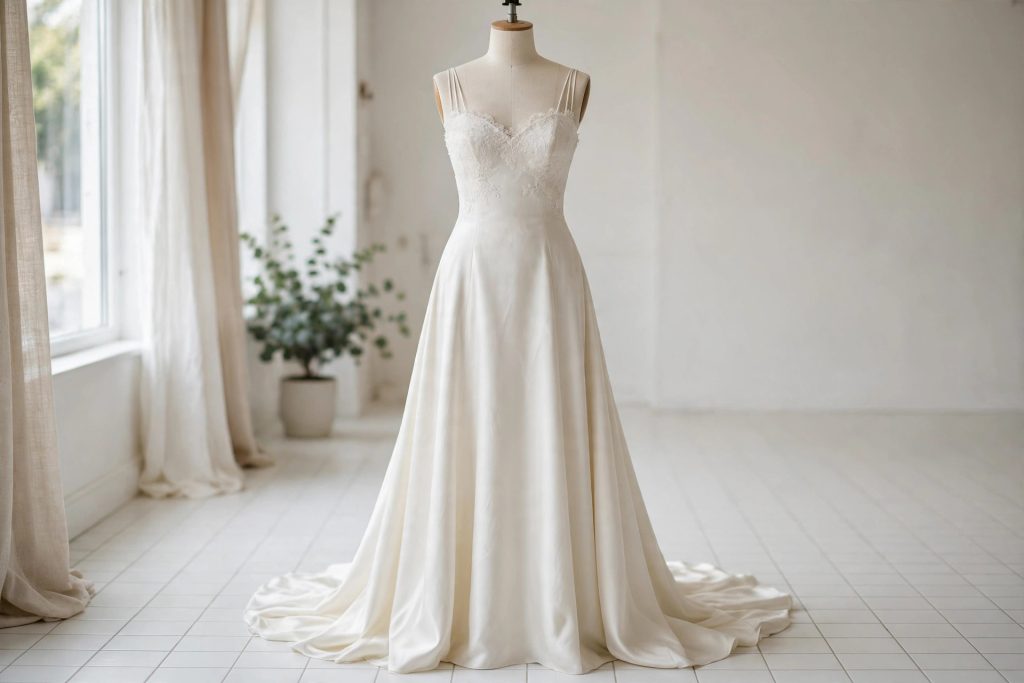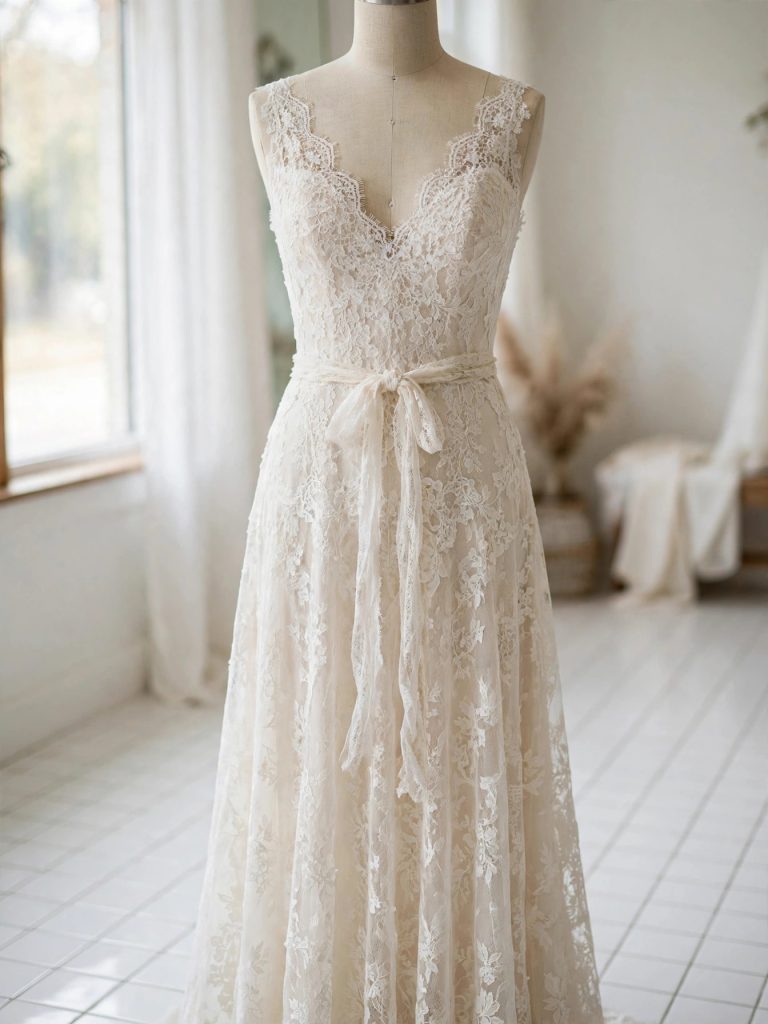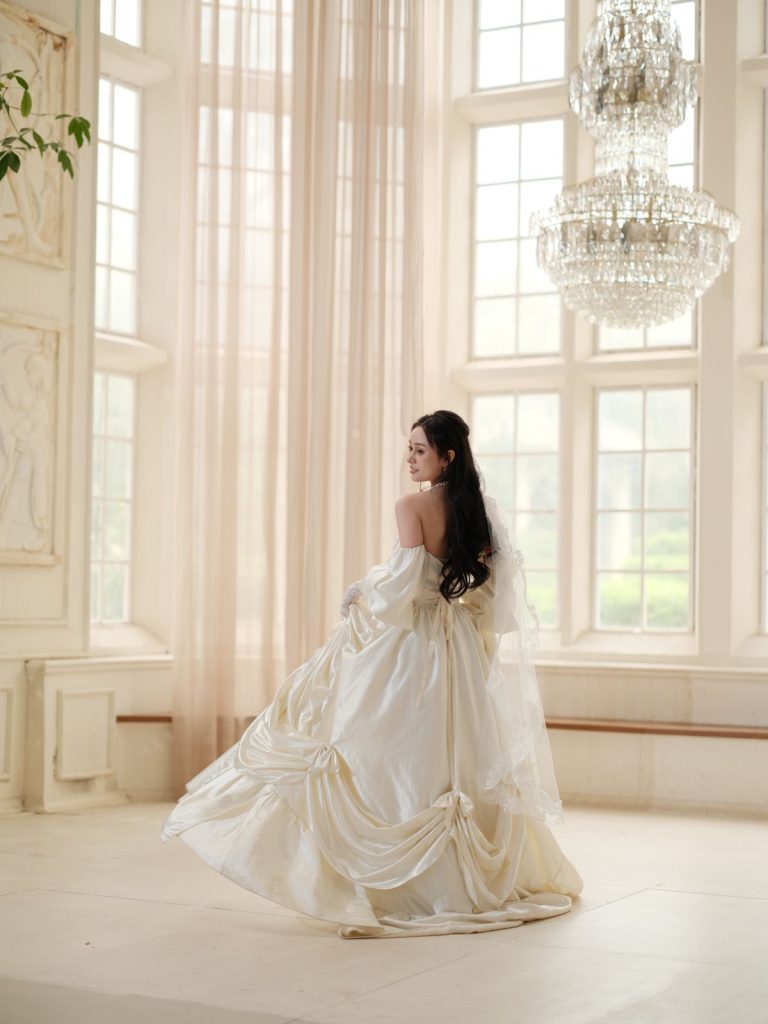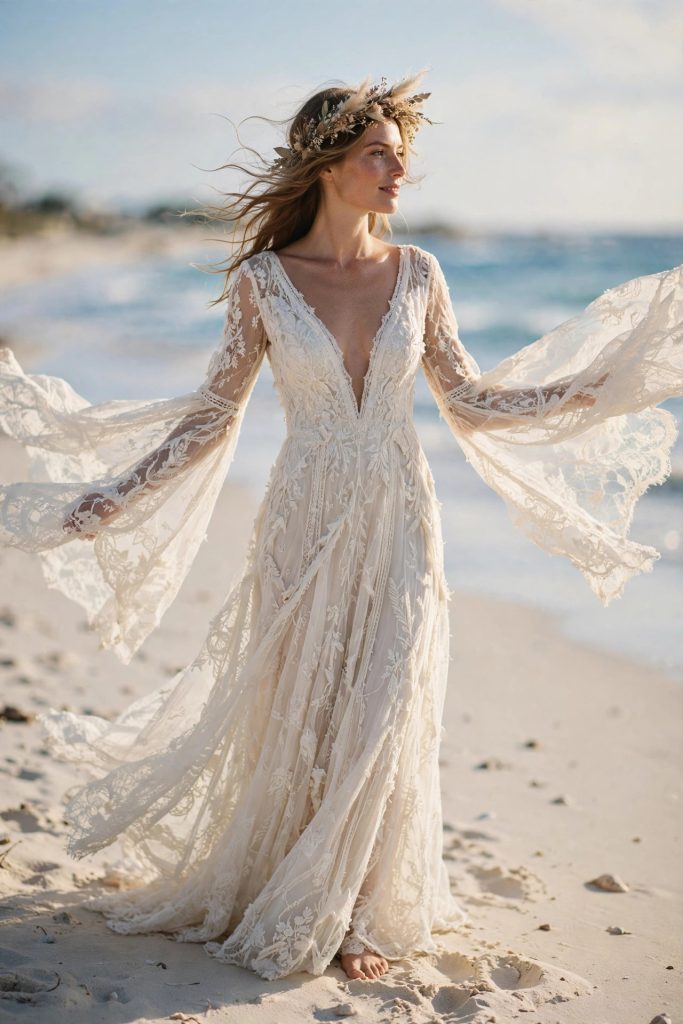
JENNA: They sent the wrong color. I’m looking at the bulk roll right now and it is not the ivory I approved.
MARA: They sent the color you approved. Which ivory did you order?
JENNA: Ivory. The card said ivory.
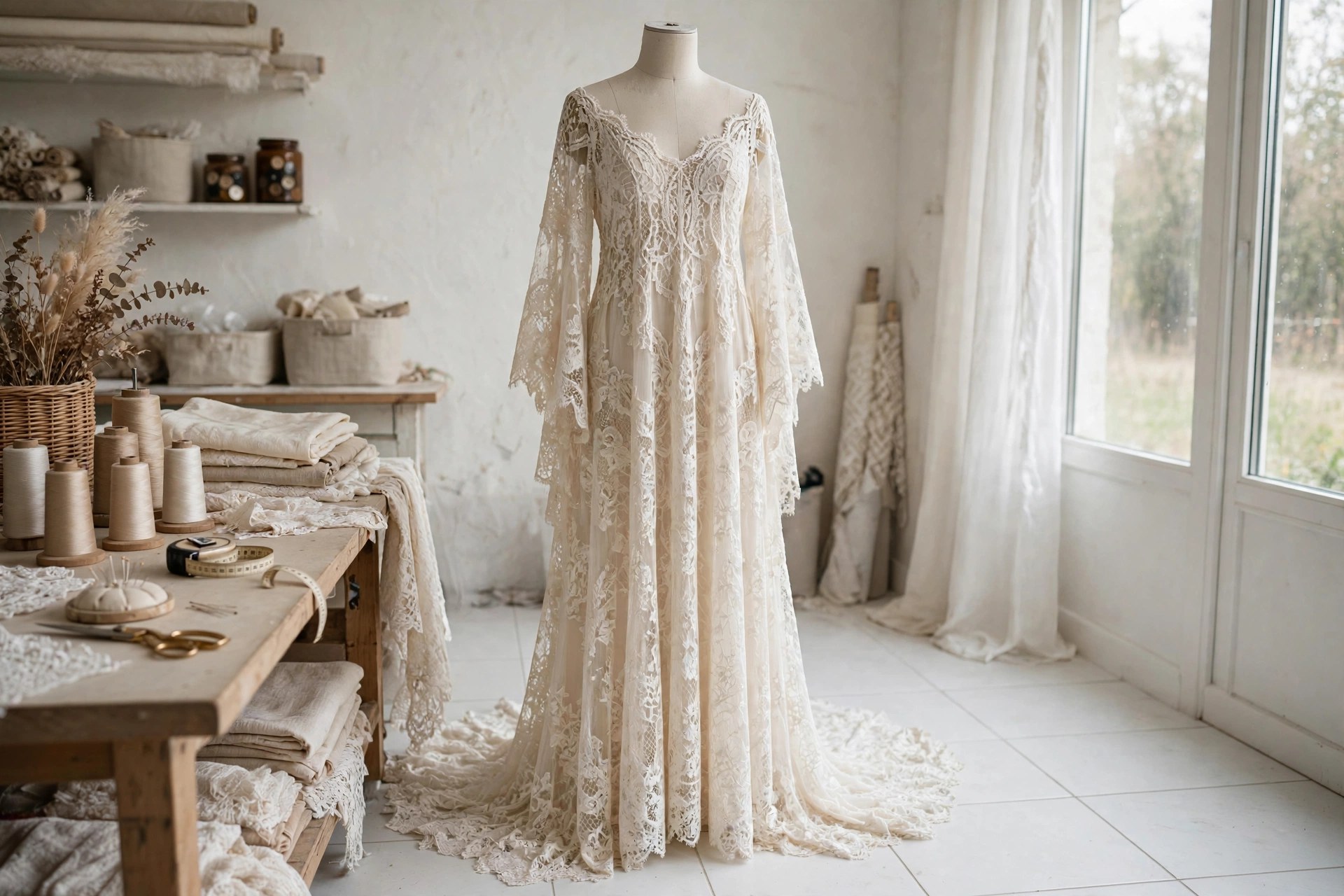
MARA: The card says twelve ivories. You approved number seven for the boho wedding dress under the fluorescents in your office. The roll on your table is number nine.
JENNA: Twelve?
MARA: Twelve. Under your office lights seven and nine were cousins. Under the boutique’s warm spots they’re strangers.
JENNA: Nobody told me there were twelve.
MARA: Nobody tells anyone. The card sits in a drawer and the buyer points at the prettiest square. Here’s the part that actually matters for a boho wedding dress: check the strike-off under 3000K spots, not daylight, not your office tubes. Daylight lies flatter than any boutique ever will. The bride tries it on under spots. You approve it under tubes. That’s the whole fight, right there.
JENNA: Fine. But the reorder didn’t match either. Same mill, same number, six months later. Visibly different.
MARA: Same mill, same formula, different Monday — for a lace wedding dress that reorders twice a year, that’s the whole game. The vats get calibrated after the first lot runs, not before — Monday morning’s lot goes through on Friday’s settings. The paper tolerance is five percent and the mill will show it to you without blinking. Under retail lighting that five reads as ten, easy. Dark colors show it worst. Ivory shows it just enough to start a fight.
JENNA: And the flowers don’t match the ground. The 3D flowers on the bodice are a half shade darker than the lace underneath. Same dress, same roll.
MARA: Same vat, even. The mesh ground and the corded flower drink dye differently — the flower takes more. Nobody tells the buyer because the buyer didn’t ask, and the dye house doesn’t volunteer problems. The buyers who get a match on a lace wedding dress are the ones who ask for the strike-off on the flower too, not just the ground. Most approve the ground for their beach wedding dress and act surprised in April.
JENNA: It’s a small order. Two hundred dresses. They told me small lots get extra care.
MARA: Small lots get the opposite of care. Under three hundred meters they don’t open a vat for your two hundred beach wedding dresses. Your ivory rides piggyback on whatever was already running — usually whatever ran before yours, and half the time that’s black. Your “custom ivory” is the rinse water of somebody’s black. Ask what ran before your lot. Their face will tell you the rest.
JENNA: The sample was vintage ivory. That’s what I asked them to match.
MARA: Vintage ivory isn’t a color. It’s a mood. Every mill has its own formula and none of them match each other, so your reorder for the lace wedding dress is a different vintage from a different mill’s imagination. There is no standard. The card doesn’t carry it. You need it twice, you buy it twice — same vat, same week — or you accept the drift.
JENNA: The lab dip matched. I approved the lab dip myself.
MARA: The lab dip is fifty milliliters in a beaker. The bulk is five hundred liters with a paddle going around. The beaker doesn’t have a Monday morning. Dips always match. It’s the bulk that has to survive the vat.
JENNA: My boss wanted champagne. The factory sent ivory. They both pointed at the same card.
MARA: They pointed at different numbers on the same card. Champagne is ivory with some yellow in it and nobody agrees on how much. I’ve watched that fight end with the buyer paying for a re-dye and the factory dyeing it straight back to the ivory it started as. Two vats for one dress and everybody out the money.
JENNA: I went to Keqiao last month. The stock lace was all “ivory” and none of it matched anything.
MARA: Six shades on the shelf, none of them on the card, and the stall owner tells you “close enough” with a straight face. Close enough is the market standard. It works until your bride holds the ivory lace next to the lining, which came from a different house in a different ivory. Two ivories, one seam on a boho wedding dress, and suddenly close enough isn’t.
JENNA: The V-neck lining shows at the edge. Different white again.
MARA: Lining’s from another house. Two houses, two ivories — the neckline is where the bride looks first and the mismatch lives. The lining needs the same dye house as the lace or you live with the edge. Nobody wants to hear that because it means one supplier instead of two, and two suppliers means a better quote. Enjoy the edge.
JENNA: The reviews are killing me. “Turned gray after one wash.” One wash.
MARA: Because it was never white. It was brightened. Optical brightener, not bleach — the brightener washes out in two, three washes, and what’s left is the actual fiber, gray-beige, always was. The mill sells you white. The washing machine sells you the truth about your lace wedding dress. A beach wedding dress shows it fastest because the sun finishes the job the washer started.
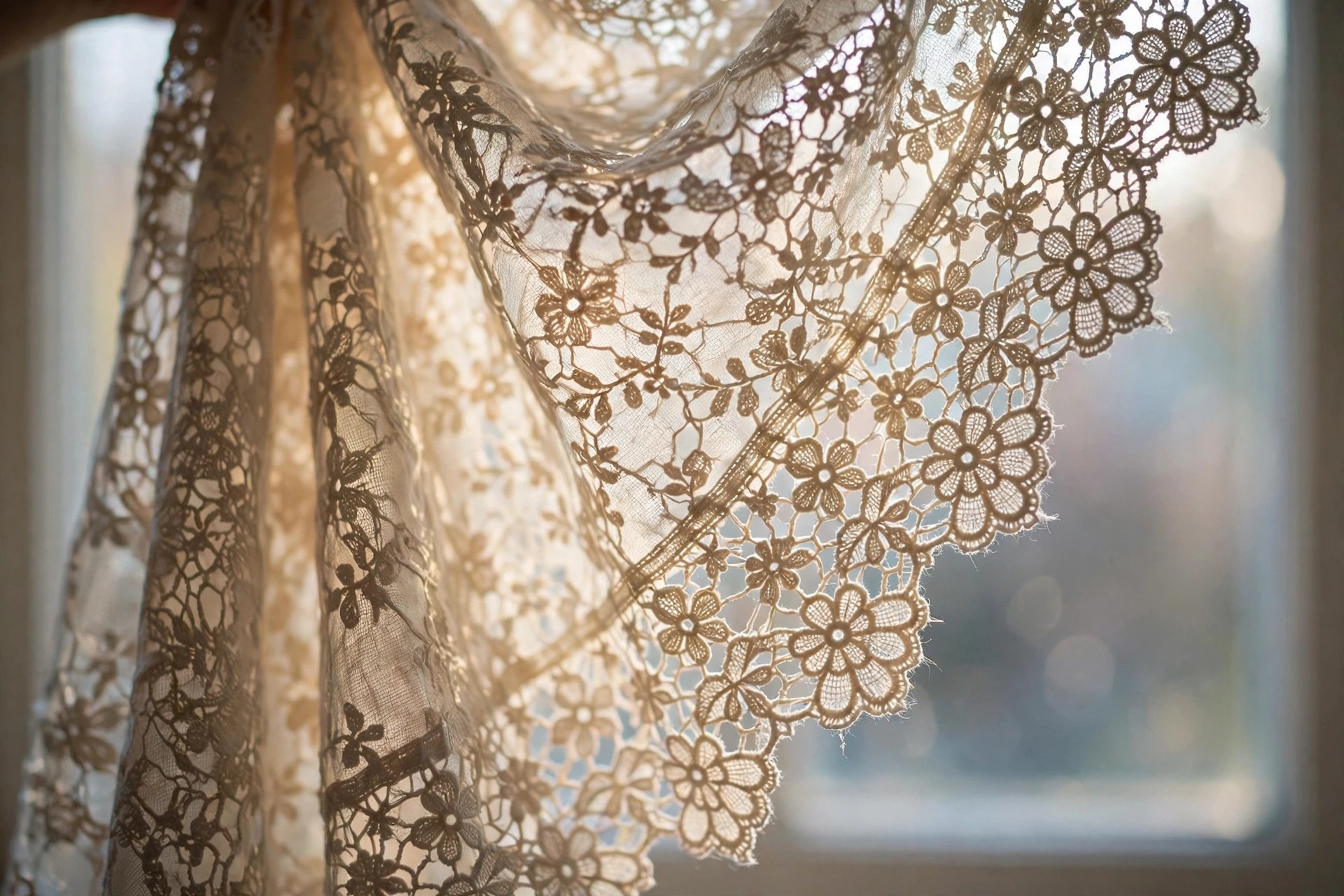
MARA: You know why they push you toward the light shades? Dark colors cost real money to dye clean now — wastewater rules. Nobody puts that on the quote. They just get very enthusiastic about your ivory lace and very quiet about the black.
JENNA: The same listing has “too white” and “too yellow” reviews. Same dress. How is that possible?
MARA: Lighting, not the dress. One bride photographed it under a ring light, one under warm bulbs. The lace didn’t change. The photons did. I watched navy do the same trick on those navy maxi dresses — photographs darker than it arrives, and the doorstep never matches the screen. Ivory just does it in reverse.
JENNA: I sent them a photo of the exact color I wanted. The exact one.
MARA: Shot under a ring light? The mill matched your photo. The bride opened the box under her bedroom LEDs and saw gray. A photo isn’t a standard. It’s a lighting setup with a lace wedding dress in it.
JENNA: You want the market numbers? Boho lace wedding dresses sit between eighty-nine and three-twenty, ratings bunched at four-point-oh to four-point-four. The one-stars lead with “color not as pictured” at twenty-two percent, then “turned gray” at fourteen. Nobody writes “differential dye uptake.” They write “yellowed” — that’s the customer word for it.
JENNA: I checked three DTC sites last night. Their “ivory” filters show four different shades.
MARA: Same word, four whites. Every brand photographs under different lights and calls it ivory. Your bride has already scrolled all four. She’s comparing your boho wedding dress to a memory of a screen, and the screen never had a standard either.
MARA: And nobody writes “the rinse was skipped” either. My steamer turned the sash pink last spring — the cert said colorfast to washing at forty degrees, and my steamer runs at one-fifty. Nobody tests steam. The certificate doesn’t mention it and the steamer doesn’t care. In the March rush they skip the rinse cycle to keep the vats turning, and it’s the unfixed dye that bleeds in May. Forget what I just said about the Monday vat. It wasn’t the vat. It was the rinse they skipped. I keep blaming the vat because the vat is the easy accusation. The rinse is the one nobody checks.
JENNA: So the cert is useless.
MARA: It’s good for exactly what it says. Washing. Steam, sun, salt air — that’s your problem, and the mill knows it. Your bride’s getting married on sand in a boho wedding dress, the ivory lace will be dingy by sunset, and she’ll blame the dress. The reviews all say “wore it once on the beach” like the beach was a surprise. It wasn’t.
JENNA: I don’t have a light lab. How do I check a strike-off?
MARA: The old hands held it to a window. You do it with a phone flashlight against a white wall, after dark — look through the lace, not at it. The window told the truth for fifty years. The flashlight is the window now.
JENNA: What do I put on the PO, then? Something real.
MARA: Strike-off on the ground and the flower, both, under spots. The buyers who ask what ran before their lot get straighter answers. The lining goes to the same house as the lace — two houses, two ivories, one visible seam. And stop ordering “vintage ivory” like it’s a standard. It isn’t. There’s no standard for it, so every reorder is a gamble.
JENNA: The bodice has beaded flowers too. Does the steam get those?
MARA: Same steam problem eats beadwork. I watched it take the finish off those beaded ball gowns — dyed beads bleed under the press, and the press is where every gown goes right before packing. I rub a damp white cloth hard on the beadwork before anything ships. Color on the cloth, color on the satin later. Nobody does the test on a boho wedding dress. Everybody pays for skipping it.
JENNA: My predecessor ordered “ivory” for three years and never complained. Same word on every PO.
MARA: Your predecessor ordered from one mill, one vat, every spring. Same water, same week, same everything. You split across two mills to save four percent. The four percent is the color.
JENNA: My boss says stick with the same mill. Says it’ll even out.
MARA: Mills change brightener suppliers without telling anyone. Same mill, same number, new brightener — your “same” is a different white. It never evens out. It just drifts slower. The appliqué formal dresses that hold their color are the ones where somebody asked these questions before the vat closed, not after the reviews came in.
JENNA: And if the mill says no to all of it?
MARA: Then you know what you’re buying, which is more than most buyers know. I don’t know if it changes your price. I left. You’re still there. The card’s still in the drawer.
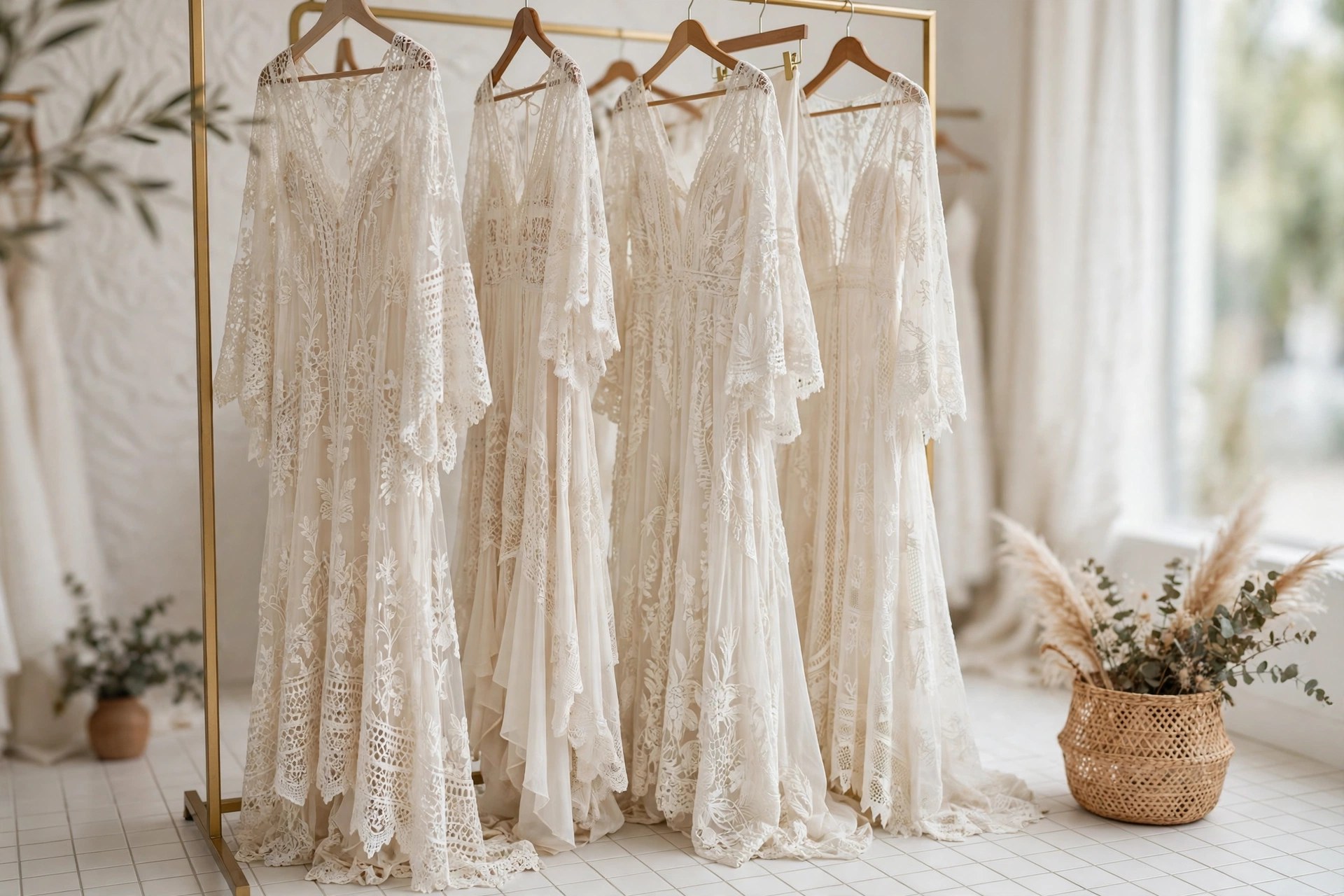
Boho lace wedding dress color questions, answered late
Ordered ivory, got yellow. Did the mill cheat me?
No. You approved ivory number seven under office fluorescents and the bulk shipped as number nine — the card carries twelve ivories and nobody told you. Under the boutique’s warm spots they’re strangers, and the bride tries the lace wedding dress on under spots. The mill didn’t cheat. The lighting did. I check strike-offs under 3000K now — learned that after three separate fights about it.
Same mill, same ivory number, reorder came back different six months later. Normal?
Normal, which is the worse answer. The vats get calibrated after the first lot runs, not before, so Monday’s lot goes through on old settings and the paper tolerance of five percent covers a multitude of sins. Then the brightener supplier changes without notice and your “same” is a different white entirely — same mill, same number, new chemistry. Reorders match when they’re cut from the same vat in the same week. Six months apart on a lace wedding dress, you’re buying a rumor of the original, and the mill will hand you the tolerance sheet like it settles the matter. I stopped expecting matches a long time ago.
Beach wedding in July. Will the lace survive the sun?
The certificate covers a forty-degree wash. It does not cover July sun, salt air, or your steamer at one-fifty — nobody tests any of that. The brightener washes out in two or three washes and the fiber underneath was always gray-beige. UV finishes what the washer starts, unevenly, so one panel fades faster than the next. “Wore it once on the beach” is the most honest review on the listing. The beach didn’t ruin the dress. The dress was never built for the beach.
JENNA: So what do I tell the bride, exactly?
MARA: Tell her ivory is a twelve-way argument and she picked a side. Or tell her nothing and let the spots do the talking. I don’t know which one costs you less.