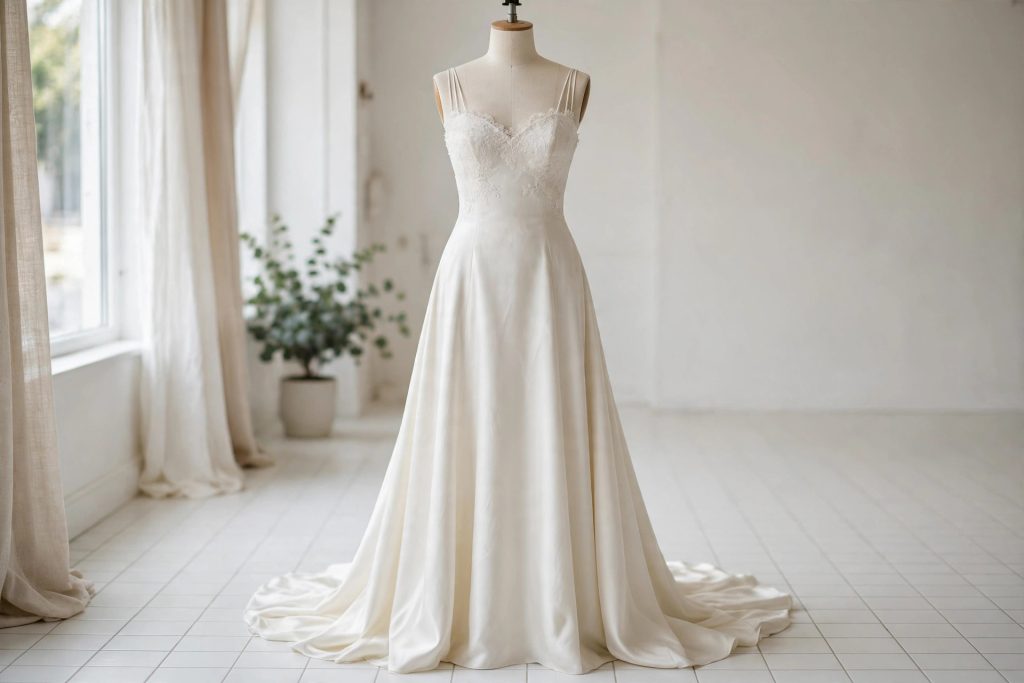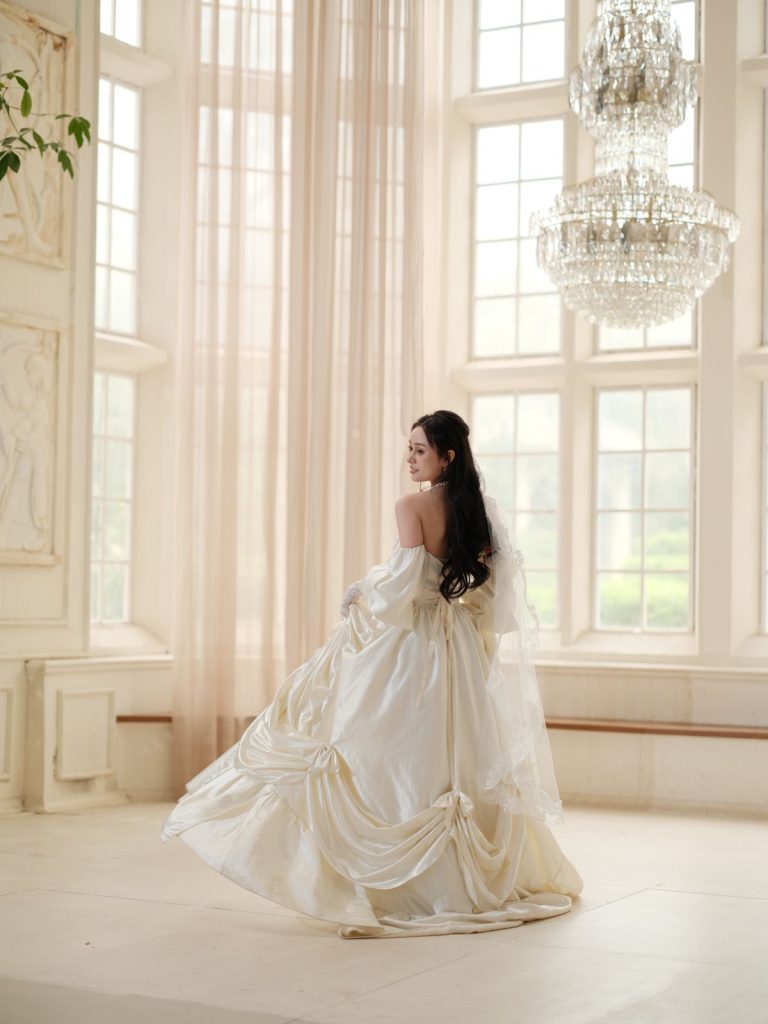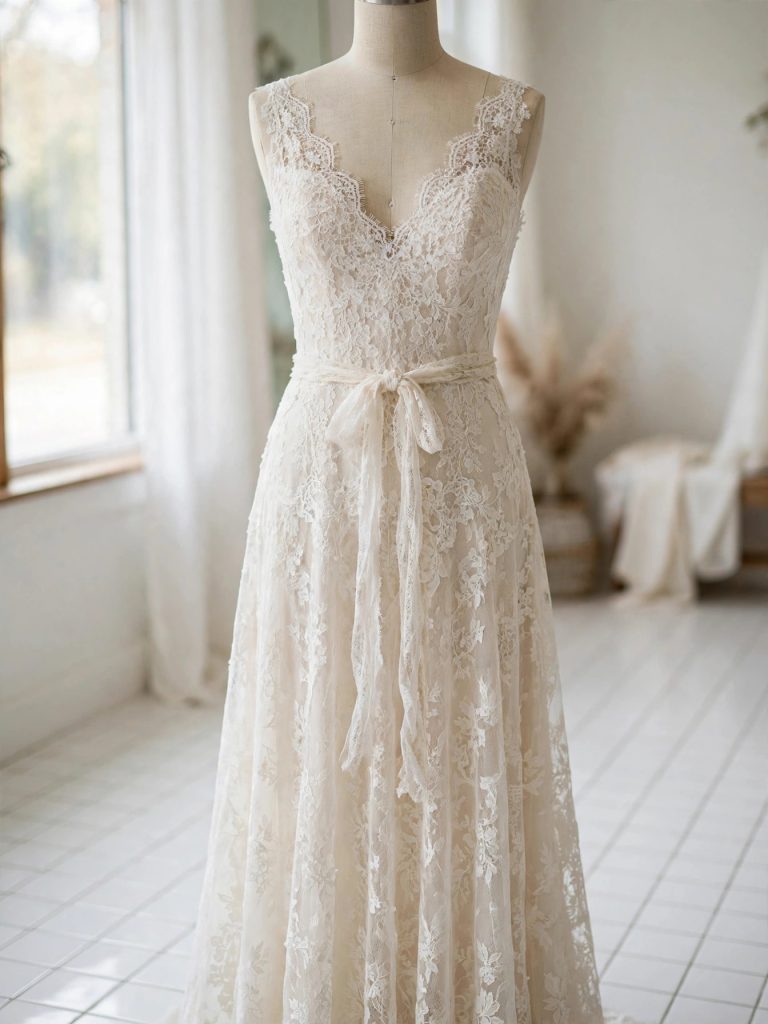
It started, the way these things usually start, with a bride standing in a fitting room saying the dress on the hanger was not the dress she had ordered. The dress was fine. The lace A-line she had approved on a screen, under the cool light of an office, had come home warm. Ivory lace does that. The same gown gets reviewed as too white by one buyer and too yellow by the next, and both of them are telling the truth about the light in their own rooms. I work the returns and customer service side of cross-border dress orders, and the lace A-line is the silhouette that generates the most confused mail I read — not the angriest, the most confused.
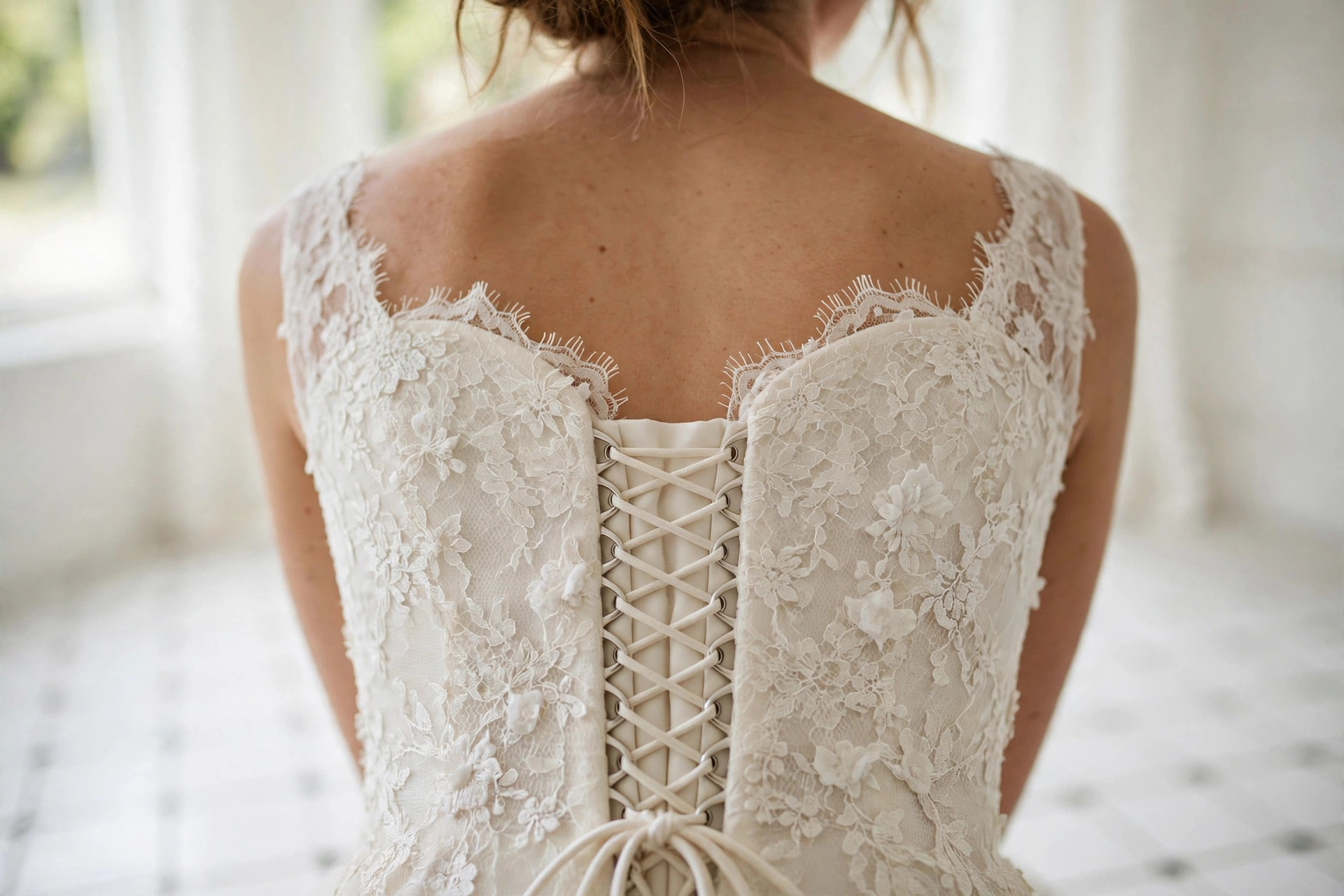
Small confusion first, then it piled up. A bride ordered her street size in a boned bodice and discovered what the returns data already knew: runs small in the bodice accounts for about 31% of sizing complaints on structured gowns, because a boned bodice does not stretch and bridal sizing sits one to two sizes away from street sizing. The explanation I repeat until I am sick of hearing myself say it is order one to two sizes up from your street size for anything with boning in it. Nobody believes it before the fitting. Everybody believes it after.
Then the January wave arrived, because it always arrives. Return volume spikes in the first two weeks of January after the New Year weddings, and again after June when the spring season clears out. Return rates on full gowns run 12 to 15%, and something like 44% of those returns give the same reason in different words: not as pictured. Not damaged. Not late. Not as pictured. The picture is the problem the lace A-line keeps having, and I have stopped being sure the picture is even fixable.
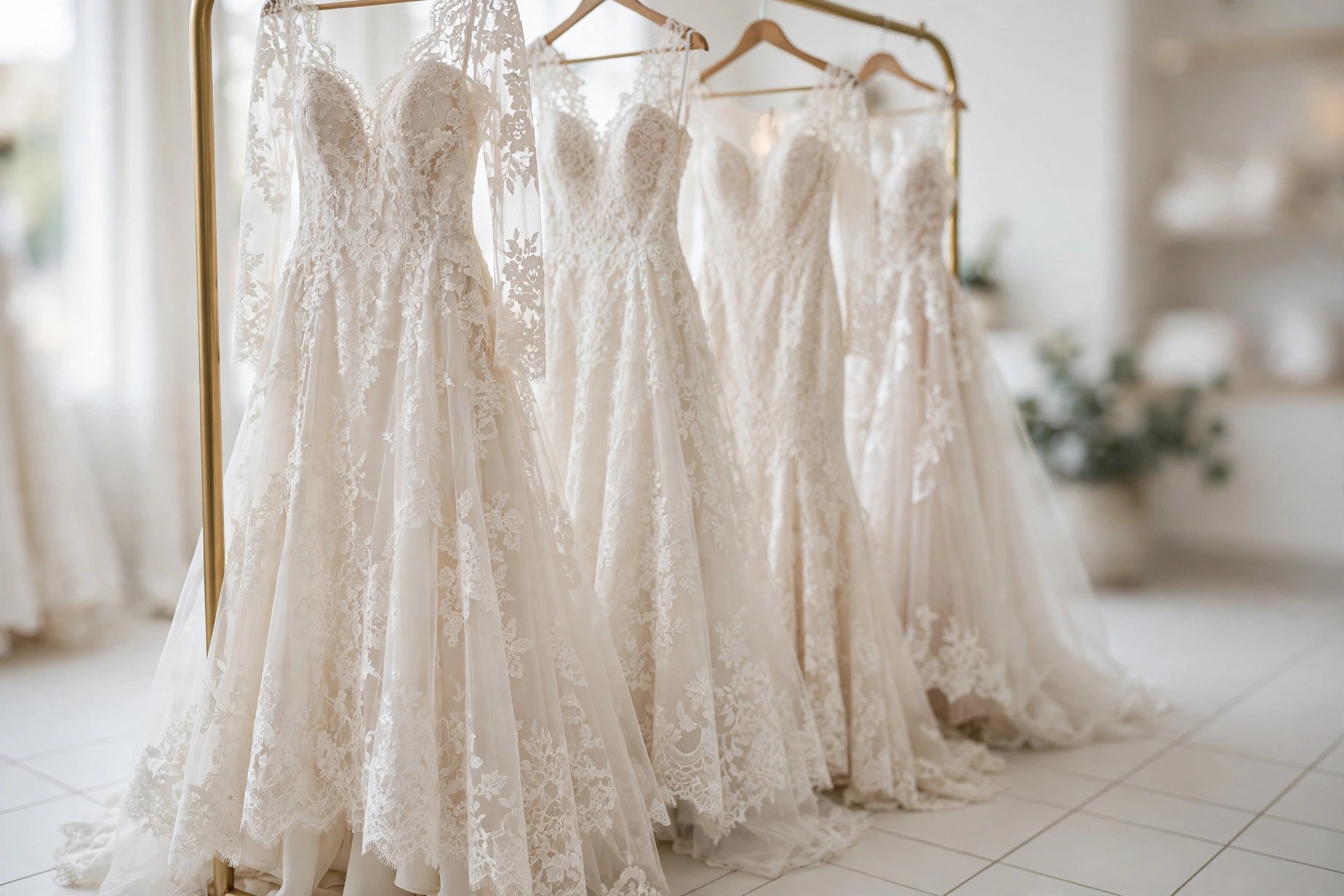
The gown was never the wrong color. The room was.
Ivory against white is its own complaint cluster on my desk. Ordered ivory, looks white. Looked white online, arrived cream. With lace the argument gets worse because lace sits over a lining, and the lining shade drags the whole dress warmer or cooler depending on what is under it. A bride holds the gown up in a hallway lit by a warm bulb and sees champagne. She holds it at a window and sees white. Both photographs she sends me are real. Neither of them is the dress the factory shipped, exactly, and both of them are.
Geography files its own version of the same complaint. European buyers report runs small at roughly twice the rate American buyers do for the identical gown, because the gap between European street sizing and American bridal sizing is wider than the gap American buyers already trip over. Same dress, same size chart, same factory. Two complaint rates. I used to think one side was exaggerating until I laid the two size systems next to each other and did the arithmetic I should have done in my first year.
At trade shows I watch boutique buyers do something no size chart can replace. They squeeze the bodice boning before they ask the price. A squeeze test, right there at the booth. Soft boning that gives a little reads as wearable; hard plastic that fights back reads as a return waiting to happen, and the buyer walks. They learned that from their own returns, the same way I learned the Monday pattern: the return code changed mind spikes the Monday after wedding expos, when brides who ordered impulsively at the show wake up next to a confirmation email. Customer service teams that know this staff up quietly for that Monday. The ones that do not find out why the queue is long.
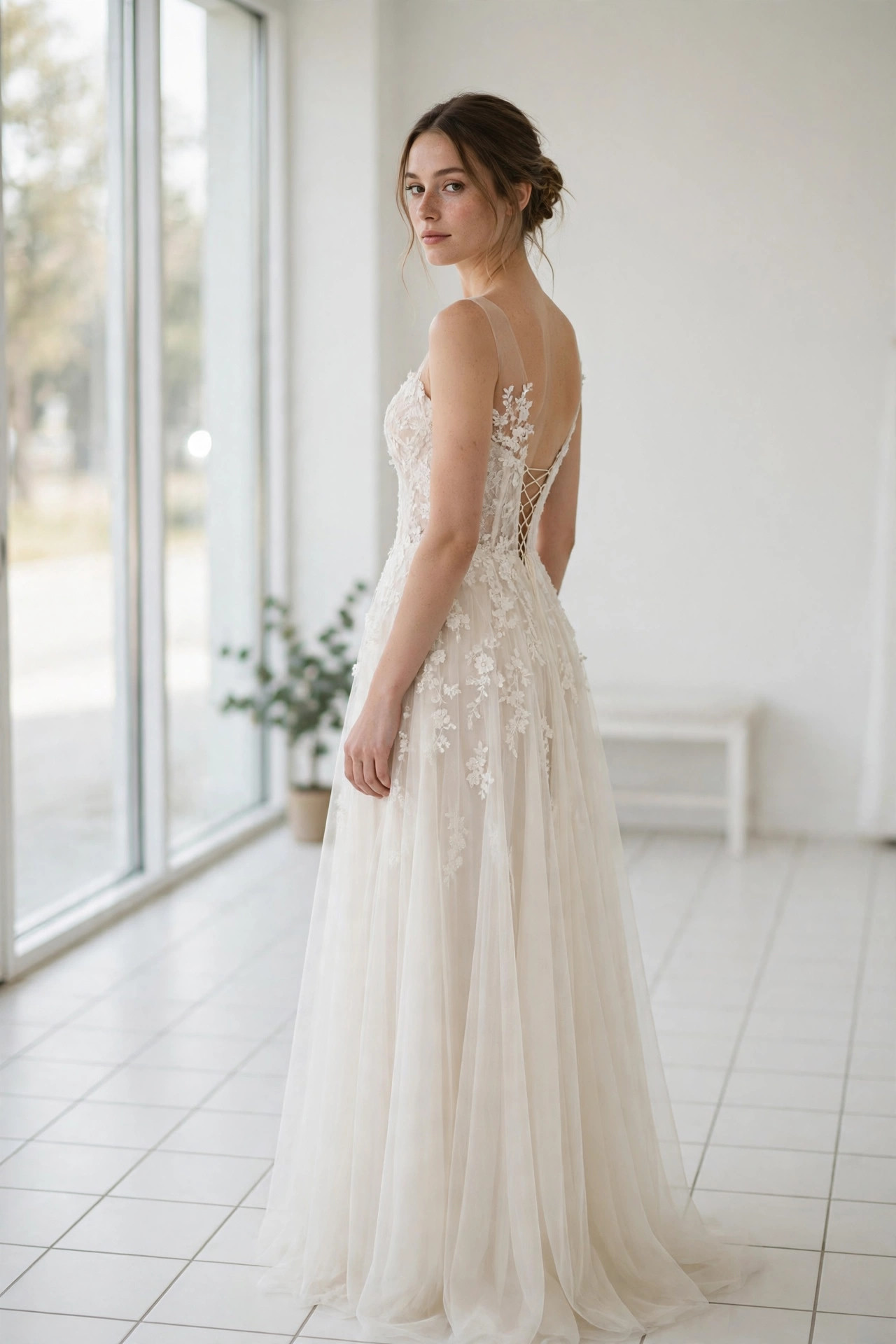
| A-line | Fit-and-flare | Ball gown | |
|---|---|---|---|
| Waist definition | Moderate, seam at natural waist | High, fit carries the shape | High, bodice carries the shape |
| Skirt volume | Medium | Low until the flare | Highest |
| Lace motif scale that reads well | Medium to large | Small to medium, placed | Large, spaced |
| Room for let-out at the seams | Yes, standard allowances | Limited at the hip | Yes, in the bodice |
| Packed volume per gown, relative | Medium | Lowest of the three | Highest of the three |
What the reviews say when the bride is done being polite
Review language predicts money better than star ratings do. A review that says the seller will not answer is the one I watch, because wording like that runs ahead of chargebacks at roughly three to one against any other complaint type. The bride who writes seller won’t answer has stopped asking for a dress and started asking her bank for the money, and by the time that review posts, the chargeback is usually already moving. Factories read reviews for quality signals. I read them as a weather report, and that phrase is thunder.
The cheap-formal end of the market writes the same report in blunter language. On the big fast-fashion platforms, different from picture leads the return reasons for formal gowns at around 40%, and satin gowns show the widest gap of all between video and the dress that comes out of the parcel. Lace is more forgiving on camera than satin — texture hides a multitude of lighting sins — which is one reason the lace A-line survives as a category while plainer gowns churn. Trade coverage this fall made a fuss about sleek satin and quiet luxury, clean lines and almost no embellishment, and none of it mentioned that the plain satin look is exactly the look that photographs best and disappoints most.
Weight is the complaint category reports never carry. A full gown runs four to seven kilos, and a bride wears it for ten hours. The support tickets that mention weight rarely use the word heavy. They say the bride sat down at the reception and did not get up to dance, or the straps were adjusted six times, or the dress came off before the cake. My pre-purchase inbox asks two questions more than any others on gowns like this — can she sit in it, can she dance in it, asked on roughly 40% of inquiries — and they are really the same question about whether the dress was designed for a photograph or for a day.
Trains collect their own small pile of regret. A cathedral-length train reviewed against a garden venue or a restaurant floor plan comes back as train too long for the venue, and historic venues with narrow doorways generate the could-not-fit-through-the-doorway complaints that sound like jokes until you read the third one in a week. None of these brides ordered the wrong dress on paper. The paper just never asked where the wedding was.
Then there is the bill nobody warned her about, which lands after the dress is already hers. Alteration cost complaints cluster hard in the $200 to $400 dress band — alterations cost more than the dress is a sentence I have read in reviews until it stopped sounding like an exaggeration. Hem, bustle and bodice work at a US tailor runs $300 to $500, and a bride who bought a lace A-line at the sharp end of the price range discovers that the fitting costs more than the gown did. She does not blame the tailor. She blames the listing, the factory, and eventually me, in that order, and the review she leaves mentions the dress, not the tape measure. When buyers ask me how a gown at that price can be real, I point them at the arithmetic of finding a reliable wedding dress manufacturer and at the tailor’s invoice they have not received yet. The dress was the cheap part. The dress was always the cheap part.
No, I am misremembering one thing. I said earlier the lace A-line generates the most confused mail I read. Ball gowns generate more mail in total — the heavy, structured end of the rack always does — but the confusion crown still belongs to lace, because a ball gown buyer usually knows exactly what she is angry about and a lace buyer is holding two photographs of the same dress, in two lights, asking me which one is real. The honest answer is both. It is not a satisfying answer. I send it anyway, most weeks, and then July and August arrive and the post-wedding question takes over the inbox: what do I do with it now, preservation, storage, a dress that took months of emails and gets one day and then a box.
Questions buyers actually ask out loud
I ordered my normal size 8 and the bodice will not close. Is the dress made wrong?
The dress is most likely made to bridal sizing, which sits one to two sizes away from street sizing, and a boned bodice has no stretch to forgive the difference. Runs small in the bodice is about 31% of the sizing complaints I see on structured gowns, and it is nearly always this gap rather than a cutting error. European buyers hit it harder, filing the same complaint at about twice the American rate on the identical dress. If the zip stops a size short, that is the sizing system talking, usually, though I would still rather see a photo of the size label before I say it flat.
The lace looked white on the listing and cream in my hallway. Which color is it, honestly?
Honestly it is probably ivory, and ivory is the shade that changes its mind with the light more than any other color on the rack. Buyers approve lace under office fluorescents and then see it turn warm under boutique spots or a hallway bulb, and the same listing collects too white and too yellow reviews from people holding the same gown. Hold it against a white wall in daylight and look at it next to something you know is pure white. If it reads soft beside it, that is ivory doing what ivory does, not a factory sending the wrong dress.
Forty-four percent come back as not as pictured. Is anyone actually checking the photos?
That figure is the return pattern on full gowns, where about 44% of returns cite the picture gap in one wording or another, and the gap is mostly light and texture rather than a different dress being shipped. Lace photographs closer to reality than plain satin does, because texture breaks up the lighting. Satin on video is the worst offender I deal with. The checks that exist happen at the factory end, on color and construction. Nobody at any end of this chain has a check for your hallway lighting, which is the unglamorous truth of it.
The wedding is over and the dress is in a box. Why does everyone ask about storage in July?
Because July and August are when the post-wedding questions land, every year, once the spring and early summer weddings are done and the dress has nowhere left to be. Preservation and storage spikes are as predictable as the January return wave after New Year weddings. A lace gown wants to be clean before it is boxed, since lace holds onto a day of wear in ways satin does not, and it wants to lie flatter than a narrow hanger will let it. I answer some version of this most summer weeks and it still feels odd, giving closet advice in a job that started with size charts.
Last week a bride sent me the two photographs again — hallway cream, window white — and asked me to pick which one her guests would see. I told her the guests would see a third version, under reception lighting, next to flowers and skin and candlelight, and that every bride in every one of those complaint threads was photographed beautifully anyway. She has not replied. I do not know if that means she kept the dress. On my side of the screen, silence after that email usually means the fitting room won, and I would rather believe that than check.