Finding a reliable wedding dress manufacturer comes down to a simple, disciplined process: shortlist three to five factories, verify each one with a license check and a factory audit, approve a physical sample, and only then place a trial order. Buyers who follow this sequence rarely get burned; buyers who skip straight to the cheapest quote often do. This guide walks you through exactly where to look, what to check, and which red flags mean you should walk away.
Where Should I Look for Wedding Dress Manufacturers?
The fastest answer: use three proven channels together — B2B marketplaces, bridal trade shows, and industry referrals — because each one covers the others’ blind spots.
B2B marketplaces (such as Alibaba and Made-in-China) give you the widest net. You can filter by product category, location, and transaction history, and verified-supplier badges add a first layer of trust. The downside is noise: trading companies often pose as factories, so a marketplace listing is a starting point, never proof.
Bridal trade shows — events like the China Wedding Expo or regional bridal fairs — let you touch fabrics, inspect stitching, and read the people behind the company in one afternoon. If you are serious about a long-term supply relationship, meeting face to face is worth the trip.
Industry referrals are the most underused channel. Ask boutique owners, fabric suppliers, or freight forwarders who they actually work with. A factory that keeps existing clients happy for years is usually a safer bet than one with the flashiest website.
Whichever channel you start with, treat every candidate the same way: as unverified until it passes the checks below.
How Do I Vet a Wedding Dress Manufacturer Before Trusting Them?
Verify before you trust. Run these six checks on every candidate, and only move forward with factories that pass all of them.
1. Check the business license and export history. A legitimate Chinese manufacturer holds a valid business license you can verify through the National Enterprise Credit Information Publicity System. Ask for export references too — a factory that has shipped to the US, EU, or Australia understands Western sizing, labeling, and compliance expectations. For a deeper read on what real bridal-grade fabrics should look and feel like, see our guide to what fabrics wedding dresses are made of.
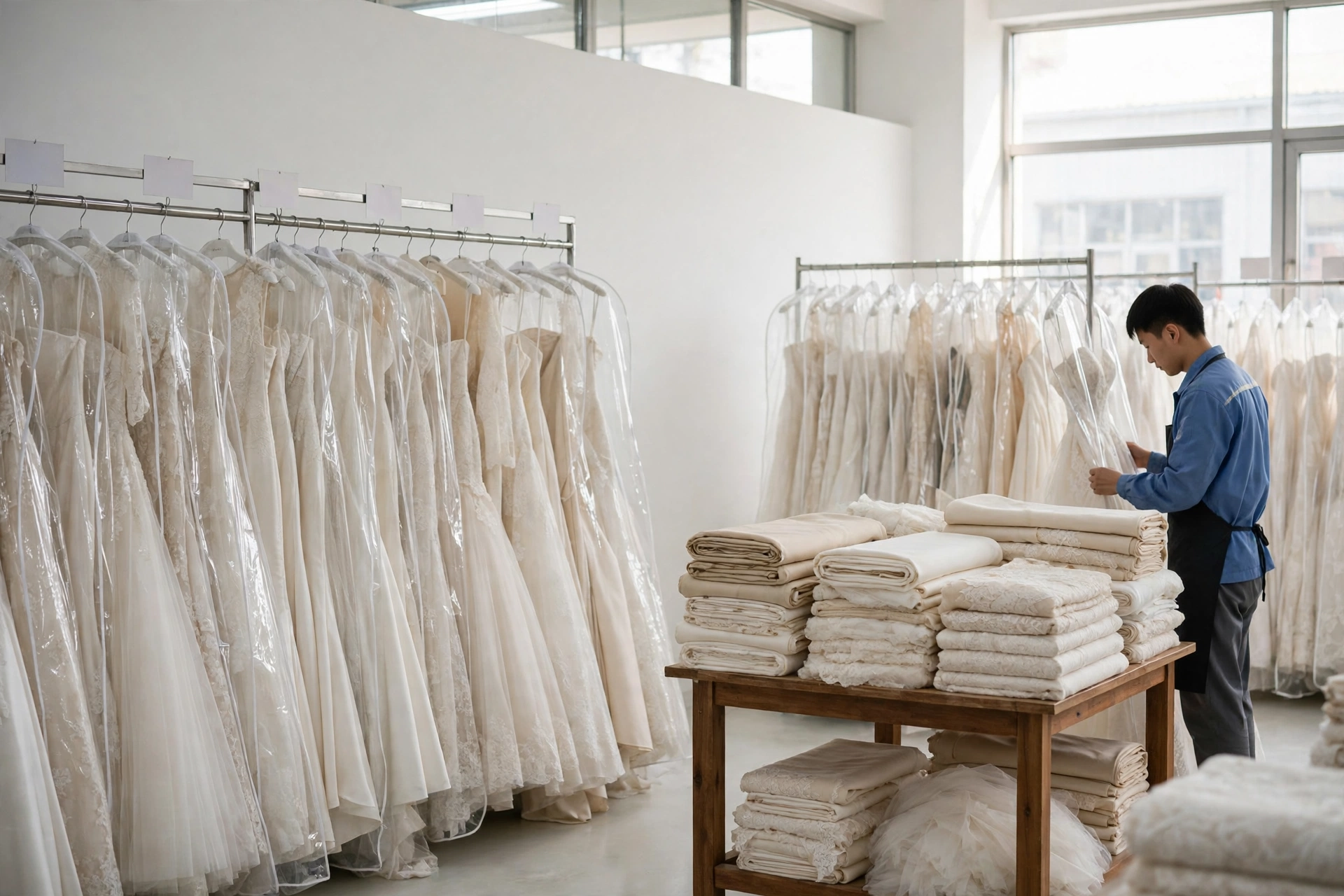
2. Audit the factory — in person or on live video. Nothing replaces seeing the workshop. If you cannot travel, request a live video walkthrough: cutting tables, sewing lines, hand-beading stations, and the QC area. A real factory shows you everything; a trading company or a one-room workshop will make excuses.
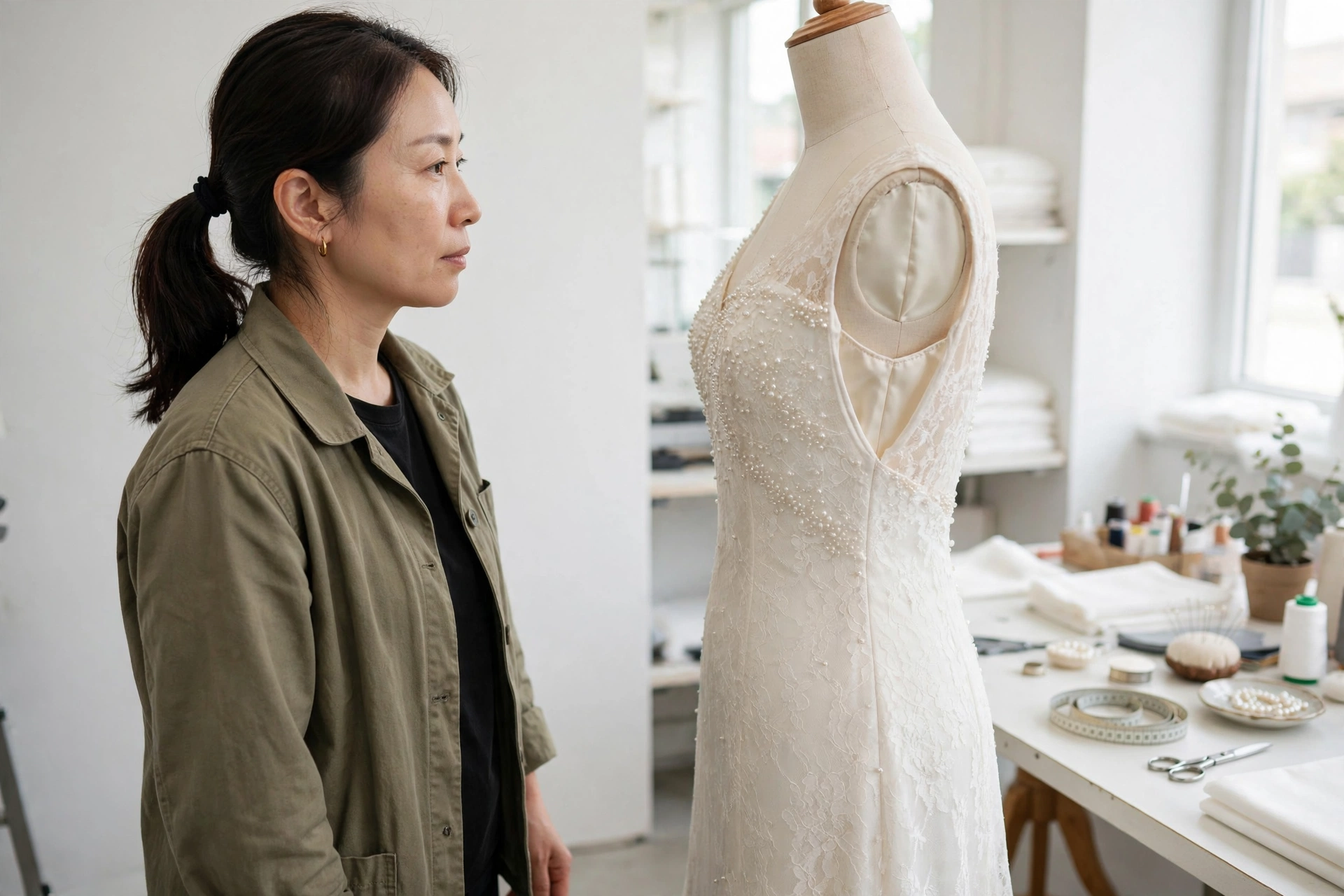
3. Evaluate a physical sample. Photos lie; garments do not. Order a sample in a style close to what you plan to buy and inspect stitch density, seam strength, lace appliqué adhesion, zipper quality, and lining finish. The sample also reveals how the factory communicates during development — slow, vague replies now mean worse later.
4. Confirm MOQ and lead time fit your business. Many bridal factories quote 50–500 pieces per style for custom orders. If that is more than you can move, look for factories with low-minimum programs — OEMOD Factory, for example, starts wholesale at 10 pieces per style on existing catalog designs. On timing, expect roughly 4–8 weeks from tech pack to sealed sample and 8–12 weeks for bulk production, plus shipping.
5. Test communication quality. You need an English-speaking contact who answers within one business day and confirms details in writing. Misunderstood measurements or fabric substitutions are the number-one cause of bulk-order disputes, and clear written confirmation prevents most of them.
6. Ask for client references. Request two or three existing buyers you can contact. Ask them about defect rates, on-time delivery, and how the factory handled problems. A manufacturer confident in its work will share references without hesitation.
What Are the Red Flags of an Unreliable Wedding Dress Supplier?
Walk away when you see any of these: the supplier cannot produce a verifiable business license, refuses a live video factory tour, demands 100% payment upfront, quotes a price far below every competitor (corners will be cut somewhere — usually fabric or labor), or will not send a physical sample before bulk production. Also beware of “factories” whose only address is a residential building and whose catalog photos are all stolen from designer brands — both are signs of a trading middleman with no production control. Trust the pattern, not the promises: one red flag is a warning, two is a verdict.
Should I Always Place a Sample Order Before Committing?
Yes — never place a bulk wedding dress order without approving a physical sample first. The sample is your contract in garment form: it locks in fabric, construction, measurements, and finish quality before money and months are committed. Budget for one to two rounds of revisions, and treat the sealed (approved) sample as the quality benchmark your QC inspection will be measured against. Our detailed breakdown of how long wedding dress sampling takes shows where every week goes, and our bulk order quality control guide explains how to inspect against that benchmark when goods are ready.
OEM vs ODM: Which Manufacturing Model Fits My Business?
Choose OEM if you have your own designs and want the factory to produce exactly to your tech packs; choose ODM if you want to launch faster by selecting from the factory’s existing designs and selling them under your label. OEM gives you exclusivity and brand differentiation but requires patterns, grading, and longer development. ODM gets you to market in weeks with lower MOQs, though the same designs may be available to other buyers. Many bridal boutiques start with ODM to test the market, then move winning styles into OEM for exclusivity. The full step-by-step flow is covered in our custom wedding dress manufacturing process guide, and if a factory quote confuses you, our guide to reading factory quotations decodes every line item.
Frequently Asked Questions
What is the typical MOQ for wholesale wedding dresses?
Most bridal factories quote 50–500 pieces per style for fully custom orders, because fabric mills have their own minimums and line setup costs the same for 10 gowns or 100. Factories with low-minimum programs go lower — OEMOD Factory starts at 10 pieces per style on existing catalog designs, which suits boutiques testing new styles.
How long does bulk wedding dress production take?
Plan on 4–8 weeks from tech pack to approved sample, then 8–12 weeks for bulk production, plus 3–5 weeks for ocean freight (about one week by air). Add a buffer of 2–4 weeks for revisions and delays, and work backward from your selling season.
Can I visit the factory before placing an order?
Yes, and you should if the order is large. Reputable manufacturers welcome buyer visits. If travel is not possible, a live video walkthrough of the cutting, sewing, beading, and QC areas is the next best thing — and any factory that refuses one is telling you something.
What payment terms are standard with wedding dress manufacturers?
A common industry structure is 30% deposit to start production with the 70% balance paid before shipment (or against bill of lading copy). Be cautious of suppliers demanding 100% upfront, and use traceable payment methods — wire transfer or trade assurance — never informal channels.
How can I verify a Chinese wedding dress manufacturer is legitimate?
Check their business license on the National Enterprise Credit Information Publicity System, request a live video factory tour, order a physical sample, and ask for two or three client references. A legitimate factory passes all four checks comfortably; a middleman or scam operation will stall on at least one.
What is the difference between a wedding dress manufacturer and a wholesaler?
A manufacturer produces the gowns — cutting, sewing, and finishing in its own facility — and usually offers OEM/ODM customization. A wholesaler resells finished dresses made by someone else, with less control over quality and little to no customization. If you need your own designs, private labeling, or consistent quality control, work directly with a manufacturer.
OEMOD Factory is a Guangzhou-based wedding dress and women’s apparel manufacturer offering wholesale and private-label production for bridal boutiques and retailers worldwide. Browse the wholesale wedding dress catalog or contact us for a quote on your designs.