Short answer: most wedding gowns are built from a small set of core wedding dress fabrics — satin, mikado, crepe, chiffon, tulle, organza, and lace — each chosen for a specific balance of structure, drape, and price.
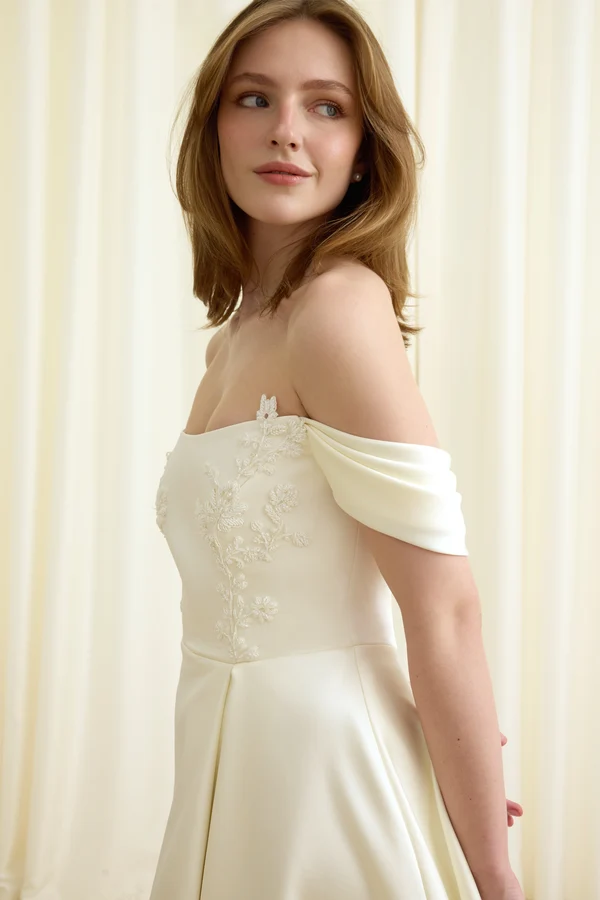
If you buy wholesale for a bridal boutique, fabric is not a styling detail — it is the single biggest driver of your landed cost, your alteration workload, and how a gown photographs. A satin ball gown and a crepe sheath can carry the same wholesale price on paper and behave like completely different products once they reach your fitting room. This guide walks through the main wedding dress fabrics from a factory-floor perspective: what each one is, what it costs relative to the others, how it affects your MOQ and lead time, and how to judge quality when a sample lands on your desk.
Satin and Mikado: The Structured Classics
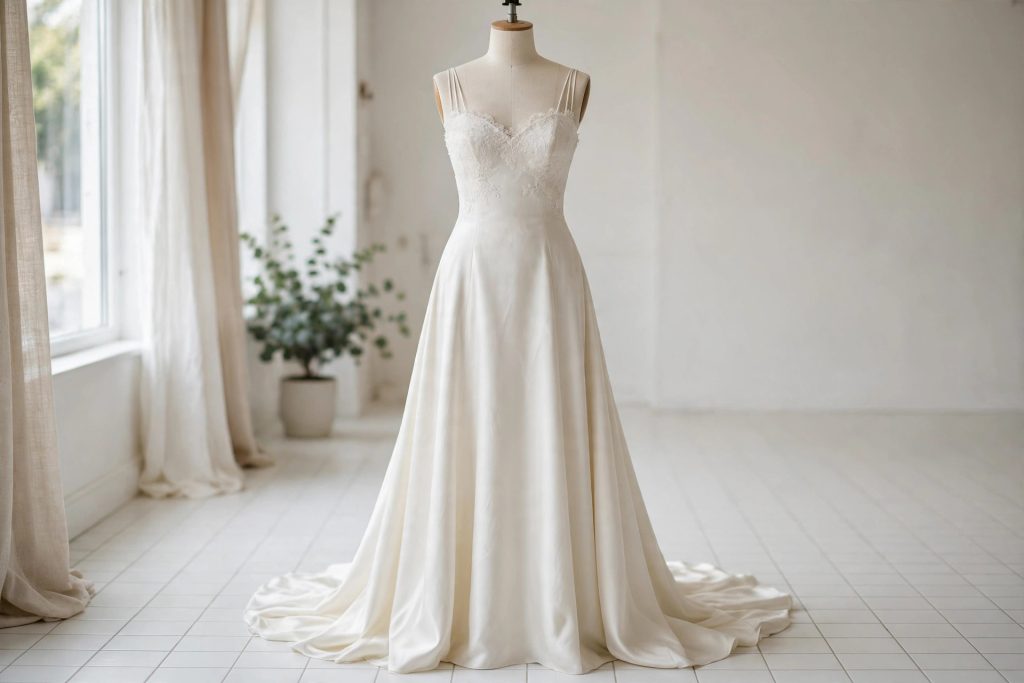
Short answer: satin and mikado are the go-to wedding dress fabrics when you want clean structure, a smooth finish, and a gown that holds its shape on the hanger — which is exactly why they dominate boutique bestseller racks.
Satin
Short answer: satin is a weave, not a fiber — most bridal satin today is polyester, with silk satin sitting several price tiers above it.
Bridal satin has a glossy face and a dull back, with enough body to support A-line and ball gown silhouettes without heavy petticoats. Duchess satin is the heavier, matte-lustered workhorse you see in formal gowns; lighter charmeuse-style satins drape more softly and are common in slip-style dresses. For boutique buyers, the practical point is fiber content: polyester satin is color-consistent, wrinkle-resistant, and easy to re-order in matching dye lots, while silk satin has a richer hand-feel but varies more between batches and demands more careful storage. When sampling, check the satin under daylight — not just showroom spots — because sheen differences between panels are the most common factory defect, and they only show up in natural light.
Mikado
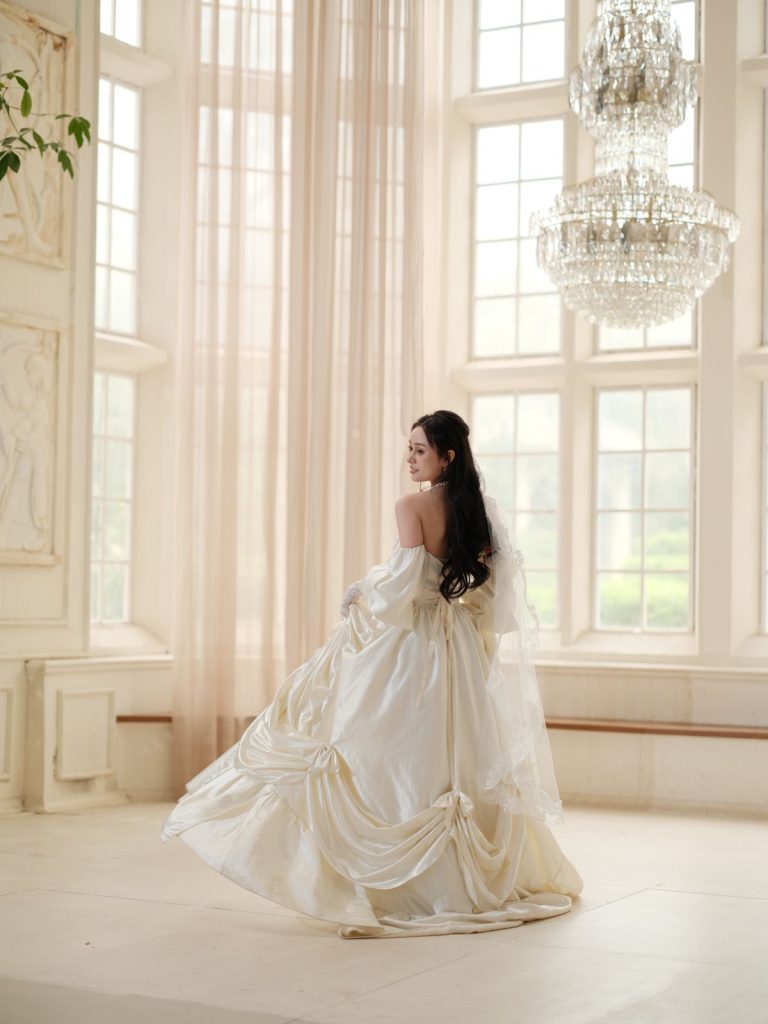
Short answer: mikado is a heavier, slightly textured silk-blend (or silk-like) satin prized for architectural gowns — and it costs more than standard satin because of its weight and weave density.
Mikado holds sculptural shapes — think clean strapless bodices and dramatic skirts — better than any other mainstream bridal fabric. It barely wrinkles, which your customers will love, but it shows every imperfection in cutting and pressing, which means the factory's skill matters more with mikado than with more forgiving fabrics. From a buying standpoint, mikado gowns tend to sit in a higher wholesale tier than plain satin gowns in the same silhouette, and lead times can run slightly longer because the fabric is less widely stocked than standard satin.
Crepe: The Minimalist Favorite (With Hidden Costs)
Short answer: crepe is the matte, slightly pebbled fabric behind the modern minimalist gown — elegant, but it is one of the least forgiving wedding dress fabrics in the fitting room.
Crepe's appeal is its clean, contemporary surface: no shine, beautiful drape, and a luxurious dry hand-feel. The catch that boutique owners learn the hard way is that crepe shows everything — undergarment lines, figure irregularities, and any pulling at the seams. That translates directly into more alterations and more returns if your clientele isn't warned. On cost, quality bridal crepe sits in the mid-to-upper range; cheap crepe looks limp and photographs poorly, so this is a fabric where cutting the fabric budget visibly hurts the final gown. When sampling, stretch a cut edge gently — good crepe recovers its shape, while low-grade crepe stays distorted, and that distortion becomes a sagging seat or wrinkled bodice after a few hours of wear.
Chiffon, Tulle, and Organza: Which Lightweight Wedding Dress Fabrics Should You Stock?
Short answer: chiffon drapes, tulle builds volume, and organza holds crisp shape — stock all three, but never substitute one for another, because they solve different design problems.
Chiffon
Short answer: chiffon is a sheer, softly draping fabric ideal for flowing skirts and sleeves — lightweight, romantic, and relatively affordable.
Chiffon layers beautifully and moves well in photographs, which makes it a staple for beach, garden, and destination-wedding collections. It frays easily and slips under the presser foot, so beading or lace appliqué on chiffon adds meaningful handwork cost. For sampling, check that layered chiffon panels are cut on the same grain — off-grain chiffon twists at the hem, and no amount of pressing fixes it permanently.
Tulle
Short answer: tulle is the net-like fabric responsible for most of the volume in modern skirts — inexpensive per meter, but yards add up fast.
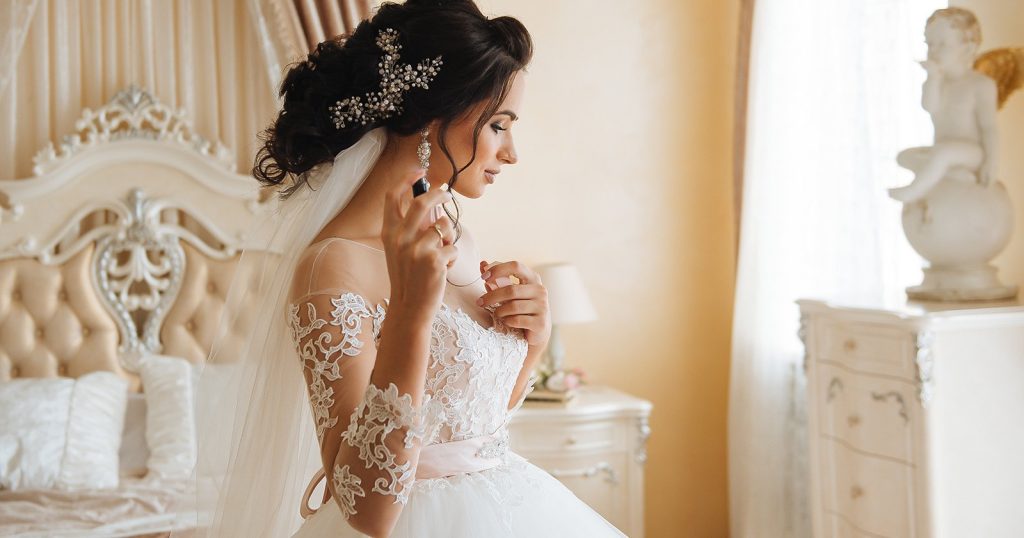
A full tulle skirt can use many layers, so while tulle itself sits in the budget tier per meter, a voluminous gown's total fabric cost surprises first-time buyers. Tulle quality varies enormously: stiff, scratchy tulle ruins the wearing experience, while soft bridal tulle (often labeled English net or illusion tulle for bodices) feels completely different. When sampling, run the tulle across the inside of your forearm — if it scratches you, it will scratch the bride all evening. Related reading: how fabric choice affects your gown manufacturing cost.
Organza
Short answer: organza is a crisp, sheer fabric that holds sculpted shape — the choice for structured overlays and dramatic translucent skirts.
Organza is stiffer than chiffon and more transparent than tulle, giving that glassy, architectural look popular in fashion-forward collections. It creases sharply and those creases are difficult to press out, so organza gowns need careful packing and usually arrive with more protective packaging — a small but real addition to your freight and handling expectations. In sampling, check seam finishes closely: organza's sheerness means every raw edge and seam allowance is visible, so French seams or bound edges are the mark of a competent factory.
Lace Wedding Dress Fabrics: Chantilly vs. Alençon vs. Guipure
Short answer: Chantilly is delicate and flat, Alençon is raised and corded, and Guipure is heavy and motif-driven — and lace is the fabric category where price and lead time vary the most.
Lace deserves special attention because it is where boutique margins are most often won or lost. Lace quality is judged by motif clarity, cord definition, and consistency across panels — and the price spread between commodity lace and fine lace is wider than for any other bridal fabric.
Chantilly Lace
Short answer: Chantilly is a fine, lightweight lace with delicate floral patterns on a sheer net ground — romantic, soft, and the most affordable of the three classic bridal laces.
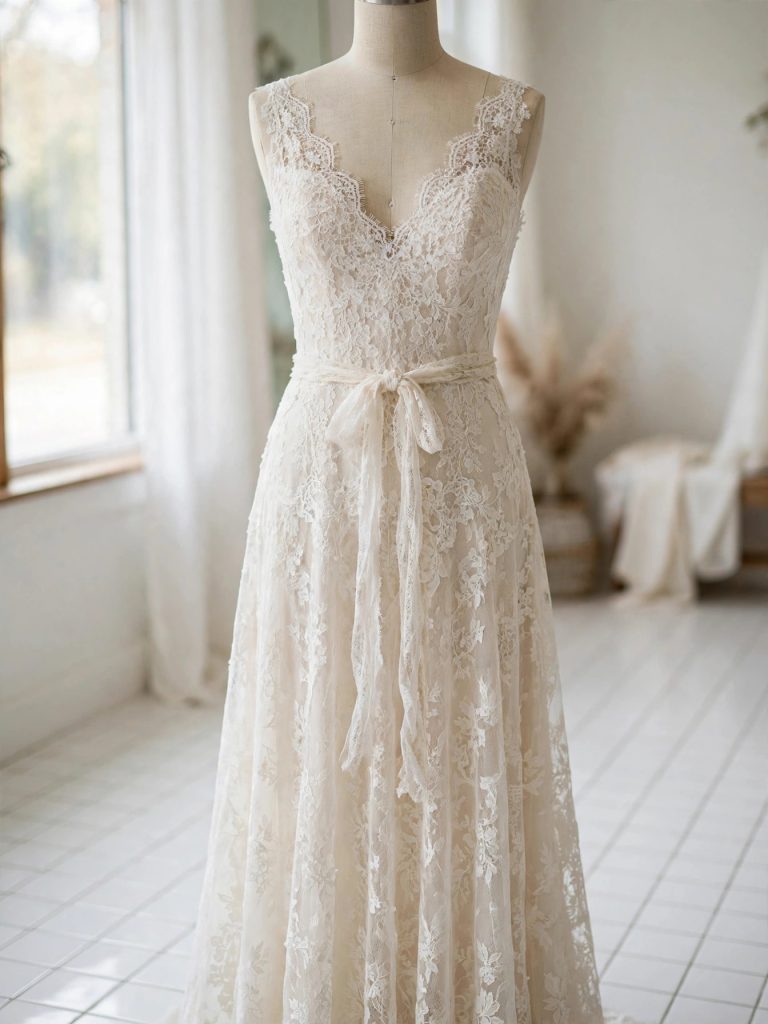
Chantilly drapes like fabric rather than sitting on top of it, making it ideal for all-over lace gowns and soft sleeves. Because the motifs are flat (not corded), it photographs with a subtle, vintage softness. When sampling, hold Chantilly up to the light: the net ground should be even with no thick or thin patches, and motifs should be evenly spaced — irregular spacing signals a lower-grade loom setup. For a closer look at construction, see how to vet a factory for complex lace work.
Alençon Lace
Short answer: Alençon is a needle-lace-look fabric with raised, corded outlines around its motifs — more dimensional and more expensive than Chantilly.
That raised cording is what gives Alençon its rich, textured appearance and its higher price: the cording is applied as a separate step. Alençon is the classic choice for formal, traditional gowns and for appliqué work, where individual motifs are cut out and hand-placed onto tulle or organza. Appliqué placement is skilled handwork, so Alençon gowns with heavy appliqué carry longer lead times — ask your factory specifically how appliqué hours scale with your order quantity, because this is where small-batch orders get expensive per unit. Also read typical production timelines for lace gowns.
Guipure Lace
Short answer: guipure (sometimes called Venetian lace) is a heavy, bold lace with large motifs joined by bars rather than net — dramatic, modern, and the priciest to produce well.
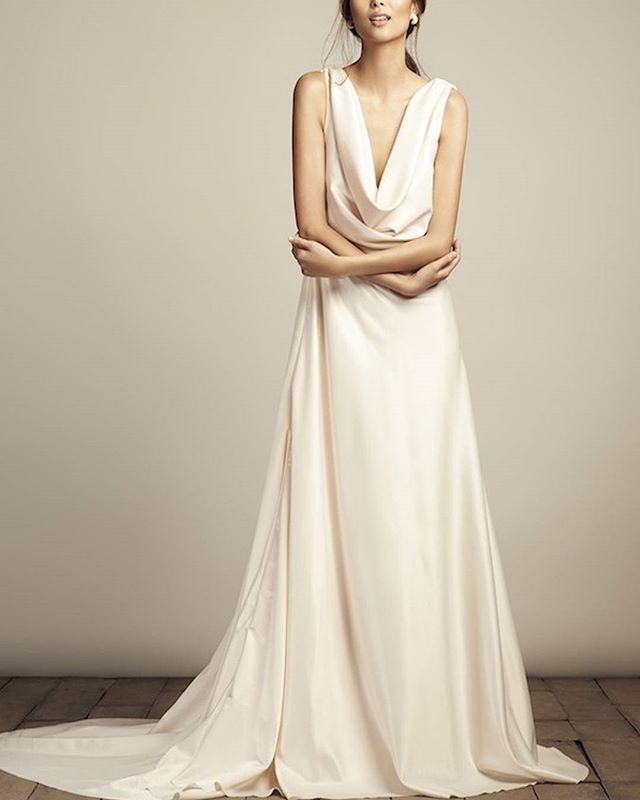
Guipure makes a statement: thick, sculptural, and unmistakable. It is less forgiving than the other laces — motifs must match at the seams, which demands careful pattern-matching and increases cutting waste. That waste is a real cost driver: expect higher fabric consumption per gown than the pattern suggests. When sampling guipure, check motif alignment across the center front and side seams; mismatched motifs are the clearest visible sign of rushed production.
Linings: The Fabric Your Customers Feel but Never See
Short answer: lining choice determines comfort, opacity, and how a gown wears over eight hours — never let it be an afterthought in your tech pack.
Most bridal gowns are fully or partially lined, and the lining is where factories under cost pressure cut corners first. A good bridal lining is smooth, breathable, and opaque enough that no show-through occurs under bright light or flash photography — test this yourself by holding the bodice up to a strong light during sampling. Stretch linings add comfort in fitted silhouettes but cost more and complicate alterations; non-stretch acetate or polyester linings are standard and perfectly serviceable. Also confirm interlinings: structured bodices need fusible or sewn-in interlining for support, and its absence is a common reason budget gowns lose their shape after the first fitting. Specify lining fiber and weight in your purchase orders — "fully lined" alone is not a specification.
How Wedding Dress Fabrics Affect Your Cost Tiers, MOQ, and Lead Time
Short answer: fabric typically sets the wholesale cost tier more than silhouette does, and specialty fabrics are the most common reason MOQs rise and lead times stretch.
Relative cost tiers
Short answer: as a rough ladder from most affordable to most expensive, expect tulle and chiffon at the base, then polyester satin and crepe in the middle, then mikado and fine laces at the top — with silk versions of anything jumping several tiers.
This is a relative ladder, not a price list, because fiber content, width, and origin move every fabric up or down. The practical use for boutique buyers is assortment planning: a collection built entirely from top-tier fabrics concentrates your risk, while mixing tiers across price points gives customers a visible reason to trade up. When a factory quotes you, always ask for the fabric breakdown separately from the labor (CMT) portion — it makes re-orders and fabric substitutions far easier to negotiate.
MOQ and lead time effects
Short answer: standard satins and chiffons are usually stock fabrics with the lowest MOQs and shortest lead times; fine laces, mikado, and custom-dyed fabrics raise both.
Factories stock commodity bridal fabrics in standard colors (ivory, white, champagne), so gowns in those fabrics can often be cut with modest minimums. The moment you specify a particular lace from a particular mill, a custom dye color, or an unusual fabric, the factory must order the material — and mills have their own minimums, which get passed through to you. For the full breakdown of how minimums work, see our MOQ guide for custom wedding dresses. Hand-appliquéd laces add labor lead time on top of material lead time; a heavily appliquéd gown can need meaningfully longer in production than a plain satin gown in the same size run. Build your buying calendar around the slowest fabric in your assortment, not the fastest.
How to Check Fabric Quality When Sampling
Short answer: a disciplined 10-minute fabric check on every sample — covering hand-feel, light, stretch, edges, and consistency — catches most quality problems before they become bulk-order problems.
Use this checklist on each sample gown, and keep a swatch file of approved fabrics for every style you carry:
1. Hand-feel test. Handle the fabric the way a bride will — scrunch satin and crepe lightly to check wrinkle recovery, and run tulle across your inner forearm to check for scratchiness.
2. Daylight test. Examine sheen fabrics (satin, mikado) and lace under natural daylight for panel-to-panel color or sheen differences that showroom lighting hides.
3. Stretch and recovery. Gently stretch crepe and lining fabrics; quality material springs back, while low-grade material stays distorted.
4. Edge and seam inspection. Check sheer fabrics (organza, chiffon) for finished seam allowances — visible raw edges signal rushed work. Check lace motif alignment at center-front and side seams.
5. Opacity check. Hold lined bodices up to strong light or camera flash to confirm no show-through.
6. Consistency across panels. Compare lace motif spacing, satin grain direction, and chiffon grain across all panels of the same gown.
7. Weight check. Heavier is not automatically better, but a gown that feels surprisingly light for its silhouette may be missing interlining or petticoat layers.
Document every approved fabric with a stapled swatch, the mill or supplier name, the color code, and the date. When a bulk delivery arrives, your first QC step is simply comparing it against the swatch — most fabric substitutions are caught this way.
Frequently Asked Questions
Which wedding dress fabric is best for plus-size brides?
Structured fabrics with body — mikado, duchess satin, and quality crepe with proper interlining — support and smooth better than clingy chiffon or unlined lace. The key is internal construction (boning, interlining) paired with the fabric, not the fabric alone.
What is the most affordable wedding dress fabric for a boutique to stock?
Per meter, tulle and chiffon are the most affordable, followed by standard polyester satin. But total gown cost depends on yardage and labor — a multi-layer tulle ball gown can cost more in materials than a simple satin sheath.
How do I know if a factory's lace is good quality?
Check motif clarity and even spacing, cord definition on Alençon, consistency across panels, and an even net ground with no thick or thin patches. Ask which mill produces the lace — named mills are accountable in a way anonymous "imported lace" is not.
Can I request a different fabric than the sample shown?
Usually yes, but expect MOQ and lead time to change if the new fabric isn't a stock item. Always request a new swatch and a re-quote before confirming — never assume the price holds across a fabric substitution.
Does fabric choice really change the production lead time?
Yes. Stock satins and chiffons in standard colors are typically fastest; specific-mill laces, custom dye colors, and heavy hand-appliqué add both material ordering time and labor time. Plan your buying calendar around the slowest fabric in each style.
What lining should I specify for bridal gowns?
Specify fiber, weight, and stretch explicitly (e.g., "stretch polyester lining, full bodice") rather than accepting "fully lined." Test opacity under strong light during sampling, and confirm structured bodices include interlining — its absence is a common cause of gowns losing shape.
The Bottom Line for Boutique Buyers
Short answer: learn to read fabric the way you read a price tag — because in bridal wholesale, the fabric is the price tag.
You don't need a textile degree to buy well; you need a consistent sampling routine, a swatch file, and the habit of asking factories for fabric and labor quoted separately. Start every new style with the fabric decision, build your margins around the fabric tier, and let the slowest fabric set your calendar. If you are planning a whole collection rather than a single reorder, our factory-side guide to starting a wedding dress brand covers how fabric decisions fit into the bigger launch picture. Do that, and fabric stops being a gamble and becomes one of your most reliable buying advantages.
—