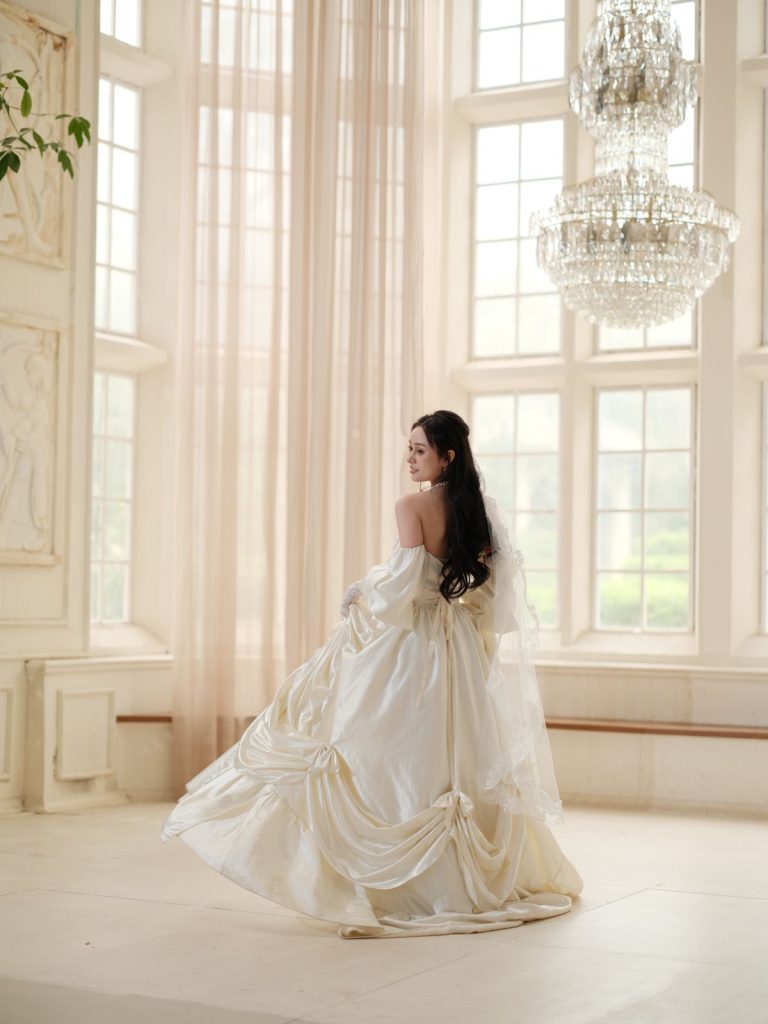
A lace mermaid gown with flare sleeves is really two budgets wearing one dress, and the money side learned to read it that way after watching the same argument repeat across enough bridal orders to stop being surprised by it. The body budget is the familiar one: a fitted shape, hip-close, opening below the knee, graded with care because a mermaid reports every centimetre it is given. The sleeve budget is the quiet one. A flare sleeve is a bell of lace hanging from the arm, edged all the way around its opening, moving every time the wearer lifts a hand, and it consumes lace, edging time, and patience in proportions its size never suggests. The Sorayan style reviewed here carries both budgets at a ready-made price, and the interesting question is never whether that is possible. It is where the saving was taken to make it possible.
The sleeves spend lace like a second bodice
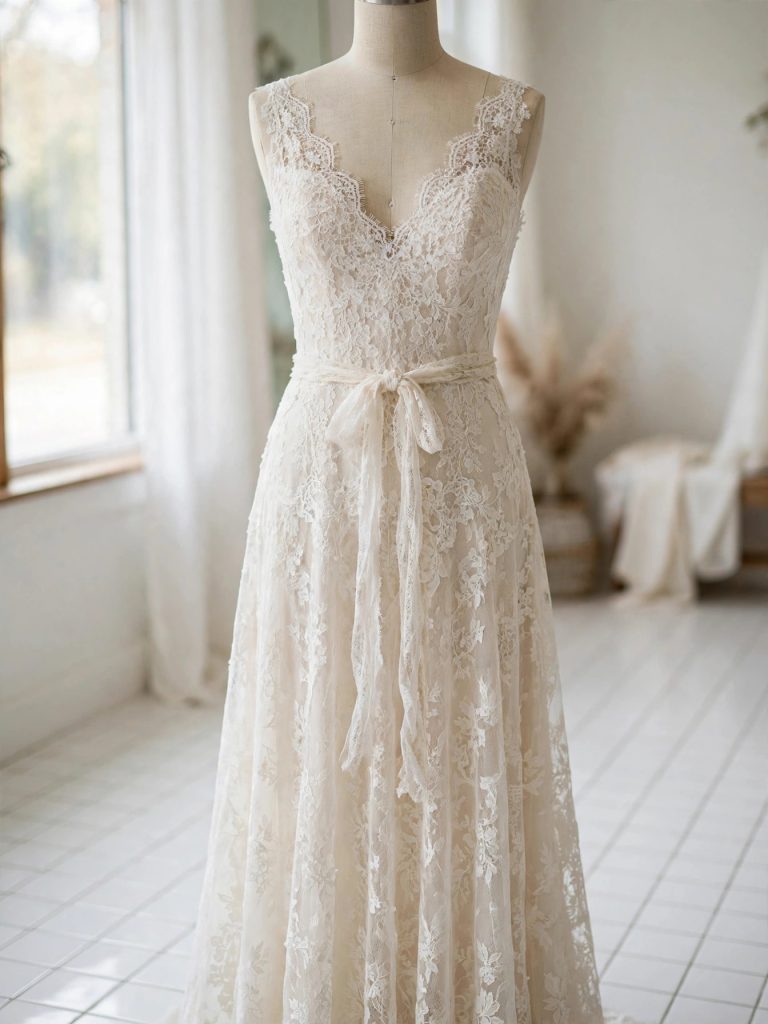
Lace is bought by the metre and judged by the motif, and a flare sleeve spends it fast. The bell needs enough lace to fall open and swing, the edge needs a finished scallop or a hand-turned trim all around the opening, and the motif has to sit on the sleeve so the pattern reads as grown, not pasted. Two sleeves can quietly consume close to what a fitted bodice consumes, on a part of the dress most listings describe in three words. A wedding dress manufacturer costing this style honestly prices the sleeves as their own line. A quote that prices them as a detail has found its saving already, and it usually shows at the sleeve edge, where a cut motif replaces a finished one and the bell frays its way through the season.
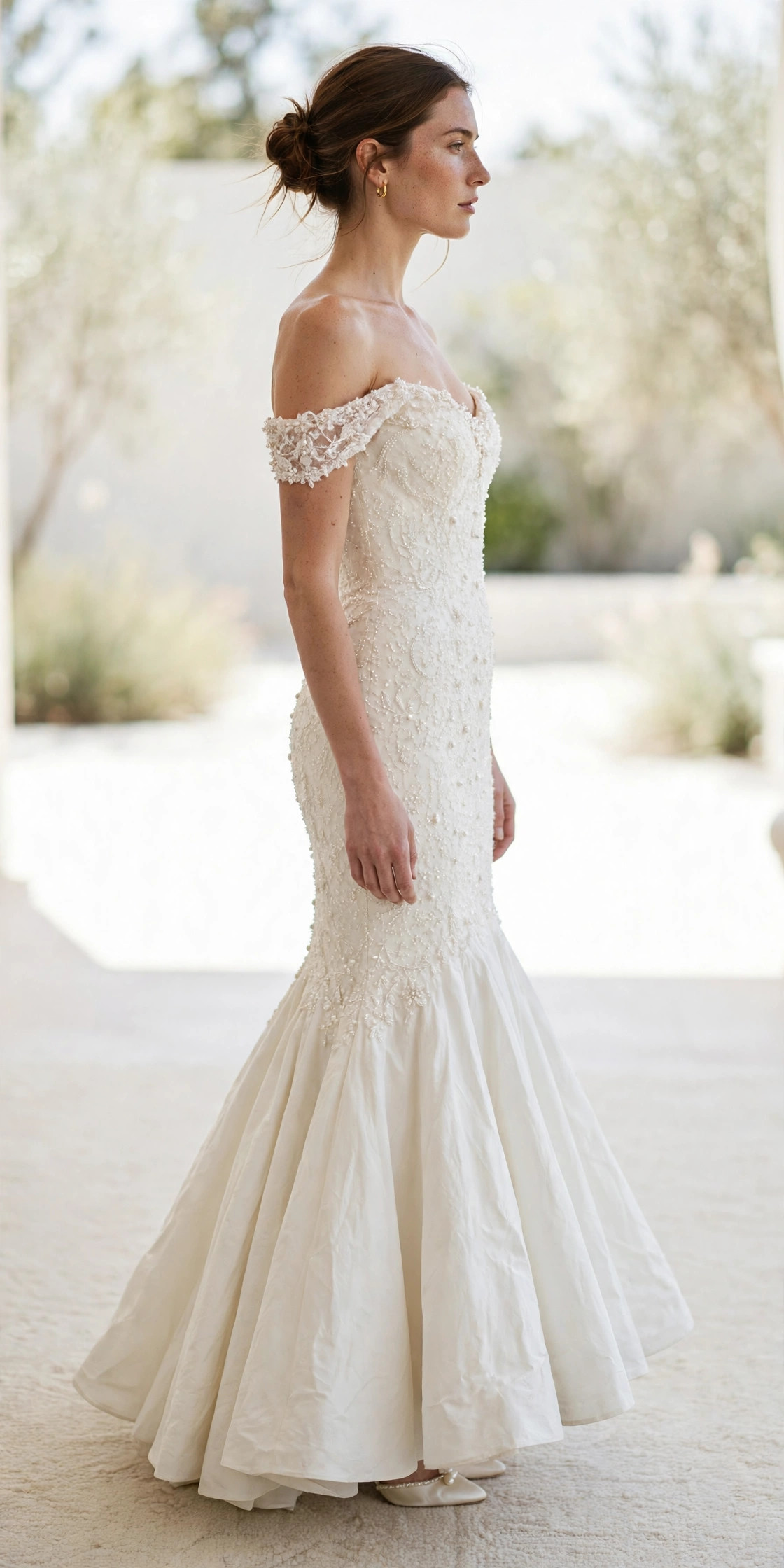
The mermaid body spends its money differently, on grading. The flare point must open at the same place on the leg at every size, which makes the knee line a measurement in its own right, and the hip ease has to be tuned size by size because fitted and tight are neighbours separated by about a centimetre. That pattern work is done once and then carried quietly inside the unit price of every reorder, which is why a store’s first order with a new garment factory can look dear and its third look fair: the first invoice is carrying the pattern, whether the invoice says so or not.
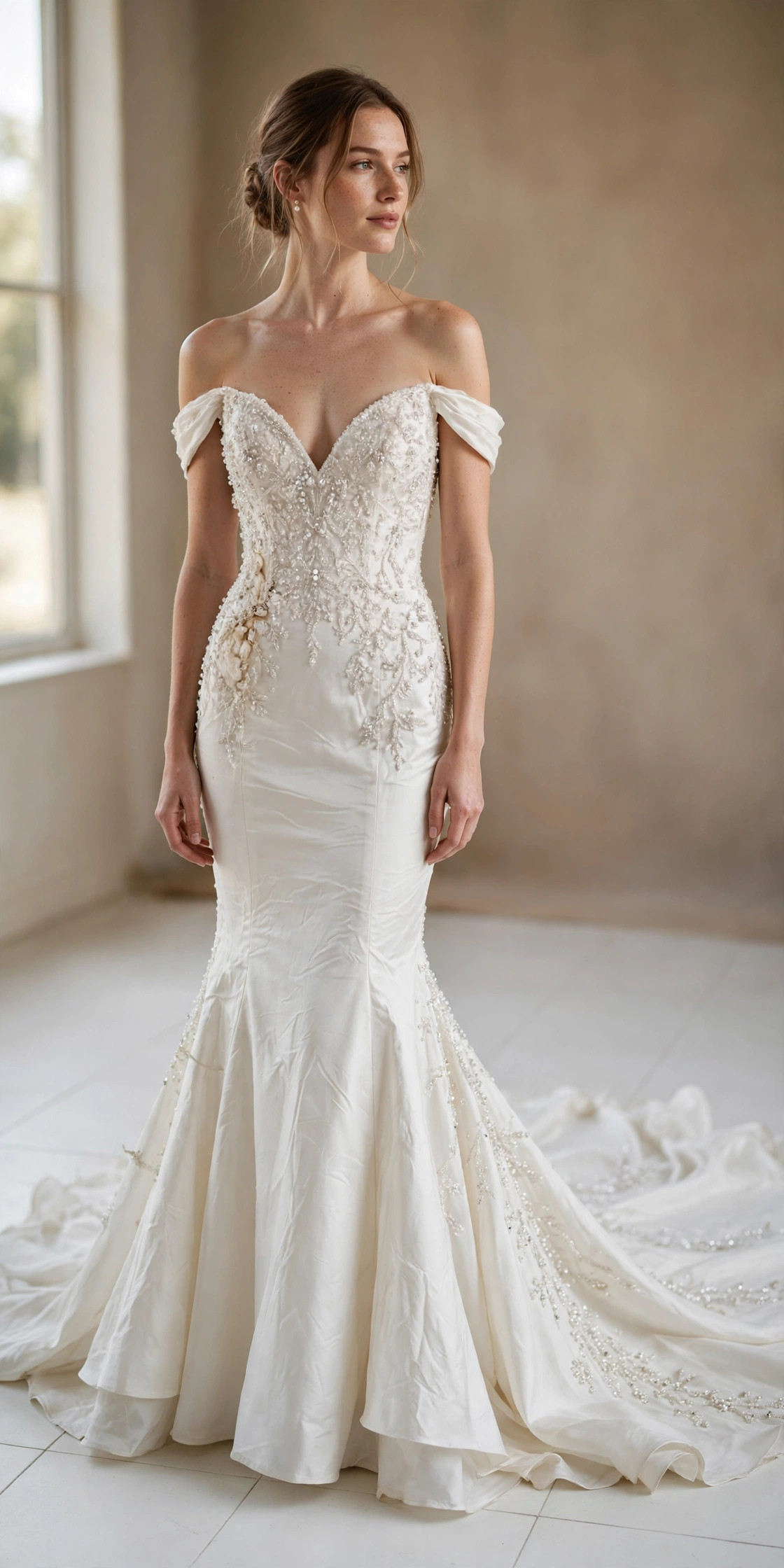
Where a cheaper quote takes the money out
Lay two quotes for this gown side by side, twenty percent apart, same photograph, and the gap is rarely in the cloth ticket. It is in minutes. Lace matched across the flare seam instead of cut through. Sleeve edges finished instead of trimmed short. A knee line graded per size instead of allowed to drift with the length. Each is a handful of minutes per dress, and minutes are the one currency a busy line can always find by spending care. The store feels the saving later, at the alteration rail, where a drifting knee and a raw sleeve edge come back as paid work with the bride standing in it. No wait, not later. The store feels it at the first fitting of the largest size, which is the moment all the saved minutes stand up at once and introduce themselves.
Sample development is where the money desk tells a buyer to spend first and argue later. One pre-production sample in the largest size the store plans to carry, sleeves and all, worn sitting and with arms raised, exposes the knee drift and the sleeve weight while both are still cheap pattern changes. Skipping that sample to protect a few weeks converts a known, bounded cost into several unknown ones spread across the run, and bridal is the worst category in the trade for unknown costs, because every one of them arrives attached to a date that cannot move and a wearer who will remember the dress longer than she remembers the invoice.
The money desk prices this mermaid file against the custom lace wedding dresses with cap sleeves range, reads the sleeve notes beside the custom colour sequined wedding dresses file, and checks it against the floral mesh maxi dresses cloth notes, because a lace gown’s real cost is never only the invoice it arrived on.
Questions buyers and stores actually ask
The sleeves carry a large share of the lace bill. Why does nobody price them separately?
Because a sleeve reads as a detail in a listing and behaves as a component on the costing sheet. A flare sleeve uses bodice-level quantities of lace once its bell and its finished edge are counted, plus hand time at the edge. A supplier who prices sleeves as their own line is usually costing the dress honestly. One who waves them in has already decided where the saving will come from.
A sample at one size, an order across eight sizes. Which size quietly pays for the grading?
The first order does, all of it. Knee line placement and hip ease per size are pattern work done once and carried inside the unit price afterwards. That is why first invoices with a new supplier can look heavy and reorders look calm. The store is not being charged twice; it is meeting the pattern bill once, at the start, where it belongs.
Two quotes, same photograph, twenty percent apart. Where did the cheaper one take the money out?
Out of minutes, almost always. Lace cut through at the flare seam instead of matched, sleeve edges trimmed instead of finished, a knee line left to drift with the length. None of it photographs. All of it arrives at the fitting rail as paid alteration work. Asking each supplier how the seam and the sleeve edge are handled, in words, separates the quotes faster than arguing over the cloth.
None of this makes the gown poor value. A lace mermaid with real sleeves, graded properly and sampled in the hard size, gives a small bridal store a line it could never fund from bespoke makers, and gives its brides a silhouette that alteration alone cannot build out of a lesser dress. The money was always going to be spent. The only choice this trade actually offers is whether it gets spent at the pattern table, where it is cheap and invisible, or at the fitting rail, where it is neither, and where everybody in the room can see exactly what the cheaper quote was made of.