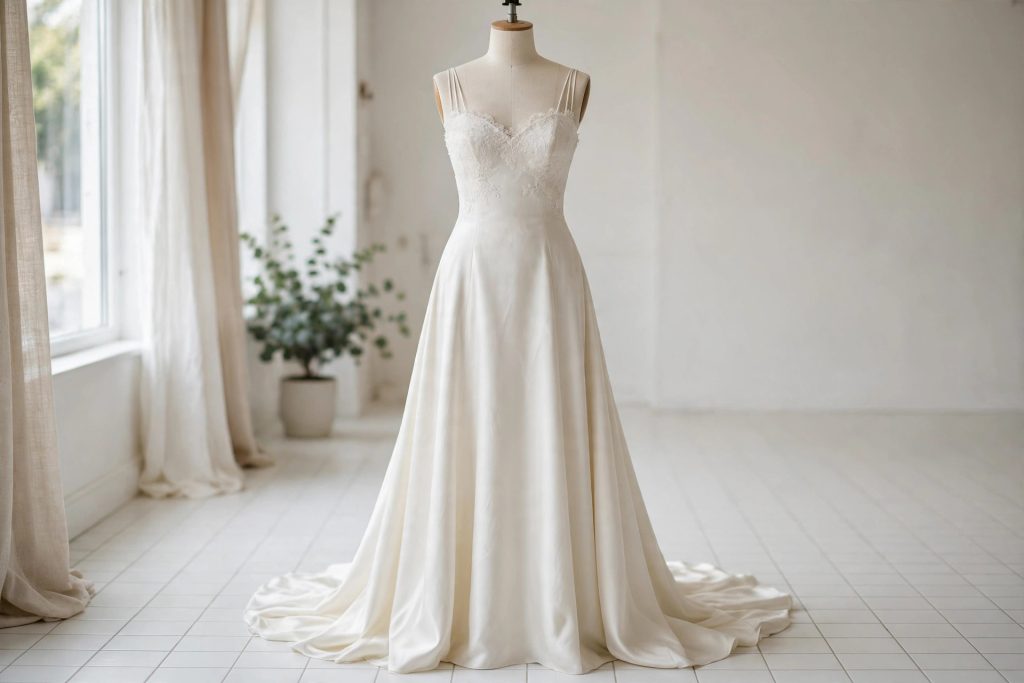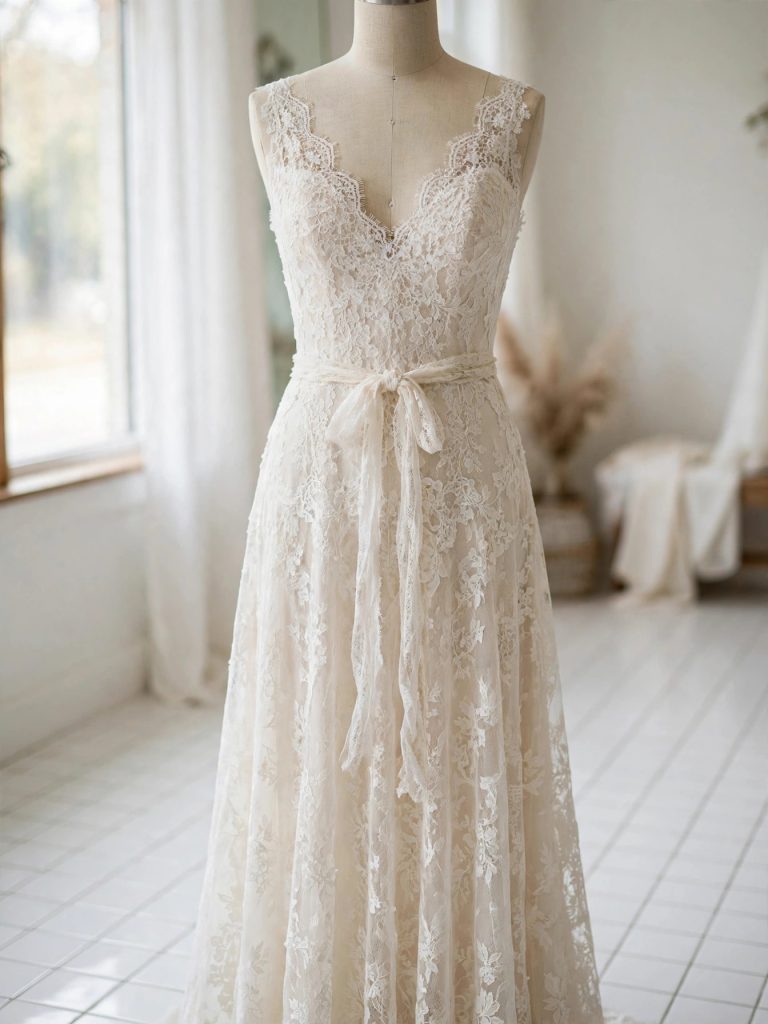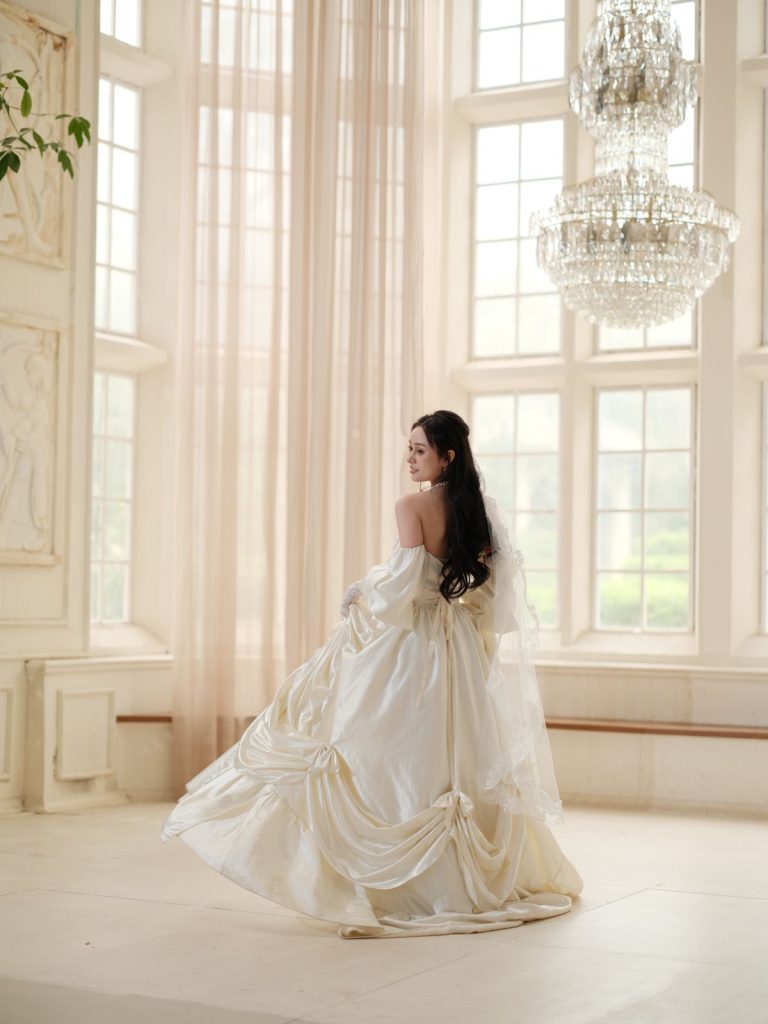
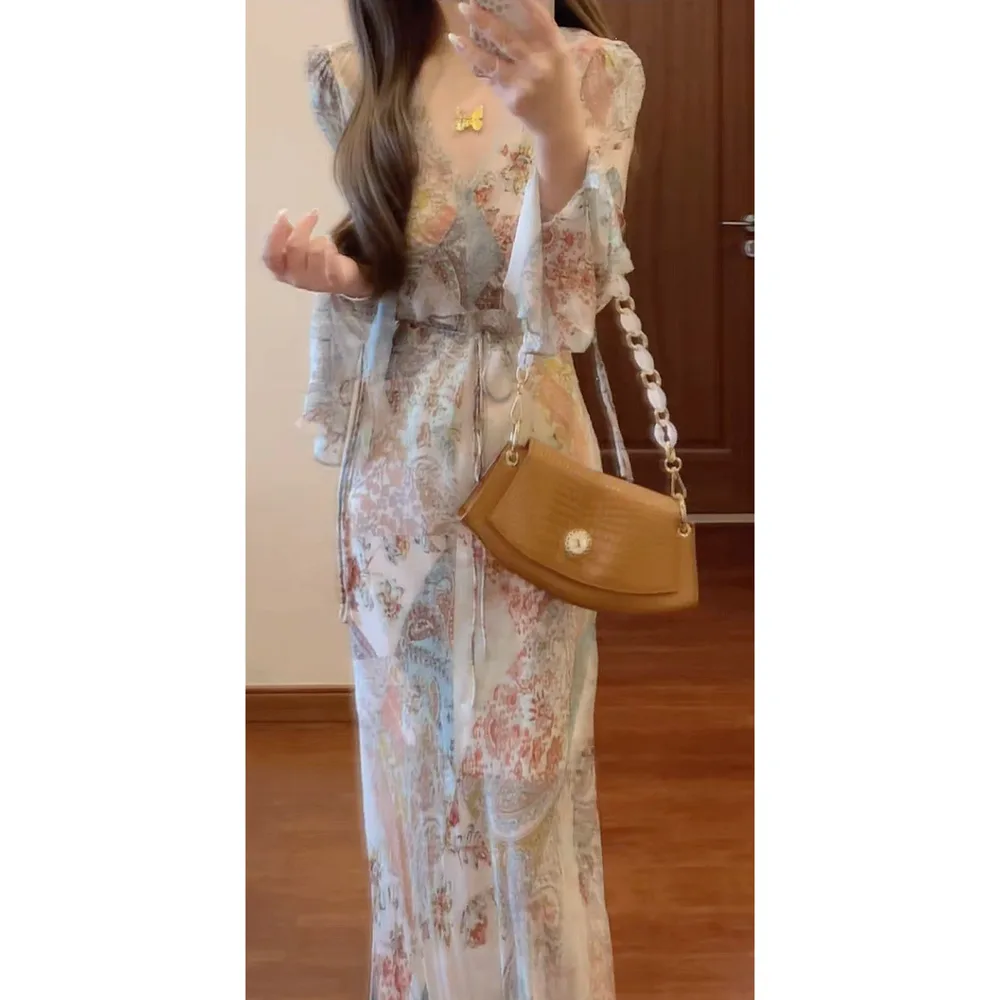
The skirt comes off the line already moving. That is the first thing a swing dress does in a factory, before it is a product or a listing: the hem is still travelling when the checker takes it, because a skirt cut with real flare does not hang still the way a straight skirt does. The Memoriesea A-line swing dress belongs to that family, a fitted top over a skirt built to move, sold for wedding guests and parties, and everything honest about it starts in that flare and in what the flare demands from the waist seam above it.
The factory behind this dress is in Guangzhou and makes women’s dresses for boutiques and private label buyers, with wedding guest and party ranges at the centre of the rail. Private label runs start at a low MOQ of 10 pieces per style, and one style can mix sizes freely while colours stay in separate runs, since a second colour means a second lay and a second dye lot. Samples run 10 to 15 days after the tech pack is confirmed, bulk production 20 to 30 days, and a general style sample fee is $45 to $75 per piece with half of it returned against the bulk order. Orders of 20 pieces and up ship by express at about $13 to $20 per kilo. A boutique building its own guest and party label, in steady sizes, is who this line fits.
| Item | Figure |
|---|---|
| Category | Women’s A-line swing dresses |
| Private label MOQ | 10 pcs per style |
| Mixing rule | Sizes mix, colours run separately |
| Sample lead time | 10 to 15 days |
| Bulk lead time | 20 to 30 days |
| Sample fee, general styles | $45 to $75 per piece |
| Freight, 20 pcs and up | About $13 to $20 per kg |
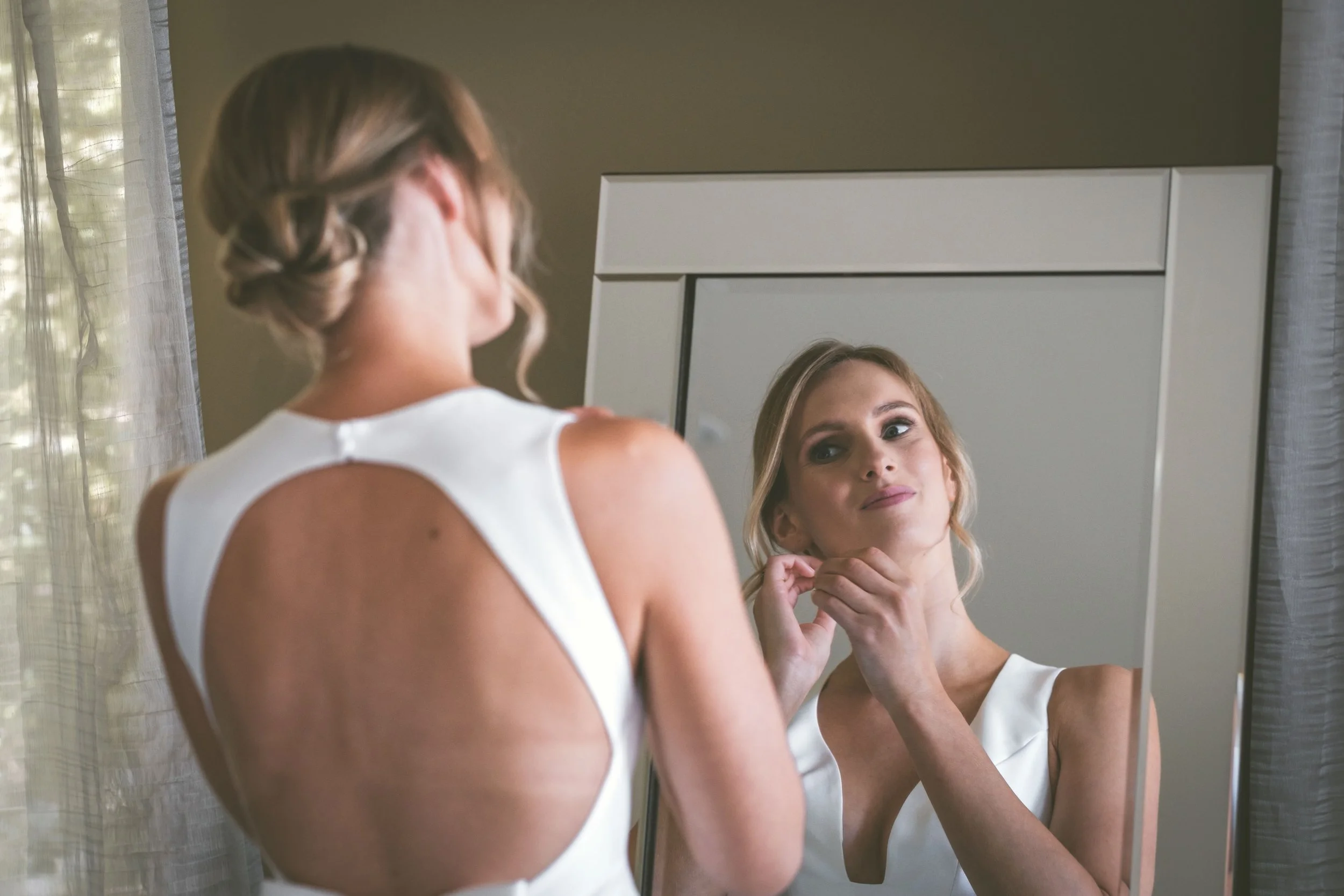
The waist seam carries the whole skirt
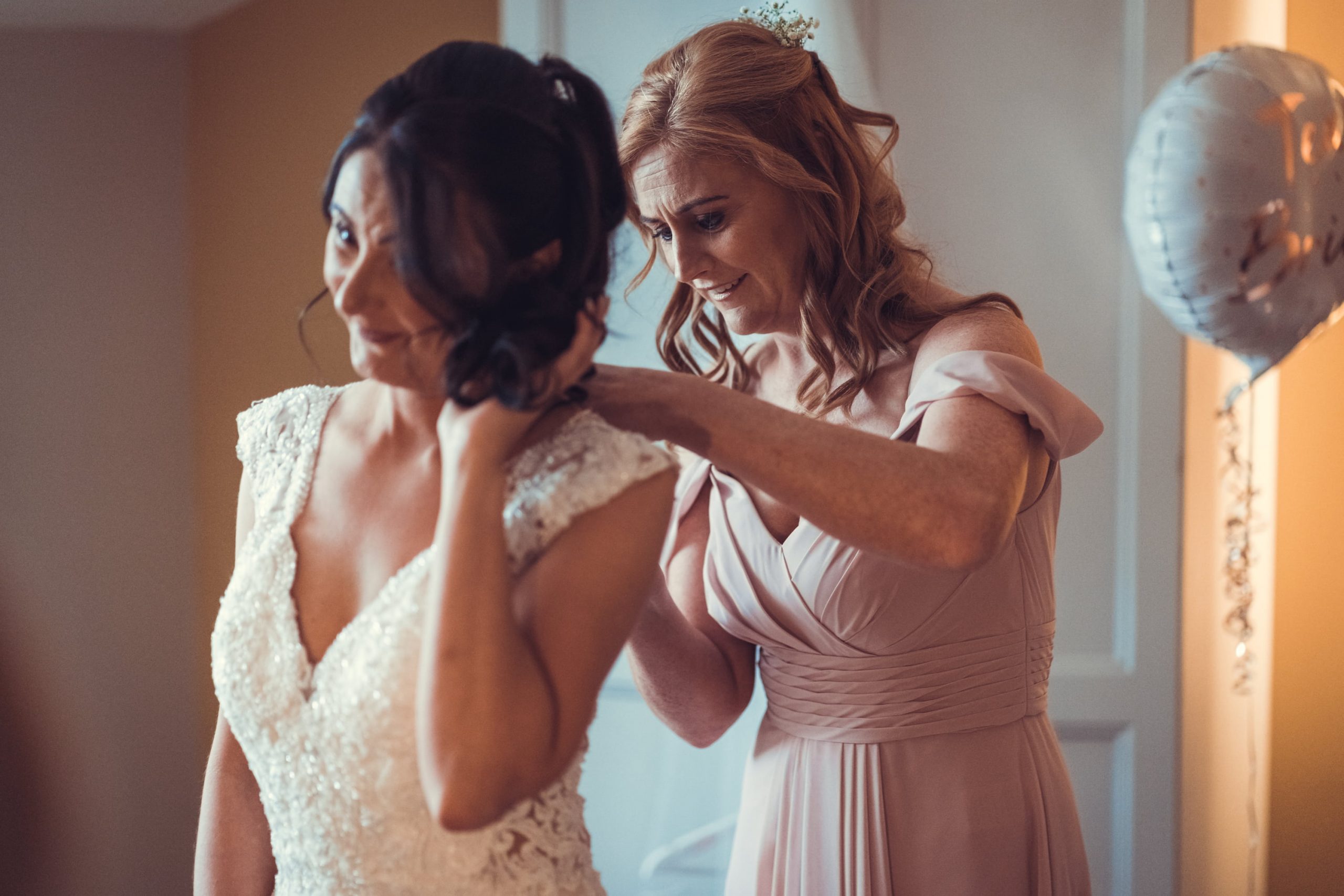
A flared skirt is weight with somewhere to go, and where it goes is the waist seam. On a swing dress that seam holds a full circle of cloth in motion, tugging downward and outward with every step, so it gets stitched and reinforced like a load-bearing join rather than finished like a decorative one. The hem is the other place this family spends its minutes. A wide curved hem finished too fast waves and ripples, because rushed hands leave the curve’s argument in the fabric. Finished patiently, eased and pressed in sections, the same hem lies flat on the rail and moves clean in wear. From a listing both hems photograph as a pretty flare. The difference is an hour of wear, which is exactly the unit party dresses are judged in.
The back zip takes the third share of the strain, and it is the share buyers write to us about. A swing skirt pulls at the waist from below while the bodice is held from above, and the zip between them works all evening. Sound production grades the zip to the skirt’s weight rather than to the dress’s price band, and clears the bulky seam allowances out of the zip path so the pull runs smooth past the waist join. No wait, graded to the skirt weight is the claim every factory makes. The checkable version is duller: open a sample, run the zip slowly through the waist seam ten times, and read the inside of the tape for frayed crossings. That short test has settled more reorder arguments in my building than any certificate on the wall.
On the factory calendar this swing dress is quoted beside the beaded sequin mermaid prom gown review, finished alongside the large pashmina shawl review, and packed with the care notes from the lint roller notes for bridesmaid dresses, because guest, prom and party orders share one line, one packing bench and one set of lessons about flared skirts.
Questions buyers and stores actually ask
Ten pieces per style, sizes can mix but colours cannot. Why does the colour rule exist?
Because a colour is a cutting lay and a dye lot, not a setting. Mixing sizes inside one style uses one lay of one cloth, graded across the run, which is work the factory does once. A second colour means a second lay, a second lot to match against its own sample, and a second chance for the two versions to drift apart in shade. Run separately, each colour stays honest to its own approval. Buyers sometimes hear the rule as stubbornness. It is the factory refusing to let a shade argument be discovered by a customer.
The hem waves on some sizes and lies flat on others. Cutting problem or finishing problem?
Finishing, usually, with grading helping it along. A flared hem is a curve, and easing that curve evenly is slower hand work that rushed benches shorten, so the wave appears where the operator hurried. Larger sizes carry longer hems, which means more curve to ease and more chances to hurry, and that is why the fault clusters at the ends of a run instead of spreading evenly. Lay the dress flat and let the hem rest overnight before judging it, though. Fresh off the line, even a sound hem holds some travel in it, and I have watched good dresses condemned at the wrong hour.
Freight is quoted at $13 to $20 a kilo for 20 pieces and up. Why does a light swing dress still cost that?
Because the kilo is not the whole story the invoice tells. A flared skirt packs with air in it no matter how carefully the carton is folded, and carriers charge for the space a light, bulky carton occupies when that space outruns its weight. Twenty dresses in a swing style can fill the volume of forty in a straight style. Folding tighter costs hem creases that somebody steams out at the other end. The honest comparison for a buyer is cost per dress landed, skirt and all, not the per-kilo figure on its own.
Half the sample fee comes back on a bulk order. When does that half actually show up?
On the bulk invoice, as a deduction from the total for that same style, once the order is confirmed and the deposit is in. It is not cash back and it does not wait until final balance unless the factory’s terms say so in writing, which is worth one email before sampling rather than an argument after. The half also belongs to the style that was sampled. Change the dress enough to need a fresh pattern and the new sample stands on its own fee, with its own half waiting behind its own order.
I like this family of dresses, which is not a sentence I say about every style that crosses my line. A swing dress is honest about what it is: a plain fitted top and a skirt that spends cloth freely to buy movement, with its three working parts, waist seam, hem and zip, all visible to anyone who turns it inside out. The versions that fail are never failing at the idea. They are failing at a rushed hem or an under-graded zip, in the minutes a low quote quietly removed. A buyer who checks those three places on a sample knows more about her reorder than a season of reviews will tell her, and the skirt, when she hangs it back up, will still be moving a little. It is the dress, still doing its job on the rail.