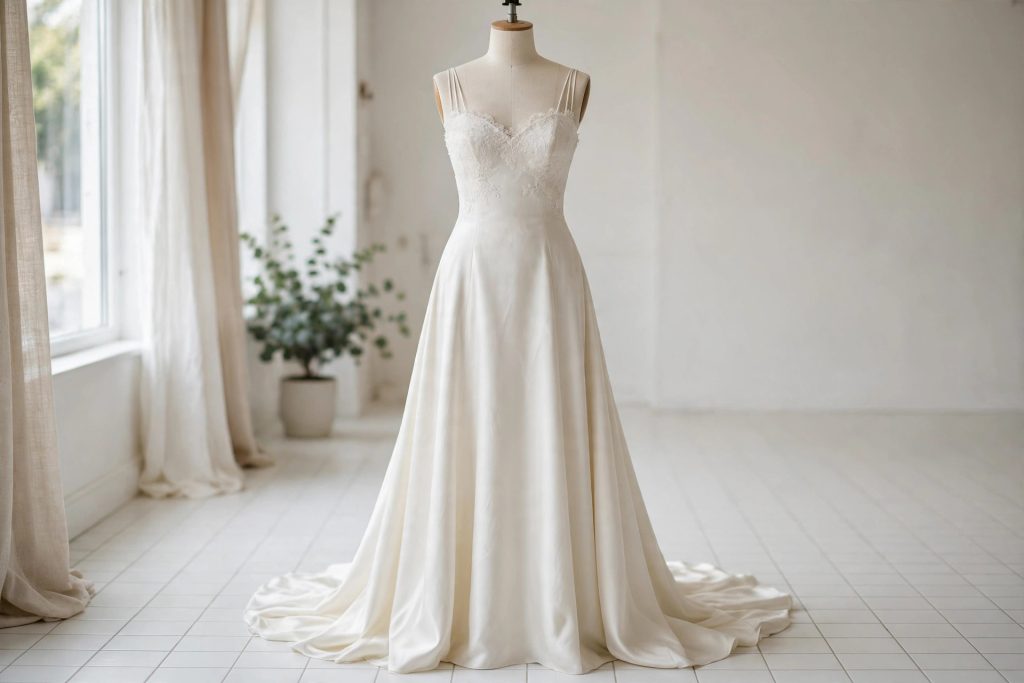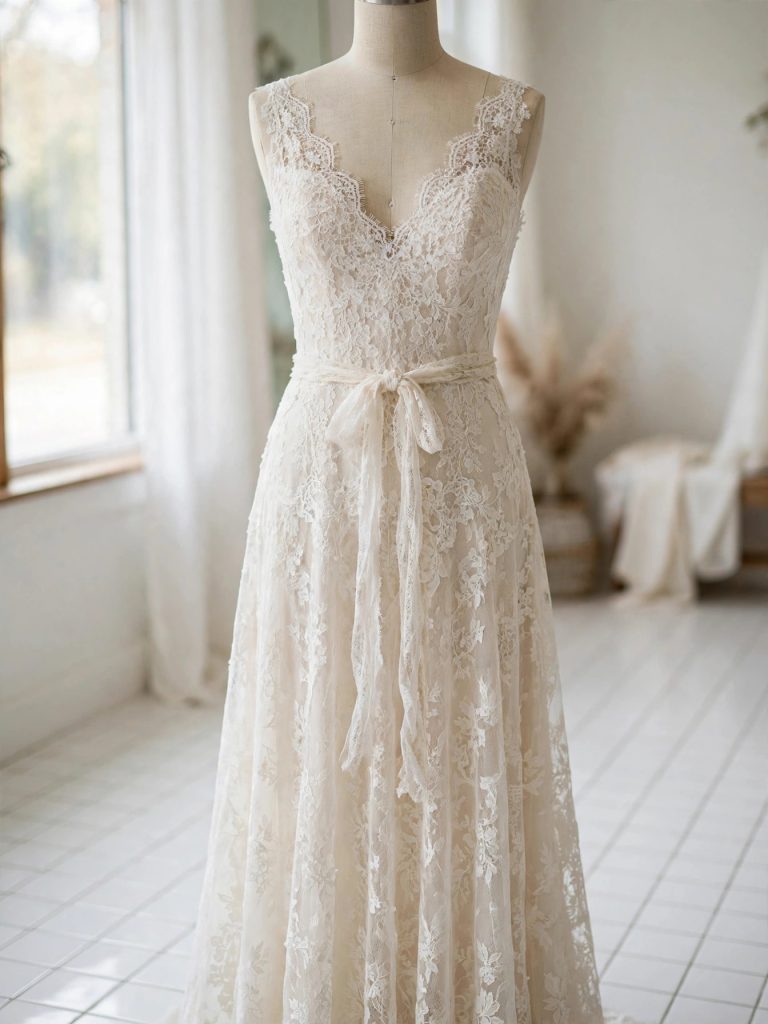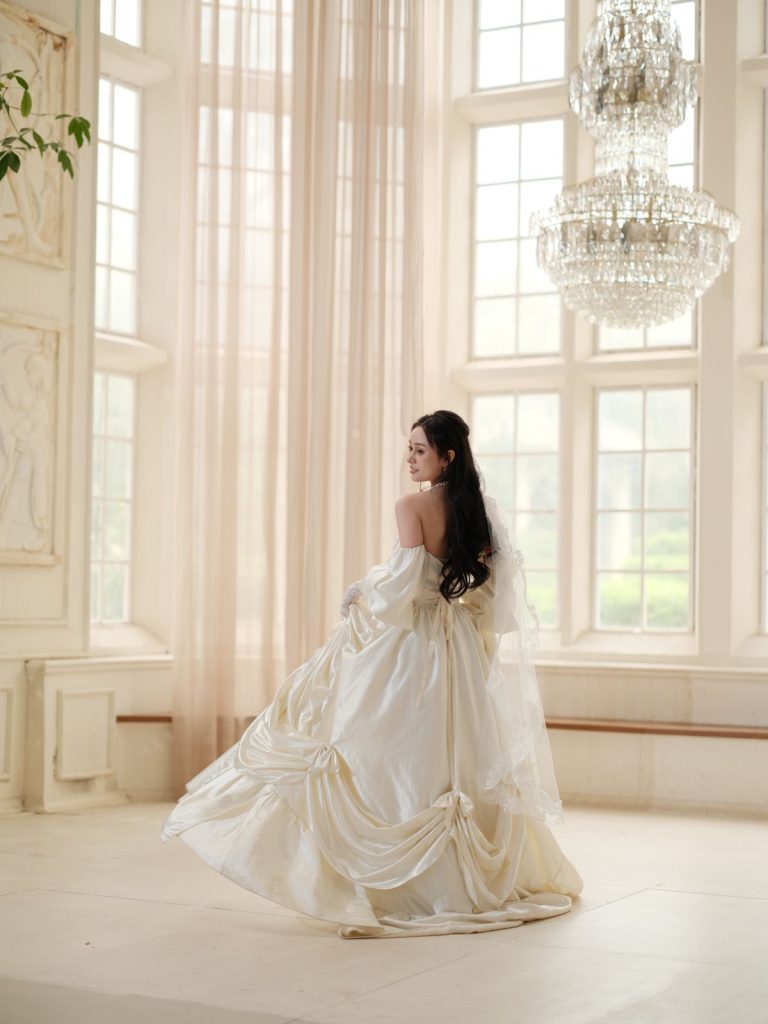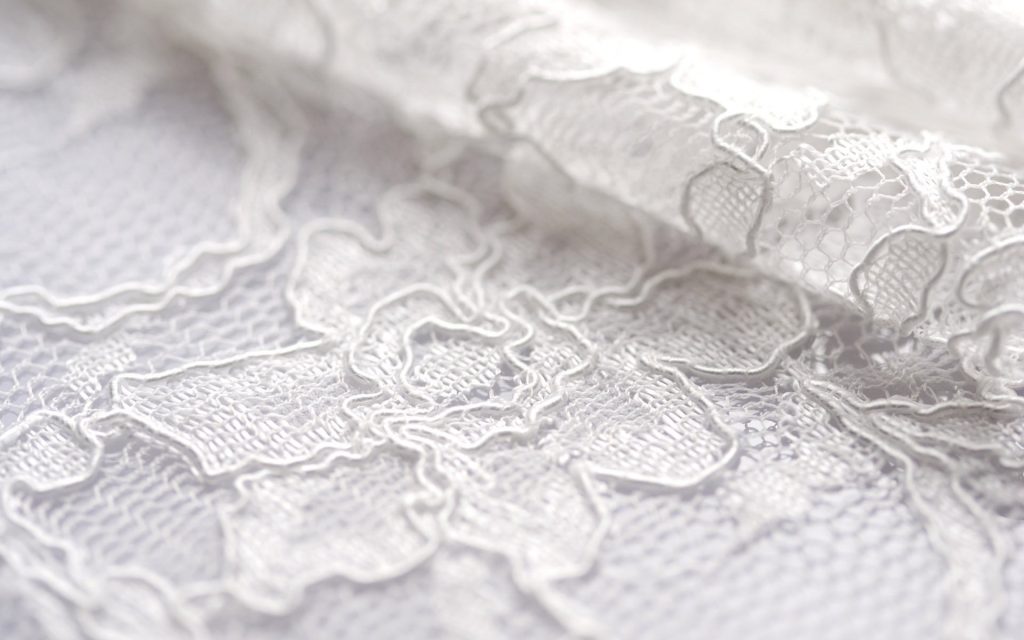
The seam goes at the hip at about seven in the evening, and by the time the dress reaches my bench it has already told its whole story. Fitted at the thigh, flared below the knee, sat in, stood up from, danced in: a lace fishtail bodycon asks more of its cloth per hour than almost any other guest dress shape, and the elegant lace version in front of us is a clean dress to explain where the asking gets answered and where it gets dodged. I run production. The failures I see are rarely mysteries. They are small savings, taken early, arriving late.
Lace that cannot come back
A bodycon dress stretches and has to return, hundreds of times in one evening, at the hip and the knee and across the back. Lace on its own does none of that work. The recovery lives in the elastic inside the lace yarns and in the lining underneath, and both are invisible in a photograph and plain as daylight on a stretch test. Pull a sound lace ten centimetres and it comes back to ten. Pull a tired one and it comes back to ten and a half, then eleven by the second wearing, which is the bagging at the knee and the loose seat that reviews describe as the dress growing during the party. It did not grow. It stopped coming back, and the difference between the two laces is a few cents per dress that a low quote removes without naming.
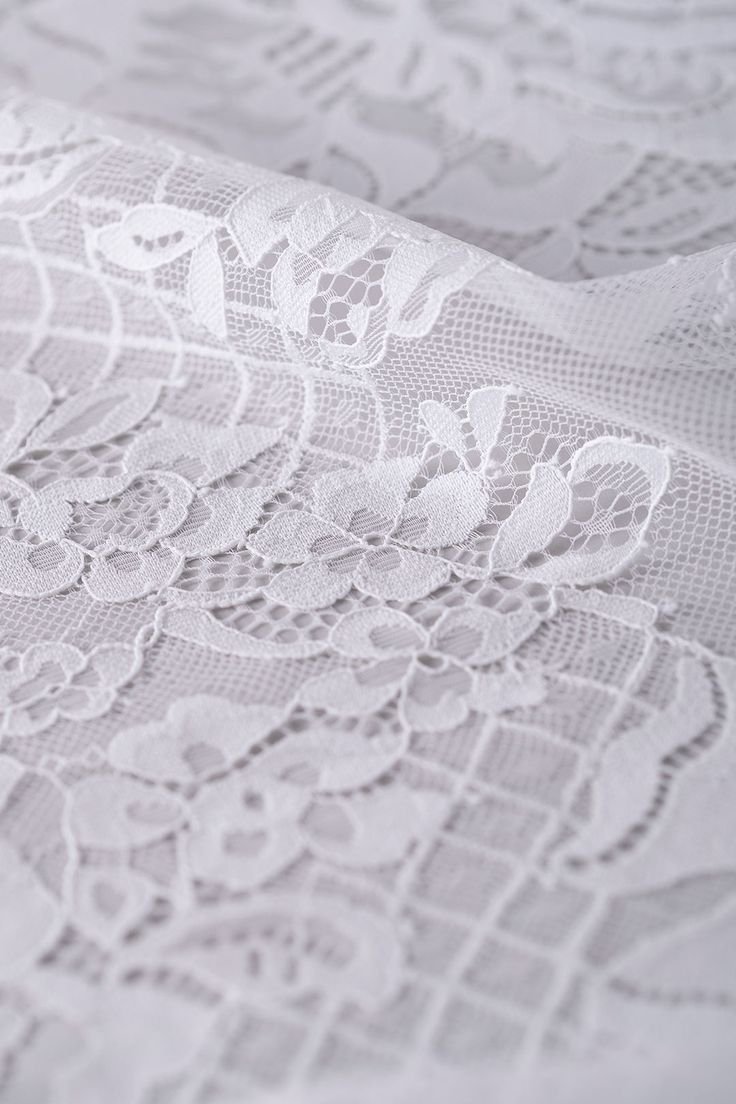
The fishtail half of the shape asks the opposite favour. Below the knee the cloth has to hold a flare, swing as one piece, and keep its edge, which wants body in the fabric. So the same dress needs a lace that gives at the top and stands at the bottom, and the honest way factories square that is a lace with real structure over a lining cut to carry the flare. The cheap way is a heavy lining under a weak lace, which holds the silhouette in the fitting room and cooks the wearer by the second hour, because the weight that was meant to be shape becomes heat.
Where the hip seam lets go
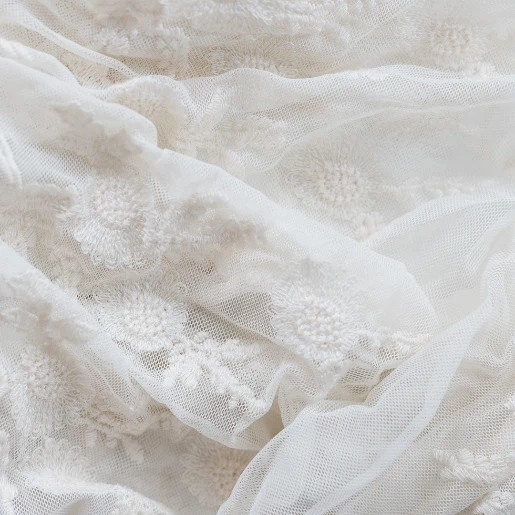
The seam that pops on this shape sits exactly where the fitted part hands over to the flare, because that join takes the sitting strain and the standing strain in opposite directions. Sound production leaves enough allowance at that join to hold under tension and finishes it so the lace edge cannot work its way out stitch by stitch. Short allowances save a sliver of cloth per dress and spend it again, with interest, the first time a wearer sits down quickly in a chair with arms. No wait, interest is the polite word. The real cost is the whole dress, returned, with the evening it ruined described in the review in detail. I have done that arithmetic on the bench more times than I have done it on paper, and it has never once come out in favour of the sliver.
Grading is the quieter version of the same story. A fishtail graded carelessly up from a small block arrives at the larger sizes with its flare starting at the wrong height, so the dress binds where it should release and swings where it should hold. The wearer experiences that as a size problem and orders up, which makes the top loose and the hip no better. It was a flare placed by a scaling rule instead of by a person who had watched the dress sit down. On my line the check is dull and physical: the largest size gets sat in, on a hard chair, before the run is released. The dresses that fail that chair do not get shipped to fail a wedding instead.
On the line this lace fishtail is sewn and argued about beside the off-shoulder lace bell sleeve mermaid gown, costed against the beaded sequin mermaid formal gown review, and read next to the long sleeve satin mermaid bridal gown file, because every fitted flare dress, lace or satin or decorated, fails at the same hip seam and the same tired stretch.
Questions buyers and stores actually ask
The sample held all evening and the bulk dress bags at the knee by the second wear. Same lace, so what moved?
The lot moved, most likely, or the lining did. A sample is sewn from the lace as approved, while a bulk run can arrive on a later lot of the same lace with weaker elastic recovery, or on a lining swapped for a roll that was already in the building. Knee bagging is recovery failing, and recovery lives in exactly those two places. The dull check is a stretch test on the bulk piece against the kept sample, side by side, pulled and released.
A seam popped at the hip on a fishtail. Bad sewing, or was the flare cut too tight to sit in?
Usually the allowance, which is a cutting decision wearing a sewing costume. The hip join on a fishtail takes sitting strain and standing strain in opposite directions, and a short allowance has nothing to hold with once the lace starts working at the stitches. Sewing can be neat and still let go if there was not enough cloth in the join to begin with. Ask to see the inside of that seam on a sample before a reorder. The join should look almost wasteful. That waste is the part that holds.
A trial runs at 10 pieces per style. Why won't 5 pieces tell me if the fiftieth dress matches the first?
Because five pieces share everything: one lot of lace, one shift, one bench, one careful mood. The fiftieth dress is where the second lot, the tired hour and the faster hands live, and a small trial never meets any of them. Ten pieces per style is still a trial, honestly, and I would not pretend otherwise from my side of the line. What settles the fiftieth dress is a kept sample, a stretch test, and a hip seam checked inside out.
A heavier lining fixed the cling and the dress still comes back marked too hot. What did the lining trade away?
It traded air for shape. A heavy lining holds a weak lace in silhouette, and it does that job, but it also sits against the body as a second dress that does not breathe the way the lace does. Guests feel that trade at a summer wedding by the second hour and report it as heat, which reads like a venue complaint and is actually a construction bill arriving. The sound fix costs more: a lace with its own body over a light lining. The cheap fix works in the fitting room, which is exactly where it stops working.
None of which makes this a bad dress. A lace fishtail built on a recovering lace, a lining that carries shape instead of heat, and an allowance at the hip that respects the chair, is one of the strongest guest shapes a boutique can stock, because it photographs fitted and wears forgiving at the table where guests actually spend the evening. They part company at about seven in the evening, at the hip, in front of witnesses, which is a hard place for a dress to explain that it was built to a price rather than to a night.