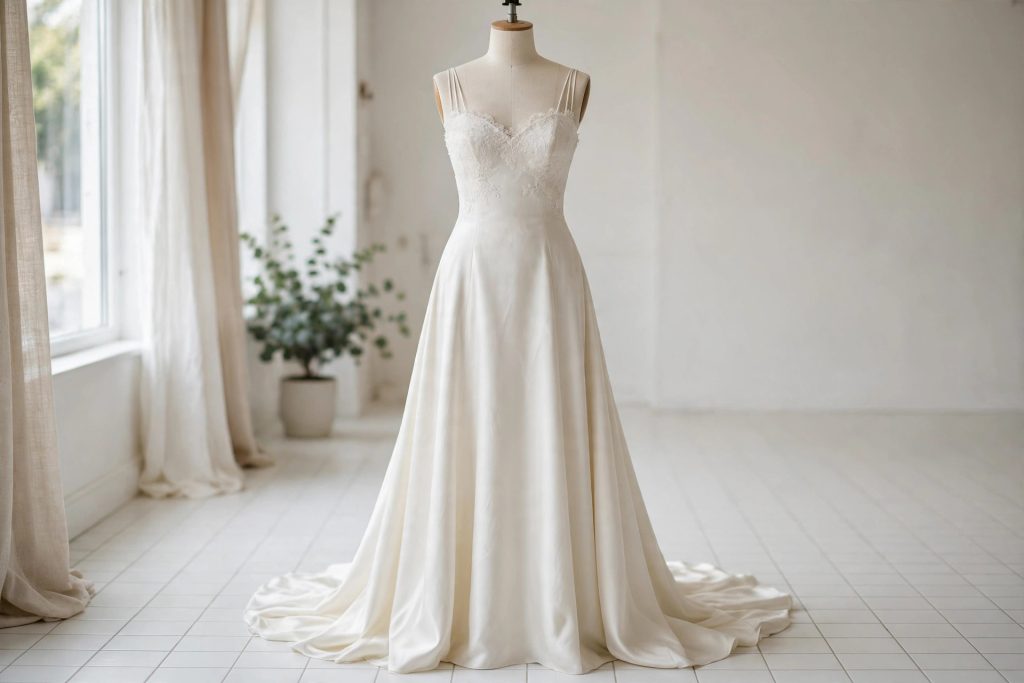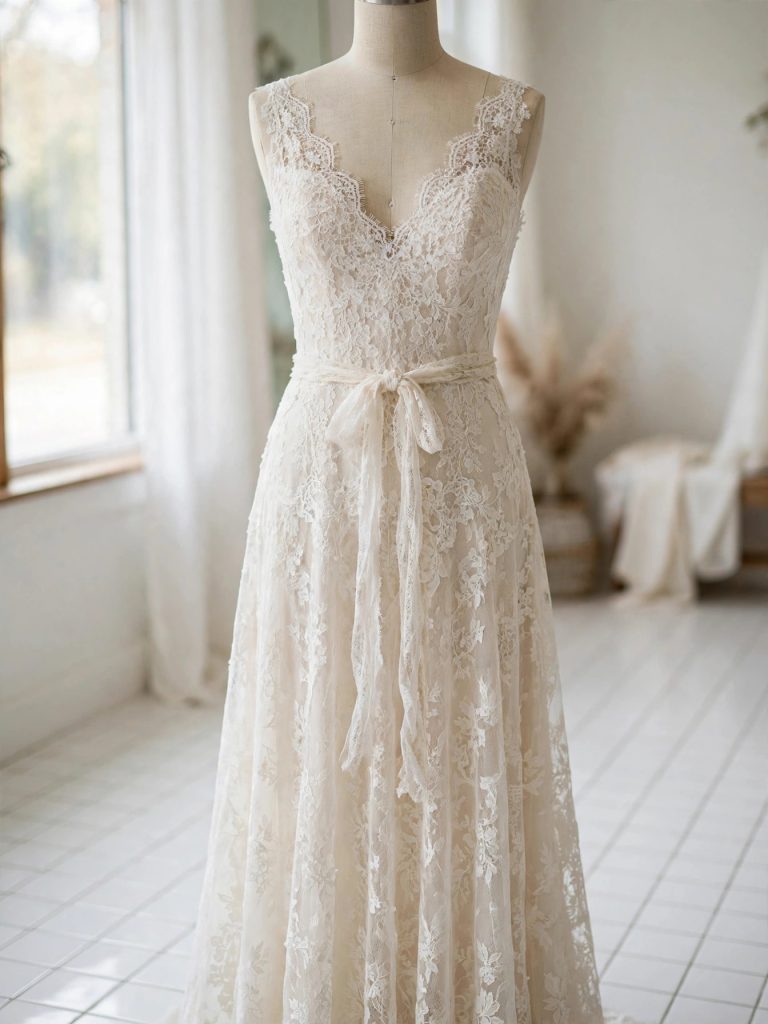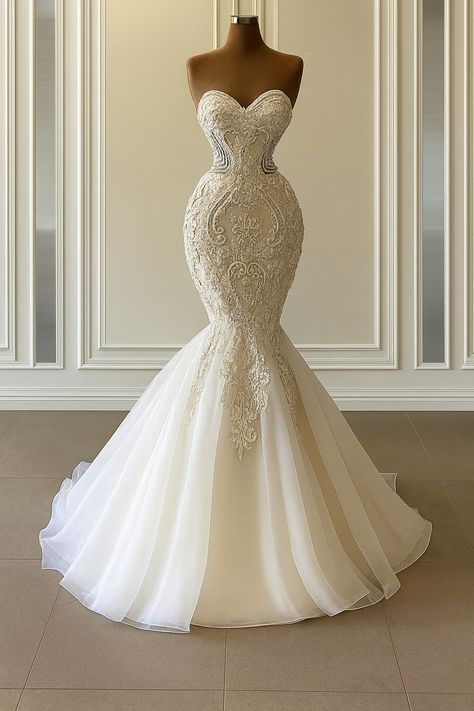
Short answer: a wedding dress factory quotation is a line-by-line breakdown of what your gown will cost to produce — fabric, trims, labor, packaging, and shipping terms — and reading it well means checking that every line is clearly specified, comparable with other quotes, and tied to a written timeline.
Most first-time bridal buyers treat a factory quote as a single number: the price per dress. That is the fastest way to misunderstand what you are buying. Two quotes for the “same” gown can differ by 40% and both be honest — one includes quality lace, hand-sewn appliqué, and door-to-door delivery, while the other prices the fabric only and leaves freight to you. This guide walks you through every section of a wedding dress OEM quotation from the factory side, so you can read any quote like a buyer who has done it a hundred times.
What Does a Wedding Dress Factory Quotation Normally Include?
A complete quotation includes the unit price per style, a material specification, sample charges, lead times for sampling and bulk production, payment terms, and the shipping terms (EXW, FOB, or DDP). If any of these are missing, the quote is a starting figure, not a finished offer.
A well-prepared quote typically shows: the style name or reference number; the unit price with the minimum order quantity (MOQ) it is based on; the fabric and lining specification (fiber content, often with weight in GSM); the trims (lace type, zipper, boning, buttons); the size range and grading included; the sample fee and how many revision rounds it covers; the bulk production lead time; the payment schedule; and the shipping term. Each line is a question you can ask — and a good factory expects you to ask.
Private-label details matter too. If you want your own brand labels, hangtags, and garment bags, confirm whether they are included in the unit price or listed separately. At OEMOD Factory, private-label basics (your logo on the main label and hangtags) are part of the standard private-label service rather than a surprise add-on — but this varies across the industry, so always check the quote.
How Is the Unit Price of a Wedding Dress Calculated?
The unit price is the sum of fabric, trims and linings, labor, packaging, factory overhead and quality control, plus the factory’s margin. Fabric is usually the largest cost driver, followed by handwork.
What moves the number: the fabric itself (a silk-blend mikado costs far more than polyester satin; hand-cut lace appliqué costs more than a printed pattern); the handwork (hand-sewn beading and hand-rolled hems are labor-intensive); the construction (a structured corset bodice with boning and multiple lining layers takes more pattern and sewing time than a simple slip silhouette); and the order quantity (unit price falls as quantity rises, because fabric is bought in bulk and setup costs are spread). For the full breakdown, see our wedding dress manufacturing cost guide.
One practical tip: always note which quantity the unit price is based on. A quote of $68 per gown at 100 pieces and $85 at 30 pieces can come from the same cost structure. Ask for a small price ladder (for example, 30 / 50 / 100 pieces) so you can see how the unit price moves before you commit.
What Do EXW, FOB, and DDP Mean on a Wedding Dress Quote?
EXW means you handle everything from the factory door; FOB means the factory delivers the goods to the port of shipment; DDP means the factory delivers to your address with duties and taxes paid. Always compare quotes on the same term.
- EXW (Ex Works): the price covers the gowns packed at the factory. You arrange pickup, international freight, insurance, customs clearance, and delivery. Cheapest-looking number, most work for you.
- FOB (Free On Board): the factory handles export clearance and delivers the cartons onto the vessel at the port. You arrange the ocean or air freight from there — the most common term for first-time importers working with a freight forwarder.
- DDP (Delivered Duty Paid): the factory (through its forwarder) handles freight, customs clearance, and duties, delivering to your boutique or warehouse. The highest-looking number — and often the simplest for small buyers.
A $75 FOB quote and a $92 DDP quote may describe the identical gown and identical freight cost — the difference is only who manages the logistics. Ask every factory to quote the same term, ideally DDP to your ZIP or postal code, so the comparison is apples to apples.
Which Lines on the Quote Reveal Hidden Costs?
The lines most buyers skip — fabric surcharges, sample fees, size grading, QC, special packaging, and how freight is calculated — are where unexpected costs usually appear. Check these five:
- Fabric sourcing surcharges. If the factory must buy a specific lace in a small quantity for your order, mills may charge a small-lot surcharge. Check whether the quote assumes stock fabrics or special orders.
- Pattern and sample fees. Custom designs need a pattern drafted from your tech pack, plus one or more samples before bulk. Ask what the sample fee covers (how many revision rounds) and whether any of it is credited against the bulk order.
- Size grading. Confirm the quote includes your full size run, not just the sample size — grading and extra fabric for larger sizes can add cost.
- Packaging. Standard polybag packing and export cartons are usually included; individual garment bags or branded boxes may be separate lines.
- Freight calculation. Gowns are bulky — shipping is often charged by volumetric weight rather than actual weight. Ask for estimated carton dimensions and total CBM so your forwarder can price freight accurately.
None of these are tricks — they are normal cost items. The problem only arises when they are not written down. A quote that lists them explicitly is a quote you can budget around.
How Do You Compare Two Wedding Dress Factory Quotes Fairly?
Normalize both quotes to the same specification, the same shipping term, the same MOQ, and the same QC and packaging terms — otherwise the cheaper quote usually just leaves more out. Run through this checklist first:
- Same gown specification: identical fabric, lace, lining, silhouette, and construction — ideally attached to a tech pack or confirmed sample.
- Same shipping term and same destination.
- Same quantity tier, or quotes at the same two or three quantity points.
- Same packaging standard and QC commitment (full inspection vs AQL sampling).
- Same sample policy: revision rounds included, and what happens to the sample fee if you proceed.
- Same lead time promise, counted from the same trigger (deposit received, or sample approved).
Once normalized, the remaining price gap is meaningful — it reflects real differences in fabric sourcing, labor rates, and efficiency. If one quote is dramatically lower after normalization, treat that as a question, not a bargain: ask which fabric and construction they priced.
What Payment Terms Are Normal for Wedding Dress OEM Orders?
The industry standard is roughly a 50% deposit to start production, with the balance paid before shipment (or against the bill of lading copy). Sample fees are usually paid separately and upfront.
The deposit covers the factory’s fabric and trim purchases for your order, committed before a single gown is sewn. Be cautious of anyone demanding 100% upfront on a first order — and equally cautious of anyone willing to start bulk production with no deposit at all. Both are unusual. For repeat buyers terms sometimes relax, but deposit-then-balance remains the norm for custom and private-label production.
On samples: the fee reflects real pattern-making and sewing time, often around two to three times the wholesale unit price. At OEMOD, samples start from 3 pieces per style. Always get the sample policy in writing: how many revision rounds are included, and what triggers the move from sampling to bulk (usually your written approval of the final sample).
What Should the Lead Time Section Tell You?
A usable lead time section states the sampling lead time, the bulk production lead time, what each is counted from, and whether the timing matches your quantity. Vague promises like “fast delivery” are not lead times.
As a rough planning reference: sampling for a custom wedding dress typically takes about 5–10 days per round, and bulk production for a standard order runs around 30 days after final sample approval and deposit — then freight on top (roughly 7–12 days by air, 25–40 days by sea to the US, depending on route). Larger orders, complex handwork, or peak bridal season can extend these windows. Work backward from the date the gowns must be in your store and add a buffer. Our custom wedding dress timeline guide covers the full schedule from tech pack to delivery.
Also check what the clock starts from. “30 days” counted from sample approval is very different from “30 days” counted from your first inquiry. Get the trigger in writing.
What Are the Red Flags in a Wedding Dress Quotation?
Treat these as reasons to ask harder questions: vague fabric descriptions, no written sample policy, lead times that defy physics, no QC or packing line, and a price far below every competitor without explanation.
- “High-quality lace” with no specification. Reputable quotes name the material: fiber content, lace type, lining fabric. Generic adjectives are not specifications.
- No sample policy in writing. Without stated revision rounds, disputes about “one more change” are almost guaranteed.
- Impossible lead times. A fully custom beaded gown quoted at 10 days door-to-door should raise questions, not excitement.
- No QC or packing line. If quality control is not mentioned, ask who inspects the gowns and to what standard before they ship.
- The outlier price. When four factories quote $70–85 and one quotes $38 for the “same” gown, the outlier is pricing a different gown — thinner fabric, simpler construction, or skipped steps. Ask for the exact spec behind the number.
Frequently Asked Questions
Should I ask for a quote with or without fabric included?
Ask for the full-package quote (fabric included) first — that is the number you will actually pay per gown. A labor-only (CMT) quote is useful only if you supply your own fabrics, which most first-time buyers do not. Comparing a CMT quote against a full-package quote without realizing it is one of the most common beginner mistakes.
Is a lower-MOQ quote always more expensive per piece?
Almost always, yes — and legitimately so. Smaller runs mean higher per-yard fabric costs and setup spread over fewer gowns. If your boutique is testing a new style, a higher per-piece price at a low MOQ is usually smarter than a large commitment for a lower unit price. Our MOQ guide explains how minimums work in practice.
Can I negotiate a wedding dress factory quotation?
Yes, within reason. Quantity, payment schedule, packaging, and shipping terms are negotiable; the factory’s labor and material costs are not. The most productive negotiation is usually about structure: a mixed-size, mixed-color low-MOQ start with an option to scale, or DDP delivery so your landed cost is fixed.
Does the quoted price include shipping to the US?
Only if the quote says so, under FOB or DDP terms with your destination named. An EXW quote never includes international freight. When in doubt, ask: “Is this price EXW, FOB, or DDP to [your city]?”
How long is a factory quotation valid?
Typically around 30 days. Fabric and trim prices move with the market, and a quote is a snapshot of costs at the time it was prepared. If your decision takes longer, ask the factory to reconfirm the price before you pay the deposit.
What should I send to get an accurate quote?
The more precise your input, the more accurate the quote: a tech pack (or at minimum clear sketches or reference photos), fabric and color direction, size range, target quantity, and delivery deadline. If you are still developing the design, start with the factory’s existing styles under private label — see how that process works in our manufacturing process guide.
Reading a quotation is a learnable skill: specify everything, normalize before comparing, and get the terms in writing. If you are comparing factories for your boutique’s next collection, browse the OEMOD Factory wholesale catalog or contact our team for a detailed, line-by-line quotation on your styles — private label from 10 pieces per style, with your logo on the labels and hangtags.