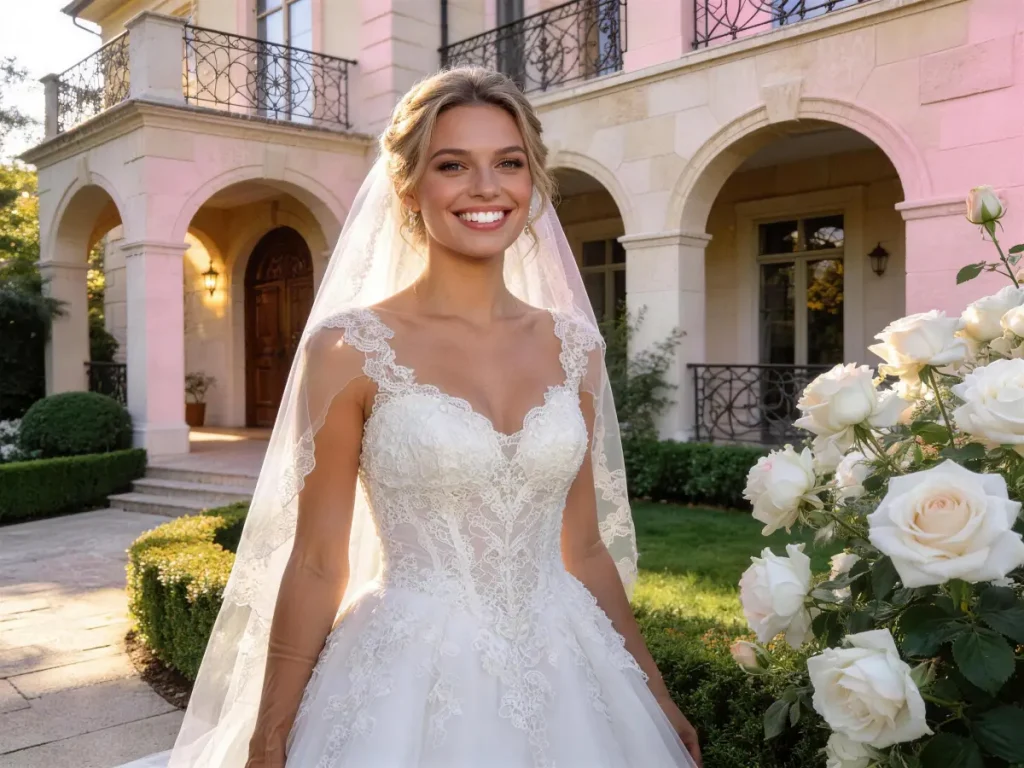
Sheer mesh sleeves are where a winter dress goes to be argued about. On the Gaylord-style spec sheet this REORIA style is one line — mesh sleeve, lined body, done — and on the factory floor it is three separate problems wearing one dress as a disguise. The mesh has to stretch enough to go over a hand and recover enough to sit smooth at the wrist. The join at the shoulder has to hold a fabric that tears like tissue against a bodice that does not give at all. And the whole thing has to survive a January wedding, which means a heated hall, a cold doorway, and a wearer who will pull the sleeve down over her knuckles in every photograph and then wonder why the cuff looks tired by dessert.
I run production on styles like this, which means my relationship with mesh is mostly measuring how it misbehaves. A mesh sleeve cut on the same pattern as a solid sleeve comes back wrong, because mesh grows. Not dramatically. A centimetre over a full sleeve length if the roll has been sitting stretched on the cutting table, a little more on the bias-hungry parts near the elbow. Good factories rest mesh panels after cutting, the way you rest elastic, and check the sleeve length again before setting. The cheap version of this dress skips the rest, ships sleeves that fit the size chart in the morning and fit nobody by the time they have hung in a warm stockroom for a month.
The shoulder join is the repair bill
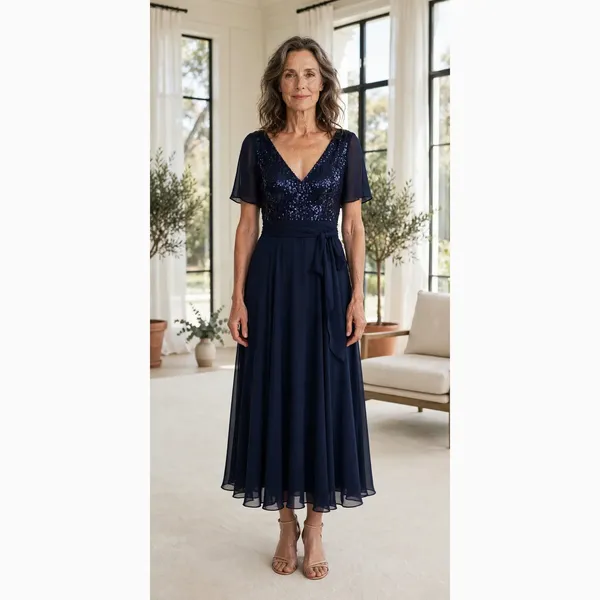
Where mesh meets bodice is the seam that decides the returns. Mesh cannot take a standard seam allowance and a standard stitch without the needle holes becoming a perforation line, and a perforation line in mesh is just a tear that has been scheduled. The fixes are known: a narrow strip of the bodice fabric or a soft binding behind the join, a slightly longer stitch, and an operator who slows down instead of feeding it through at jersey speed. Each fix costs seconds. Seconds are the currency. A buyer comparing two quotes on this style, a dollar apart, is usually looking at exactly those seconds — one factory priced the join properly, the other priced the photograph.
Then there is the colour problem nobody puts in the listing. Sheer mesh shows the dye lot twice. The lined body hides a small shift between lots; the sleeve, being transparent and worn against skin, announces it. A sleeve cut from lot B sewn to a body from lot A can look like a different dress in daylight and the same dress under warm hall lighting, which is why the argument about it never resolves — both sides have photographs and both photographs are honest. The discipline that prevents it is boring: sleeves and body from the same roll, cut in the same lay, bundled together so a later replenishment order does not quietly marry two lots at the shoulder.
What winter actually does to this dress
Winter weddings are hard on sheer sleeves in a specific way: static. Dry heated air, a lined synthetic bodice, a mesh sleeve — the sleeve clings to the arm in patches and floats in others, and in photographs it reads as poor fit even when the fit is fine. Better versions of this style use a mesh with a little weight to it, which drapes instead of clinging, and that choice is a fabric-grade decision made before anyone talks about price. It is also why the same style name can hide two different dresses. Ask which mesh, in grams, not which photograph.
No, I should be fair to the style before I bury it in cautions, because a sheer-sleeve winter dress solves a real problem. Guests want coverage without a cardigan and warmth is not actually the point — nobody is warm in mesh, and nobody sensible claims otherwise. The point is the arm is covered, the silhouette stays formal, and the wearer is not adjusting a wrap all evening. When the join is bound, the mesh is rested, and the lots are matched, this is a dependable mid-price winter style that boutiques reorder. The failures I see are never the concept. They are the three shortcuts, taken one at a time, each too small to argue about until they are all in the same dress.
Long sleeves in winter are a whole family of decisions, and the REORIA long sleeve wedding guest maxi dresses reviewed here earlier sit at the plainer end of it, while the BTFBM fall ruched maxi dress shows what ruching does to the same basic brief — same season, same sleeve length, completely different arguments at the sewing table.
Questions buyers and stores actually ask
Why do sheer mesh sleeves sometimes arrive longer on one side than the other?
Because mesh grows under its own handling. If panels are cut and sewn immediately, the side that spent longer stretched on the lay or under a presser foot keeps a little more of that stretch, and a full sleeve length turns a small percentage into a visible difference at the cuff. Factories that rest cut mesh panels and re-check sleeve pairs before setting mostly avoid it. If you receive a bulk with uneven sleeves, compare several units before concluding anything — one uneven pair is a sewing slip, a pattern of them is a cutting-room process that skipped the rest step.
Ten pieces per style to start — what should a boutique check first on this dress?
The shoulder join, inside out, before anything aesthetic. Look for a binding or a backing strip behind the mesh join and give the seam a firm, honest tug. Then check the sleeve against the body in daylight for a colour step, and measure both cuffs against the size chart after the dress has hung for a day, not straight out of the polybag. Those three checks cover the ways this style actually fails. The neckline, the zip and the hem are ordinary work that most factories get right most of the time.
Will a mesh sleeve keep a guest warm at a winter wedding?
No, and any listing implying warmth from a sheer sleeve is selling a feeling rather than a fact. Mesh is a single open layer; it covers the arm visually and adds almost nothing against cold. What it does do is remove the need for a wrap or cardigan indoors, which is the real comfort at a heated venue. For an outdoor ceremony in January, the honest answer is a coat over it. Stores do better framing this as a coverage style than a warmth style, because the returns differ: coverage buyers keep it, warmth buyers send it back.
The sample was perfect and the bulk sleeves feel thinner. What happened?
Probably a mesh substitution, the quietest change in this category. Mesh is bought by weight and hand-feel is hard to specify in words, so a replenishment order can arrive on a lighter roll that photographs identically. The defence is a retained sample plus a specification in grams per square metre written into the order, not the phrase ‘same as sample’ — those three words have settled nothing in any dispute I have seen. Weigh a sleeve panel from the sample and one from the bulk on a kitchen scale if you suspect it. Numbers end arguments that adjectives cannot.
The last bulk of a mesh-sleeve style I signed off went out with the sleeves a half centimetre longer than the sample, on purpose, because the mesh on that roll relaxed short in the first lay and the cutter caught it. Half a centimetre, argued over for an afternoon, invisible in every photograph the store will ever take. That is the level this category is won and lost at, and it is why the listing copy, which talks about elegance, tells a buyer almost nothing she can use.