A short rhinestone veil is a bill of materials pretending to be an accessory. Net, comb, edging, stones, glue or claw settings, and a labour line for whoever sits setting stones in a curve that has to read as deliberate rather than spilled. I work the supply side of bridal accessories, which means I see this product as a spreadsheet first and a veil second, and the spreadsheet explains nearly everything buyers argue about later — why two listings that look identical differ by half in price, why the cheap one sheds, and why the shedding starts, with grim reliability, about three weeks after delivery rather than at inspection.
Start with the stones, because the photograph starts there too. Rhinestones for veils come in grades that are indistinguishable in a listing image and very distinguishable in the hand: faceted glass at the top, acrylic below it, and resin below that, each step down lighter, duller up close, and cheaper by a factor rather than a percentage. Weight is the tell a buyer can use without equipment. A short veil scattered with glass stones has a slight, definite heft at the edge; the resin version feels like the net alone. Neither is automatically wrong — a Halloween costume veil in resin is honestly specified if the listing is honest — but a bridal listing priced like glass and built in resin is where the margin quietly lives.
Glue is a schedule, not a detail

How the stones are attached decides when the veil fails. Hot-fix stones with a proper heat press bond are respectable. Claw or rim settings are better and slower and price accordingly. Cold glue, dabbed by hand, is the economy option, and cold glue on net has a known biography: it holds beautifully at inspection, softens in a warm container or a hot stockroom, and lets go in the customer’s hands in week three. The containers are the part buyers forget. A summer shipment crosses the Pacific in a box that can sit at temperatures no glue dab was tested at, which is why stone-shedding complaints cluster by shipment rather than by unit. It looks like a quality problem. Half the time it is a logistics temperature wearing a quality problem’s clothes.
The comb deserves its own paragraph because it gets none in the listings. A short veil lives or dies on a comb: metal combs grip and can be bent back to grip again; plastic combs flex, smooth their teeth within a season, and slide in fine hair no matter what the photographs promise. The attachment stitching matters at the same scale — a veil gathered and stitched to the comb at enough points drapes in a controlled pouf, while one tacked at two points twists. None of this is visible in a product image. All of it is visible in the return rate, which is why the same veil design can carry a four-star life at one store and a two-star life at another that bought the cheaper comb.
Halloween changes the specification
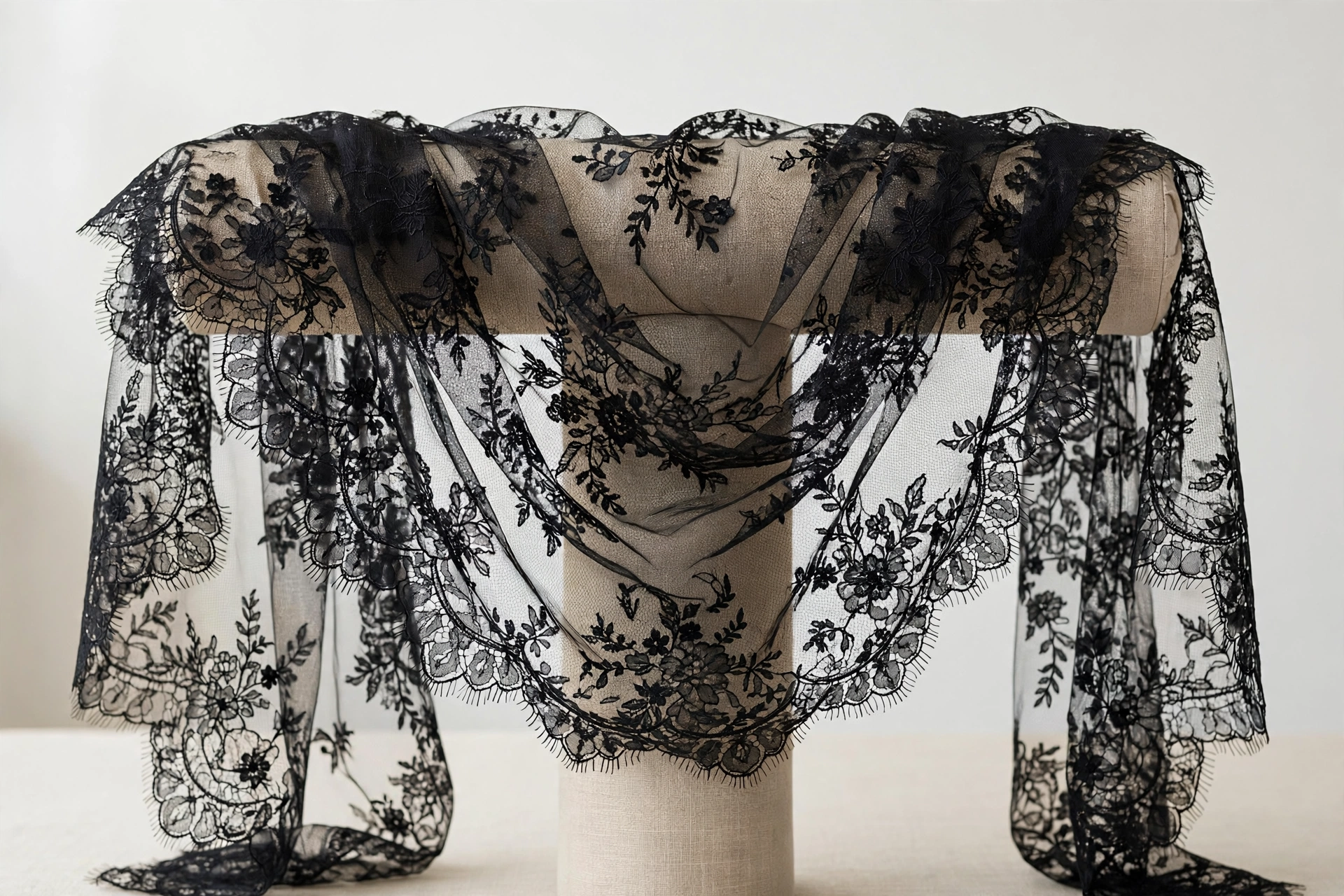
October rewrites this product. A share of short rhinestone veils sold in autumn are costume pieces — bride-of-Halloween, gothic parties, photo shoots — and costume demand tolerates resin stones and plastic combs because the wearing is one night and the photographs are dim. The supply chain knows this and, less charmingly, lets costume-grade stock drift into bridal listings when October inventory runs long. A boutique ordering rhinestone veils in September for the autumn bridal season is buying in the exact weeks when the two grades are most likely to be mixed in the same carton. The check is unglamorous: weigh the veil, flex the comb, and pull — firmly, once — at a stone over the bin. Do it in September, not when the bride is in the shop.
There is also the matter of what ‘short’ means, because the trade uses the word the way it uses all veil lengths: loosely. Short can be shoulder, elbow, or a blusher length depending on the maker’s habit, and the difference between them is the difference between a veil that sits as pictured and one that ends at an odd point on the back and reads as a mistake. Centimetres are the only language that survives translation here. A listing that will not state a length in centimetres is telling you something about how the rest of the specification was written, too.
Veil buying splits along exactly these lines elsewhere on this site: the short two-tier veil with white binding is the plain end of the same supply chain, and the one-tier lace cathedral and fingertip veils show what happens to cost when length and edging, rather than stones, do the spending.

Questions buyers and stores actually ask
How can a buyer tell glass rhinestones from resin ones without a lab?
Weight and temperature, mostly. Glass stones make a short veil measurably heavier at the edge and feel cool against the skin of the wrist; resin and acrylic feel neutral and almost weightless. Hold a stone between your fingers under a desk lamp as well — glass throws a sharper, whiter sparkle with clearer facets, resin looks slightly milky at the edges. None of these tests needs equipment, and together they are reliable enough for a buying decision. If a supplier resists sending a physical sample for a stone product, that resistance is also information.
Why do stones start falling off a few weeks after the veil arrives?
Usually the bond, not the stone. Cold-glued stones on net pass a delivery inspection because the glue is fresh and the veil has not yet been warm, flexed and handled. Heat in transit or storage softens marginal glue, and ordinary handling does the rest, which is why shedding tends to start across a whole shipment at roughly the same age. Heat-bonded and claw-set stones do not follow this pattern. When shedding starts, check whether it is shipment-wide before blaming a single unit — the pattern points at the attachment method and the journey, not at one careless maker.
Metal comb or plastic comb — does it really matter on a short veil?
It is one of the few specifications that matters every single wearing. A short veil has little weight to help it stay, so the comb is the whole anchoring system. Metal teeth grip, can be re-bent when they loosen, and hold in fine or slippery hair with a crossed pin or two. Plastic combs are cheaper and lighter, their teeth smooth with use, and they are the leading suspect when a veil ‘just would not stay in’ at an event. For a costume worn once, plastic is a fair economy. For a bridal veil a store stakes its fitting-room reputation on, metal is the specification to write down.
The listing just says 'short'. How long is the veil, actually?
There is no enforced standard, which is the honest answer. In practice, short veils are sold anywhere from blusher length, around the face, down to elbow length, and makers use the word for all of them. Buy in centimetres: ask for the length from comb to hem, measured hanging, and compare it against where you want the edge to fall on an actual person. A maker who produces veils seriously will answer in one message, because their patterns are written that way. Vagueness on the easiest measurement in the product is a reliable preview of the rest.
Is a rhinestone veil sensible stock for a small bridal boutique?
In small depth, yes, with the specification locked. It is an accessory with a high attach rate — brides who did not plan a veil try one and the sparkle does the selling — and it takes no size run, which frees the budget that dresses eat. Ten pieces across two lengths is a workable start. The conditions are the ones above: glass stones bonded or set, a metal comb, a stated length in centimetres, and a sample pulled and tugged before the bulk ships. Boutiques get hurt by this category when they buy the photograph. Bought as a bill of materials, it behaves.
None of this makes the product a bad one. A short rhinestone veil, in glass, on a metal comb, stones bonded rather than dabbed, is a genuinely pretty thing that earns its price and photographs like jewellery. The category’s trouble is that every one of its quality decisions is invisible at the point of sale and noticeable three weeks later, in the small clicking sound of a stone landing on a dressing-table, in a shop that has already banked the sale and now has to buy the trust back.