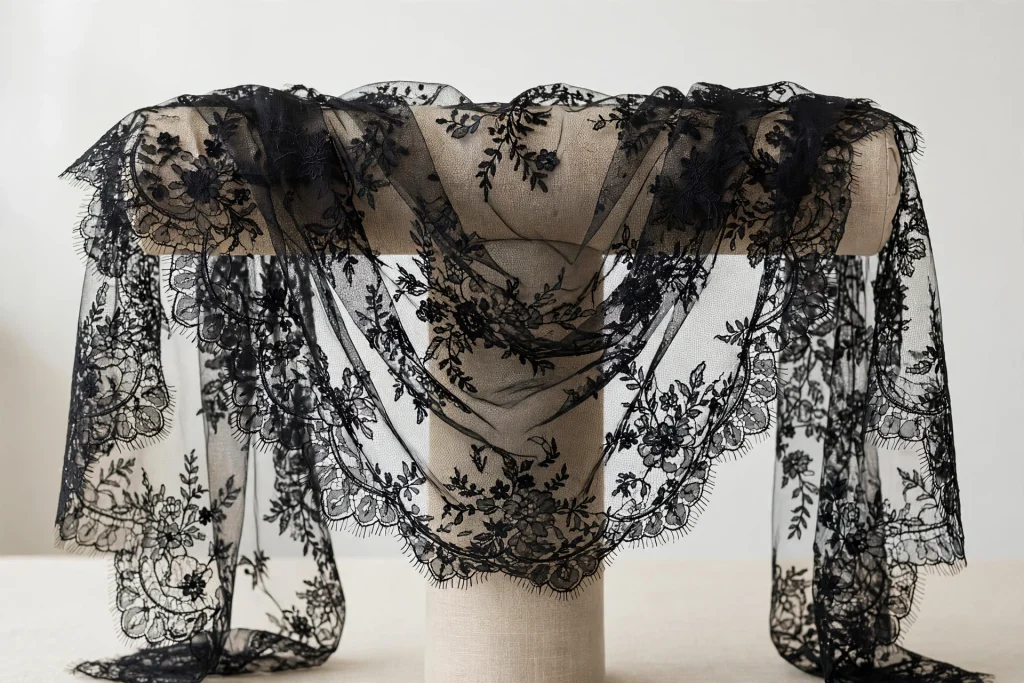
Three weeks before Halloween last year, a carton of black lace veils arrived back at our inspection station with a complaint tag tied to the strap, and the tag said “rips when handled,” which is the kind of sentence that ruins a QC supervisor’s afternoon. I pulled one veil out. The lace along the bottom edge had been cut raw, no stitch and no binding, just open fibers, and the plastic comb was sewn into a fabric loop barely wider than my thumbnail. Wrong. The factory had passed the batch a month earlier because the photo sample looked dramatic on a mannequin, and nobody had thought to tug the comb the way a bride would on a windy October night, when the entire point of a black lace veil is surviving the drama. That was Acenail’s, or one of the batches that ships under that name. Doesn’t matter.
The buyer wanted gothic drama at a costume price and then acted surprised when the veil behaved like a costume, and that is the exact pattern that pushes me to the factory’s side even on the days when I feel like yelling. Not fair. The purchase order was priced for photographs, not for weddings. The floor delivered precisely what the money bought, and then the inspection report turned into a little theater where everyone pretended the failure was some deep mystery. I’ve watched this play out enough times that I can recite the dialogue from memory, the buyer blaming workmanship, the factory pointing at the unit price, and me standing in the middle with a loupe and a broken comb. Honestly, I’m starting to doubt whether either side wants these things to last. Right.
What actually breaks on this veil, if you’re buying Acenail’s black lace version for a Halloween wedding or a funeral or whatever your plan is, comes down to two attachment points that nobody ever bothers to photograph. Fine. The plastic comb sits in a loop of self-fabric that is usually single-needle stitched, and when I stress-tested the tension by pulling it the way a hairstylist would, the loop gave at about the force of a firm tug, which tells you everything about six hours of dancing. The second weak spot is the lace itself, because the motifs are appliquéd onto a single layer of tulle with what looks like a narrow zigzag, and the raw outer edges catch on everything, including the teeth of that same comb. A long floral lace wedding veil built for real brides usually gets a finished edge or at least a folded binding, because whoever designed it had seen a bride cry. This one was designed to be photographed. That difference shows up around hour three.
The thing buyers keep missing, and I keep writing on reports that nobody reads, is that ten-piece starter orders for accessories like this almost always get made from leftover lace rolls, which means the black dye lot shifts between the confirmation sample and the bulk, and the comb supplier changes without anyone telling the sewing line. Shady. I once flagged a 30% shade difference across two cartons of the same order, and the merchandiser told me brides wouldn’t notice in candlelight, which is technically true and completely beside the point. When you are sourcing a lace mantilla veil or any black lace veil for resale, the question is never “does the sample look good,” because the sample always looks good. The question is whether batch twelve looks like batch one. Most factories at this price don’t even run a light-box check. They eyeball it. I’ve stopped pretending that shocks me.
Now, the tulle weight is actually decent for the price, lighter than I’d like but not the papery stuff that tears if you look at it, and the floral motif repeats cleanly without the jagged edges you see on cheap laser-cut lace. Actually, no. That’s not right. What I meant was the motif repeats cleanly on the sample I handled; I have no idea what the bulk repeat looks like, because I never got to inspect the full shipment before it left the building, and the sample room always keeps the prettiest piece. That’s the part of this job that makes me suspicious of my own reports. I write “acceptable” based on a sample that someone curated for me, and then the real cartons land somewhere in Ohio and I’m not there to see them.
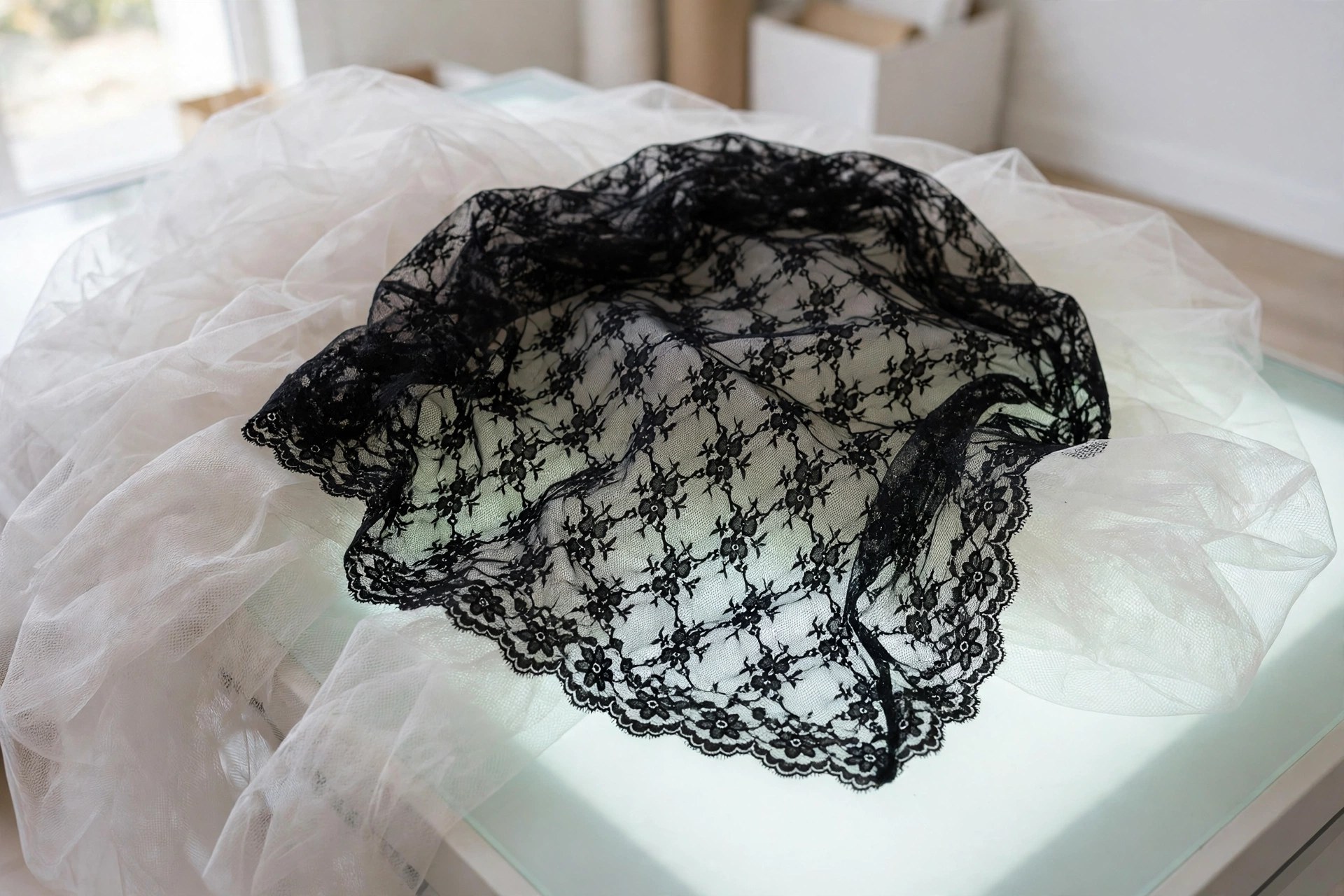
Whether the lace is cotton-rich or full poly, I couldn’t tell you without a burn test, and that’s not my department anyway, because the lab handles fiber content and I handle what I can see and pull and measure. Fair. What I can tell you is that the stitch density on the appliqué is around what you’d expect at this price, tight enough to survive shipping, not tight enough to survive a bride yanking it out of a bun at midnight. If you’re a boutique buyer wondering whether to stock this for the Halloween season, stop thinking like a consumer and think like someone who eats the returns. One return wipes out the margin on nine good sales. Nine.
When the cartons arrive, do this: pull five veils, not one, from five different cartons, because the one sitting on top is always the best piece in the whole carton, hand-picked by someone who knows exactly what an inspector does first. Quick. Then hold the lace up to a window, any window, because a single layer of black tulle will show you every thin spot the factory hoped you’d miss, and thin spots are where the rips start. And here is the part nobody wants to hear — the part where I go off-script for a minute — if your customer is buying this for one night, one Halloween wedding, one photo shoot, then all of this QC theater is overkill and you should just sell it and move on, because the veil will survive one night fine. My job is bulk orders. Ten pieces minimum, hundreds on reorder. Different game.
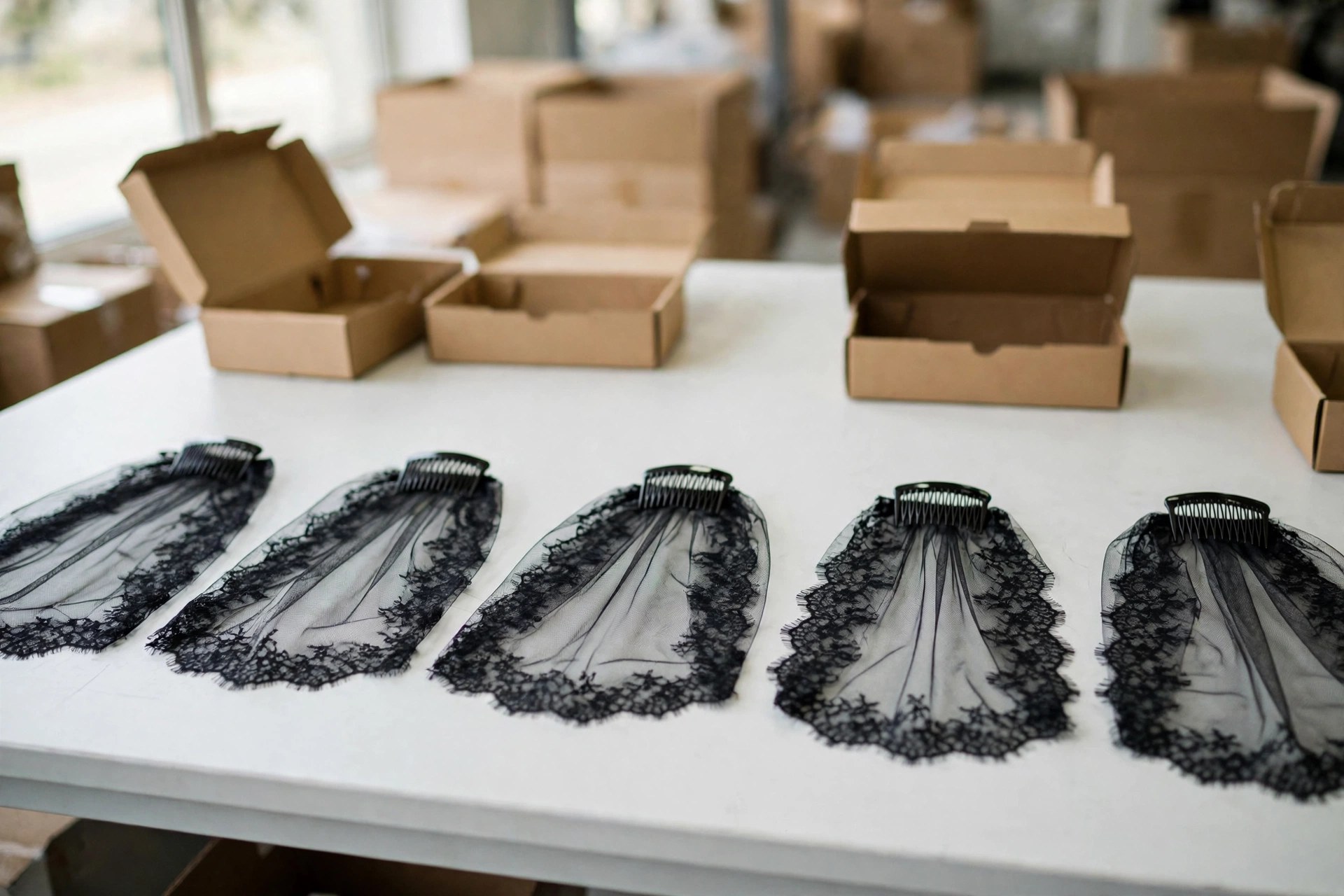
If you want a system for this instead of my grumbling, there’s a decent walkthrough of quality control on bulk wedding dress orders on this site, and most of it transfers to veils, because the failure logic is the same: check what moves, check what bears weight, check five pieces not one. True. The mistake is inspecting the pretty sample and calling it a day. I made it in my second year, signed off on a batch of sashes that looked perfect on the table and fell apart in transit, and I still remember the exact wording of the buyer’s email, because some failures stay with you longer than the good batches ever do.
I’m looking at the comb loop on my desk right now — I kept one from that returned carton, it sits next to my caliper — and I keep wondering whether the factory knew it would fail or just didn’t care enough to add a second line of stitching that would have cost them eleven cents. Eleven cents. That’s what stands between a veil that survives a wedding and one that ends up in my returns pile, and I still can’t decide which answer bothers me more. Probably the second one. Probably.