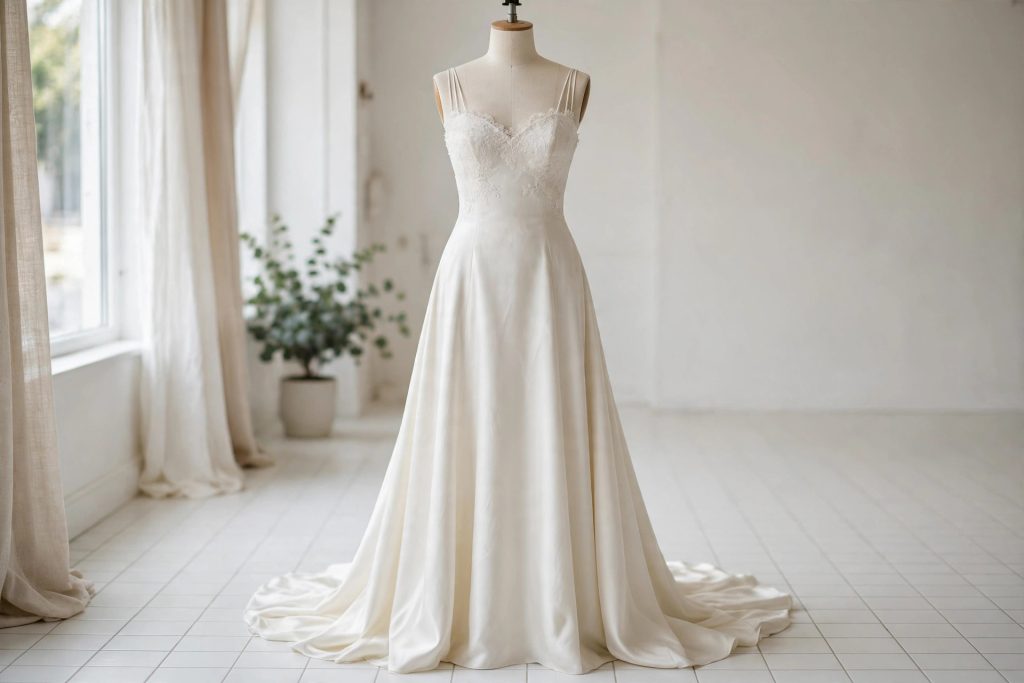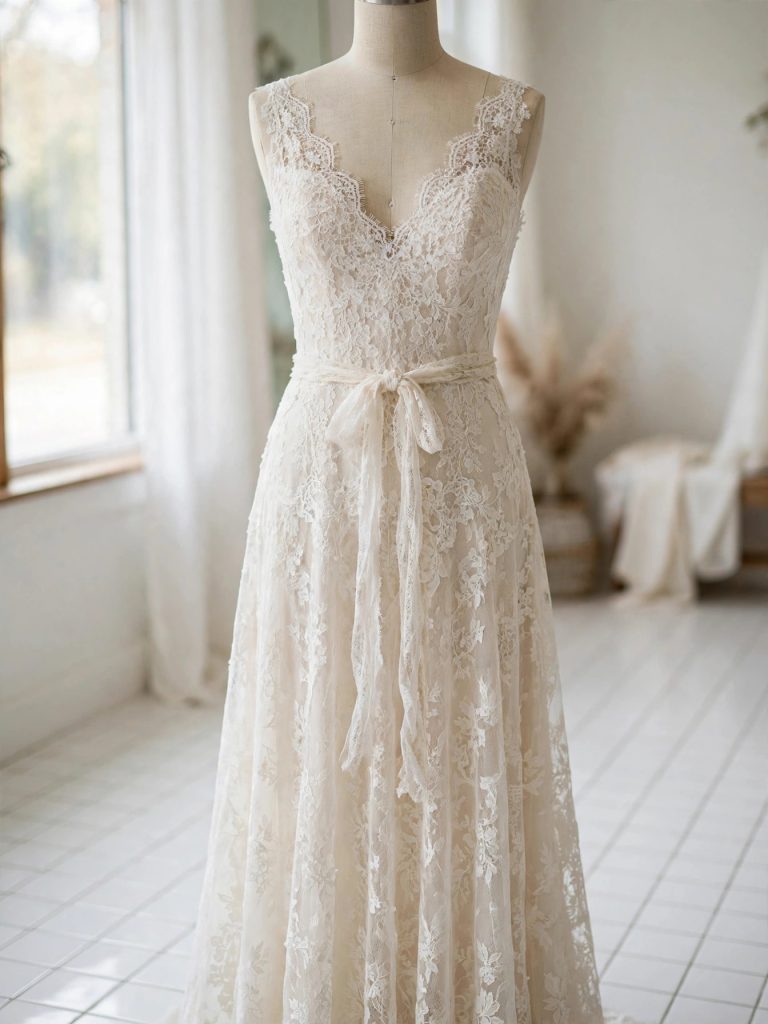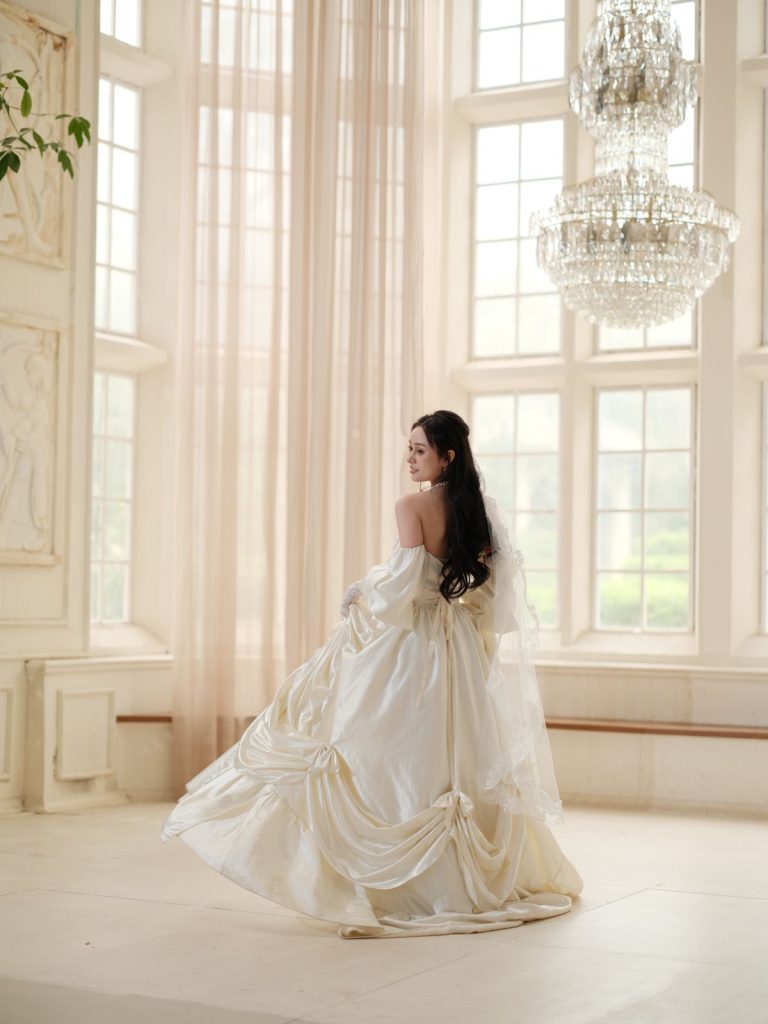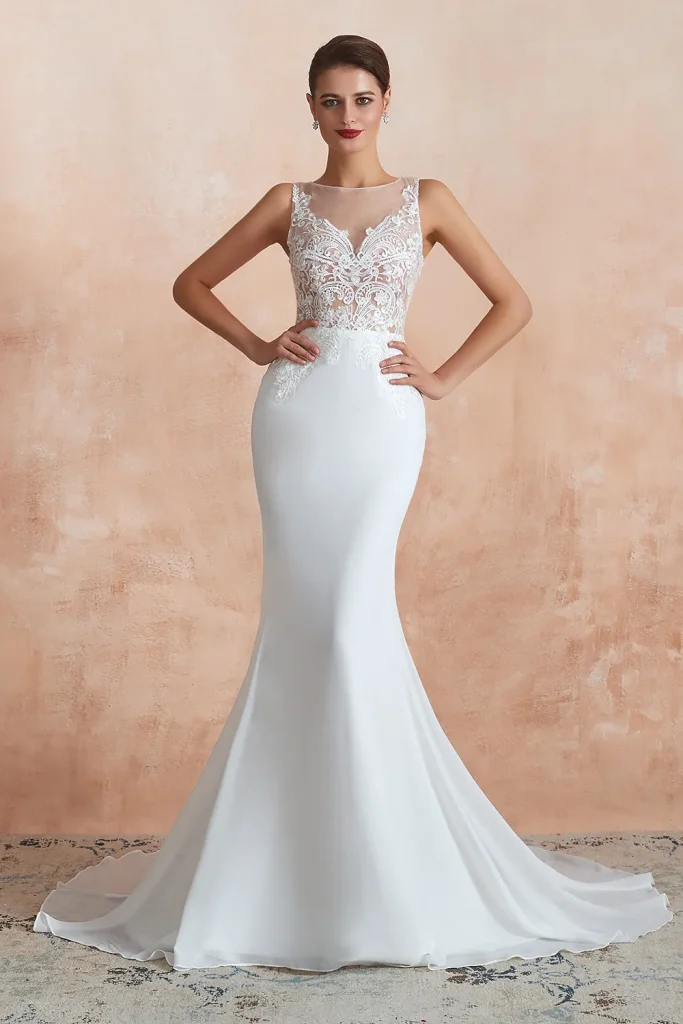
Some dresses fail loudly. A zip gives way, a seam opens, the review writes itself. A ruched floral maxi fails the other way, in photographs that come back slightly wrong and returns that say felt off, without ever naming a fault a store can fix. I read those returns for a living, and the ruched bodice is nearly always where the story starts, because ruching is a promise. It promises the bodice will gather softly and forgive an inch here or there. Whether it keeps that promise depends on decisions the customer never sees.
The style itself is easy to picture. Floor length floral skirt, gathered bodice, the kind of dress a guest wears to three weddings in a season when it is made right. The returns I read cluster around two complaints that sound like sizing and usually are not. The bodice felt tight by the evening. The flowers sat in a strange place. Both are construction speaking through the customer’s vocabulary, and translating them is most of my job.
Ruching is elastic wearing a costume
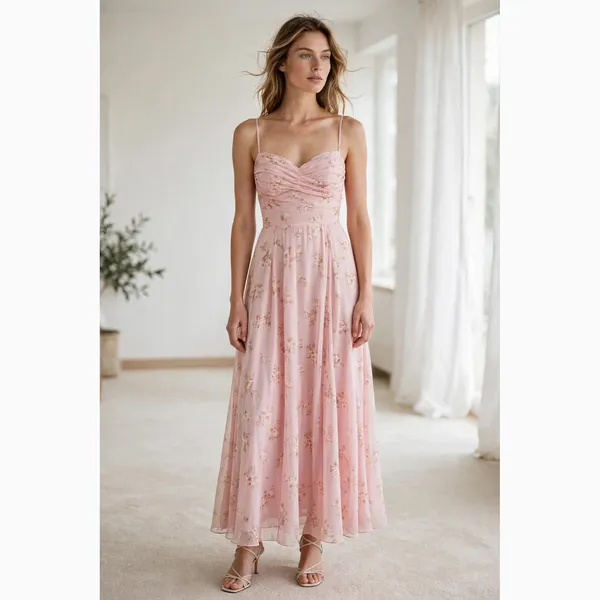
Those soft gathers are held by elastic or by shirring, and the tension is set piece by piece, shift by shift. Set it firm and the bodice photographs beautifully and slowly squeezes its wearer across a long reception, which is how a dress that fit at noon gets returned as too small after a Saturday wedding. Set it soft and the gathers slump by the second wear, and the same dress comes back as cheap looking. The middle setting is a range, not a point, and a size run sewn across two shifts can quietly contain both ends of it. Customers think they are reporting their bodies. They are reporting the tension dial.
This is also why the fit advice confuses everyone. A shopper between sizes is told the ruching will forgive, and across the ribs it sometimes does. It forgives nothing at the waist seam, where the gathered bodice is anchored to a skirt that does not stretch at all. Returns spike at exactly that seam, described as the dress being two sizes in one body. It is. That is how it was built, and a boutique writing size guidance for a wholesale order of this style should say so plainly instead of repeating the word forgiving until it means nothing.
Where the flowers land is a cutting decision
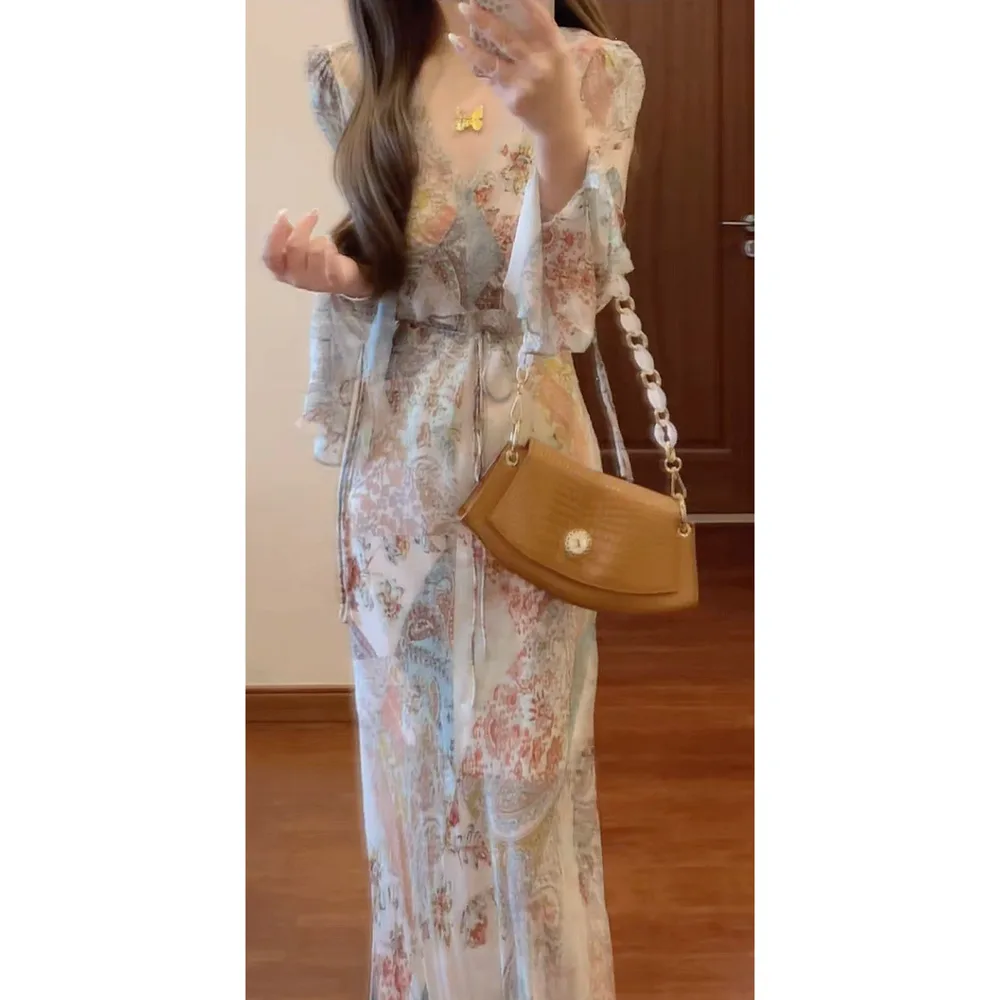
A floral maxi lives or dies on placement nobody consciously notices. A large bloom centered on the stomach reads as a target. The same bloom offset reads as a garden. Cutting rooms working fast cut without placing motifs, which saves real money per dress and randomizes every wearer’s photograph, so one customer gets the garden and the next gets the target. Better runs place at least the bodice motif, even when the skirt is left free. When a store asks me why one batch reviewed a full grade better than another batch of the identical listing, placement is the first thing I ask about, and it is rarely what the store thought to specify.
No wait. Buyers create half of this problem themselves. A buyer who negotiates a ruched floral maxi down hard on price is not told what the concession bought, but motif placement time and elastic quality are two of the first places a squeezed quote recovers its money. The dress that arrives is the dress the negotiation specified, and the returns desk is simply where the bill gets read out loud.
Evening complaints, morning data
Guest dresses share most of these failure patterns, so the boho long sleeve midi notes looks at a long sleeve boho midi where the cloth carries the blame, the summer floral mesh maxi review follows a floral mesh maxi with its own placement questions, and the Black Friday wedding maxi cost notes reads a discounted wedding maxi from the money side of the same trade.

Questions buyers and stores actually ask
The bodice fit at noon and felt tight by the reception. Is that a sizing problem worth exchanging over?
Usually it is a tension problem, and an exchange for the same size from the same batch may land on a dress gathered a touch softer or firmer, because the setting varies across a run. If the tightness sits across the ribs, that is the ruching working at the firm end of its range. Stores do better to check the waist seam first, since that seam never gives at all. I get this one wrong half the time myself from a written return alone. On the body, in the evening, it is much easier to read, which is sort of the whole problem with this style.
Big flower right on the stomach in my photos. Bad luck, or should the store have caught that?
Both. Motif placement is a cutting choice, and a run cut for speed randomizes it, so some wearers draw the target and most draw the garden. A store cannot inspect every skirt, but it can specify bodice placement in the order and check the first pieces off the line, where the habit gets set for the whole run. If your dress came from an unspecified run, nobody decided where your flowers would land. The cutting table decided by not deciding, and your photograph is the result.
Between two sizes in a ruched maxi. Does the gathering actually forgive the smaller size?
Across the ribs, partly. At the waist seam, not at all, and the waist seam is where the dress is truly sized. The gathering gives where it is gathered and nowhere else, so a smaller size borrows comfort from the bodice and pays for it at the anchor seam all evening. Take the larger size and let the ruching do the shaping it was designed to do. The seam does not care what the listing promised, and neither, by hour five, does the wearer.
A boutique ordering this style at ten pieces per style for a first run. What should the trial actually test?
Endurance, above everything else. Have the sample worn through a full day by somebody on staff, because this dress keeps its secrets until hour four. Check where the largest motif lands on the bodice of several pieces rather than one, and pull the gathering on two dresses side by side to feel whether the tension agrees with itself. A trial order spent standing in front of a mirror teaches almost nothing about a ruched maxi, and the returns data will teach the rest in public, at full price.
The pattern I trust most here is timing. Fit complaints about ruched bodices arrive after events, on Mondays and Tuesdays, written by people who wore the dress for six hours rather than six minutes. A dress tried at home in a mirror generates almost none of these returns, which tells you the problems are endurance problems, not first impressions. Have someone on staff wear the sample through a full working day before the bulk order is confirmed. It sounds insulting in its simplicity, and the returns keep arriving every Monday because almost nobody does it.