There is a question I have carried around the returns desk for a few years now, and a parcel last month brought it back. If an a line dress flatters everybody, why does this one keep coming back. The dress in the parcel was not damaged. The zip worked, the seams were clean, and the size on the label matched the size on the order, which I checked twice because the message attached to it said the dress had made the buyer look pregnant, and she was fairly sure nobody involved in the order was. She had bought the shape the advice columns send everyone to. She had measured herself. And the dress she received widened from a seam that sat well above her waist, so the cloth fell from under her bust and kept falling, and the flattering letter A she had been promised turned into a tent with sleeves.
I answer messages like hers for a living, on the side of the business where dresses come back and somebody has to read why. After a while you stop reading the reason code first. The code says size, or colour, or changed mind, because the form offers a short list and people pick the nearest word on it. The sentence underneath is where the truth sits, and in this category the sentences repeat in a way that still surprises new staff. Tent. Maternity. Nightgown. Three words, one problem, and the problem is almost never the woman and rarely the size. It is a seam in the wrong place wearing the right name.
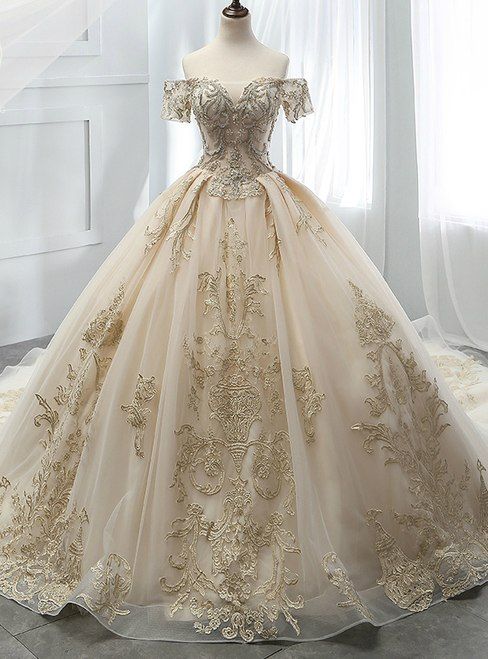
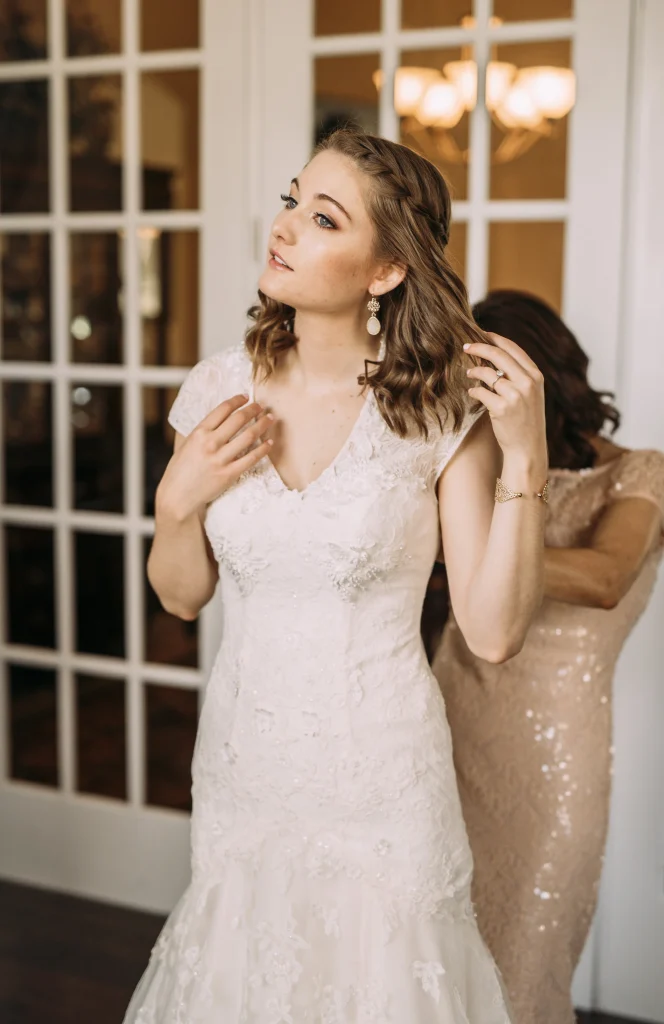
An a line dress, in the plain version of the thing, is fitted through the bodice and begins to widen at the waist, then keeps widening in a steady slope until the hem clears the body and swings. That steady slope is the whole garment. Move the start of it up by a hand’s width and you have a different dress that happens to share a listing title. Move it down and let the cloth stay narrow past the hip before it lets go, and you have a third one. All three get photographed from the front, on a model who stands the way models stand, and from the front they can look like cousins. From the side, which is how the buyer meets the dress in her own mirror, they are barely related.
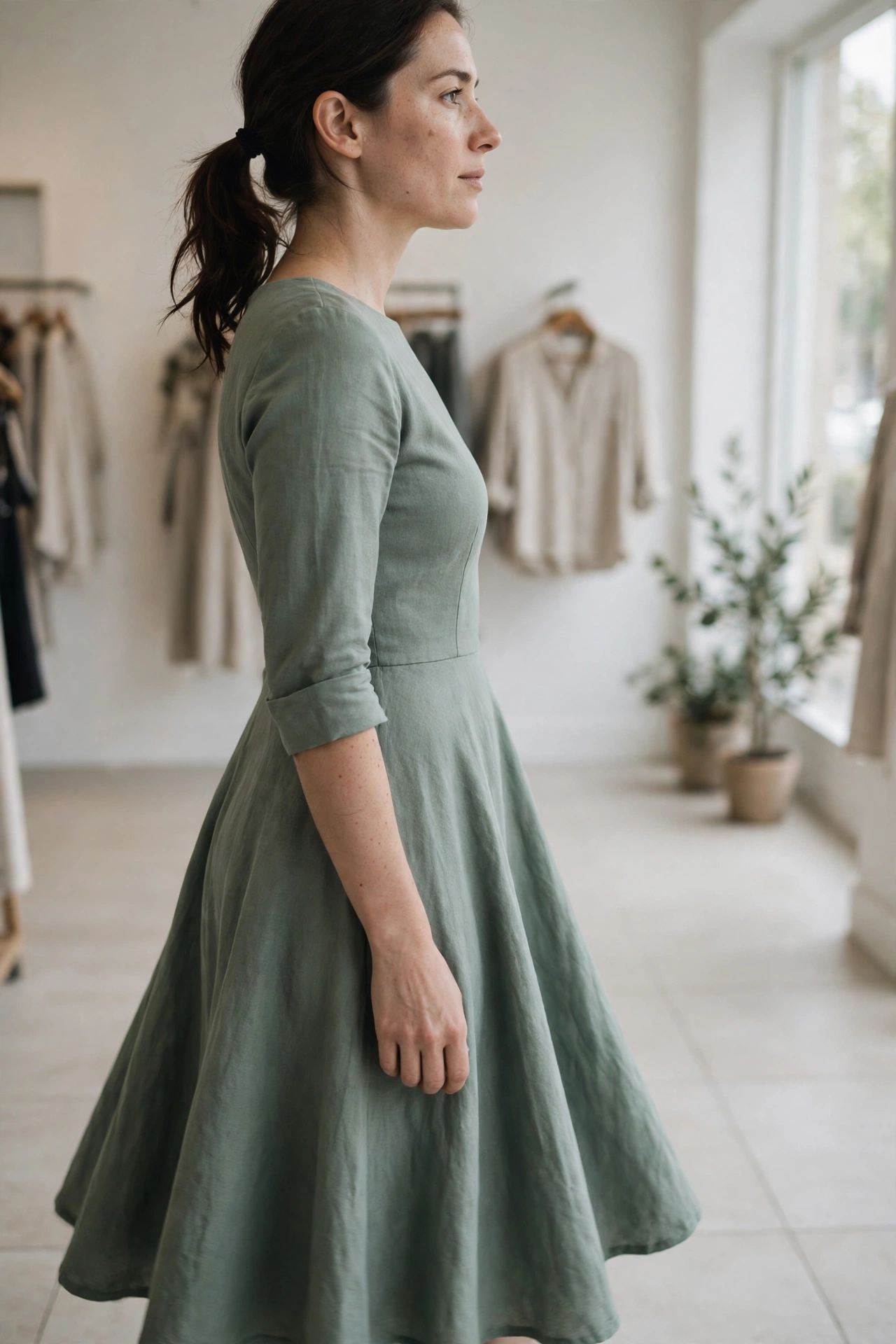
One label, three dresses, and only one of them keeps its promise
The waist-start version is the one the advice is actually about. The bodice ends where the waist ends, the skirt leaves from there, and the widest part of the garment arrives low, below the hip, where width reads as movement rather than as body. A woman with wide hips asking what type of dresses look good on wide hips is usually asking for exactly this geometry, whether or not she has the words for it. The cloth passes the hip instead of describing it, and it passes it on a slope she can predict. When this version comes back to us, the messages tend to be ordinary sizing messages. Waist a touch tight. Length longer than expected. The shape itself rarely gets accused of anything.
The high-start version is where my inbox fills up. The seam sits under the bust, the skirt is gathered or flares from there, and on a hanger it reads as romantic and easy. On a body it adds its width at the one place most buyers did not want width added, and because the cloth never comes back in at the waist, the eye reads the whole torso as one widening shape. That is the dress behind the maternity messages, and I have some sympathy for everyone in that thread, including the seller, because the seller often bought it under the same name the buyer did. Somewhere up the chain a pattern got described by its hem instead of by its seam, and the description travelled further than the dress ever did.
Then there is the version with no waist seam at all, cut in one piece that widens from the shoulder down. In a soft cloth it hangs close and calm and gets kept. In a stiffer cloth it stands away from the body all the way down, and the buyer looks like she is standing inside the dress rather than wearing it. Listings call this one A-line too, and swing, and trapeze, sometimes in the same paragraph, and the buyer has no way to know which garment is in the parcel until the parcel is in her kitchen. Print makes the guessing worse. A busy floral breaks up the slope of a skirt so completely that you cannot see where the widening starts, and I have laid a returned print dress flat next to its own listing photograph and failed, myself, to find the seam line in the picture. Solid colours tell on themselves in photographs. Prints keep the secret until the dress is on.
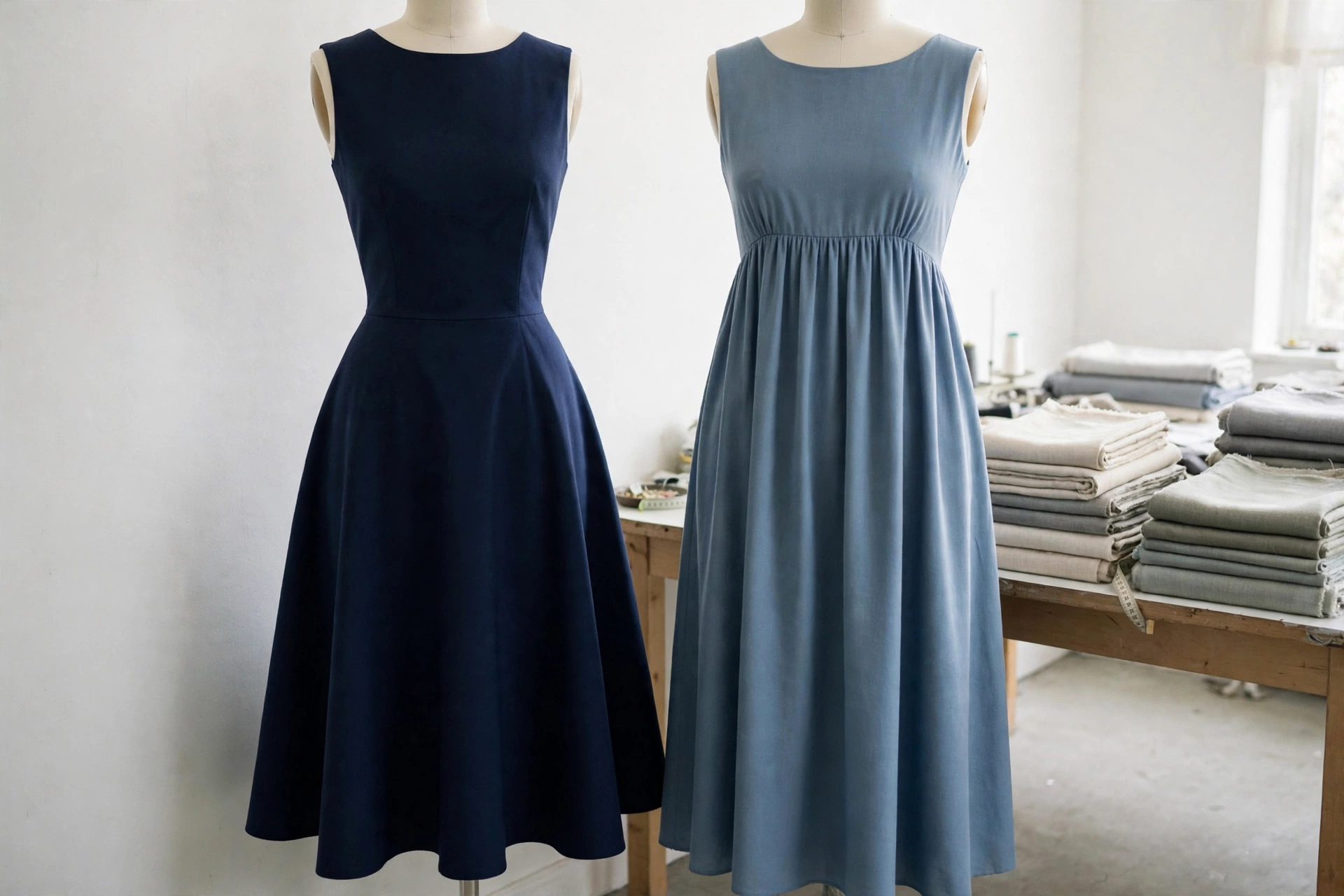
The fabric decides whether the shape survives the parcel
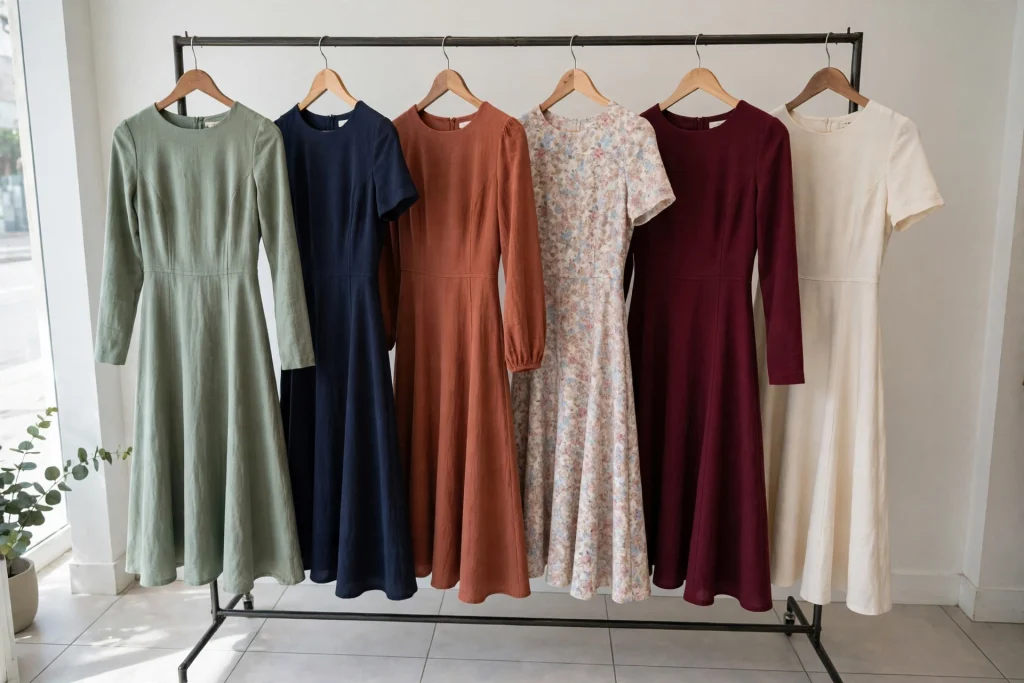
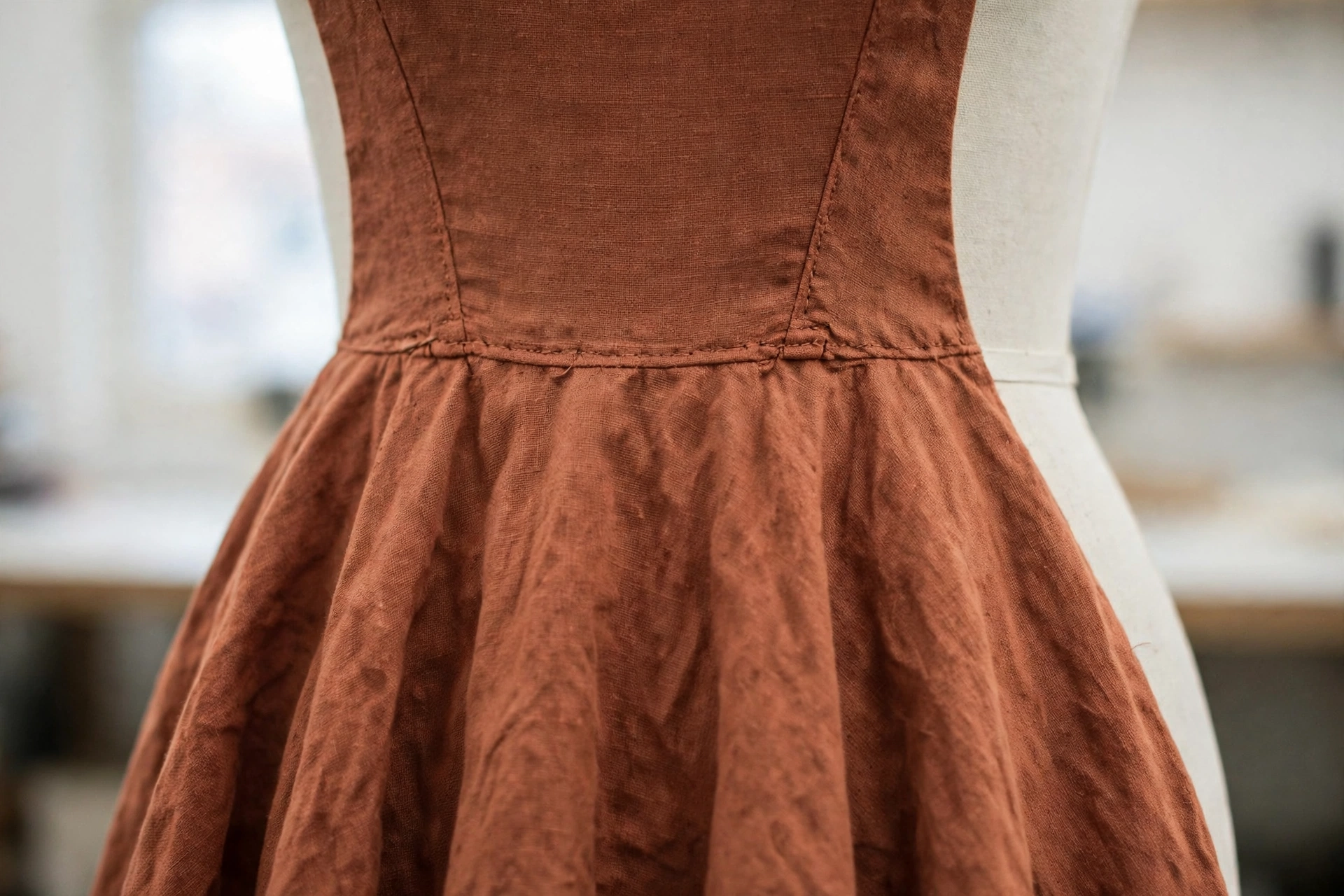
A pattern is only an intention until cloth gets hold of it. The same waist-start pattern cut in a fluid viscose falls in a narrow, swaying column that widens late and gently, and a customer who wanted the slope to show may feel the dress arrived straighter than its photograph. Cut it in a firm cotton poplin and the slope holds its angle away from the leg, the hem stands out in a ring, and the word tent appears in my inbox within the week. Neither dress was sewn badly. They are two garments sharing a tech pack, and the returns desk can often guess the fabric from the complaint before opening the box, which is a sad little party trick and a reliable one.
Boutiques run into the bulk version of this when a sample arrives in one cloth and the run gets made in another that was described to them as equivalent. Equivalent is a word that does a lot of unpaid work in this trade. Two fabrics can share a weight on paper and behave nothing alike over a hip, and an A-line shape is less forgiving of that swap than a straight dress, because the shape is the product. Swap the cloth on a straight dress and you have a straighter or softer straight dress. Swap it on this shape and the silhouette itself changes jobs. Shops that stock women’s dresses wholesale across casual and occasion styles learn to pin the sample’s fabric swatch to the order and treat any substitution as a new style, not a detail, usually after one season of learning it the expensive way. The yardage side of that lesson is its own shock, and we pulled the bill apart in our notes on the fabric yardage behind an A-line dress, because the wide hem that makes the shape work is also what makes it cost.
Our own floor for styles already in the range is 10 pieces per style, colours and sizes mixed inside the ten, and buyers sometimes ask whether a small run like that is worth the sampling trouble for a shape this common. From the returns side I would say the small run is exactly where this shape should be tested, because ten dresses worn by ten different bodies will tell you where the flare starts in practice faster than any photograph will. One sample on one fit model tells you the dress can look right once. It says nothing about what the dress does on a shorter torso, where the waist seam lands lower than the pattern room assumed and the slope starts late, or on a taller one, where the seam rides up and the whole argument of this article starts again in somebody’s kitchen.
No wait. I said earlier that the shape itself rarely gets accused when the seam sits at the waist, and that is true of the messages, but it lets the length off too easily. A waist-start dress in a midi length that lands at the widest part of the calf comes back accused of making legs look short, and that complaint belongs to the hem, not the slope. I file it under shape anyway, because the buyer does. From her side of the mirror there is one garment and it either worked or it did not, and my tidy separation of seam complaints from hem complaints is a filing habit, not a description of her afternoon.
What the return form never asks
The form never asks where the dress widened. It should. Half the advice I give boutiques from this desk is really advice about photographs and one line of text. A side view, taken on a body or a form, shows the start of the slope in a way no front view can, and a listing that states where the waist seam sits, in plain words, takes the guesswork out of the one measurement this shape lives on. Shops do the same work for skirts, where the flare question arrives without a bodice attached, and our comparison of pleated, wrap and A-line skirts keeps circling the same point from the other side of the rail. The garment that gets described by its construction gets returned for its size. The garment that gets described by its mood gets returned for its shape, and shape returns carry the angry wording, because the buyer feels the advice itself lied to her.
That expectation gap is the part of this category I did not understand when I started reading these messages. A woman who buys a fashion shape buys a risk and knows it. A woman who buys this shape often bought it because a dozen articles, and possibly a friend, told her it was the safe one, the one that suits wide hips and narrow hips and everyone standing between. She opens the parcel with more trust than usual. When the seam sits high and the tent goes on, the disappointment is not really about a dress. It is about being told a certainty and receiving a lottery ticket, and her message says so, in politer words than mine and at greater length.
Questions the returns desk keeps answering
The chart said this shape flatters wide hips. So why did she send it straight back?
Usually because the dress she received was not the geometry the chart was praising, and I say that having measured returned dresses against their own listings more times than I can defend at parties. The flattering version widens from the waist and passes the hip on a slope. The returned version, nine times out of ten in my pile, either started under the bust or was cut in a cloth stiff enough to stand away from her, and either way the width arrived in the wrong place. I get this wrong myself when I only look at the front photograph, honestly. The side view is the one that answers her, and it is the one listings leave out.
10 pieces per style is the minimum for a boutique run. Can she mix the stiff cloth and the fluid one inside those ten?
Colours and sizes mix inside the ten, and that part is straightforward, but a second cloth is a second garment as far as the shape is concerned and it should be sampled like one. What tends to happen when nobody samples it is that the fluid version sells quietly and the stiff version comes back wearing the same style code, and the boutique concludes the style failed when really one cloth failed under the style’s name. I would rather a shop spent its ten on one cloth it had held up against a body than split them across two it had only seen in a photograph, even if the second colourway looked like easy money in March.
It looked A-line in the photographs and like a tent on her body. Which one lied?
Neither of them lied, which is the maddening part, and it took me an embarrassingly long time to accept that two honest pictures can describe different dresses. The photograph was taken from the front, on a body the sample was fitted to, in a cloth that may or may not be the cloth in the parcel. Her mirror showed her the side view, in the production cloth, on the torso the dress actually has to live on. When a boutique asks me which picture to trust I tell them to trust the one taken from the side, and then I go back to reading messages from women who were never shown one, which rather proves the point and does not improve my afternoon.
I still do not have an answer to the question I started with, not a clean one. The shape does flatter an unusual range of bodies when the seam is where the name says it is and the cloth minds its manners, and I have kept enough of these dresses out of the returns pile, by nagging sellers about side photographs, to believe the advice is not a lie. But the name travels without the geometry now. It gets attached to whatever widens, and every mislabelled parcel makes the next honest listing a little harder to believe, and somewhere tonight another buyer is opening a box in her kitchen, turning sideways in front of a mirror, and deciding what word the form will let her use for what the seam did.
Follow our channels for new styles and factory updates: WhatsApp Channel · Telegram Channel